Quakers need to step out of their meeting

I’m grasping for anything I can do to reduce the chances of yet another atrocity of violence, another massacre of children. I feel anger and sorrow at the pitifully inadequate legislation being discussed in Washington, DC. Even those measures are unlikely to pass.

I’ve been part of a local Mutual Aid community for almost two years now. And I have experienced how powerful and effective Mutual Aid is in building community and addressing community needs immediately. It is by working in our local communities that we can address community safety, providing alternatives to guns and violence. It is the only way.

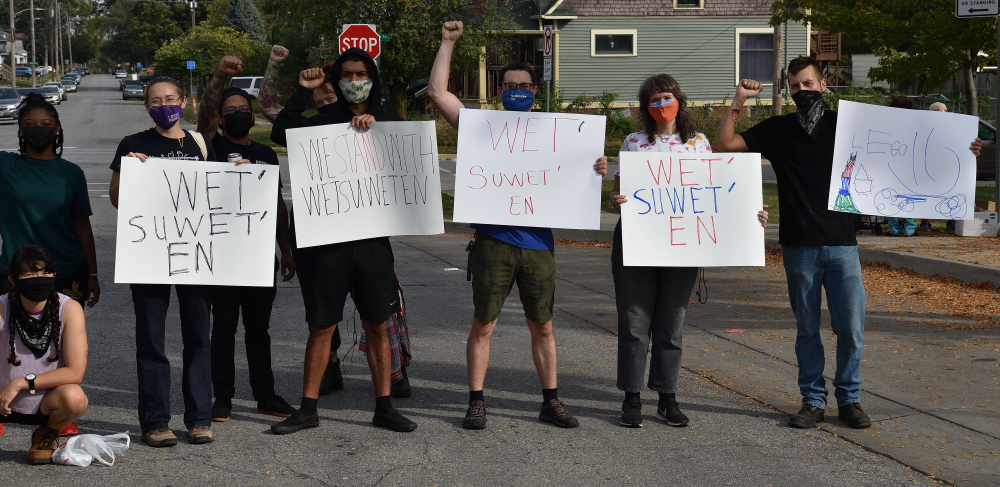
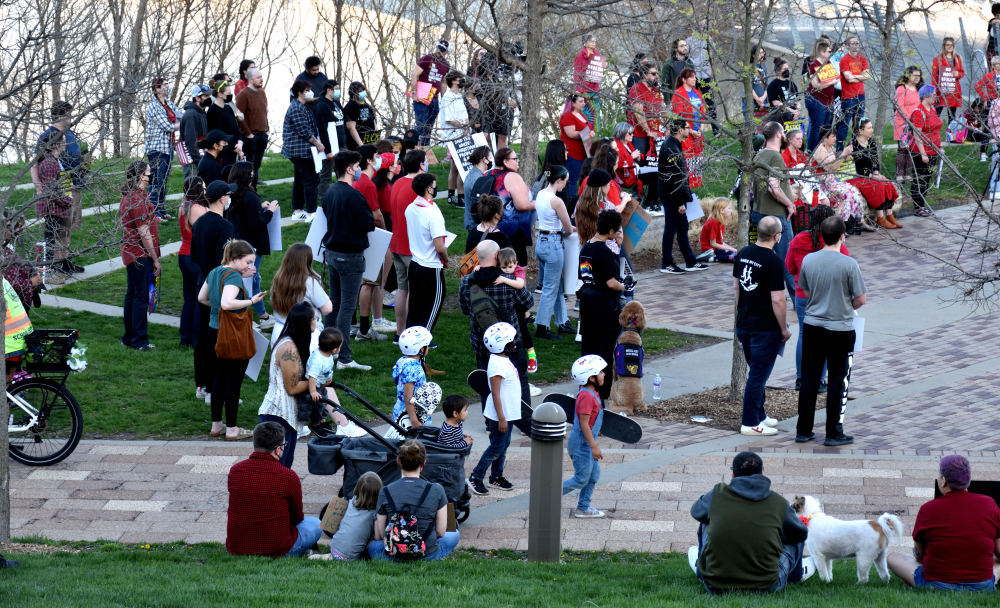
Des Moines Mutual Aid

My experiences with this type of community justice work strongly supports what José Santos Woss, Director for Justice Reform at the Friends Committee on National Legislation, says in this video, “Quaker Faith in Justice Reform” (below).

In particular, he says “there’s a need for Quakers to step out of their meeting.”

When I was in Indianapolis, North Meadow Circle of Friends were part of the pilot program of the American Friends Service Committee (AFSC) called Quaker Social Change Ministry (QSCM). The idea was to get Quakers out of the meetinghouse by finding a community near them that was experiencing injustice, and spend time being physically present with that group. Spending a lot of time there by consistently showing up.

QSCM brings a spiritual focus to Quaker justice work by having the Quakers involved reflect on the spirituality of the experiences they were having. QSCM also taught us how important it is to listen deeply to those in the community we were working with. To wait to be asked by the community to do something. To be students, not teachers.

This blog post summarizes what I learned with QSCM. Out of the meetinghouse.


Quakers are pretty white, and that comes with quite a bit of power and privilege. A Quaker in Omaha, Nebraska is going to have probably more weight in what they say to a legislator than a Black Lives Matter activist in Brooklyn, New York. I think there’s a need for Quakers to step out of their meeting and away from a lot of these phenomenal institutions that they’ve created and speak to individuals in an interfaith setting (from Black churches or Black Lives Matter) and have a cross-cultural understanding of what that experience is like because you’ll find that it’s very different, and I think the more we can do of that the more effective we’ll be in addressing these problems. These exchanges and fusion coalitions are what I think it’s going to take, not only for Friends to be effective in dismantling these systems of racism, classism, and white supremacy in American society, but also for all of us to better address these problems in our country.

José Santos Woss, Quaker Faith and Justice Reform, Quakerpeak video

https://youtu.be/aHtmwaCi2PI

White Quakers need to “speak to individuals in an interfaith setting (from Black churches or Black Lives Matter) and have a cross-cultural understanding of what that experience is like because you’ll find that it’s very different.”

That is what we did when North Meadow Friends engaged with the Kheprw Institute, a Black youth mentoring community in Indianapolis. We spent at least one Sunday afternoon a month there, participating in discussing books about justice issues.

When I said a sad goodbye, I told them I felt I had received a graduate degree from them. Alvin said “your diploma is in the mail.”

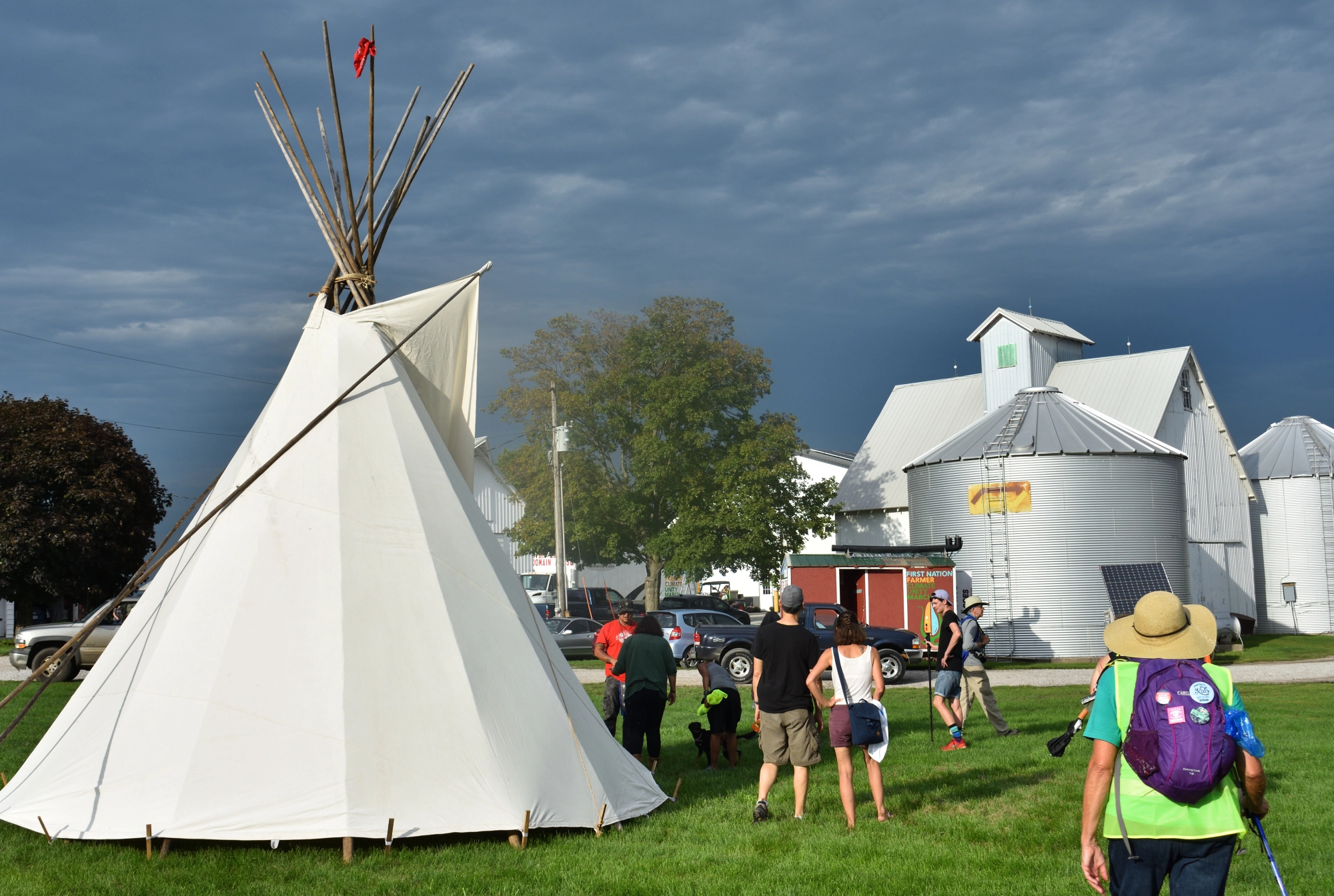
I began to receive a similar education when I walked and camped for eight days, for ninety four miles with a small group of native and nonnative people along the path of the Dakota Access pipeline.

And it is the education I’m receiving from my work with Des Moines Mutual Aid (as described above).

White Friends cannot receive this education without leaving the meetinghouse. Neither committee meetings, lectures or workshops can do this.

And those in oppressed communities will not listen to what you have to say until you have demonstrated you have experienced and learned these things.

These exchanges and fusion coalitions are what I think it’s going to take, not only for Friends to be effective in dismantling these systems of racism, classism, and white supremacy in American society, but also for all of us to better address these problems in our country.

José Santos Woss, FCNL

One thing we can do is work to promote community violence interruption. Mutual Aid communities are a framework for doing this.

“Trust, credibility, and relationships are core pillars of the Safe Streets Baltimore program and other programs around the country like it,” said Moix. “Local violence interrupters are able to respond quickly to potential incidents and de-escalate the situation, while building relationships and strengthening community resilience over time. These locally-led programs are impactful and cost-effective, and they deserve more federal support and funding from Congress.”

Growing Support for Investing in Community Violence Interruption, FCNL’s General Secretary Bridget Moix, May 23, 2022

Build Safer Communities: Invest in Violence Interrupters

Traditionally, cities have responded to community-level violence by increasing the presence of a militarized police force. This solution has repeatedly failed with sometimes fatal consequences. A new solution, one that comes from within the community itself, offers a new way forward: violence interrupters.

Violence interrupters work within their communities to deescalate violence before it happens, without police intervention. These evidence-based programs are tailored to the unique needs of the neighborhoods they serve and lay the groundwork for lasting communal change.

Urge Congress to make our communities safer by dedicating federal funding to violence interrupters programs.

Use this button to send this message to your Congressional representatives.


“It takes a monster to kill children. But to watch monsters kill children again and again and do nothing isn’t just insanity – it’s inhumanity.”

Amanda Gorman

The Light that Never Fails

I sense universal despair from the unbelievable tragedy of the deaths of elementary school children, yet again. Part of the hopelessness is that these things have happened in the past and we fear they will continue to happen. That there will be no changes for better community safety. We feel personally responsible for these failures. And we are, aren’t we, if we do nothing?

Many disparage the idea of “thoughts and prayers” which admittedly is usually an empty sentiment. But as people of faith, we do believe in prayer, don’t we?

Amanda Gorman recently wrote “It takes a monster to kill children. But to watch monsters kill children again and again and do nothing isn’t just insanity – it’s inhumanity.”


Many Quakers look for hope in statements and suggestions for action from our national political lobbying organization, the Friends Committee on National Legislation (FCNL).

The gun violence epidemic is both a public health crisis and a troubling reflection on our country’s spiritual state. As we seek policy solutions, we must also look critically at the culture that enables so many people to kill each other with guns.

Friends Committee on National Legislation (FCNL)

Information on the FCNL website today follows, including a link to send a message to your Congressional representatives to enact universal background checks.

When will it be enough?

The mass shooting at an elementary school in Uvalde, TX is horrific and heartbreaking. We grieve for the children, the teachers, and the families. We grieve for America. And we will continue to demand that our lawmakers act to disrupt this cycle of violence and terror.

Tell Congress to Enact Universal Background Checks

Universal background checks legislation would save lives by implementing background checks for every firearm purchase or transfer. The House recently pass two such bills – the Bipartisan Background Checks Act of 2021 (H.R. 8) and  Enhanced Background Checks Act of 2021 (H.R. 1446).  

Urge your senators to support this common-sense measures and save lives!


Gun Violence Prevention Principles

Gun violence in the United States is so common that it rarely makes the news. As a nation, we have seemingly accepted that ordinary activities – going to a house of worship, a nightclub, a school – carry the risk of violent death.

But our current levels of gun violence are not inevitable. Policymakers’ failure to pass common sense, responsible legislation contributes to appalling rates of gun violence in the United States.

Lawmakers must take every available step to reduce harm and loss of life. Easy access to guns will continue to make it horrifyingly easy to escalate fear, hatred, and rage into slaughter.

We support efforts to reduce gun violence by limiting gun ownership, possession, and use. In particular, a comprehensive gun violence prevention strategy will:

  • Address the many forms of gun violence, including mass shootings, accidental shootings, police shootings, domestic and intimate partner violence, and suicide, through context-sensitive approaches
  • Advance evidence-based gun violence prevention
  • Preserve civil liberties and anti-discrimination protections
  • Prioritize systemic changes over individual punishment
  • Limit access to equipment that makes mass shootings deadlier
  • Implement safety checks for all gun buyers
  • Promote and strengthen community engagement by implementing community-based violence intervention and prevention programs

The gun violence epidemic is both a public health crisis and a troubling reflection on our country’s spiritual state. As we seek policy solutions, we must also look critically at the culture that enables so many people to kill each other with guns. As Quakers, we believe that there is that of God in every person and that all creation has worth and dignity. We call on Congress to act immediately to protect each sacred life.

Gun Violence Prevention Principles
Friends Committee on National Legislation (FCNL)


“The Light That Never Fails”
(from “Meru” soundtrack)

When the cold bites your bones
And gets in your heart
It can make you feel hopeless
And fear will come to steal your sun and make it dark
But don’t believe you’re lonely

We’ve all had that moment when our shoulders sink
And we sit back and think
We could just run

But we’re not born to chase the fading light
We’re not born to fall and lose the fight
Never letting go
Oh no oh
I’m askin’ you to lift me, lift me higher than I ever been
Hold your breath and say you’re gonna come with me
We were born to follow
The light that never fails

You’re scared to fight
You’re scared to climb
Afraid to die
But I can be your courage
And help you see you’ve already won this

We all have that moment when our head hangs low
We question if we should go
Or turn back and run

But we’re not born to chase the fading light
We’re not born to fall and lose the fight
Never letting go
Oh no oh
I’m askin’ you to lift me, lift me higher than I ever been
Hold your breath and say you’re gonna come with me
We were born to follow
The light that never fails

Come along
We’re settin’ sail
Never looking back again

We’re not born to chase the fading light
We’re not born to fall and lose the fight
Never letting go
Oh no oh
I’m askin’ you to lift me, lift me higher than I ever been
Hold your breath and say you’re gonna come with me
We were born to follow
The light that never fails
We were born to follow
The light that never fails
Light that never fails
The light that never fails

Andra Day

Indian Boarding Schools and White Supremacy

Washington, DC. The Friends Committee on National Legislation (FCNL) welcomed the release of the first volume of the Federal Indian Boarding School Initiative’s long-awaited investigative report. Assembled by the Department of the Interior, this report serves as historic documentation of the trauma inflicted by Indian boarding schools. It also underscores the need for further reckoning on this vital issue, both in Congress and in the Quaker and faith communities.

“This new report shines a much-needed light on the atrocities committed at Indian boarding schools, some of which were run by Quakers,” said FCNL General Secretary Bridget Moix. “We commend the Department of the Interior for doing this difficult work and we remain committed to doing our part to advance the reckoning and healing process for this dark chapter in American history.”

“Further, we call on the faith community at large to share records and accounts of their administration of these schools. Only through complete honesty and transparency can we begin moving towards a more just future,” she continued.

Quaker Lobby Welcomes Long-Awaited Report on Indian Boarding Schools by Alex Frandsen, May 12, 2022

Portia Kay^nthos Skenandore-Wheelock, is the Friends Committee on National Legislation (FCNL) Congressional Advocate, Native American Advocacy Program. She makes an important point when she writes about connecting boarding schools to broader practices of White supremacy. This is important for White Quakers to understand as we search for ways to support Indigenous peoples today.

The consequences of separating young children from their families and tribal homes, a curriculum of child labor, and punishments akin to those inflicted on prisoners of war are deeply felt within Indigenous communities to this day.

Further, beneath the cruel assimilation policy lies the true purpose of this government strategy: an effort to seize Native land. Federal records confirm that the creation of the federal Indian boarding school system coincided with land dispossession. An assimilation policy targeted at Native children was thought to be easier and less costly than war in separating tribes from their land. The schools would discourage tribal land and food practices and encourage western agricultural practices that require less land.

Another tactic was to encourage tribes to purchase goods on credit to support the western agricultural lifestyle. Thus, tribes would fall into debt and have no option but to cede lands to the U.S. for payment—those funds were then mostly used to fund the boarding school system.

Survivors left these institutions abused, in poor health, and without the language and cultural knowledge to connect with the homes they returned to.

A First Look at the Federal Indian Boarding School Initiative Report by Portia Kay^nthos Skenandore-Wheelock May 16, 2022

Separating Native children from their families continues today as social service agencies create excuses to remove them from their homes.

And there was the practice of separating children from their families at the southern border.

It is the ultimate manifestation of White Supremacy to violently and cruelly force anyone who is not white to abandon their culture, practices and beliefs, to assimilate into White culture.

Global White supremacy was codified in the Doctrine of Discovery

Doctrine of Discovery Factsheet

What is the Doctrine of Discovery? Why Should It Be Repudiated?

For thousands of years, Indigenous Peoples lived free in their territories in the Western Hemisphere. When European monarchies invasively arrived in the Western Hemisphere in the fifteenth, sixteenth, and later centuries, during the so-called Age of Discovery, they claimed the lands, territories, and resources of the Indigenous Peoples, asserting that the monarchies had a right to appropriate on behalf of Christendom. The monarchies’ claims of a Christian dominion (dominance) over Indigenous Peoples and their lands served them pragmatically to fend off competing monarchies and to de-legitimate the long-established autonomous indigenous peoples’ governments.

The Doctrine of Discovery is a key premise for non-Indigenous government claims to legitimacy on and sovereignty over Indigenous lands and territories. It is used in particular by former British colonies, specifically, Canada, Australia, New Zealand and the United States of America.

(The fact sheet continues at the following link)

New York Yearly Meeting


Buffalo Rebellion

juxtaposition 2

It’s difficult to write this morning. Writing is a spiritual practice for me. But my heart and Spirit are heavy from the news of yet another horrendous school shooting.

There are so many questions, and so few answers.

Just because something like the second amendment is interpreted to enshrine guns doesn’t mean that is the right thing to do. Why do those in power choose guns over the lives of children?

We should beat guns into plowshares.

He shall judge between the nations, and shall arbitrate for many peoples; they shall beat their swords into plowshares, and their spears into pruning hooks; nation shall not lift up sword against nation, neither shall they learn war any more.

Isaiah 2:4

Today’s juxtaposition is related to an online event about the trauma, and deaths that occurred in the Indian Boarding Schools in this country and Canada. The genocide. Trauma that has been passed from generation to generation. Trauma those living today experience.

That is in juxtaposition to the elementary school massacre in Texas yesterday.

Seeking Truth, Healing, and Right Relationship: Quakers and the Legacy of Indian Boarding Schools, MAY 25, 2022, 6:30 – 7:30 PM EDT 

FCNL and Friends advocate in solidarity with Indigenous peoples. Yet, historically, Quakers played a role in colonization and the cultural genocide of Native people through the operation of more than 30 Indian boarding schools. With legislation now before Congress to investigate the legacy of Indian boarding schools, how are Friends communities engaging to address Quaker complicity in these atrocities?

Join us on Weds. May 25 at 6:30 p.m. EDT to learn how FCNL and F/friends are reckoning with this history and advocating in solidarity with Native communities.

In conversation with Paula Palmer and Jerilyn DeCoteau, FCNL’s Congressional Advocate for Native American Advocacy Portia Kay^nthos Skenandore-Wheelock will discuss FCNL’s work to build support for the bipartisan Truth and Healing Commission on Indian Boarding School Policies in the United States Act (S. 2907/H.R. 5444). Paula and Jerilyn will share from their expertise and experience co-directing Towards Right Relationship with Native Peoples with Friends Peace Teams. Director of Quaker Leadership Alicia McBride will moderate the conversation.

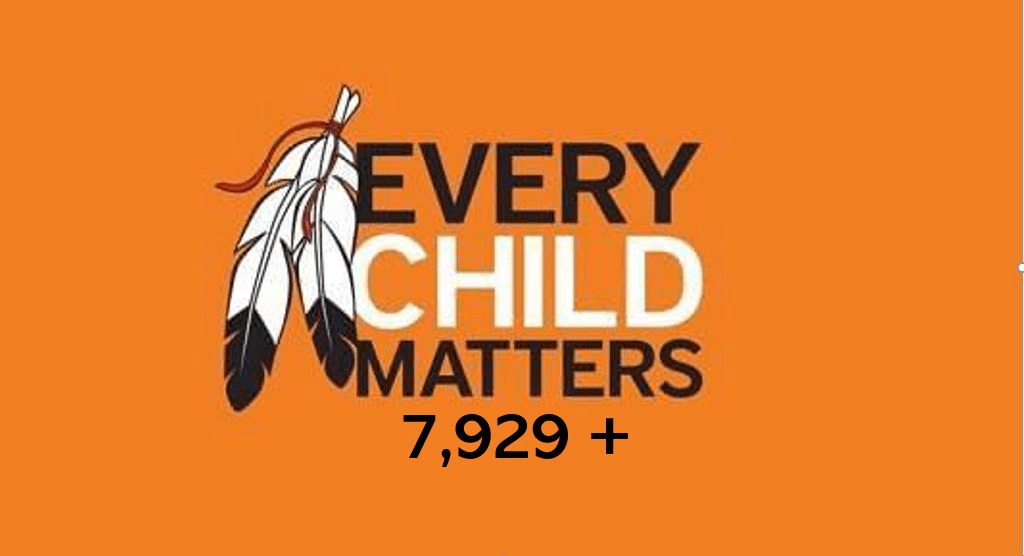
There is a Facebook group, Every Child Matters related to the atrocities of the Indian Boarding Schools. The number on the graphic tracks the number of remains of children found so far.

https://www.facebook.com/groups/125050373031500

A community to provide educational resources, generate awareness, share events and actions, and build community. Recognizing the legacy of colonization in all of Turtle Island, and working together as a community to create a world our 7 generations yet to come can feel proud to be a part of.

“Every person will do their work in their own way as we move forward.

Some will take direct action and take action. That is important. Some will write policy. That is important. Some will do ceremony. That is important. Some will share stories. That is important. Some will build relationships and understanding. That is important. Some will teach. That is important. If we all do what we know how to do, with what we know, it will be good.

Every one and every thing has purpose. Keep your ears and minds and hearts open. Try to listen to each other without forming an opinion. Listen to things as information. You don’t have to agree with it. But you can validate it as someone’s experiences, feelings and ways of healing.”


Following is a link to the poem every child, found on the Intrepid Muse Poetry blog.

https://intrepidmusepoetry.blogspot.com/2022/05/every-child-matters.html

juxtaposition is the title of an earlier blog post.

It is a juxtaposition to see the rapidly accelerating, multiple effects of environmental devastation and chaos versus the struggles of Indigenous peoples trying to protect their pristine lands and waters.
https://quakersandreligioussocialism.com/2022/05/23/juxtaposition/

Support the Truth and Healing Commission on Indian Boarding School Policies Act

The House Natural Resource Subcommittee for Indigenous Peoples is accepting written testimony in support of H.R. 5444, the Truth and Healing Commission on Indian Boarding School Policies Act.

There are two ways you can send your written testimony for the bill. One is by using The National Native American Boarding School Healing Coalition’s resources. Secondly, information from the Friends Committee on National Legislation (FCNL) is found at the end of this post. The FCNL site will help you write your letter and send it to the appropriate members of Congress.


The National Native American Boarding School Healing Coalition

REQUESTING SUPPORTIVE WRITTEN TESTIMONY FOR H.R.5444

The National Native American Boarding School Healing Coalition (NABS) is currently pursuing the passage of H.R. 5444 / S. 2907, the Truth and Healing Commission on Indian Boarding School Policies in the US Act. The House Natural Resource Subcommittee for Indigenous Peoples held a hearing on Thursday, May 12, 2022, on H.R. 5444. We are reaching out to invite you to submit written testimony in support of this legislation. The House allows for written testimony until May 26, 2022. Therefore, we are humbly asking you to share your story by emailing the House Natural Resource Committee at:

HNRCDocs@mail.house.gov and CC NABS at info@nabshc.org 

To familiarize yourself with the legislation, NABS’s one pager can be found here, H.R. 5444/S.2907 the Truth and Healing Commission on Indian Boarding School Policies Act. 
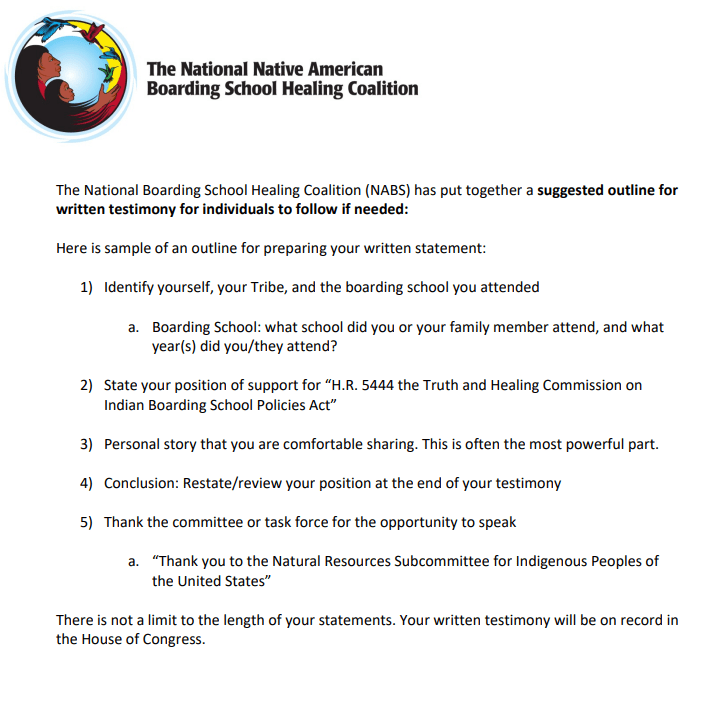
To submit testimony, please see NABS suggested draft template on how to write your story for Congress. It can be a minimum of two paragraphs up to 15 pages.
If you have any questions, please reach out to NABS at info@nabshc.org  
t’igwicid – Thank you, 

https://mailchi.mp/nabshc.org/nabs-requesting-your-story-6024016?e=039867b489

https://mcusercontent.com/a2409f90592cd87d4d9c47cad/files/0dd54e21-d6e2-e607-8bd1-dd35e41c0834/Outline_for_Testimony.01.pdf

Natural Resources Committee to Hold First Congressional Hearing on the Indian Boarding School Era

Washington, D.C. – Tomorrow, May 12, at 1:00 p.m. Eastern, the Subcommittee for Indigenous Peoples of the United States will hold the first congressional hearing in history to examine the “Indian Boarding School Era,” the time period from 1819 to 1969 in which the U.S. government forcibly removed Indigenous children from their communities and placed them into government-run boarding schools to assimilate them into Euro-American society. At these schools, American Indian, Alaska Native, and Native Hawaiian students were forbidden to practice their culture, use their given names, or speak their traditional languages. If they disobeyed, they were harshly punished. Many students experienced physical, sexual, or psychological abuse, and some never returned home to their families. To this day, the United States government has never formally acknowledged or apologized for these actions.

The hearing will be livestreamed here: https://www.youtube.com/watch?v=lFeCr0gDopU

The legislative hearing will consider H.R. 5444, the Truth and Healing Commission on Indian Boarding School Policies Act, introduced by Rep. Sharice L. Davids (D-Kan.), which will establish a formal commission to investigate and document the policies of the Indian Boarding School Era. The commission will develop recommendations on how the U.S. government can best acknowledge and heal the intergenerational trauma associated with the era.

Natural Resources Committee, U.S. House of Representatives


Friends Committee on National Legislation (FCNL)

Support the Establishment of a Truth and Healing Commission on Indian Boarding Schools

It is long overdue for the United States to acknowledge the historic trauma of the Indian boarding school era. In the 19th and early 20th centuries, Christian churches collaborated with the government to create hundreds of boarding schools for Native American children. The conditions at these schools, some of them Quaker-run, were unspeakable.

Remind your members of Congress of their responsibility to tribal nations and urge them to support the Truth and Healing Commission on Indian Boarding School Policies in the United States Act (S. 2907/H.R. 5444).

Friends Committee on National Legislation (FCNL)


It’s time to elevate Indigenous voices

As I was praying about what to write this morning, I was thinking about the title from an email from Grist magazine: It’s time to elevate Indigenous voices

It’s time to elevate Indigenous voices

It’s clear that Indigenous leaders and communities play a critical role in climate action and have already faced significant climate threats. Elevating Indigenous voices is key to staving off the climate crisis, and the news industry must do better.

Our reporting brings light to the challenges Indigenous communities face and grounds these stories through the lens of solution and justice by elevating the Indigenous leaders and ideas that are critical to protecting the planet’s biodiversity and the health of our ecosystems

Donate now

Grist

Although there is colonialism in the idea that it is White people’s privilege to frame these narratives, it is important to make White people aware of the importance of elevating Indigenous voices.

White people cannot begin to have authentic relationships with Indigenous peoples until we have learned and acknowledged the truth about the history of White settler colonists stealing the land and committing genocide against native peoples. And the continued oppression today. To understand the trauma that has been passed from generation to generation. The grief of those living today.

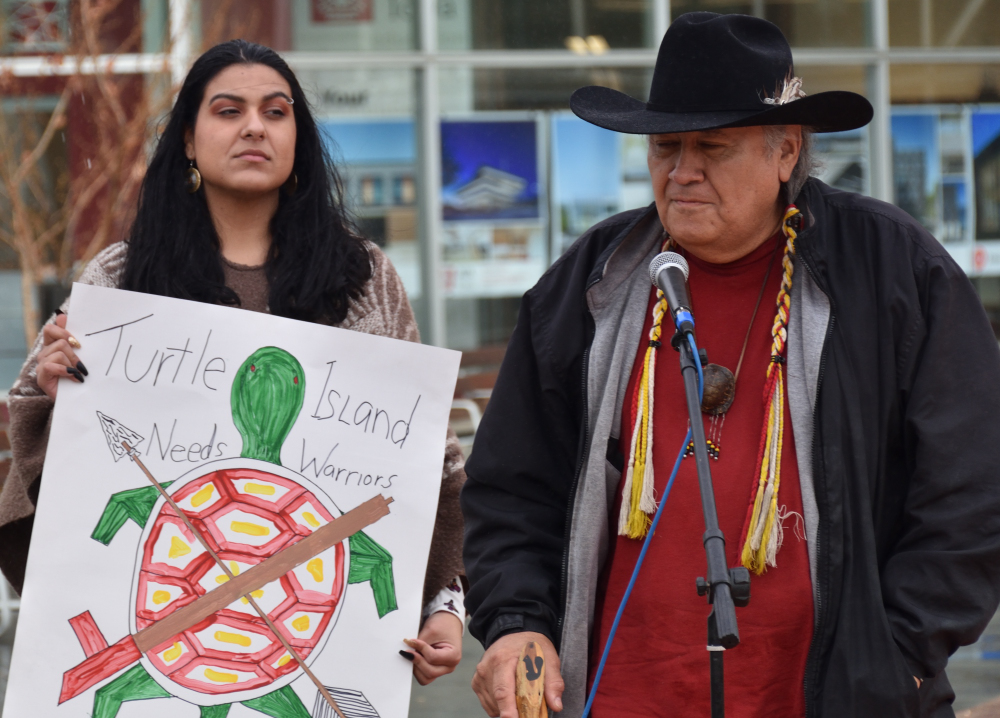
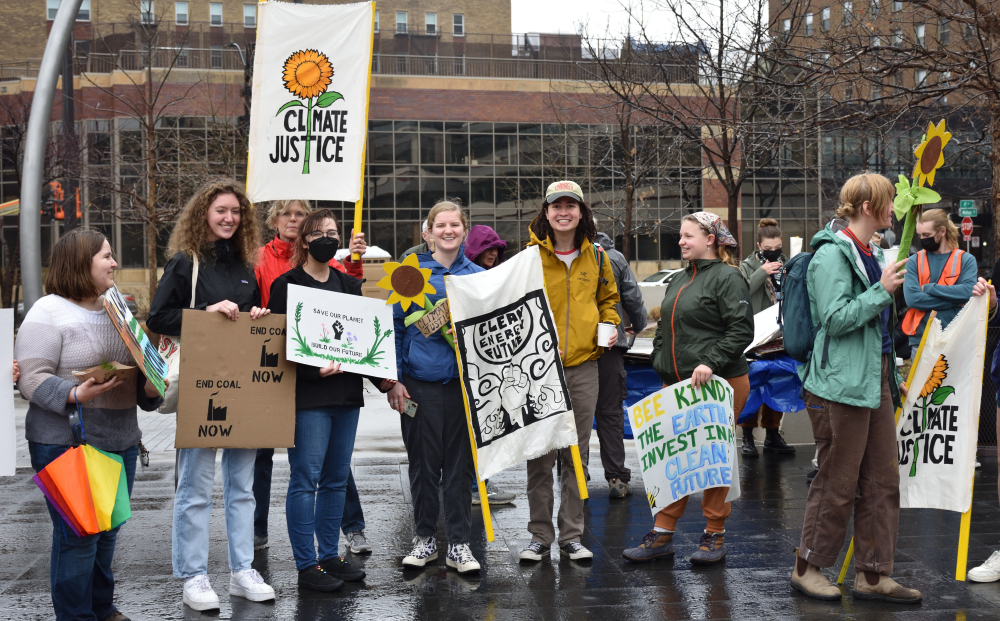
I was blessed to participate in the Climate Justice Summit of the new coalition, the Buffalo Rebellion. A coalition that has leadership from Indigenous people and that is elevating Indigenous voices.

Buffalo Rebellion is a coalition of Iowa grassroots organizations that are growing a movement for climate action that centers racial and economic justice!

Formed in 2021, Buffalo Rebellion is comprised of seven Iowa organizations: Great Plains Action Society, DSM Black Liberation Movement, Iowa Migrant Movement for Justice, Sierra Club Beyond Coal, Cedar Rapids Sunrise Movement, SEIU Local 199, and Iowa CCI


Forced assimilation of native children

One of the most grievous wrongs was the forced assimilation of native children. [https://quakersandreligioussocialism.com/forced-assimilation/]

  • This is a fraught issue in Quaker communities today. More than 30 Indian boarding schools were run by Quakers.
  • The first step toward healing for all those involved, White and Indigenous peoples, is truth telling.
  • Raw emotions are re-awakened as the process of locating the remains of native children on the grounds of Indian boarding schools occurs at more schools.
  • The first volume of the Federal Indian Boarding School Initiative Investigative Report has just been released.

Urge your members of Congress to support the Truth and Healing Commission on Indian Boarding School Policies Act (S. 2908/H.R. 5444).


It’s past time for the United States and the faith community to acknowledge the historical trauma of the Indian boarding school era.

I know that. You know that. And this week, we received two strong signs that lawmakers are starting to understand it too.

Act Now

On Wednesday, the Department of the Interior released an investigative report documenting the brutal conditions endured by Native children who were forced to attend federal boarding schools. The next day, a House subcommittee held the first-ever hearing on this critical issue.

The impacts of this tragic era persist today. These schools—more than 30 of them run by Quakers—are inextricably linked to the loss of tribal languages, cultural resources, and dispossession of land. Many of the problems facing tribal nations today, including poverty, violence, suicide, and alcohol and drug abuse, are rooted in the traumatic separation of children from their families and the abuses at these federally sponsored institutions.

Your advocacy is making a difference. We have to keep the pressure on. Urge your members of Congress to support the Truth and Healing Commission on Indian Boarding School Policies Act (S. 2908/H.R. 5444).

Portia Kay^nthos Skenandore-WheelockSincerely, Portia K. Skenandore-Wheelock Congressional Advocate
Native American Advocacy Program

P.S. Read the Department of Interior report here.


It is long overdue for the United States to acknowledge the historic trauma of the Indian boarding school era. In the 19th and early 20th centuries, Christian churches collaborated with the government to create hundreds of boarding schools for Native American children. The conditions at these schools, some of them Quaker-run, were unspeakable.

Now we must work with tribal nations to advance congressional efforts to establish a federal commission to formally investigate boarding school policy and develop recommendations for the government to take further action. Although the wrongs committed at these institutions can never be made right, we can start the truth, healing, and reconciliation process for the families and communities affected as we work to right relationship with tribal nations.

Friends Committee on National Legislation (FCNL)
Support the Establishment of a Truth and Healing Commission on Indian Boarding Schools


Acknowledging the Trauma of Indian Boarding Schools

Letter Writing May: Acknowledging the Trauma of Indian Boarding Schools

From the Friends Committee on National Legislation (FCNL)

“Native organizations are not asking us to judge our Quaker ancestors. They are asking, ‘Who are Friends today? Knowing what we know now, will Quakers join us in honest dialogue? Will they acknowledge the harm that was done? Will they seek ways to contribute toward healing processes that are desperately needed in Native communities?’” – Paula Palmer, Friends Journal

It is long overdue for our country to acknowledge the trauma inflicted by Indian Boarding Schools in the 19th and early 20th centuries. Christian churches often collaborated with the government to create hundreds of these schools around the country with the goal of assimilating Native children into white society. Quakers were among the religious bodies that ran these boarding schools, causing unspeakable harm to Native children and communities. 

Today, Congress can pass legislation that would begin to seek truth and healing for the Native communities that are still affected by this trauma. Friends today are working with tribal nations to advance this congressional effort to formally investigate boarding school policy and develop recommendations for future action.

Act Now!
Urge your members of Congress to support and co-sponsor the Truth and Healing Commission on Indian Boarding School Policies in the United States Act (S. 2907/H.R. 5444).

Download the Letter

Increasingly, more members of Congress are signing on to co-sponsor this legislation. Your voices are vital in continuing the momentum to push this effort forward. While the wrongs committed at these boarding schools can never be made right, this truth and healing commission can begin a process of working to right the relationship with tribal nations.

Please act using the accompanying letter template, call script, and this email template. Add 2‐4 sentences letting your legislator know why you are personally concerned.

Then, call Congress at 202‐224‐3121 and ask to be connected to your representative’s and senators’ offices. Leave a message if they do not pick up or if you are calling after office hours.

I also hope you will join FCNL’s Quaker Changemaker event on May 25 at 6:30 p.m. EDT, “Seeking Truth, Healing, and Right Relationship: Quakers and the Legacy of Indian Boarding Schools.”

Your letters, emails, and phone calls to Congress matter now more than ever.

We ask Friends to continue contacting their elected officials using our materials. Please share this call to action with your community email lists and organize virtual gatherings for collective advocacy. 

Learn more and get training from FCNL staff at fcnl.org/lobbyfromhome.
Emma Hulbert
In peace, Emma Hulbert Program Assistant
Quaker Outreach

FCNL Native American updates

Following are Native American updates from the Friends Committee on Legislation (FCNL).

Seeking Truth, Healing, and Right Relationship: Quakers and the Legacy of Indian Boarding Schools
MAY 25, 2022, 5:30 – 6:30 PM Central, ONLINE

FCNL and Friends advocate in solidarity with Indigenous peoples. Yet, historically, Quakers played a role in colonization and the cultural genocide of Native people through the operation of more than 30 Indian boarding schools. With legislation now before Congress to investigate the legacy of Indian boarding schools, how are Friends communities engaging to address Quaker complicity in these atrocities?

Join us on Weds. May 25 at 6:30 p.m. EDT to learn how FCNL and F/friends are reckoning with this history and advocating in solidarity with Native communities.

In conversation with Paula Palmer and Jerilyn DeCoteau, FCNL’s Congressional Advocate for Native American Advocacy Portia Kay^nthos Skenandore-Wheelock will discuss FCNL’s work to build support for the bipartisan Truth and Healing Commission on Indian Boarding School Policies in the United States Act (S. 2907/H.R. 5444). Paula and Jerilyn will share from their expertise and experience co-directing Towards Right Relationship with Native Peoples with Friends Peace Teams. Director of Quaker Leadership Alicia McBride will moderate the conversation.


Reauthorize FVPSA with Critical Support for Tribal Domestic Violence Programs

The Family Violence Prevention and Services Improvement Act (FVPSA) is the primary federal grant program for domestic violence shelter and supportive services. This is especially significant for tribal communities, which deal with domestic and sexual violence at unparalleled rates. 

FVPSA will help all tribes provide culturally appropriate and life-saving prevention and treatment resources for their citizens by funding domestic violence programs, shelters, hotlines, resource centers in Alaska and Hawaii, and tribal coalitions. In short, FVPSA is a key piece of legislation to address the crisis of Missing and Murdered Indigenous People.

The House passed their bill (H.R. 2119) in October 2021, but the Senate has yet to vote on their version (S. 1275).

Remind your senators of their responsibility to tribal nations and urge them to pass the Family Violence Prevention and Services Improvement Act.


Historic Funding for Tribal Nations in FY 2023 Budget Proposal

For the first time in history, the president’s budget process included direct consultations with tribal nations. As a result, President Joe Biden’s FY 2023 budget proposal includes increased funding for tribal nations and programs. Notably, it would also significantly invest in the stabilization of the entire tribal healthcare system.

By recategorizing Indian Health Service (IHS) funding as mandatory rather than discretionary spending, IHS funding would automatically keep pace with increasing healthcare costs and population growth. This change would gradually close longstanding shortfalls, address backlogs and inequities, and modernize record systems. The budget proposal recommends $9.1 billion in mandatory funding for tribal healthcare.

“This proposal is a historic step forward towards securing adequate, stable, and predictable funding to improve the overall health status of American Indians and Alaska Natives,” said IHS Acting Director Elizabeth Fowler. “It also ensures we never repeat the disproportionate impacts experienced during the pandemic…and acknowledges the need to implement long-term solutions to address IHS funding challenges, which contribute to the stark health disparities faced by American Indian and Alaska Native people.”

Other wins in the budget proposal include increased funding for tribal programs in general, Violence Against Women Act programs, and the Federal Indian Boarding School Initiative.


Interior Department Reverses Nearly 50 Year Obstacle to Tribal Water Rights

On April 7, Interior Secretary Deb Haaland reversed the Morton Moratorium, a 1975 memorandum directing the Bureau of Indian Affairs to disapprove tribal regulation of water use on reservations. With this change, tribes requiring secretarial approval of tribal water codes will be able to better regulate and protect waters on tribal lands.

“If we are to truly support tribal self-determination, we cannot be afraid to review and correct actions of the past that were designed to create obstacles for tribal nations,” said Haaland. The Interior Department will hold tribal consultations for guidance on an improved review process for tribal water codes.


What we’re reading