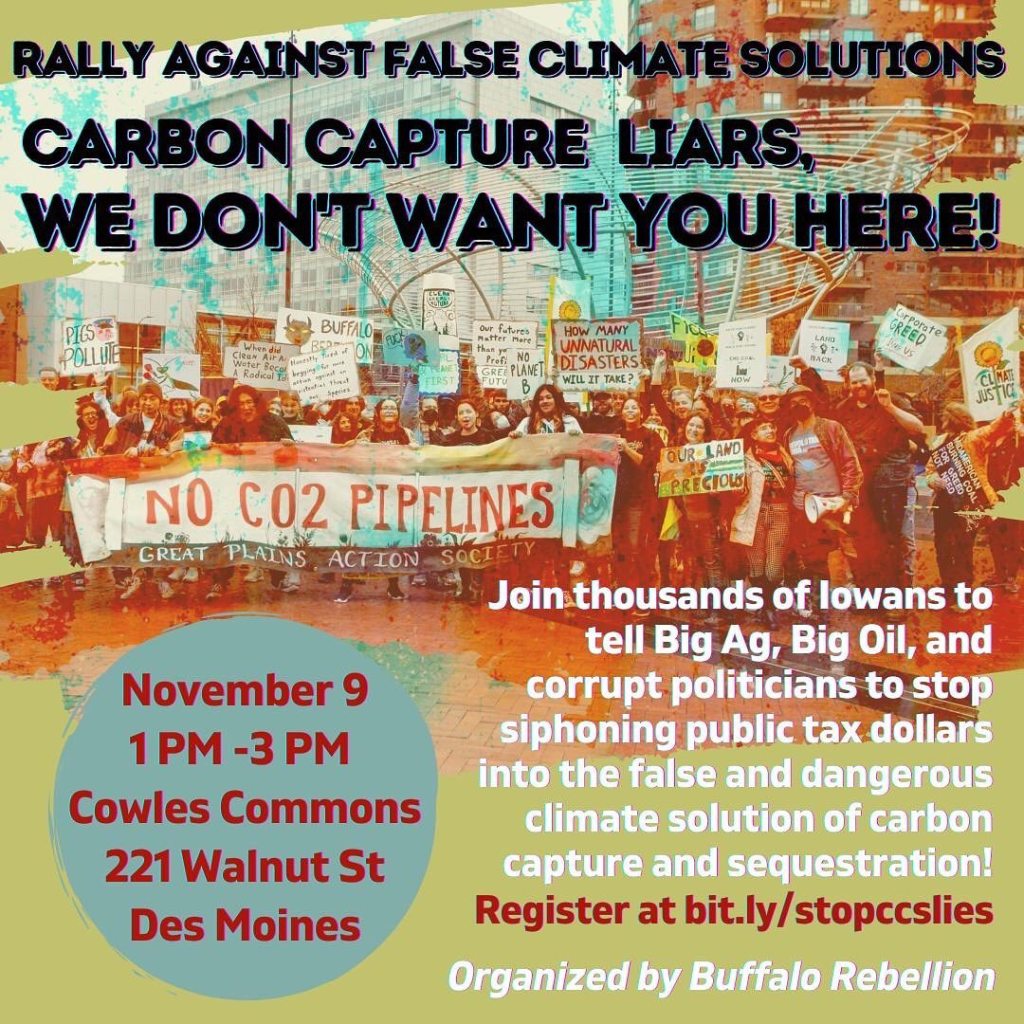
This morning I wrote about peacemaking. Encouraging Friends, each of us, to take a careful look at our life, and to speak out against the injustice and violence occurring today. To work to fill the spiritual void. But to do that means we have to show up. Be at Cowles Commons tomorrow at 1 pm
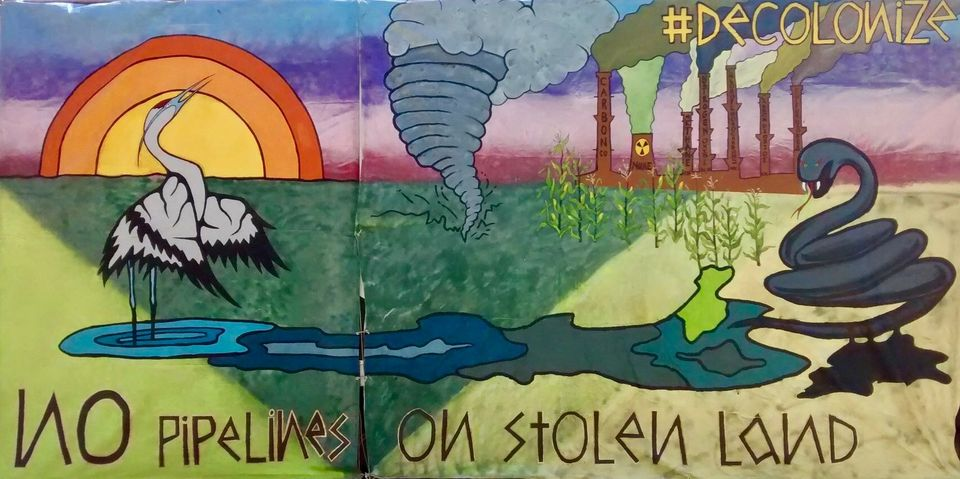
Tomorrow is our chance to do this. To speak against the violence of carbon capture, carbon pipelines and the hazardous material they carry. To support Black Lives Matter and Indigenous peoples. To protect our children and future generations. To be peacemakers.
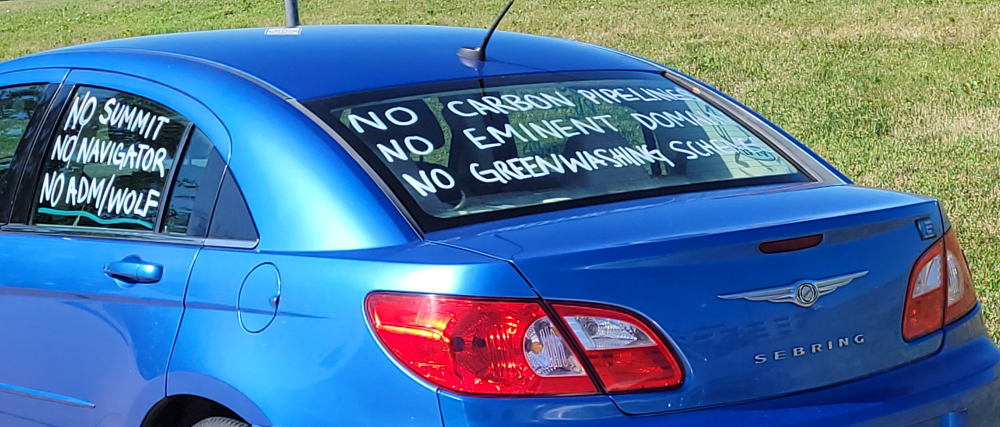
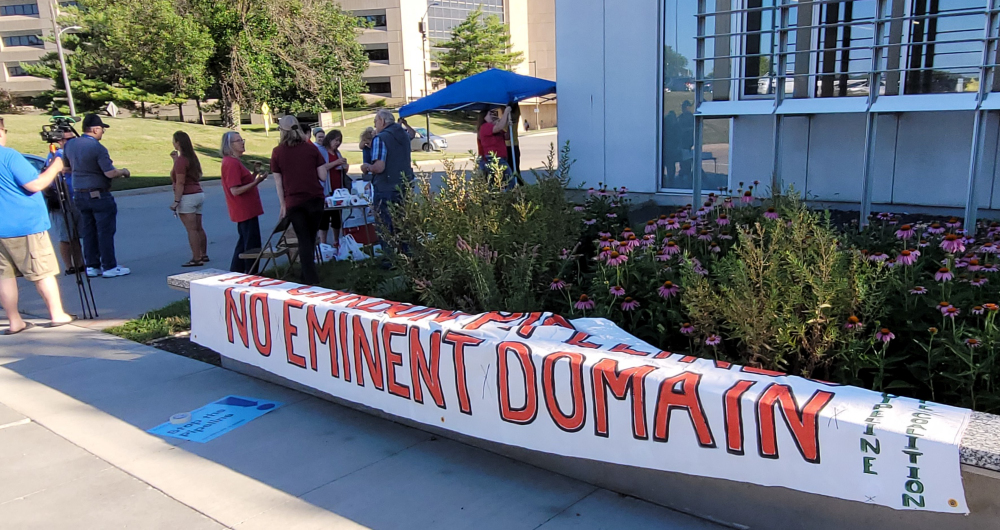
This morning, members of CCI Action and Des Moines BLM disrupted a nationwide carbon capture convention in Des Moines during a panel that featured the 3 companies who want to force their greenwashing scam on America’s heartland– Summit, Navigator, and Wolf.
When the panel claimed that most Iowans and landowners are in support of their pipelines, seven of us rose up to speak the truth.
2:00pm Protest outside as the convention is concluding
3:30 pm Report back to the CCI office for food, refreshments and to debrief
Between disruptions this morning, a panel member representing Summit Carbon Solutions– Bruce Rastetter’s company– had the nerve to tell the crowd that objection to the CO2 pipelines comes from a “small minority.”
Yesterday I wrote about the video of the interview of Friend Mary Mendenhall (included below). She told of the Quakers who left the United States because of their opposition to war and the military draft. That migration and the development of the Monteverde community in Costa Rica, where they settled, is an example of Quakers living in a manner consistent with their beliefs.
I also wrote about attending the Friends National Conference on War and Conscription in 1968. I had forgotten there was a similar declaration in 1948. One of the statements in that declaration is “We realize that the basic task in peacemaking is to fill the spiritual void in our civilization.” I’ve often prayed about what I call the Spiritual poverty that exists today and how Quakers could help fill that void.
The basic task in peacemaking is to fill the spiritual void in our civilization
Richmond Declaration Against the Draft, 1948
A statement in the 1968 declaration is “we acknowledge our complicity in these evils in ways sometimes silent and subtle, at times painfully apparent.” That declaration also includes a call for affirmation of action.
AFFIRMATION OF ACTION
We commit ourselves to validate our witness by visible changes in our lives, though they may involve personal jeopardy. We cannot rest until we achieve a truly corporate witness in the effort to oppose an end conscription. Let us hold each other in the Light which both reveals our weaknesses and strengthens us to overcome them.
I believe we were led to talk about Mary Mendenhall at Bear Creek meeting last Sunday. And that I was led to write about other stories related to Quakers and peacemaking yesterday. That I was led to remember the 1948 declaration against the draft.
I was especially struck by the Affirmation of Action part of the 1968 declaration. There is a similar admonition in a statement about racial justice of Iowa Yearly Meeting (Conservative). “Each person is urged to take a careful look at their life, to identify where one is benefiting from this, and work to correct that. We urge Friends to speak out against the injustices and violence occurring today.“
We urge Friends to speak out against the injustices and violence occurring today.
Declaration on the Draft and Conscription: Richmond 1968
Among the injustices and violence today are attacks, physical and otherwise, against Black, Indigenous, and other people of color (BIPOC). And the all-out assault against Mother Earth.
All of this relates to my Des Moines Mutual Aid community, and to the Buffalo Rebellion I’m part of. There will be a rally against carbon capture and the pipelines needed to transport the carbon. An important part of the Buffalo Rebellion, including tomorrow’s rally, is the leadership of Indigenous peoples in the Midwest.
This is an opportunity for Friends to speak out against the injustices and violence occurring today.
Did you hear? The corporations vying to get rich from building carbon capture pipelines across Iowa will be meeting at a convention right here in Des Moines Nov 8-9!
People from Minnesota, Illinois, Nebraska, and all four corners of Iowa will be there to say “NO CO2 PIPELINES! NO MORE FALSE CLIMATE SOLUTIONS!”
1pm rally at Cowles Commons 1:30pm March to Iowa Event Center 2:00pm Protest outside the carbon capture convention
Whether you’re Black, White, Indigenous, rural or urban, we are ALL feeling the impacts of climate change ramping up in Iowa and around the world.
Big corporations that have significantly polluted our land, air, and water are scrambling to find “solutions”—false ones— in attempt to cover up the environmental damage they inflict on our state. And they’re trying to use our tax-payer dollars to do it.
CO2 pipelines are being pitched as the golden ticket to end greenhouse gas emissions from ethanol, fertilizer, and coal plants.
The problem?
–Carbon capture projects have never actually reduced greenhouse emissions. –They bolster industries that capitalize off dirty energy and destructive agricultural practices –CO2 pipeline leaks are extremely dangerous and public entities are not equipped to respond. –Pipeline developers are bankrolling Governor Kim Reynolds to use eminent domain to seize land in order to enrich private corporations.
Richmond Declaration Against the Draft, 1948 Advices on Conscription and War: By the Religious Society of Friends in the United States, Richmond, Indiana, 1948
We realize that the basic task in peacemaking is to fill the spiritual void in our civilization by replacing the fear that now cripples all our efforts with a faith in the Eternal Power by which God unites and sustains those who pursue His Will; and we extend our fellowship to all those of other persuasions who share this faith.
In humility and repentance for past failures, we call upon all Friends to renew the springs and sources of our spiritual power in our meetings for worship; to examine our possessions, to see if there be any seed of war in them/ and to live heroically in that life and power that takes away the occasion of all wars and strife.
Declaration on the Draft and Conscription: Richmond 1968
We call on Friends Everywhere to recognize the oppressive burden of militarism and conscription. We acknowledge our complicity in these evils in ways sometimes silent and subtle, at times painfully apparent. We are under obligation as children of God and members of the Religious Society of Friends to break the yoke of that complicity.
As Friends we have for many years been granted privileged status within the draft system. This has often blinded us to the evil of the draft itself, and the treatment of those not so privileged. We are grateful for all those who by resolutely resisting the draft have quickened our conscience. We are called into the community of all who suffer for their refusal to perform unconscionable acts.
We reaffirm the “Advices on Conscription and War” adopted at Richmond in 1948. We realize in 1968 that our testimony against conscription is strengthened by refusing to comply with the Selective Service law. We also recognize that the problem of paying war taxes has intensified; this compels us to find realistic ways to refuse to pay these taxes.
We recognize the evil nature of all forms of conscription, and its inconsistency with the teachings and examples of Christ. Military conscription in the United States today undergirds the aggressive foreign policies and oppressive domestic policies which rely on easy availability of military manpower. Conscription threatens the right and responsibility of every person to make decisions in matters of conscience. Friends opposing war should refuse any kind of military service; Friends opposing conscription should refuse to cooperate with the Selective Service System.
We call for the abolition of the Selective Service System and commit ourselves to work with renewed dedication to abolish it. We shall oppose attempts to perpetuate or extend conscription, however constructive the alleged purpose, by such a system as National Service. We do not support efforts at draft reform; the issue is not equal treatment under compulsion, but freedom from compulsion.
We recognize how difficult it is to work through these complex issues, and to bear the burden of decision and action. We hold in love and respect each member of our Society as he follows where conscience leads. We know there are spiritual resources available to those who would be faithful.
AFFIRMATION OF ACTION
We commit ourselves to validate our witness by visible changes in our lives, though they may involve personal jeopardy. We cannot rest until we achieve a truly corporate witness in the effort to oppose an end conscription. Let us hold each other in the Light which both reveals our weaknesses and strengthens us to overcome them.
Declaration on the Draft and Conscription: Richmond 1968. Friends National Conference on the Draft and Conscription, October 11-13, 1968
An Epistle to Friends Concerning Military Conscription
Dear Friends,
It has long been clear to most of us who are called Friends that war is contrary to the spirit of Christ and that we cannot participate in it. The refusal to participate in war begins with a refusal to bear arms. Some Friends choose to serve as noncombatants within the military. For most of us, however, refusal to participate in war also involves refusal to be part of the military itself, as an institution set up to wage war. Many, therefore, become conscientious objectors doing alternative service as civilians, or are deferred as students and workers in essential occupations.
Those of us who are joining in this epistle believe that cooperating with the draft, even as a recognized conscientious objector, makes one part of the power which forces our brothers into the military and into war. If we Friends believe that we are special beings and alone deserve to be exempted from war, we find that doing civilian service with conscription or keeping deferments as we pursue our professional careers are acceptable courses of action. But if we Friends really believe that war is wrong, that no man should become the executioner or victim of his brothers, then we will find it impossible to collaborate with the Selective Service System. We will risk being put in prison before we help turn men into murderers.
It matters little what men say they believe when their actions are inconsistent with their words. Thus we Friends may say that all war is wrong, but as long as Friends continue to collaborate in a system that forces men into war, our Peace Testimony will fail to speak to mankind.
Let our lives speak for our convictions. Let our lives show that we oppose not only our own participation in war, but any man’s participation in it. We can stop seeking deferments and exemptions, we can stop filling out Selective Service forms, we can refuse to obey induction and civilian work orders. We can refuse to register, or send back draft cards if we’ve already registered.
In our early history we Friends were known for our courage in living according to our convictions. At times during the 1600’s thousands of Quakers were in jails for refusing to pay any special respect to those in power, for worshiping in their own way, and for following the leadings of conscience. But we Friends need not fear we are alone today in our refusal to support mass murder. Up to three thousand Americans severed their relations with the draft at nation-wide draft card turn-ins during 1967 and 1968. There may still be other mass returns of cards, and we can always set our own dates.
We may not be able to change our government’s terrifying policy in Vietnam. But we can try to change our own lives. We must be ready to accept the sacrifices involved if we hope to make a real testimony for Peace. We must make Pacifism a way of life in a violent world.
We remain, in love of the Spirit, your Friends and brothers,
Don Laughlin Roy Knight Jeremy Mott Ross Flanagan Richard Boardman James Brostol George Lakey Stephen Tatum Herbert Nichols Christopher Hodgkin Jay Harker Bob Eaton Bill Medlin Alan & Peter Blood.
Don Laughlin and Roy Knight, among those who signed that Epistle, were members of Iowa Yearly Meeting (Conservative). Both were imprisoned for their refusal to participate in the military draft. As were a number of other Quakers. Don collected some of those stories, which can be found here:
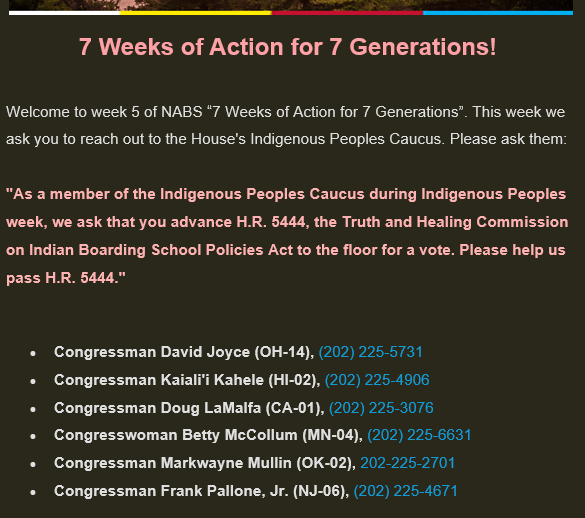
A fundamental principle of justice work is to follow the leadership of those impacted by the injustice. The 7 Weeks of Action for 7 Generations are what Native peoples are asking us to do to help them. This week we are asked to contact US House representatives belonging to the Indigenous Peoples Caucus.
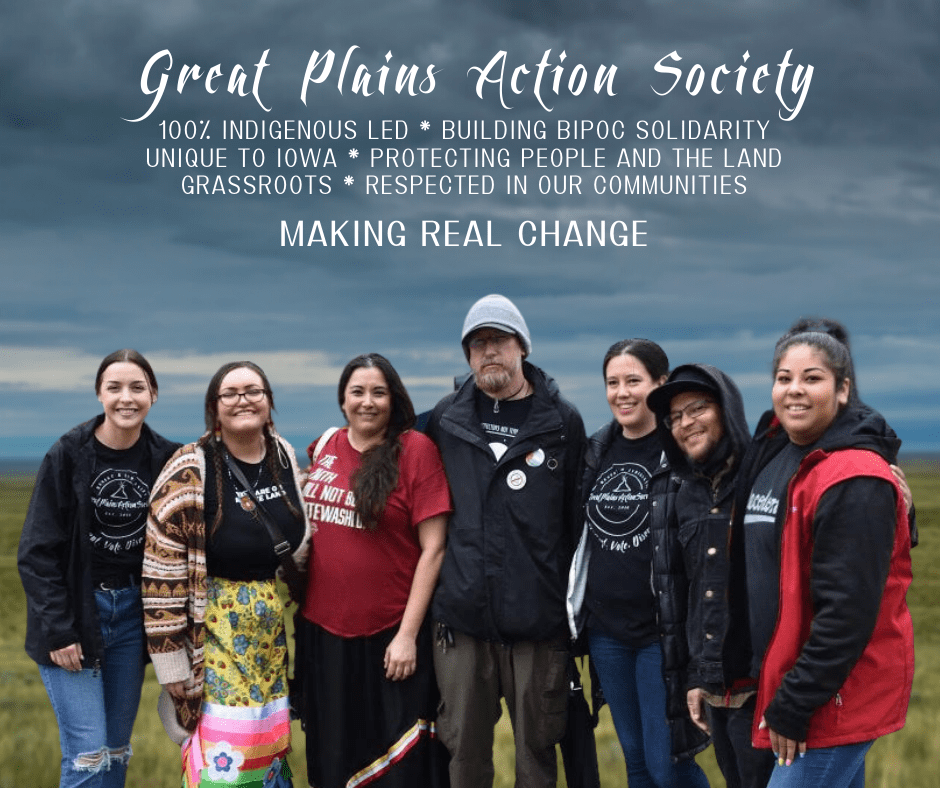
I recently wrote about my friends at the Great Plains Action Society’s (GPAS) Open Letter Campaign: Truth and Healing with Friends. GPAS describes how their supporters can use the Friends Committee on Legislation’s (FCNL) online tools to help people write messages and send them to their representatives. This is a great collaboration between GPAS and FCNL that we can build upon.
Help us bring justice, accountability, awareness, and healing by telling the unvarnished truth about America’s history and genocide committed against Indigenous Peoples by way of Federal Indian boarding school policies. NABS asks us to please call members of the House’s Indigenous Peoples Caucus and request that they bring forward HR. 5444, the Truth and Healing Commission to the floor for a vote #NABS #Time4Justice
MSNBC Symone Sanders, Indigenous Peoples Day NABS Interview
NABS Creative Director Kenrick Escalanti spoke with Symone Sanders of MSNBC today on Indigenous Peoples Day to discus the history of the U.S. Indian Boarding School Policies and what needs to be done to pass House Bill H.R. 5444 and Senate Bill S.2907 the Truth and Healing Commission on Indian Boarding School Policy Act.
One September 1, I had a Skype meeting with Reid Willis in Senator Grassley’s Washington, DC, office. Reid was familiar with the history of Indian Boarding Schools. He told me Senator Grassley agreed with intent of S 2907 with two exceptions. Or, as a friend says, he doesn’t support it.
And particularly because he is the Ranking Member of the Senate Judiciary Committee, he doesn’t think that such a commission should have subpoena power.
The Federal Indian Boarding School Initiative lays the groundwork for continued work of the Interior Department.
Federal Indian Boarding School Initiative
In June 2021, Secretary of the Interior Deb Haaland announced the Federal Indian Boarding School Initiative, a comprehensive effort to recognize the troubled legacy of federal Indian boarding school policies with the goal of addressing their intergenerational impact and to shed light on the traumas of the past.
The announcement directed the Department, under the leadership of Assistant Secretary for Indian Affairs Bryan Newland, to prepare a report detailing available historical records relating to federal Indian boarding schools and to develop the first official list of sites. On May 11, 2022, Secretary Haaland and Assistant Secretary Newland released Volume 1 of the investigative report. This report lays the groundwork for the continued work of the Interior Department to address the intergenerational trauma created by historical federal Indian boarding school policies. It reflects an extensive and first-ever inventory of federally operated schools, including profiles and maps.
I am pleased to release the first volume of the report, which represents the first attempt to produce a historical list of all Federal Indian boarding schools, to collect information about known and possible student burial sites, and to lay out a critical historical overview that sheds light on the damaging consequences of these policies and marks a path toward redressing their lasting consequences. A second volume will follow and will serve as a roadmap for continuing the compilation of records, in order to further efforts to heal the intergenerational trauma and associated economic, health, social, spiritual, and political impacts created by these failed policies.
One area of particular concern is whether the Truth and Healing Commission would have subpoena power. The bill, in its current form, allows for the commission to subpoena organizations involved in the operation of Native boarding schools. Some lawmakers have expressed concern that this would grant too much power to the investigation, outside of what is legally necessary.
Supporters of the bill, however, argue that without subpoena powers, the ability of the commission to conduct its investigation would be severely hindered.
“I do believe there needs to be some requirement that any entity, including state governments and churches, who operated boarding schools and received Federal funding or support must make any relevant documentation available to the Commission,” said Kirk Francis, chief of the Penobscot Nation, during the Senate hearing.
“I do believe there needs to be some requirement that any entity, including state governments and churches, who operated boarding schools and received Federal funding or support must make any relevant documentation available to the Commission,” said Kirk Francis, chief of the Penobscot Nation, during the Senate hearing.
The House Education and Labor Committee will consider the Truth and Healing bill next before it can go to the House floor for vote. This is a critical time for faith communities, Quaker meetings, and lawmakers in Congress to support the commission and uphold support for subpoena powers. Without access to records and documents, the commission cannot effectively bring justice to the countless victims and their families.
The Great Plains Action Society has published an “Open Letter Campaign: Truth and Healing with Friends”, which includes information about using FCNL’s letter writing templates for supporters of the bill to use to contact their representatives in Congress about this legislation.
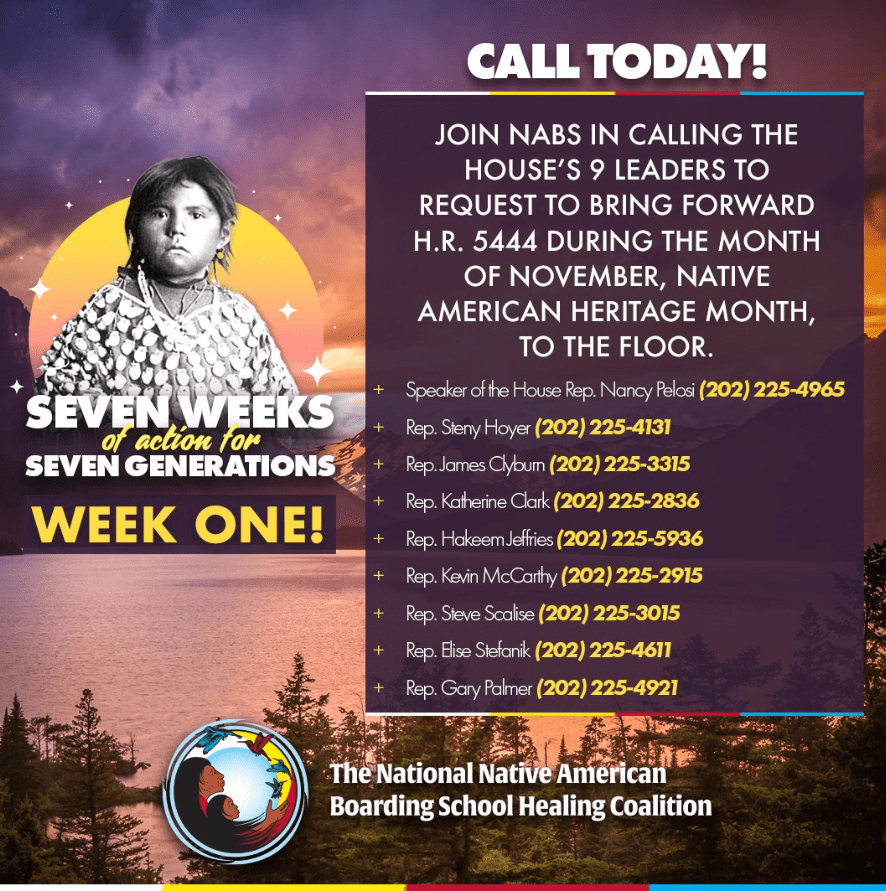
Week One of Seven: Help us bring justice, accountability, awareness, and healing by telling the unvarnished truth about America’s history and genocide committed against Indigenous Peoples by way of Federal Indian boarding school policies. NABS asks that you please call the U.S. House leadership and request “they bring forward HR. 5444, the Truth and Healing Commission to the floor to vote on during November which is Native American Heritage Month.” #NABS#Time4Justice
This afternoon the National Native American Boarding School Healing Coalition (NABS) provided a two hour Zoom online seminar titled Seven Weeks of Action for Seven Generations, Week One! The purpose is for support and passage of the Truth and Healing Commission on Indian Boarding School Policies in the United States Act (S. 2907/H.R. 5444)
As is nearly universally true for every American Indian, Alaska Native, and Native Hawaiian each of the speakers were affected by the residential schools. Nearly every speaker had times when they were so overcome with emotion that they had to pause what they were saying.
Each week for the next seven weeks a list of Congressional Representatives or Senators will be targeted for phone calls from us, asking the legislation to be brought out of committee for votes before the House and Senate.
Week One of Seven: Help us bring justice, accountability, awareness, and healing by telling the unvarnished truth about America’s history and genocide committed against Indigenous Peoples by way of Federal Indian boarding school policies. NABS asks that you please call the U.S. House leadership and request “they bring forward HR. 5444, the Truth and Healing Commission to the floor to vote on during November which is Native American Heritage Month.” #NABS#Time4Justice
I recently wrote about my friends at the Great Plains Action Society’s (GPAS) Open Letter Campaign: Truth and Healing with Friends. That describes how people can use the Friends Committee on Legislation’s (FCNL) online tools to help people write messages and send them to their representatives.
The First Nation-Farmer Climate Unity March involved a group of about thirty native and non-native people walking, eating, and camping together for 8 days. We walked ninety-four miles from Des Moines to Fort Dodge Iowa, along the route of the Dakota Access Pipeline during the first week of September 2018.
It was a bit amazing when I read the following as I’m reflecting on my experiences and friendships from the March.
Roughly a year later, in 2019, as part of my work at the Dechinta Centre for Research and Learning in Denendeh, I helped organize a solidarity gathering that took place in March, in the territory of the Yellowknives Dene First Nation (YKDFN). Our idea was simple—to invite a small group of Black, Brown and Indigenous activists, thinkers, writers, and organizers to spend time with us, in the spring, on an island in what the Yellowknives Dene known as Tindeè, or “big lake.” Together we fished nets under the ice, travelled by snowmobile and sleigh across the frozen lake, shared moose ribs cooked over the fire, stories from YKDFN Elders, our own ideas, and time with each other.
We wanted to invest in our relationship with each other and our affinities, outside of the institution, the internet, and crises, because we believed that the land would pull out a different set of conversations and gift us with a different way of relating. We wanted to sit together on the land, immersed in a Dene world, engage in a practice of Dene hospitality to see if we related to each other in a different way. This is exactly what happened. The land nurtured a set of conversations and way of relating to each other outside of the institution and its formations.
Maynard, Robyn; Simpson, Leanne Betasamosake. Rehearsals for Living (Abolitionist Papers) (p. 35). Haymarket Books. Kindle Edition.
In many ways the March was transformative for me. I wrote a long blog post of reflections on the March in early 2020. See: Reflections on the March.
The world, and I, have changed a lot in just the two years since those reflections were written. These two images represent the time span between the March and work we are doing today.
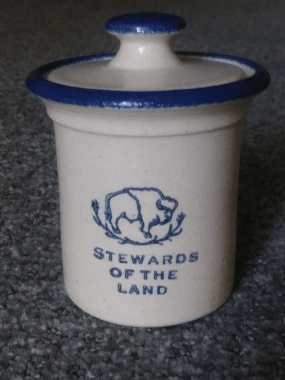
Gift from Bear Creek Quaker and potter Russ Leckband after the March 2018Buffalo Rebellion 2022Then and now
The first time I attended Quaker meeting after the March (2018), Russ Leckband gave me this piece of pottery, which was still warm from the kiln. The graphic on the right is about the Buffalo Rebellion, a climate justice summit, that I attended earlier this year. (See: https://quakersandreligioussocialism.com/?s=Buffalo+rebellion )
I suppose this blog post is more reflections on the prior reflections. (As a photographer, I envision what that might look like)
Indy Art Jeff Kisling
Changes since the March in 2018
Environmental devastation and chaos are occurring much more rapidly than expected. In some ways not anticipated. The havoc from increasingly ferocious and frequent wildfires, violent storms, floods, and development of large areas of drought are overwhelming our social, economic, and political systems. Continued wars ruin or prevent the transport of vast quantities of agricultural products.
So many of the systems we used to depend on, we no longer can. Municipal services such as water, power, sewage, and trash processing will fail, are failing. Food will no longer be available in grocery stores. Medical services will collapse. What will happen to those in prisons and long-term care facilities? Financial failures will wreck the economy and end social safety nets.
There are other compelling reasons to design and build new communities. Our economic system has not adapted to the loss of jobs overseas and to automation. There are simply not enough jobs for millions of people, and many of those who do have work are paid at poverty levels. Forced to depend upon increasingly diminishing social safety nets.
The judicial and law enforcement systems work with extreme bias against people of color. What will the response of militarized police, armed forces, armed militias be as social unrest escalates?
How do we respond? Some lessons learned from and since the March.
It is one thing to talk about change, but it is becoming increasingly difficult to avoid the reality of the changes described above. So, this is not an intellectual exercise.
Almost none of the White people I know, or have observed, are thinking of the radical changes necessary to deal with this evolving chaos. They are trapped in these failing systems and ways of being. Even those who recognize the many injustices of those systems.
For many reasons I believe our responses will be a return toward Indigenous ways and the sustainable ways of our ancestors.
White settler colonists must learn the true history, which was not taught to us. We can’t begin repair if we don’t know the underlying sources of injustice. We must stop treating the symptoms and instead focus on the causes, the underlying disease.
I FEEL THAT I NEED TO go backward in order to go forward. If we are going to find a way to make livable lives in these times, it is necessary to move beyond “human-related activities”: the climate crisis is tethered to its origins in slavery and colonialism, genocide and capitalism.
Maynard, Robyn; Simpson, Leanne Betasamosake. Rehearsals for Living (Abolitionist Papers) (p. 25). Haymarket Books. Kindle Edition.
I’ve been learning about the #LANDBACK movement, but I hadn’t consciously made the connection to the land we walked and slept upon during the March. We were deeply affected when we crossed the pipeline. And were aware of how different it was to spend hours outside and away from the busy-ness of technology. Many more hours than usual for many of us. And yet time had that elastic property that made hours seem like minutes and vice versa as we traveled through space together. Hearing stories of the past that can help us face the future.
Most of my White friends are horrified as they are learning more about the atrocities committed at the Indian boarding schools. Can hardly believe thousands of children died there. But they are being forced to as the remains of the children are being located.
White people cannot process these things and begin healing as long as they remain in the their White spaces and thinking. And deny any responsibility for what was done in the past.
My hope and prayer is a mass movement of us build Mutual Aid networks.
As William Shakespeare wrote, “what’s past is prolog”. Native children are still being taken from their families in the guise of child welfare. Native children are still forcefully assimilated when they are forced to read the White settler colonist view of history.
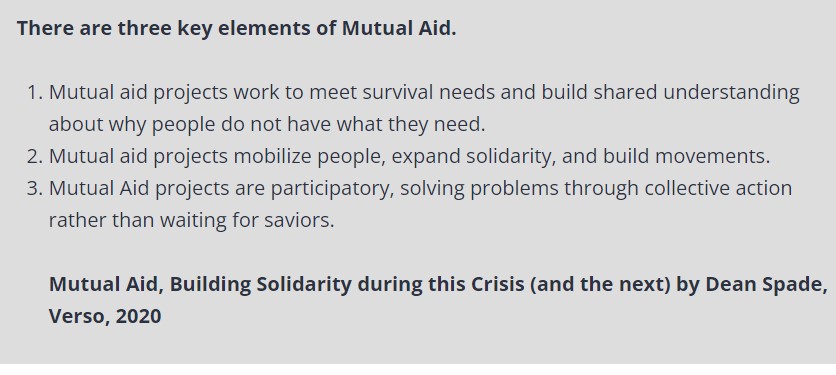
My involvement in Mutual Aid for the past two years has resulted in significant changes in my life. Changes that can be done now and help us move into the future. Another quote from the book Rehearsals for Living eloquently describes Mutual Aid.
My hope and prayer is a mass movement of us build Mutual Aid networks.
You and your relations, my friend, are (still) busy building a different world at the end of this one. This is something I’ve emphasized over and over again in my own work. I cherish the belief and practice that it is never enough to just critique the system and name our oppression. We also have to create the alternative, on the ground and in real time. In part, for me, because Nishnaabeg ethics and theory demand no less. In part because in Nishnaabeg thinking, knowledge is mobilized, generated, and shared by collectively doing. It’s more than that, though. There is an aspect of self-determination and ethical engagement in organizing to meet our peoples’ material needs. There is a collective emotional lift in doing something worthwhile for our peoples’ benefit, however short-lived that benefit might be. These spaces become intergenerational, diverse places of Indigenous joy, care and conversation, and these conversations can be affirming, naming, critiquing, as well as rejecting and pushing back against the current systems of oppression. This for me seems like the practice of movement-building that our respective radical practices have been engaged with for centuries.
Maynard, Robyn; Simpson, Leanne Betasamosake. Rehearsals for Living (Abolitionist Papers) (p. 39). Haymarket Books. Kindle Edition.
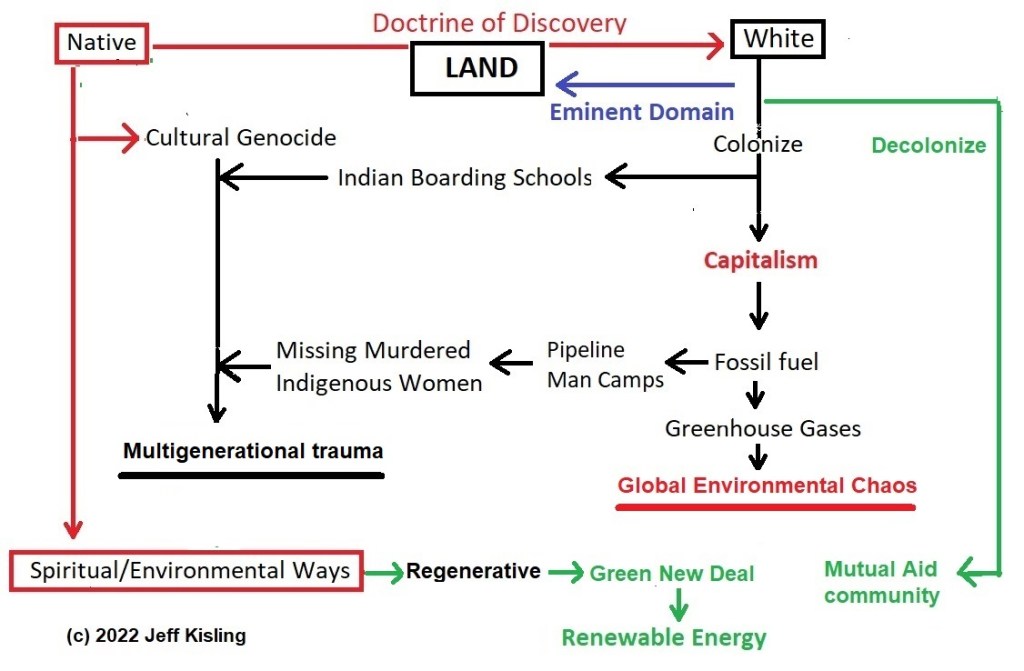
Following is the latest version of a diagram I’ve been working on to visualize some of what I’ve expressed above.
I am very happy that my friends of the Great Plains Action Society (GPAS) are asking their supporters to use the Friends Committee on National Legislation’s (FCNL) letter writing tool to send letters to support the Truth and Healing Commission on Indian Boarding School Policies in the United States Act (S. 2907/H.R. 5444) to their congressional representatives.
Open Letter Campaign: Truth and Healing with Friends
Support the Establishment of a Truth and Healing Commission on Indian Boarding Schools: Friends Committee on National Legislation (FCNL)
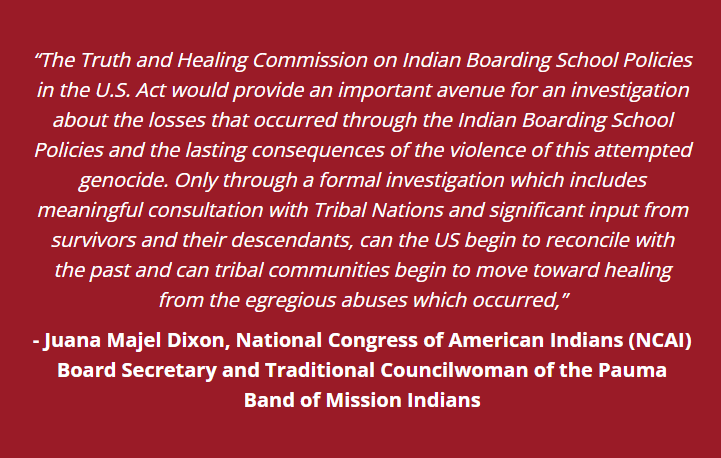
As children are returning to school, we are reminded that school has not always been a safe place for Native children. For many years, Native children were taken from their homes and placed in government and religious run institutions with the aim of stripping away their Native language, culture, and identity. We are only now beginning the painful process of bringing home the children left in unmarked graves at the boarding schools they were sent to (U.S. report identifies burial sites linked to boarding schools for Native Americans). We are still working on healing the damage of boarding school and intergenerational trauma (American Indian Boarding Schools Haunt Many : NPR). Healing from the damage caused by the boarding school system will require effort by not just those harmed, but the institutions that did the harming. There is great work being done by our comrades at the Friends Committee On National Legislation (Native Americans | Friends Committee On National Legislation). For this edition of our Open Letter Campaign, we are directing you to a letter from our friends at FCNL to help you in urging your representatives to support the Truth and Healing Commission on Indian Boarding School Policies in the United States Act (S. 2907/H.R. 5444).
The following is courtesy our much appreciated Quaker friends (esp Jeff!):
One of the primary reasons I embarked upon this journey about the evolution of my foundational stories was to encourage people who hadn’t been much involved in justice work to change that.
Injustices abound. The victims should be supported while working to address the root causes of the injustice.
We should search our own lives to see if and how we are contributing to injustice.
Spiritual guidance often leads to justice work.
If others observe our Spirit guided work, they may join our Quaker communities.
It is discouraging to see attendance of our Quaker meeting diminish as Friends die or move away, and few new people join. Many Friends do justice work, but that is often unseen by people in the community. This is a time of great spiritual poverty, and Quaker meetings for worship could be what some seekers are looking for. For seekers to find us, we need to be seen in our communities. And doing justice work is a way for that to happen.
The reason I’m thinking about all this now is because a group of us will be meeting with Senator Ernst’s staff in Des Moines to talk about the Truth and Healing Commission on Indian Boarding School Policies in the United States Act (S. 2907/H.R. 5444). (See: https://quakersandreligioussocialism.com/2022/08/29/practicing-hope/)
There is a web of interrelationships among Native and non-native peoples in the Midwest that presents opportunities to work together to learn and publish the truth about Indian Boardings Schools. There are parts of this that are only appropriate for each community to work on separately. But hopefully these Congressional visits will be the beginning of further work together.
This began with an appeal from Friends Committee on National Legislation (FCNL) for us to ask our Senators to support that legislation (S. 2907). And specifically, to do this during their current recess when they would be in Iowa.
I know my friend Sikowis Nobiss is interested in supporting legislation related to Native Americans, so I contacted her about this. She put me in touch with Jessica Engelking, who is also part of the Great Plains Action Society. Fortunately, I met Jessica when we were attending the Buffalo Rebellion conference recently. Some of the networking that occurred there. Others at that conference included my friends Peter Clay, Sikowis, Mahmud Fitil, Ronnie James, Miriam Kashia and Jake Grobe.
When Jessica asked what Quakers have been doing related to our role in some of the residential schools, I shared FCNL’s decades of advocacy for Native Americans. We began to work together to arrange visits to our Senators about the truth and healing commission act, and included Jessica Bahena, FCNL’s National Organizer, who is FCNL’s contact related to this legislation in our planning.
Over the past several years there have been changes in how I do justice work. What hasn’t changed is the I’ve tried to be obedient to what the Spirit is telling me to do.
Most of my life I did justice work within the framework of Quaker meetings, communities, and organizations, such as FCNL. For about 8 years I was clerk of Iowa Yearly Meeting (Conservative)’s Peace and Social Concerns Committee. At our annual sessions a month ago, someone else took over that responsibility.
The Quaker involvement in the Indian Boarding Schools has long been a concern of mine. When I learned about this appeal from FCNL, I wanted to work on that. But no longer being on the Peace and Social Concerns Committee, I wasn’t thinking about working in the context of that committee, although I did contact the clerk of the committee in case they wanted to become involved.
Mutual Aid
For the past two years I’ve been working in the Des Moines Mutual Aid community. This has answered a deep need in my life to find accomplices who are doing justice work in a way that focuses on root causes of injustice and builds community. (See: Mutual Aid PDF)
I’d like to explore the possibility of Native Americans and White people working together on these traumatic problems. At first, I thought the Mutual Aid part would just be an interesting possibility to frame this work, but the more I think about it, the more important I think it could be, for making our work together avoid the problems of hierarchy, who’s in charge.
Mutual Aid
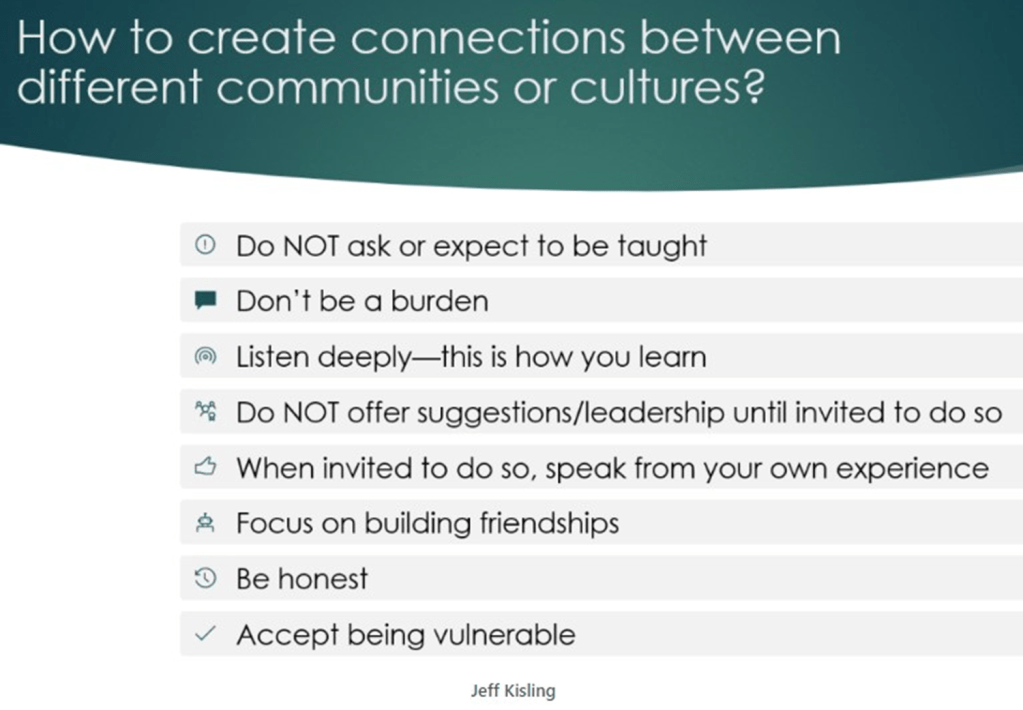
It is common to feel vulnerable when we meet new people, in new organizations and communities. But we need to venture out of our meetinghouses more often. I’ve been blessed to have found numerous communities to work with over the years. What follows are guidelines I’ve discovered that can help you as you begin to work with other communities or cultures.
I keep returning to the question, “are we really listening for that still small voice during our prayers, and meeting for worship? Do we practice hope?” Or do we force what we hear to conform to our current worldview? Do we do a sort of reinterpretation of what we hear? If we heard “give up all your possessions”, would we?
I sign my email messages “practicing hope”.
People often mistake hope for a feeling, but it’s not. It’s a mental discipline, an attentional practice that you can learn. Like any such discipline, it’s work that takes time, which you fail at, succeed, improve, fail at again, and build over years inside yourself.
Hope isn’t just looking at the positive things in this world, or expecting the best. That’s a fragile kind of cheerfulness, something that breaks under the weight of a normal human life. To practice hope is to face hard truths, harder truths than you can face without the practice of hope. You can’t navigate dark places without a light, and hope is that light for humanity’s dark places. Hope lets you study environmental destruction, war, genocide, exploitative relations between peoples. It lets you look into the darkest parts of human history, and even the callous entropy of a universe hell bent on heat death no matter what we do. When you are disciplined in hope, you can face these things because you have learned to put them in context, you have learned to swallow joy and grief together, and wait for peace.
I don’t remember reading what that quote referred to, so I read that this morning.
When Hypoc was through meditating with St. Gulik, he went there into the kitchen where he busied himself with preparing the feast and in his endeavor, he found that there was some old tea in a pan left standing from the night before, when he had in his weakness forgot about its making and had let it sit steeping for 24 hours. It was dark and murky and it was Hypoc’s intention to use this old tea by diluting it with water. And again in his weakness, chose without further consideration and plunged into the physical labor of the preparations. It was then when deeply immersed in the pleasure of that trip, he had a sudden loud clear voice in his head saying “it is bitter tea that involves you so.” Hypoc heard the voice, but the struggle inside intensified, and the pattern, previously established with the physical laboring and the muscle messages coordinated and unified or perhaps coded, continued to exert their influence and Hypoc succummed to the pressure and he denied the voice.
And again he plunged into the physical orgy and completed the task, and Lo as the voice had predicted, the tea was bitter.
From Page 37 of the Pricipia Discordia, 5th edition
Hypoc succummed to the pressure and he denied the voice.
During this morning’s prayers I was thinking that still small voice must have been ignored when grave wrongs were done, are being done. The focus of my prayers these past few years relate to the genocide of indigenous peoples. And the forced assimilation that was a large part of that.
Quaker involvement in the Indian Boarding Schools evokes strong emotions among Friends today. Deep trauma in Indigenous communities that are experiencing multigenerational trauma. Where wounds have been ripped open by locating the remains of children who died or were killed in those institutions. Grief for those not yet found.
But the process of “thinking” is problematic. Thinking involves the brain, with logic and knowledge. That still small voice is not about thinking.
Logically (thinking), from today’s vantage point, forced assimilation and genocide were absolutely wrong.
We don’t know what that still small voice led the Quakers in those days to do. We can’t judge them because we don’t know what they heard. But we can’t leave it at that. We have a responsibility to find the truth of what occurred in those “schools”. We must know the truth so healing can begin. Healing for Indigenous peoples and for Quakers.
This tragedy should lead us to re-evaluate our own lives today. To hear what that still small voice is saying to us. And to do what it is saying.
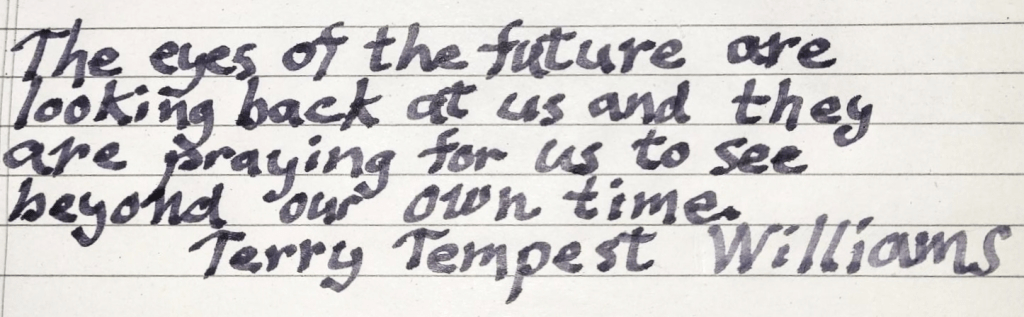
What will future generations think about when they look back at what we have done, are doing now?
Addressing the Legacy of Indian Boarding Schools
This document from the Friends Committee on National Legislation is about addressing the legacy of Indian Boarding Schools.
Minute your concern and commitment to action, including your support for this bill in your monthly meeting, Friends church, and/or yearly meeting.
This year’s report of the Peace and Social Concerns Committee of Iowa Yearly Meeting (Conservative) can be found below, which supports the bill.
Share your statement(s) with FCNL at Quakers@fcnl.org. We are compiling them on our website and can help you relay them to your members of Congress and the media: fcnl.org/NativeAmerican
Our Peace and Social Concerns Report has been sent to FCNL
Write your members of Congress about your concern: fcnl.org/BoardingSchools. You can customize FCNL campaign letters and send them directly to Congress from any Internet-connected device. Invite Friends in your community to contact their officials as well
We are making appoints with Iowa Senators Ernst and Grassley to discuss the Truth and Healing Commission on Indian Boarding School Policies in the United States Act (S. 2907/H.R. 5444) We are working with the (Indigenous) Great Plains Action Society on this.













 Quakers and Mutual Aid