Spirituality over religion

People ask me if I believe in god… I tell them I pray to creator.
They tell me Jesus died for me… I tell them my ancestors did.
They say I will burn in hell for not following the Bible, but it has been used as weapon to colonize and murder my people…
for me it’s spirituality over religion. I don’t hate people for going to church, but I do hate what the churches have done to us…
before colonization we had our own ways and ceremonies, I choose the path of my ancestors.

Indigenous

I find myself in a spiritual crisis regarding Christianity. I realize being a Christian and professing to be a Christian are often not the same.

The Christianity I cannot be part of is the weaponized version of a religion. One that created and enforced the doctrines of discovery which gave permission to steal indigenous lands and instructed killing the people living on them. That codified white supremacy and empire. That drove global colonization.

One that raised great wealth from stolen lands and labor. And then built ostentatious churches in the midst of profound poverty.

One that tore native children from their families and took them far away, to places of forced assimilation where every kind of abuse was visited upon them. Where thousands died or were killed. And their families were often not even told of their deaths. Where other children were sometimes forced to dig the graves. The trauma passed from generation to generation. An open wound in Indigenous communities to this day that I have witnessed in my native friends. A wound that has been ripped open with the verification of the remains of thousands of native children. With many more places that haven’t been scanned yet.

Part of the reason for my crisis is reading “American Holocaust: Columbus and the Conquest of the New World” by David Stannard. Recent scholarship has revealed sophisticated Indigenous communities in the Americas prior to the arrival of white men. And much larger numbers of Indigenous people, millions more than previously thought. Meaning millions more deaths occurred.

American holocaust.

The destruction of the Indians of the Americas was, far and away, the most massive act of genocide in the history of the world.

Stannard, David E. American Holocaust: Columbus and the Conquest of the New World. Oxford University Press. Kindle Edition.

More often than we realize, in ways we don’t recognize, white Quakers continue to benefit from the American Holocaust. Continue white domination.

We made a small step in learning about land acknowledgements. But those are empty statements if we don’t take the next steps. We need actions, not more words.

The reason I write and talk so much about my experiences with Mutual Aid is because that gets to the root causes of white supremacy. Mutual Aid exemplifies what Christianity is supposed to be. Mutual Aid is a means to begin decolonization.

As painful as it is, I know out of my confusion and distress, I will be led to a better place.

Real radicalism implores us to tell the whole ugly truth, even when it is inconvenient.

Brittney Cooper, Eloquent Rage: A Black Feminist Discovers Her Superpower (2018)
Congress reauthorizes Violence Against Women Act

Tribal nations are celebrating the reauthorized Violence Against Women Act.

Congress passed the omnibus spending package for the 2022 fiscal year late Thursday, which included major tribal provisions. It passed in the Senate with a 68-31 vote. The bill will now head to the president’s desk to be signed.

This means that tribal nations “will continue to increase safety and justice for victims who had previously seen little of either,” said Fawn Sharp, president of the National Congress of American Indians in a statement.

VAWA reauthorization headed to President’s desk. Tribal provisions passed in appropriations bill for 2022 fiscal year, INDIAN COUNTRY TODAY, March 11, 2022

The US Congress just passed the omnibus spending package that included major tribal provisions. Many people and organizations have been lobbying for these provisions for years. Below you will find some history of our lobbying efforts in Iowa since 2018. Despite frustrations about the process and time required, sometimes our goals are achieved. I am especially thankful for all I have learned about lobbying and the support from the Friends Committee on National Legislation (FCNL).

Coalition to Work with Senator Grassley

November 20, 2018

Today a coalition of Native and non-Native people, representing several organizations, met with Carol Olson, Senator Chuck Grassley’s State Director at the Federal Building in Des Moines, Iowa. Two of Senator Grassley’s staff from Washington, DC, joined us via a conference call. The meeting was a chance for us to get to know each other and find ways we can work with Senator Grassley and others to pass legislation to support Native American communities. Those who attended are shown in the photo below.

This coalition came together from two circumstances. One relates to the First Nation-Farmer Climate Unity March this September, where a group of about forty Native and non-Native people walked ninety-four miles, from Des Moines to Fort Dodge, along the route of the Dakota Access Pipeline. This March was organized by Bold Iowa, Indigenous Iowa and Seeding Sovereignty. The goal was the development of a community of Native and non-Native people who would get to know each other so we could work together on areas of common interest. All those in the photo were on the March except Shazi and Fox Knight, who are members of Bear Creek Friends Meeting, as am I.

The other circumstance is the desire of the Friends Committee on National Legislative (FCNL) to build teams of people to develop ongoing relationships with the staff of their U.S. Senators and Representatives in their in-district offices. FCNL is a 75-year-old Quaker organization that has worked to support legislation for peace and justice issues. FCNL is non-partisan and has developed an extensive national network of Friends and others who support this work for peace and justice. Since the 1950’s Native American Affairs have been one of the principal areas of focus of the organization.
During this meeting, I talked about the Friends Committee on National Legislation and the SURVIVE Act. Christine Nobiss (Sikowis) spoke about the racism and violence against Native women and Savanna’s Act. Everyone else then contributed to the discussions.

Jeff Kisling, Fox and Shazi Knight, Christine Nobiss, Shari Hrdina and Sid Barfoot

October 15, 2018

Dear Mr. Kisling:

Thank you for taking the time to contact me to express your support for a tribal set-aside within the Crime Victims Fund. As your senator, it is important that I hear from you.

I was an original cosponsor of the Victims of Crime Act (VOCA), which established the Crime Victims Fund. As chairman of the Senate Judiciary Committee, I’ve also called on congressional appropriations leaders to provide an appropriate funding stream for Tribes under VOCA.  As stated in a letter I initiated to the Senate Appropriations Committee earlier this year, “individuals on Tribal lands experience high rates of domestic and sexual violence, and resources from the Crime Victims Fund are critical in addressing” these victims’ needs.  This letter was cosigned by several dozen of my Senate colleagues.

I hope you find this information helpful. Your involvement in this issue is important, and I encourage you to keep in touch.

Sincerely,

Chuck Grassley
United States Senate

“For too long, tribal communities have been under-resourced and under-supported in their pursuit of justice,” said FCNL General Secretary Bridget Moix. “By reauthorizing the Violence Against Women Act as part of the omnibus spending package, lawmakers are helping chart a more just and secure future for Native communities across the country.”

“Expanding tribal criminal jurisdiction strengthens the capacity of tribes to exercise their sovereign authority to protect their citizens,” said Portia K. Skenandore-Wheelock, FCNL’s Native American advocacy program congressional advocate. “The ability of tribal nations to hold all perpetrators accountable is directly linked to protecting tribal communities from further violence and truly getting a handle on this crisis.”

As a Quaker organization, FCNL continues a historic commitment to working in solidarity with Native American communities in support of the full realization of their rights.

Quaker Lobby Commends Congress for Reauthorizing Violence Against Women Act by Alex Frandsen, Friends Committee on National Legislative, March 11, 2022

The historic tribal provisions in VAWA:

  • Reaffirm Tribal Nations’ jurisdiction to prosecute non-Indian perpetrators of child violence, sexual violence, sex trafficking, stalking, crimes against tribal law enforcement and correctional officers, and obstruction of justice;
  • Establish an Alaska pilot project, which will allow a limited number of Alaska Native Villages to exercise Special Tribal Criminal Jurisdiction and civil jurisdiction over non-Indian perpetrators for the first time since the 1998 U.S. Supreme Court decision in Alaska v. Native Village of Venetie;
  • Clarify that all Tribal Nations in Maine can exercise tribal jurisdiction under VAWA;
  • Ensure that non-Indian defendants must exhaust all Tribal court remedies;
  • Reauthorize funding for and amending the Tribal Access Program, to ensure that all Tribal Nations can access national crime information systems for criminal justice and non-criminal justice purposes;
  • Make the 2010 Bureau of Prisons Tribal Prisoner Program permanent and allow Tribal Nations to place offenders in federal facilities that are sentenced to one year or more; and
  • Significantly increase resources for Tribal Nations to exercise Special Tribal Criminal Jurisdiction and establish a reimbursement program to cover tribal costs.

National Congress of American Indians

https://us02web.zoom.us/webinar/register/WN_uOAEpwyjQXi_NjF30w85aA
NCAI Tribal Leader Town Hall on the Violence Against Women Act
Date: March 16, 2022
Time: 2:00 – 3:15 p.m. EDT
NCAI will host a virtual Town Hall on March 16, 2022 on the VAWA reauthorization to discuss this historic moment for Indian Country, review the tribal provisions in the law, and highlight the next steps for Tribal Nations. More information to come.
https://us02web.zoom.us/webinar/register/WN_uOAEpwyjQXi_NjF30w85aA

What else is in the bill?

$6.707 billion for Native health programs at the Department of Health and Human Services

  • $6.63 billion for Indian Health Service programs, including $2.3 billion for IHS clinical services
  • $55 million for the Substance Abuse and Mental Health Services Administration’s Tribal Opioid Response grant program
  • $22 million for Health Resource and Services Administration grants to the Native Hawaiian Health Care Systems

$3.65 billion for the Bureau of Indian Affairs and Bureau of Indian Education at the Department of the Interior

  • $7 million for DOI’s Indian Boarding School Initiative to conduct a comprehensive review of the troubled legacy of federal boarding school policies

$1 billion for Native American housing programs at the Department of Housing and Urban Development

  • $922 million for the Indian Housing Block Grant program
  • $72.09 million for the Indian Community Development Block Grant program
  • $22.3 million for the Native Hawaiian Housing Block Grant program

More than $86 million to address the missing and murdered Indigenous women crisis and public safety needs of Native communities

  • $50 million for the Department of Justice’s Office of Justice Programs assistance to tribes
  • $25 million for DOI’s initiative to address MMIW cases
  • $5.5 million for DOJ’s Office of Violence Against Women Tribal VAWA implementation grant program
  • $3 million for a DOJ initiative to support cross-designation of tribal prosecutors as Tribal Special Assistant United States Attorneys
  • $1 million for DOJ – OVW to conduct analysis & research on violence against Indian women
  • $1 million to support establishment of a Native Hawaiian Resource Center on Domestic Violence
  • $500,000 for a national Training and Technical Assistance clearinghouse on issues relating to sexual assault of American Indian and Alaska Native women
  • Five percent set-aside for tribes to receive direct funding from the Crime Victims Fund

More than $47.5 million for programs to support Native American languages and cultures

  • $16 million for Tribal Historic Preservation Officers
  • $14 million for HHS’s Administration for Native Americans Native language grant programs
  • $9.37 million for the Department of Education’s K-12 Native American language immersion grants
  • $2.3 million for Native American and Hawaiian museum services
  • $1.5 million for Native Hawaiian and Alaska Native culture and arts development
  • $1.5 million for DOI Native American language instruction and immersion programs for federally recognized tribes and tribal organizations
  • $1.5 million for Native American Graves Protection and Repatriation Act implementation and enforcement at BIA
  • $1 million for the National Bison Range
  • $600,000 for a cultural resource study to protect Chaco Canyon
  • $500,000+ for ED to fund establishment of a Native American Language Resource Center

More than $65.42 million in tribal climate and environmental resiliency funding to help tribal communities address and prepare for the effects of climate change

  • $5 million for DOI’s tribal climate adaptation grants
  • $8 million for DOI’s tribal relocation grants
  • $10.65 million for reclamation of abandoned mines on tribal lands
  • $4.8 million for clean energy development through BIA Minerals and Mining
  • $12 million for mitigation of environmental impacts of Department of Defense activities on Indian lands
  • $6 million for the tribes wildlife conservation grant program at DOI’s Fish and Wildlife Service

VAWA reauthorization headed to president’s desk. Tribal provisions passed in appropriations bill for 2022 fiscal year, INDIAN COUNTRY TODAY, March 11, 2022

Spirituality for a just transition

Ever since I wrote yesterday’s post, I knew something wasn’t right. Trying to think things through in public can be disconcerting. Hopefully, there is some value in showing the process. Making mistakes is how we learn and grow.

I’ve been praying and thinking about all the things I’m learning in my Mutual Aid community for a long time. I’ve been wondering what sustains my friends in this work. Sometimes difficult work. My Mutual Aid community is definitely an example of Beloved community. We feel and share the love. Never have I seen anger. This is part of what sustains us.

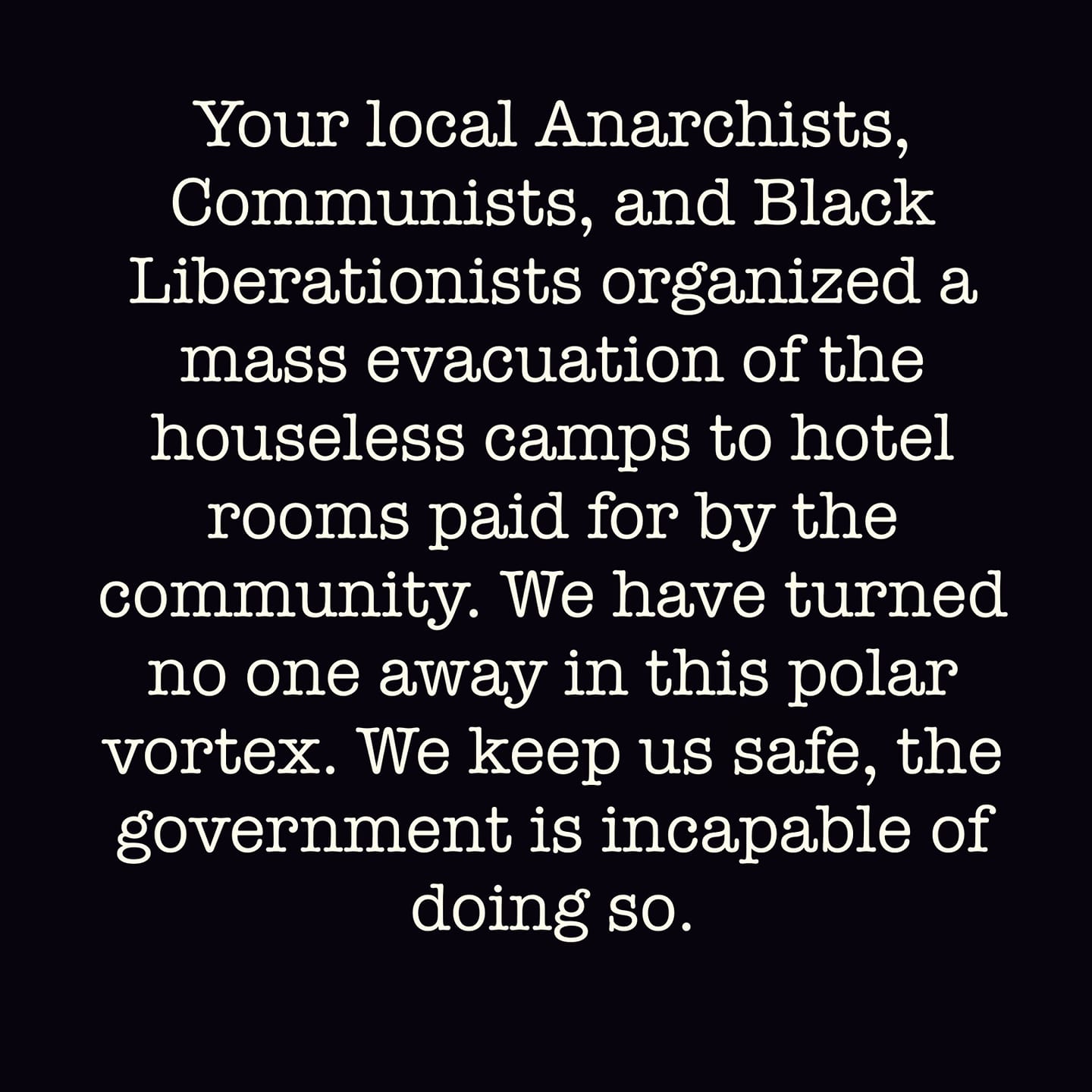
And the joy of being able to provide food to our community is a large part, too. I wrote that sentence carefully, to demonstrate an important part of Mutual Aid. It is NOT us helping them. We are all in this together. A friend recently told me at one time she needed food. Now she is so happy to help distribute food.

Des Moines Mutual Aid

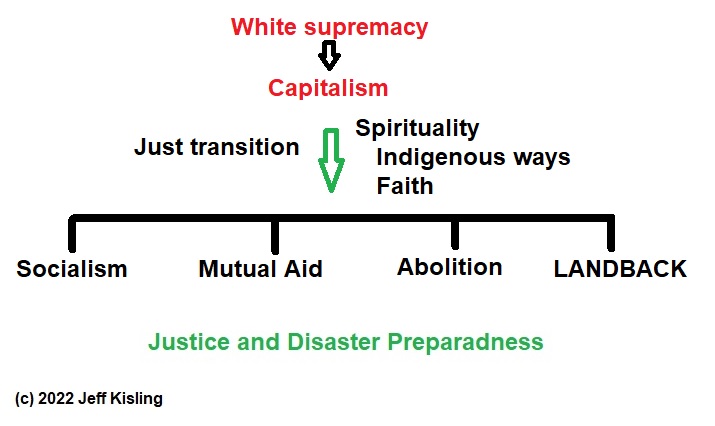
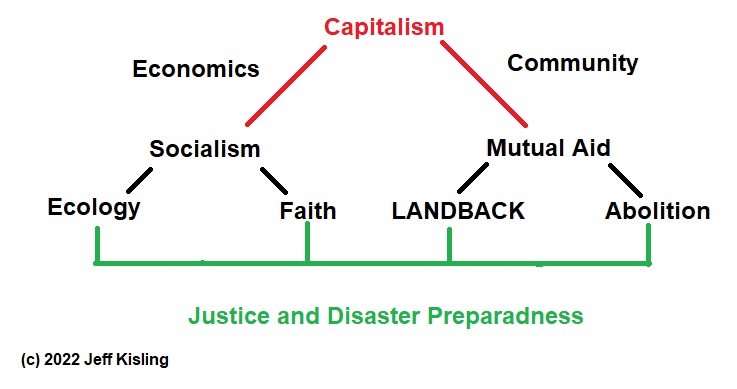
Returning to yesterday’s post, Justice and Disaster Preparedness, I tried to simplify the main concepts I think are important for making a transition to the communities we want, need to create. I was trying to figure out where faith fit. I put it under Socialism because I’ve been learning about religious socialism. That and other problems made me decide to scrap that diagram. Following is today’s version.

Socialism, Mutual Aid, Abolition, and LANDBACK each have a role in building Beloved communities. Especially regarding disaster preparedness.

Spirituality is what will help us make the just transition to communities needed to prepare for the present and coming disasters.

Spirituality can be expressed in many ways. But there is only one Creator or God.

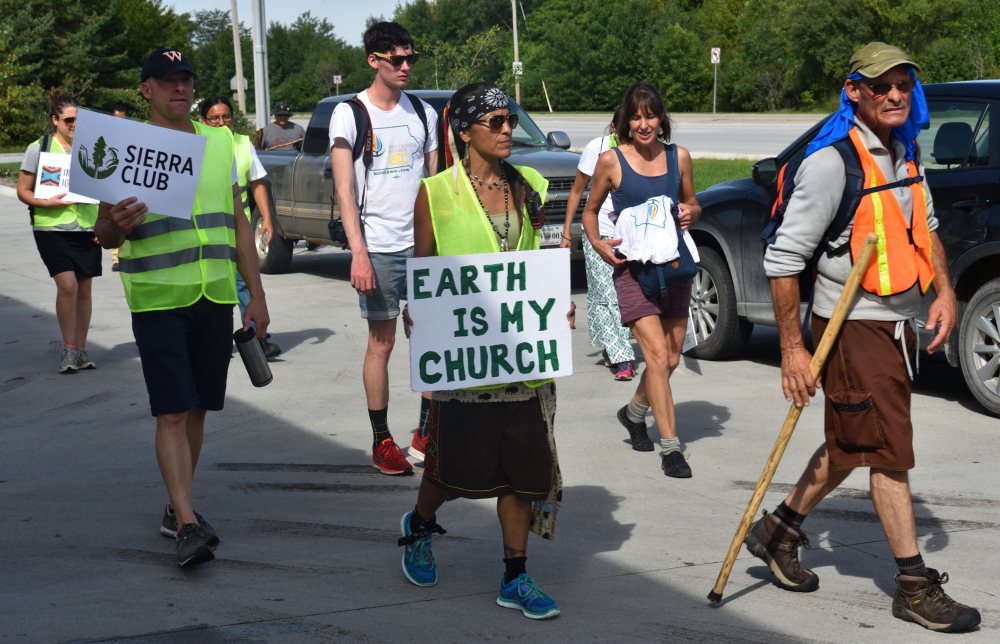
I love the EARTH IS MY CHURCH sign my friends Alton and Foxy Onefeather carried during our First Nation Farmer Climate Unity March.

Justice and Disaster Preparedness

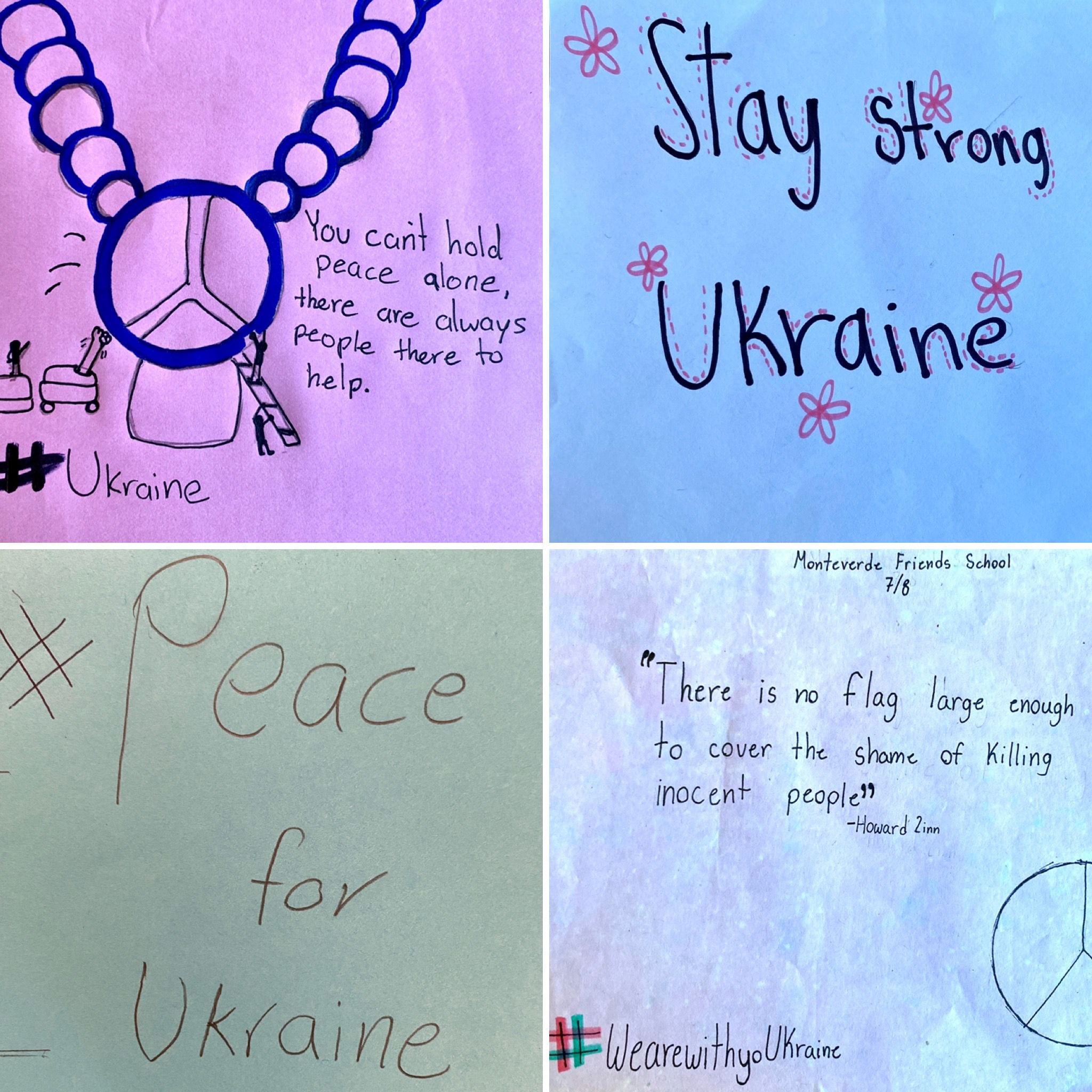
Watching the tragedy of war unfolding in Ukraine makes real the future I fear we are moving into. Are already experiencing in many ways.

Fear not only as a noun, “an unpleasant emotion caused by the belief that someone or something is dangerous”, but also as a verb, “to be afraid of.”

I can’t imagine anyone watching the stories from Ukraine, and not thinking about how tenuous our own lives are. Seeing people’s lives destroyed in an instant. Injury or death of loved ones. Loss of shelter and infrastructure. No water, power, medicines, food, community.

What would we do in a similar situation?

We might find out sooner than we think. We are facing numerous crises ourselves.

  • Environmental chaos
  • Economic collapse
  • Political collapse
  • War
  • Domestic extremism and armed conflict

There have been warnings about these things for decades, with little effect. But now we are seeing everything on that list happening to various degrees. And each negatively impacts the others.

Following is a new diagram I’m working on to show relationships among systems. The reason justice is in today’s title is because so many of our current systems have injustices embedded in them. As we prepare for disasters, not addressing injustice would mean:

  • Not benefiting from the wisdom and skills of those we don’t have relationships with now. Because of the mistrust between us.
  • Bringing these injustices and conflicts into the disaster relief communities.

We have three choices:

  • We can just react to what is coming at us. Go into survival mode.
  • We can prepare for disaster locally.
  • We can work for justice as part of disaster preparedness.

Descriptions of the systems in the diagram: ecosocialism, LANDBACK, abolition and Mutual Aid follow.

I believe faith is an important part of this. This morning I thought faith was going to be the subject, but found this background needed to be covered first.

Ecosocialism

Ecosocialism brings together two complementary ways of thinking about humans and the environment they live in. The “eco-” in ecosocialism comes from the science of ecology and its emphasis on the complex and dynamic interactions among the living and non-living components within an ecosystem. In particular ecologists understand how the life-supporting functions within an ecosystem can be disrupted by the behavior of one organism, for example, humans.

But ecology lacks a social analysis; it has no way of understanding how economic and political forces drive human behavior and social change.

Ecosocialists start with the premise that environmental degradation and social injustice stem from the same source: a world where profit is the highest goal. We believe that the emancipation of people from capital and its masters goes hand-in-hand with the emancipation of the earth and its biosphere from the cancer of capitalism.

What is ecosocialism? System Change Not Climate Change

LANDBACK

  • It is a relationship with Mother Earth that is symbiotic and just, where we have reclaimed stewardship. 
  • It is bringing our People with us as we move towards liberation and embodied sovereignty through an organizing, political and narrative framework. 
  • It is a catalyst for current generation organizers and centers the voices of those who represent our future. 
  • It is recognizing that our struggle is interconnected with the struggles of all oppressed Peoples.
  • It is a future where Black reparations and Indigenous LANDBACK co-exist. Where BIPOC collective liberation is at the core. 
  • It is acknowledging that only when Mother Earth is well, can we, her children, be well. 
  • It is our belonging to the land – because – we are the land. 
  • We are LANDBACK!

LANDBACK

Abolition

The criminal justice system is violent and harmful: The UK’s prison population has risen by 90% in the last two decades, bringing the number to over 90,000. At the time of writing we are 156 days into 2018 and already we have seen at least 129 deaths in prison, immigration detention centres and at the hands of the police. As the effects of neoliberalism and austerity deepen each day, increasing numbers of people find themselves made disposable by our economic system and structural inequality, targeted by the agencies of the criminal justice system simply for being homeless, experiencing poor mental health or being born in a different country.

The criminal justice system does not reduce social harm: Policing, courts and the prison system are presented to us by politicians and the media as solutions to social problems. Yet, as the prison population has soared, we have continued to seen violence and harm in our society on a massive scale. Violence against women and girls is endemic, racism and the far right are on the rise in Britain and rates of murder and violent assaults are beginning to increase again. As politicians continue to scapegoat those with the least power in society, the conditions of structural violence that so often precede interpersonal violence remain in place.

We can build a world based on social justice, not criminal justice: All over the world, communities are coming together to build real solutions to societal problems. These solutions lie outside of the criminal justice system, in preventing harm through building a better society. By bringing together groups and organisations working for social justice, we want to demonstrate and strengthen the links between prison abolition and wider struggles for housing, health, education, and environment; and for economic, racial, gender, sexual and disability justice.

Abolitionist Futures

Mutual Aid

Fog of War

I’m horrified by all the consequences of the Russian invasion of Ukraine.

There are many aspects beyond the actual fighting that I’m having trouble understanding or believing. Not much of which is being covered in the mainstream media. Vitally important issues that should inform decisions being made now, and in the future.

This confusion has been expressed as the fog of war.

The fog of war is the uncertainty in situational awareness experienced by participants in military operations. The term seeks to capture the uncertainty regarding one’s own capability, adversary capability, and adversary intent during an engagement, operation, or campaign.

Fog of War. Wikipedia

Access to fossil fuel sources has been and will continue to be a major part of all wars and conflicts.

It is past time to stop fossil fuel emissions. That is the existential global threat. Nothing else will matter as our environmental catastrophe rapidly worsens.

And yet what is informing political decisions in this country is the impact on gas prices. Capitalism.

Releasing strategic oil reserves is an example of the kind of decisions being made now that are absolutely wrong. Burning fossil fuels is indefensible as our environmental catastrophe accelerates. But that hasn’t slowed down fossil fuel emissions, yet.

As Jade Begay says, the current conflict will drive up domestic oil and gas development.

This makes it clear that not only are oil and gas used to carry out war but are also a root cause for exponential climate change. Second, as an organizer who is actively working to shut down fossil fuel infrastructure, I am hyper aware that this conflict will potentially drive up domestic oil and gas development, onshore and offshore gas leasing, and/or potentially roll back recent wins when it comes to fossil fuels, thus contributing to an increase in carbon emissions. Finally, I’d be remiss to not mention the impact that militaries have on the climate, when it comes to the U.S., our military is the single largest institutional polluter in the world, which creates more greenhouse emissions than 140 other countries.

Jade Begay. Climate justice campaign director for the NDN Collective, said Russia’s oil and gas money allowed it to pay for the invasion, according to an article in Indian Country Today.

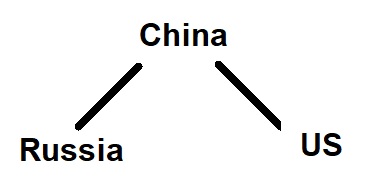
There is this triangle between Russia, China and the US, where China buys Russian oil for its economy. And the US buys products from China. Which means Russian profits come indirectly from the US economy. Which means the US is helping to financing the war in Ukraine.

Another part of the fog of war is a strengthening relationship between Russia and China.

Releasing strategic oil reserves is an example of the kind of decisions being made now that are absolutely wrong. Burning fossil fuels is indefensible as our environmental catastrophe accelerates.

Indigenous communities have a unique perspective on Ukraine’s tragic and horrific situation. They understand what it’s like to be invaded by a colonial power. They see the war not only as an attack on human rights, but an attack on Mother Earth.

Indigenous leaders speak out on Russia’s Ukraine invasion, Healing Minnesota Stories, March 3, 2022

Is what is happening in the Arctic another part of the fog of war? Indigenous people above the Arctic Circle are wary of what Russia’s attacks foreshadow, according to the Indian Country Today article Monitoring the Arctic in Russian invasion of Ukraine.


Split Screen

I’m trying to sort out confused feelings about war and peace through a split screen of foreign versus domestic.

I was caught off guard by the Russian invasion of Ukraine. It was unrealistic to think there wouldn’t be another war between nations anytime soon.

But we haven’t had peace in this country, either.

I had forgotten Martin Luther King, Jr, was outside a California prison, which was holding Vietnam War protesters when he said, “there can be no justice without peace, and there can be no peace without justice.” December 14, 1967.

So, there is this dichotomy of war between nations versus domestic injustices. Domestic injustices mean there is no peace here.

This quote from Muhammad Ali relates to this.

Under no conditions do we take part in war and take the lives of other humans.

It is in the light of my consciousness as a Muslim minister and my own personal convictions that I take my stand in rejecting the call to be inducted. I do so with the full realization of its implications. I have searched my conscience.

Man, I ain’t got no quarrel with them Vietcong…they never called me ______.

Muhammad Ali

I’ve been blessed to have become part of numerous oppressed communities in this country. Where there are so many injustices. Where there is so much violence, much of it state sanctioned.

The scenes and stories from Ukraine are devastating to see. And while it is good to see the response of so many who want to help, I wish there were similar responses to our own domestic tragedies.

A friend this morning tells me others have noted similar disparities in the response to the plight of Palestinians. He said, “Once again I am reminded of how ‘White’ my thinking is.”

And there are the dispiriting stories of racial discrimination in support among the Ukrainian refugees.

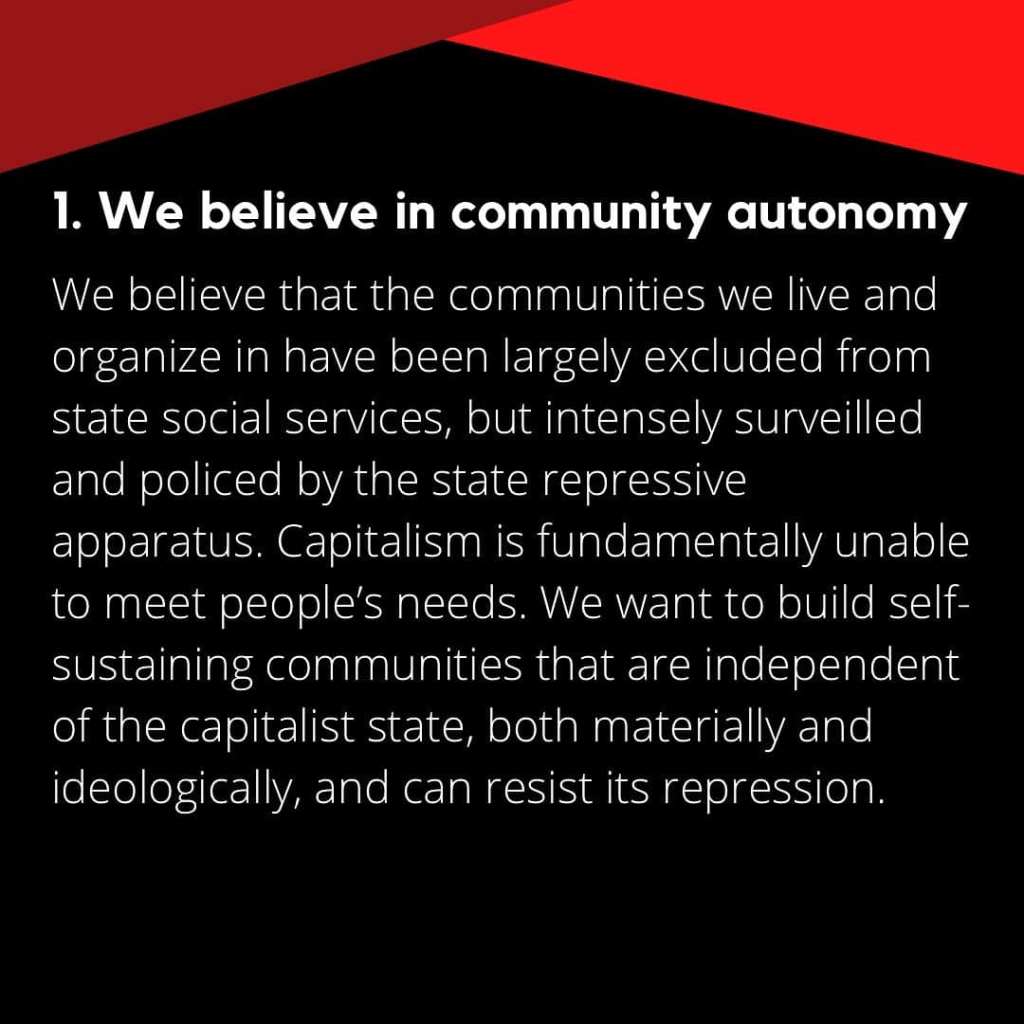
My experiences with Mutual Aid have convinced me that is a way to peace.


The recent past shows us that mutual aid is not only a tool of survival, but also a tool of revolution.

Ronnie James

The first, and possibly the most important, is that it was not always this way, which proves it does not have to stay this way. 

What we have is each other. We can and need to take care of each other. We may have limited power on the political stage, a stage they built, but we have the power of numbers.

Those numbers represent unlimited amounts of talents and skills each community can utilize to replace the systems that fail us.  The recent past shows us that mutual aid is not only a tool of survival, but also a tool of revolution. The more we take care of each other, the less they can fracture a community with their ways of war. Organized groups like The American Indian Movement and the Black Panther Party for Self Defense showed that we can build not only aggressive security forces for our communities, but they also built many programs that directly responded to the general wellbeing of their communities. This tradition began long before them and continues to this day. Look into the Zapatistas in Southern so-called Mexico for a current and effective example.

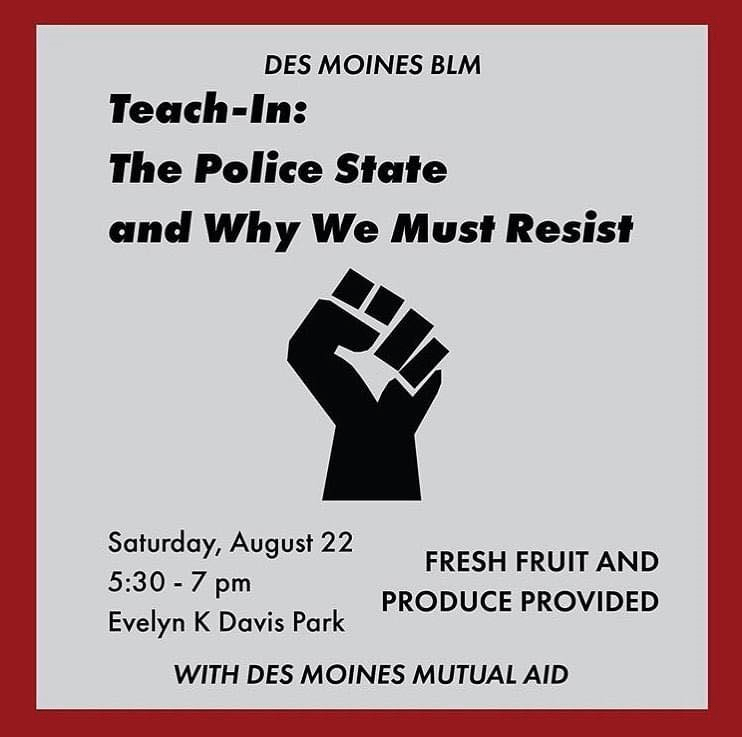
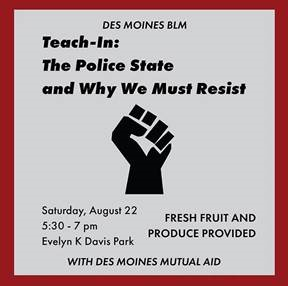
Ronnie James, The Police State and Why We Must Resist

Global Abolition and White Supremacy

For most of my life I understood abolition to mean abolishing slavery. I often heard about that in my Quaker community. The story is that Quakers were involved in the underground railroad, helping freedom seekers escape from where they were enslaved.

But my friend Lucy Duncan writes about myths and avoiding uncomfortable truths.

We White Quakers like to revel in our myths about ourselves. These include “we were all abolitionists”; “we all worked on the Underground Railroad”; and “none of us were slaveholders.”

Often there are kernels of truth in myths, but the truth is more complex. Myths exist to veil the complexity and contradictions of our history, to obfuscate the differences between who we think we are and who we really are and have been. Often we want to take credit for the courageous few among us in order to absolve us from the uncomfortable reckoning with our past and our present. These myths protect our sense of innocence and goodness, but at what cost? Our failure to interrogate uncomfortable truths keeps us from living up to the promise of our faith, one that centers uncovering truth as foundational to our communal religious life.

A Quaker Call to Abolition and Creation by Lucy Duncan, Friends Journal, April 1, 2021

There are many stories of white Friends today refusing to reckon with our past, and what racial justice requires of us now.

Today abolition more commonly refers to abolishing police and prisons. I’ve joined in the work of Quakers for Abolition Network and contributed to an article about this in the Western Friend, https://westernfriend.org/issue/94. I participate in the Central Iowa Democratic Socialists of America’s prison letter writing efforts and am taking two courses related to abolition.

As I was praying about what to write today, I was thinking about the terrible abuses the Wet’suwet’en peoples in British Columbia are suffering from the heavily militarized Royal Canadian Mounted Police. The state sanctioned violence to enforce construction of the Coastal GasLink pipeline through their sacred and pristine lands and water. Yesterday I wrote about stopping the criminalization of Indigenous land defenders. And I realized this is another case that calls for the abolition of police and prisons.

That led to making the connection to the entire history of colonization of so-called North America to abolition. To the global colonization of Indigenous peoples. To the need for abolition of colonization and supremacy worldwide. Including repudiation of the Doctrine of Discovery.

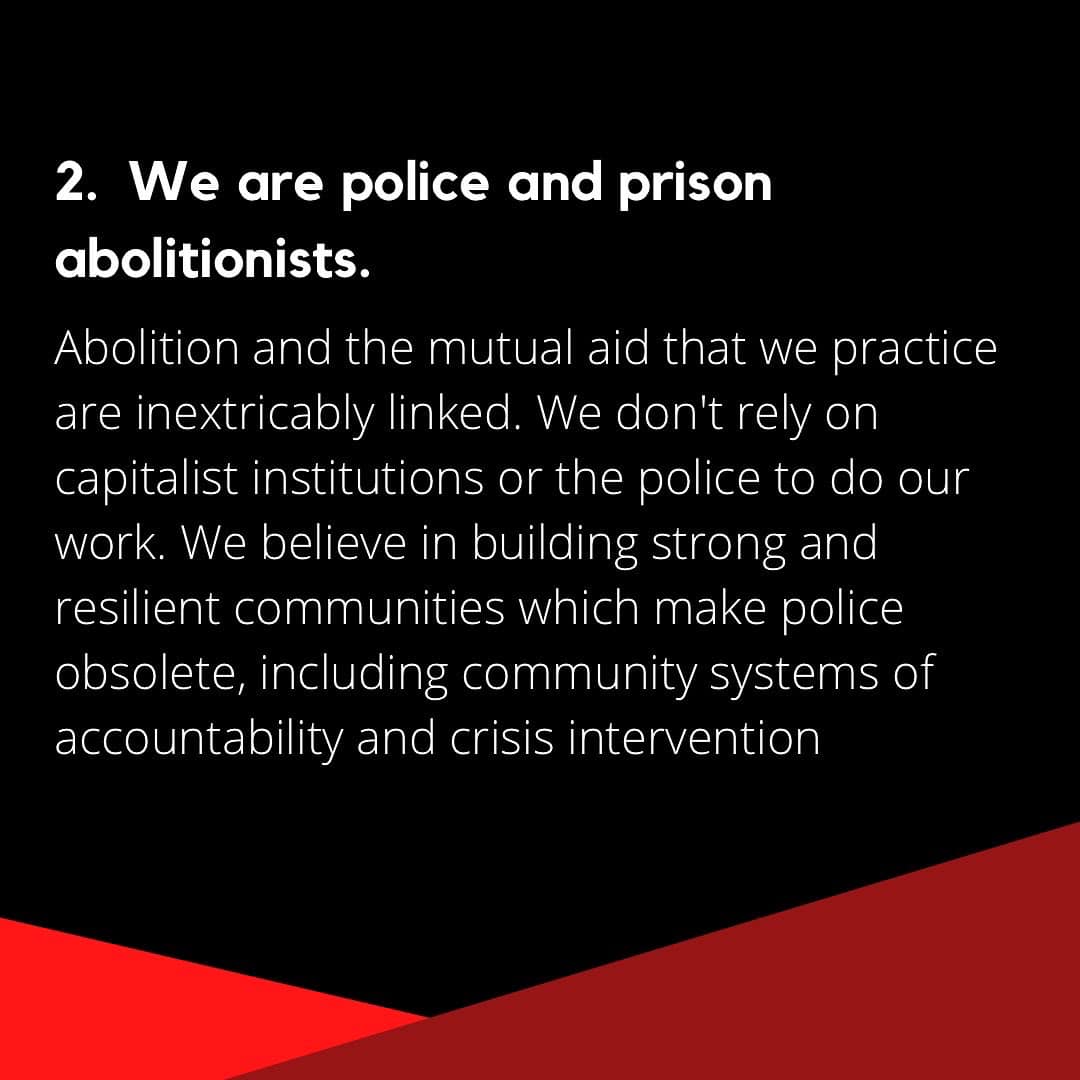
Abolition is about ending systems of control over populations. That is why my friends and I are working to create Mutual Aid communities. Mutual Aid is about replacing vertical hierarchies with horizontal group structures. There can be no control from above if there is no vertical hierarchy.

“What would it look like to finally and fully abolish slavery?” It would look like Mutual Aid.

What would it mean for us to take seriously and collectively as a Religious Society a call to finish the work of abolition, hand in hand and side by side with those affected  and their loved ones? What would it mean for us to stand fully with the calls to abolish the police and fully fund community needs instead? What would it mean to reckon with our past complicity with harm and fully dedicate ourselves to the creation of a liberating Quaker faith that commits to build the revolutionary and healing faith we long to see come to fruition? What would it look like to finally and fully abolish slavery?

A Quaker Call to Abolition and Creation by Lucy Duncan, Friends Journal, April 1, 2021

Stop Criminalizing Indigenous Land Defenders

These videos tell the story of the most recent persecution of the Wet’suwet’en peoples by the Canadian government and the militarized Royal Canadian Mounted Police. They speak eloquently for themselves.

They point out what has been obvious to anyone watching the trucker protests the double standard of how the RCMP treat them versus the state sanctioned violence against Indigenous peoples.

Two warnings. There are scenes of police violence. And the song at the end of the first video includes words not appropriate for children but are for the message given.

Today, February 14th 2022, a day that we honour and remember all our relatives that go missing and are found murdered, our land defenders are attending court for upholding Wet’suwet’en law.

We live by our ancestors teachings and the laws that have been in place forever. We will defend our lives and way of living, as all those that came before have done, so that our children will not have to fight the same battles.

We are so grateful that so many nations and allies have stood with us. Their bravery and conviction will always be remembered. Today we stand united before a court that refuses to recognize its’ own rulings. Today we also support our Likhtsamisyu and Gitxan relatives as they appear in the same court for also upholding Wet’suwet’en law. We are all one.

This is a first appearance for all those that were arrested on November 18/19 2021. There are two others facing charges that were arrested and violently removed from Coyote Camp on Cas Yikh yintah appearing today as well.

The criminalization of our people and the blatant racism of the so-called justice system is especially pronounced now as we see how non-indigenous people are treated. The violence used against Indigenous women protecting Indigenous land is intentional. The kid gloves used in Ottawa is intentional. We will not allow this to continue for our children to grow up with.

For more information please visit yintahaccess.com on how to support and current campaigns.

Follow our social media pages for updates on today’s court and future proceedings.

Misiyh.


Following is some history related to support from various groups in Iowa for the Wet’suwet’en struggles.

January 26, 2020

Bear Creek Friends (Quaker) meetinghouse is in the Iowa countryside. Many members have been involved in agriculture and care about protecting Mother Earth. A number of Friends have various relationships with Indigenous peoples. Some Friends have worked to protect water and to stop the construction of fossil fuel pipelines in the United States, such as the Keystone XL and Dakota Access pipelines.

We are concerned about the tensions involving the Wet’suwet’en Peoples, who are working to protect their water and lands in British Columbia. Most recently they are working to prevent the construction of several pipelines through their territory. Such construction would do severe damage to the land, water, and living beings.

Bear Creek Friends Meeting, of Iowa Yearly Meeting (Conservative) approved sending the following letter to British Columbia Premier, John Horgan.

John Horgan.
PO BOX 9041 STN PROV GOVT
VICTORIA, BC V8W 9E1.
Email premier@gov.bc.ca

John Horgan,

We’re concerned that you are not honoring the tribal rights and unceded Wet’suwet’en territories and are threatening a raid instead.

We ask you to de-escalate the militarized police presence, meet with the Wet’suwet’en Hereditary Chiefs, and hear their demands:

That the province cease construction of the Coastal Gaslink Pipeline project and suspend permits.

That the United Nations Declaration on the Rights of Indigenous Peoples (UNDRIP) and tribal rights to free, prior and informed consent (FPIC) are respected by the state and RCMP.

That the Royal Canadian Mounted Police (RCMP) and associated security and policing services be withdrawn from Wet’suwet’en lands, in agreement with the most recent letter provided by the United Nations Committee on the Elimination of Racial Discrimiation’s (CERD) request.

That the provincial and federal government, RCMP and private industry employed by Coastal GasLink (CGL) respect Wet’suwet’en laws and governance system, and refrain from using any force to access tribal lands or remove people.

Bear Creek Monthly Meeting of Friends (Quakers)
19186 Bear Creek Road, Earlham, Iowa, 50072

February 7, 2020

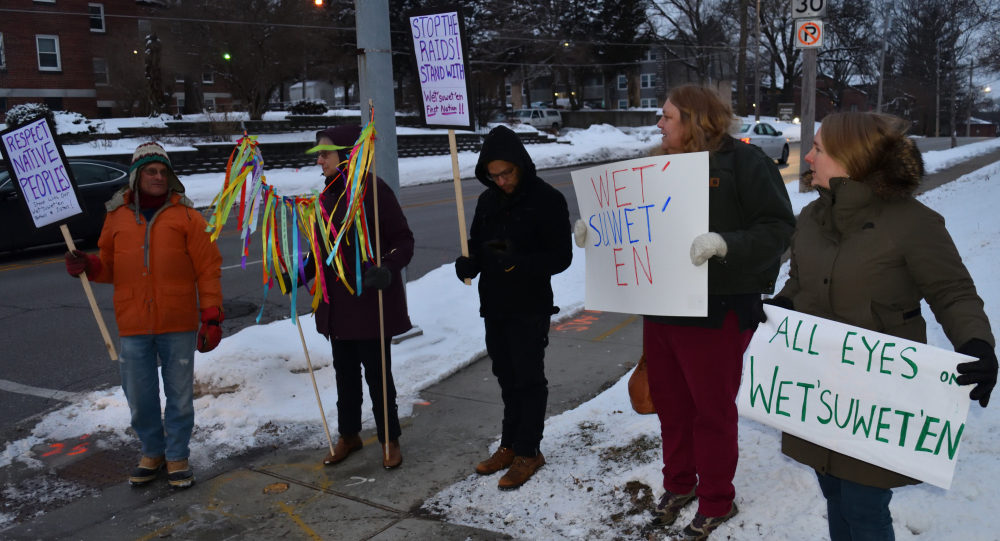
Several of us gathered in Des Moines, Iowa, for a vigil in solidarity with the Wet’suwet’en peoples. Our friends at Bold Iowa and Iowa Citizens for Community Improvement (ICCI) helped notify people about our vigil.

Feb 7, 2020

And photos from other events since that time.

#wetsuwetenstrong

Break up with Canada

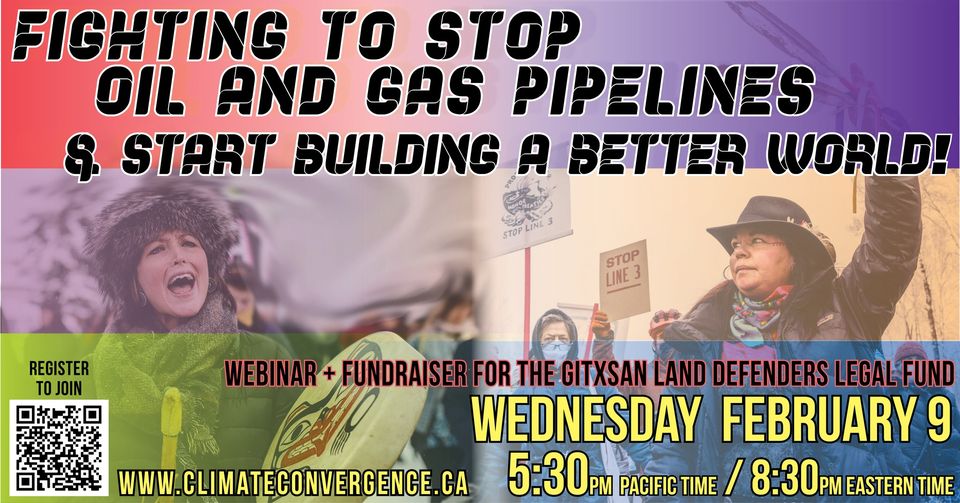
Last night I attended the “Fighting to stop oil and gas pipelines and start building a better world!” updating what is happening in Wet’suwet’en territory.

Image

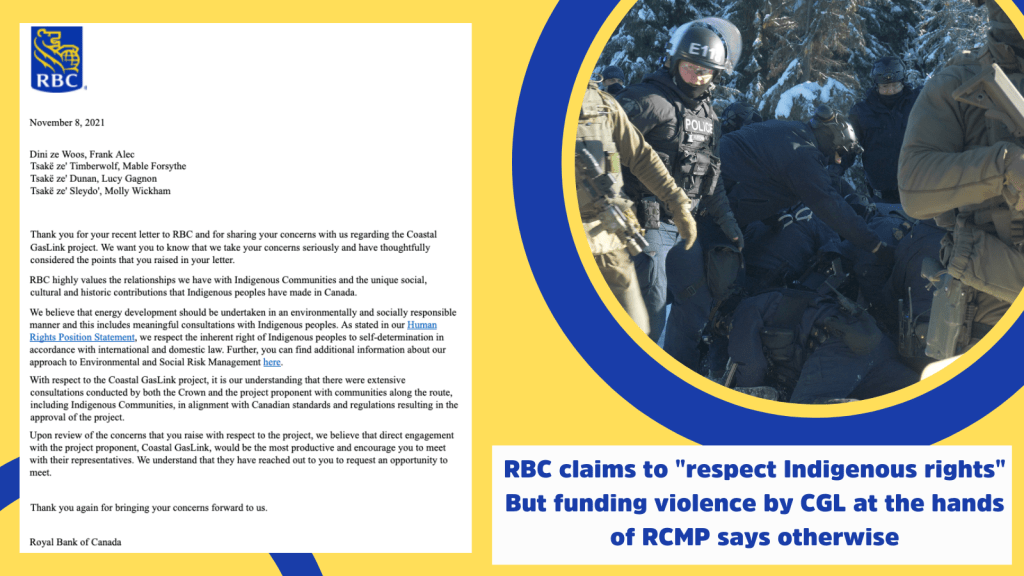
Sleydo, Molly Wickham, spoke about the Coastal GasLink pipeline. I hadn’t realized that pipeline was supposed to be the proof of concept that multiple pipelines could be built to transport fossil fuel through Wet’suwet’en territory, to the west coast to be loaded onto oil tankers. It’s called the “carbon corridor”. Which is why the Royal Canadian Mounted Police (RCMP) are working with the fossil fuel industry to force construction of the Coastal GasLink pipeline.

Sleydo said RBC has invested $400 million in the Coastal GasLink pipeline.

Iowa Solidarity with Wet’suwet’en

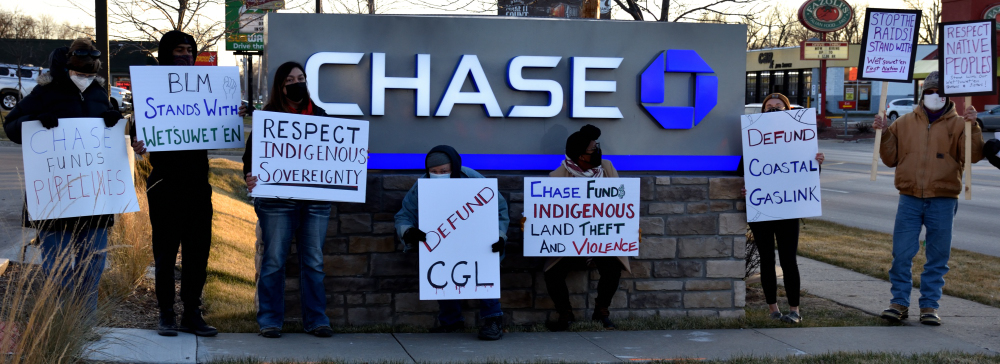
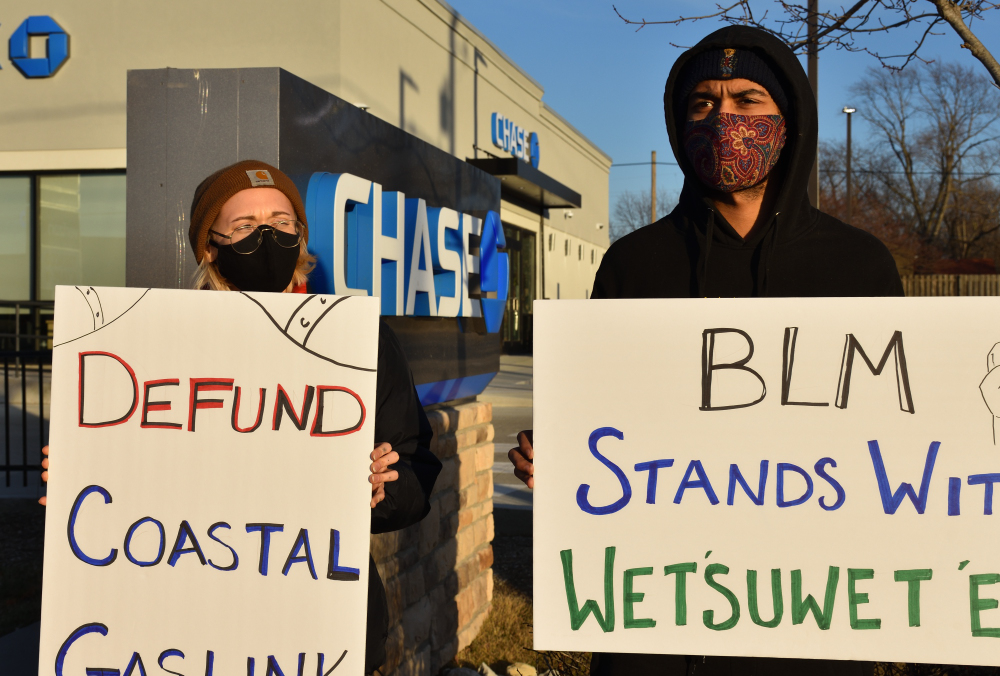
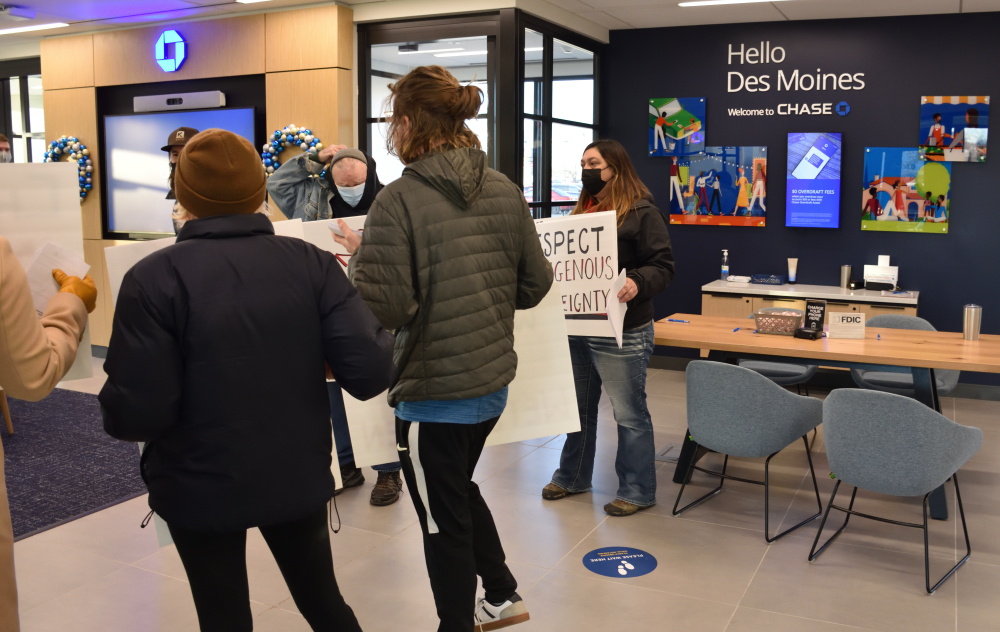
On December 22, 2021, we went to Chase bank in Des Moines to protest the bank’s funding of fossil fuel projects. In support of the Wet’suwet’en’s calls for solidarity.


First Nations land defenders on Monday filed a submission to the United Nations detailing how their territory and human rights are being violated by Canadian and British Columbian authorities in service of a fossil fuel corporation’s gas pipeline.

“We are intimidated and surveilled by armed RCMP, smeared as terrorists, and dragged through colonial courts. This is the reality of Canada.”

The submission to the United Nations Human Rights Council was filed by the Gidimt’en—one of the five clans of the Wet’suwet’en Nation—who for years have been fighting to stop the construction of Coastal GasLink’s pipeline through their territory in northern British Columbia.

The filing notes that “ongoing human rights violations, militarization of Wet’suwet’en lands, forcible removal and criminalization of peaceful land defenders, and irreparable harm due to industrial destruction of Wet’suwet’en lands and cultural sites are occurring despite declarations by federal and provincial governments for reconciliation with Indigenous peoples.”

Submission to UN Human Rights Council. “Wet’suwet’en is an international frontline to protect the rights of Indigenous peoples and to prevent climate change.” by Brett Wilkins, Common Dreams, February 7, 2022

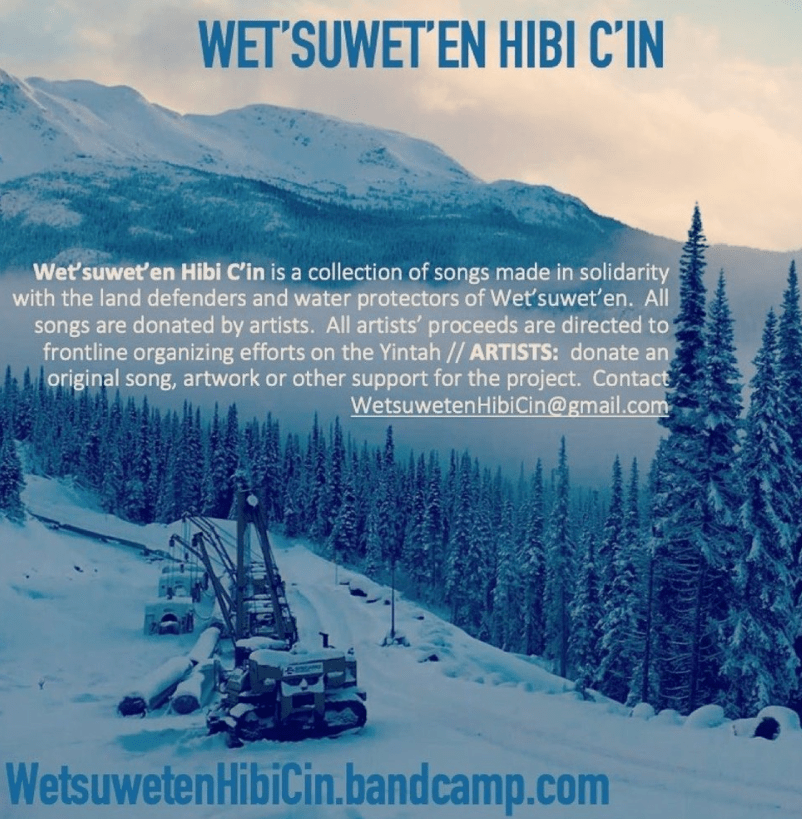
One way you can support the Wet’suwet’en is to purchase music donated by artists.

https://wetsuwetenhibicin.bandcamp.com/releases

Purchase TINY HOUSE to support Wet’suwet’en. I purchased TINY HOUSE and others. https://wetsuwetenhibicin.bandcamp.com/track/tiny-house

Open Letter to Sports Page

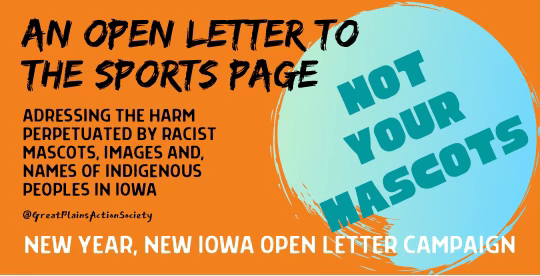
I’ve been writing about the New Year, New Iowa Open Letter Campaign of my friends at the Great Plains Action Society. See: Your Invitation to be an Ally. At the end of this is a statement by GPAS related to a racist image found in the Sports Page restaurant in Indianola.

I called the Sports Page, where someone took a message from me, and passed it on to one of the owners. The message returned was they didn’t know anything about a mascot. Which was an unfortunate way I put the message to them, but I’m sure they got the point of follow-up concern about the imagery in their restaurant.


Great Plains Action Society makes the following points response to this issue, applicable to all persons or establishments that continue to display racist imagery.

THIS IS NOT A MATTER OF ‘OPINION’: FOR DECADES, MULTIPLE SCIENTIFIC STUDIES HAVE SHOWN THAT THESE IMAGES AND MASCOTS HARM INDIGENOUS CHILDREN. Exposure to this racist imagery also correlates to increasing negative views of Native people in non-Native children. Too often this issue gets brushed aside as a matter of “differing opinions” about what is or is not “offensive.” To be very clear, this is not about what is or is not offensive, or whether there is consensus about this among the vastly diverse Indigenous communities. Experts have weighed in and it is clear that children mascots hurt Indigenous children, full stop.

I spent my entire adult life working in a children’s hospital and this concerns me. Following is part of a policy statement on the Impact of Racism on Child and Adolescent Health from the American Academy of Pediatrics.

Racism is a “system of structuring opportunity and assigning value based on the social interpretation of how one looks (which is what we call ‘race’) that unfairly disadvantages some individuals and communities, unfairly advantages other individuals and communities, and saps the strength of the whole society through the waste of human resources.” Racism is a social determinant of health that has a profound impact on the health status of children, adolescents, emerging adults, and their families.  Although progress has been made toward racial equality and equity, the evidence to support the continued negative impact of racism on health and well-being through implicit and explicit biases, institutional structures, and interpersonal relationships is clear. Failure to address racism will continue to undermine health equity for all children, adolescents, emerging adults, and their families.

The Impact of Racism on Child and Adolescent Health, FROM THE AMERICAN ACADEMY OF PEDIATRICS, POLICY STATEMENT, AUGUST 01, 2019

GOOD OR BAD INTENTIONS ALONE DO NOT DETERMINE THE WRONGNESS OR RIGHTNESS OF AN ACTION. So often we see people claim that because they have good intentions, their use of racist imagery and mascots is not problematic. However, it’s still problematic, because regardless of an individual’s intention, it is still an act that harms children.

RETIRING MASCOTS AND DISCARDING STEREOTYPED IMAGE IS NOT AN ERASURE OF ANYONE’S IDENTITY; IN FACT, THE EXISTENCE OF THESE MASCOTS IS A CONTRIBUTING FACTOR TO INDIGENOUS ERASURE. Many supporters of racist images and mascots are under the impression that retiring them is taking away from their identity because being a [insert racist mascot here] is a huge part of who they are. It’s unfortunate that people have built their identity around “being” a [racist mascot], because identifying as something that harms children and society in general is problematic, and that identification should especially cease when they learn about the harmful effects on children.

An Open Letter to Amanda and Joe Ripperger, the owner of the Sports Page restaurant in Indianola, and all other owners of establishments with racist mascot decor:

It was brought to the attention of Great Plains Action Society that an Indianola community member contacted the owners of the Sports Page restaurant about their racist “R*dman” mascot sign hanging at their establishment. Though the owners, Amanda and Joe Ripperger, said they took time to think about removing the sign, they eventually declined to do so based on typical, problematic reasoning. The reasons they gave are among the most common rationalizations in defense of racist images and mascots and so we are taking this opportunity to, once again, clarify some points about the racist images and mascots “debate.” We are including text from their response to the community member for context and transparency. From the community member:

They approached the restaurant owners and this was their answer:

On our first request to remove their racist signs, we were told they were “decor,” nostalgia and history.

In a second response the Ripperger’s said:

I am very sorry for your families hurt that you have experienced in our community, and we do hear your concerns. We have decided that the signs will remain up. Our restaurants are a piece of Indianola’s community, but most importantly they are ours. We have owned and operated these restaurants for 10 years on January1 and we are so proud to be part of the Indianola community that it seems like we would be erasing something that is near to our hearts. Nothing hung on our walls is meant to be derogatory. We hope that you and all our customers know that.

Thank you for sharing your perspective with us.

Sincerely,

Amanda and Joe Ripperger

We believe they would be sensitive to additional feedback and might hopefully change their position. Great Plains Action Society

#greatplainsactionsociety #NotYourMascot #NewYearNewIowa