Transforming justice strategies

Is working for justice important to you? Are you satisfied with your justice work?

Working for justice has been a lifelong focus of mine. Being a Quaker, I have many examples of how people and organizations have worked for justice. But, no, I am not satisfied with my justice work. I don’t believe we can be as long as there is injustice.

Over the past decade, I have connected with many great activists and organizations. In addition, I’ve been fortunate to have received several types of training for community organizing.

Much of what I’ve learned relates to working with different communities and cultures, which I summarize here:


Significant changes are occurring that add impetus to re-evaluating how we (Quakers) do justice work.

  • Accelerating environmental chaos is increasingly disrupting communities and lives
  • There is rising resistance to political systems based upon White superiority and evolving authoritarianism
  • Economic, food, transportation, energy, education, political, and healthcare systems are failing
  • Indigenous peoples are reclaiming their leadership and ways of protecting and healing Mother Earth

Change is hard

I plan to discuss these things this weekend with my Quaker meeting (Bear Creek Friends). I’ll share my recent experiences with Mutual Aid, Indigenous friends, and the Buffalo Rebellion. Change is hard, and this might involve some challenging discussions. And may involve changes in how we do justice work together.

Mutual Aid

First, there are many ways my Quaker meeting is already working regarding the concepts of mutual aid. Such as connections in the nearby town of Earlham, working to deliver meals, staffing the museum, and the Sunshine sewing circle. Years of work supporting the annual Prairie Awakening/Prairie Awoke ceremony. And connections with the nearby Grade A Gardens.

I believe Friends can add to the spirituality of Mutual Aid.

Needed Changes

From my experiences over the past five years, I have been led to see Mutual Aid as the model for justice work now. (See: https://quakersandreligioussocialism.com/mutual-aid/ )

  • We must replace the current structure of using committees to do justice work. Because Mutual Aid is fundamentally about not having hierarchies.
  • What would a Quaker Mutual Aid community look like?
    • Spirituality?
    • Who would be involved?
    • When and how would the community meet or communicate?
    • How would decisions be made?
    • How do we center the voices of the oppressed? Of Indigenous peoples?
    • How would we interact with Quaker organizations?
    • How would we physically build community structures?

Options

  1. I will continue my involvement with Des Moines Mutual Aid. And would continue to share what I’m learning with my Quaker meeting
  2. Bear Creek could decide to replace the Peace and Social Concerns committee with a Mutual Aid community, OR
  3. Bear Creek could continue its Peace and Social Concerns Committee structure and create a Mutual Aid community for justice work.

Implementation

Creating a Mutual Aid community at Bear Creek would require:

  • Ways for community members to communicate in real time
    • Des Moines Mutual Aid uses the Signal app, an encrypted real-time messaging system
  • Permission for Bear Creek Mutual Aid to make decisions in real time

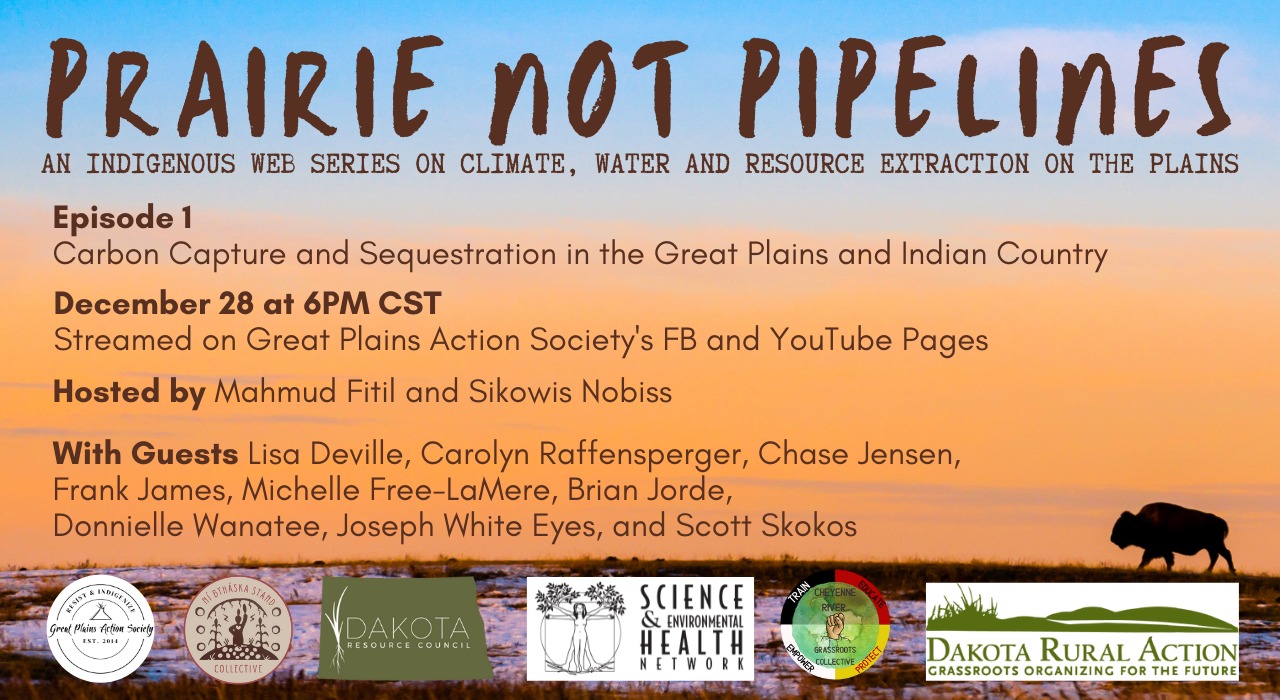
As the graphic below shows, Mutual Aid is one of the methods the Great Plains Action Society (GPAS) uses as an engagement mechanism.

GPAS supports Des Moines Mutual Aid (DMMA) by funding the work of Ronnie James. Ronnie has been my Mutual Aid mentor.

GPAS is part of the Buffalo Rebellion, a coalition of environmental justice organizations in Iowa. Continued connections with GPAS and the Buffalo Rebellion are how to center the voices of Indigenous and other oppressed peoples.

The Buffalo Rebellion is a coalition consisting of

  • Des Moines Black Liberation
  • Great Plain Action Society
  • Iowa Citizens for Community Improvement
  • Iowa Migrant Movement for Justice
  • Sierra Club Beyond Coal
  • Service Employees International Union (SEIU) Local 199, and
  • Cedar Rapids Sunrise Movement

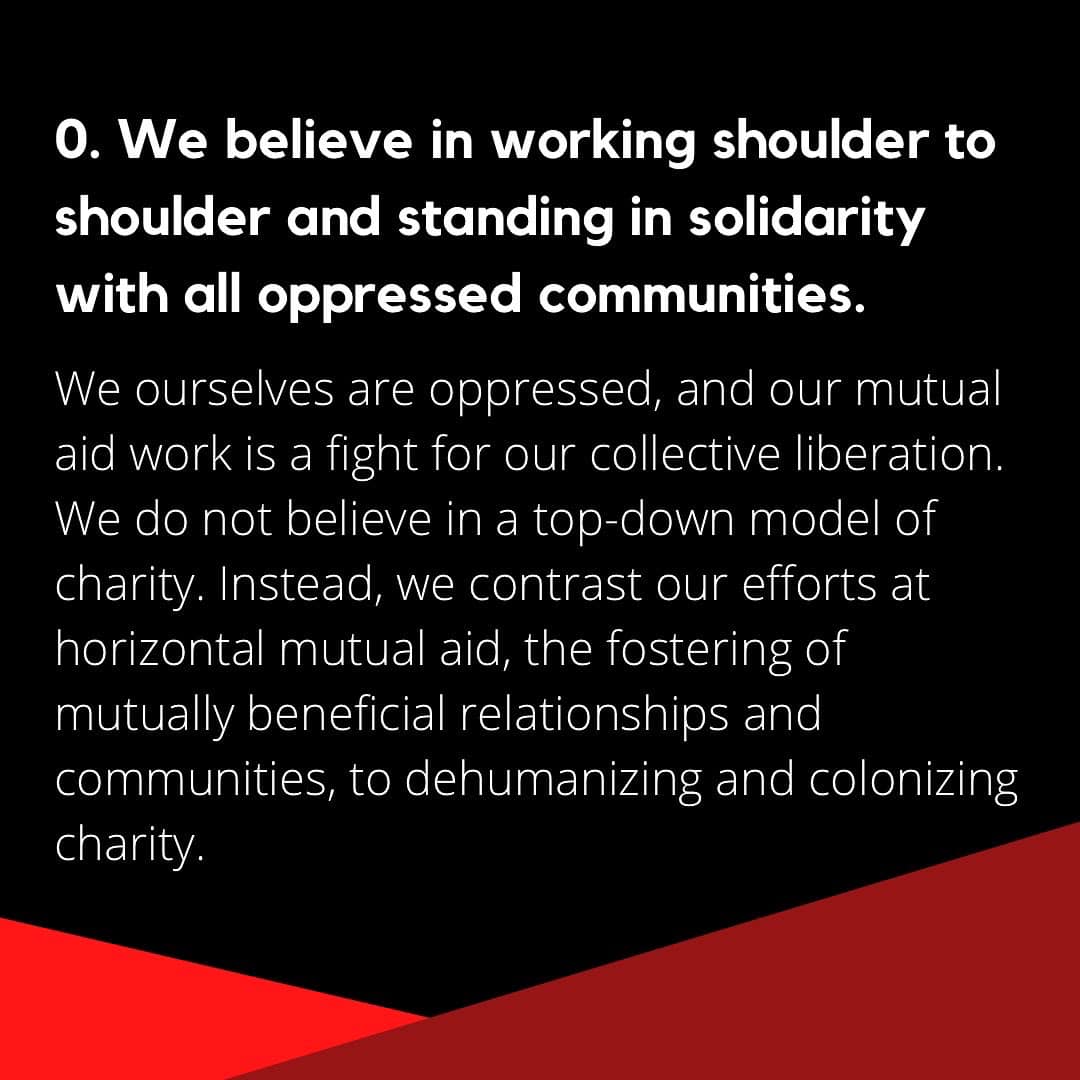
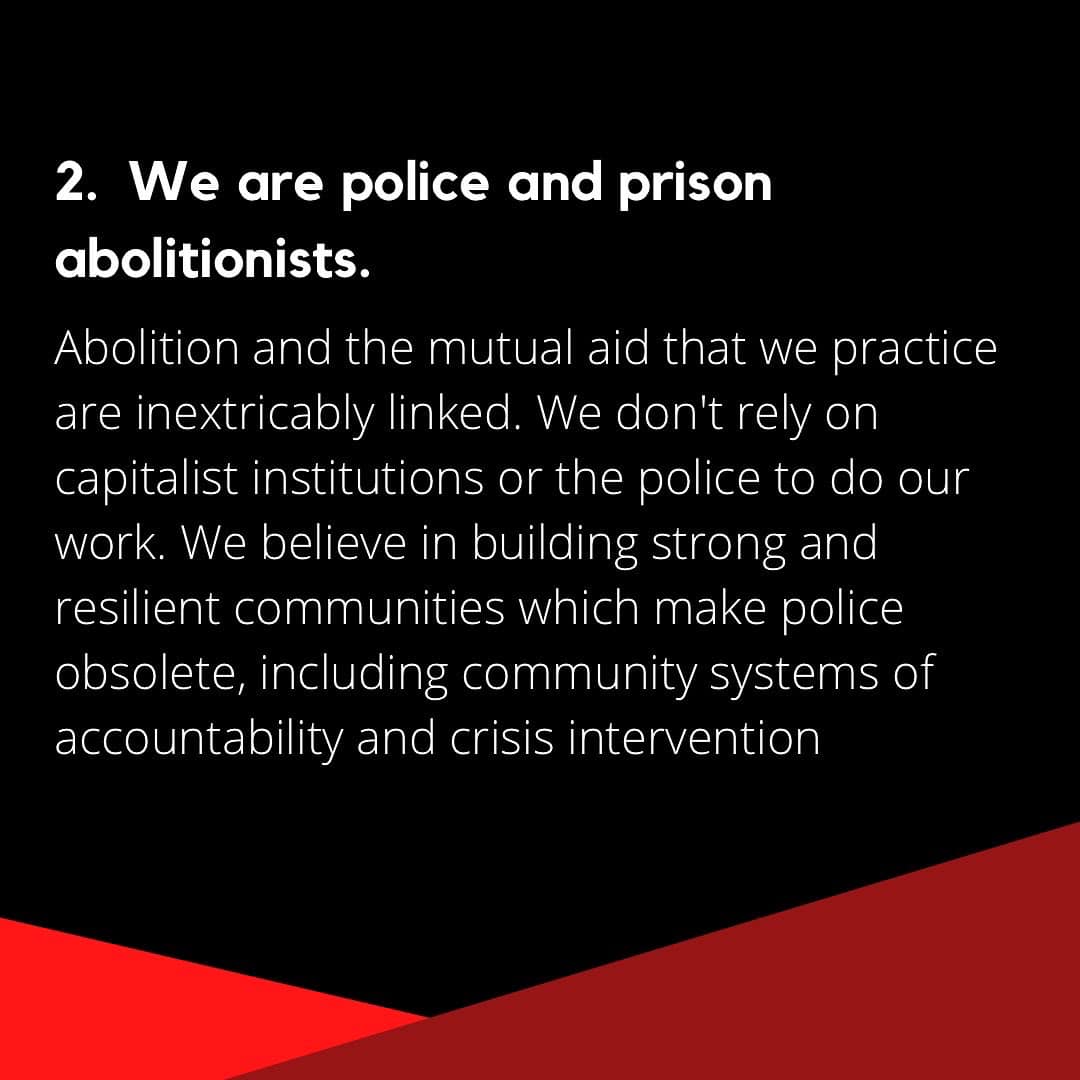
Also below are the Des Moines Points of Unity, which explain what DMMA is about.

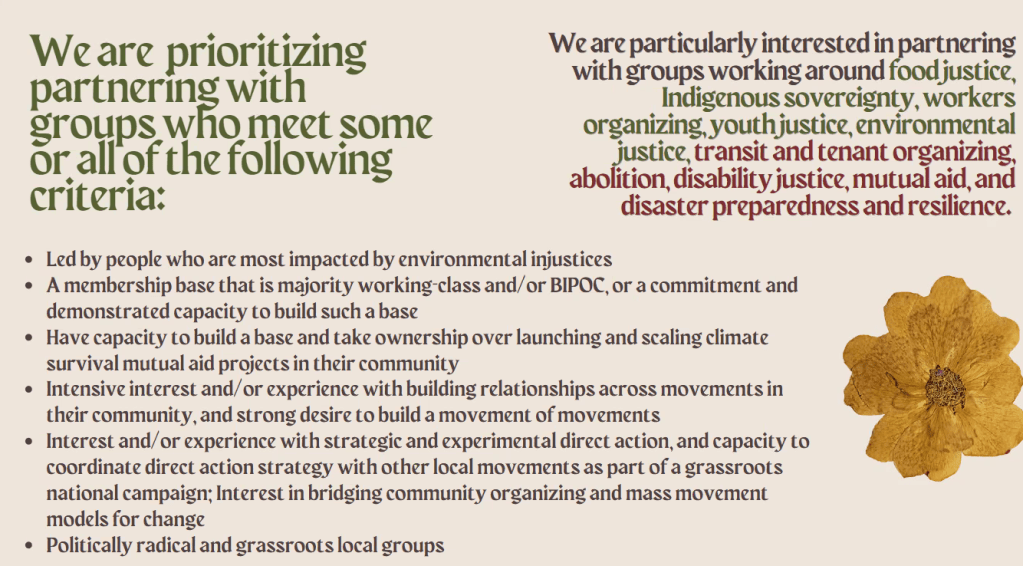
Finally, other justice organizations are re-evaluating their strategies. The Climate Mobilization Network describes why they decided to pause and transform their strategy. Mutual Aid is a focus of their new strategy. I’ve been in touch with Climate Mobilization Network about working with them.


Des Moines Mutual Aid

Why We Decide to Pause and Transform our Strategy

  • Congressional failure to take meaningful action on climate
  • The slow pace of local climate programs where policy change is severely limited by what’s considered politically possible
  • Rising inequality amid continued neoliberalism
  • Escalating climate disasters that are hitting global and US-based frontline communities the hardest and will continue accelerating rapidly!
  • And widespread cultural and generational concern about climate change has not yet been tapped into effectively by a mass movement.

This collective visioning, movement incubation and learning gathering will equip you with space for reflection, new ideas, inspiration, and next steps to participate in this new campaign.

Together we will build relationships and explore:

  • How survival and mutual aid programs can grow the movement
  • New, creative approaches to taking action against fossil fuels
  • Ways to integrate healing into our work
  • And how to create space for reflection, intentionality and strategic clarity

Climate Mobilization Network


Eyes of the Future

How can Friends achieve the 2022 theme of World Quaker Day, “Becoming the Quakers the World Needs,” while functioning in a blatantly and politically corrupt, racialized world?

Black Quaker Project

Introduction

These are times of upheaval, with greater changes rapidly approaching. Times of uncertainty and fear. These are also times of opportunity. Can we use this collapse to envision and build more just communities?

I believe we can. But first, we need to understand the injustices the capitalist economic system is based upon. And use this understanding to guide the development of mutual aid communities. which reject capitalism.

It is difficult to escape the status quo. But that is the only way we can protect and heal Mother Earth and build communities for future generations. The status quo in this country is about preserving the capitalist economic system and White superiority. Maintaining the status quo will only deepen environmental devastation and collapse. And collapse of the systems built on capitalism.


The eyes of the future are looking back at us, and they are praying for us to see beyond our own time. They are kneeling with hands clasped that we might act with restraint, that we might leave room for the life that is destined to come.

Terry Tempest Williams

The Seventh Generation Principle is based on an ancient Haudenosaunee (Iroquois) philosophy that the decisions we make today should result in a sustainable world seven generations into the future.

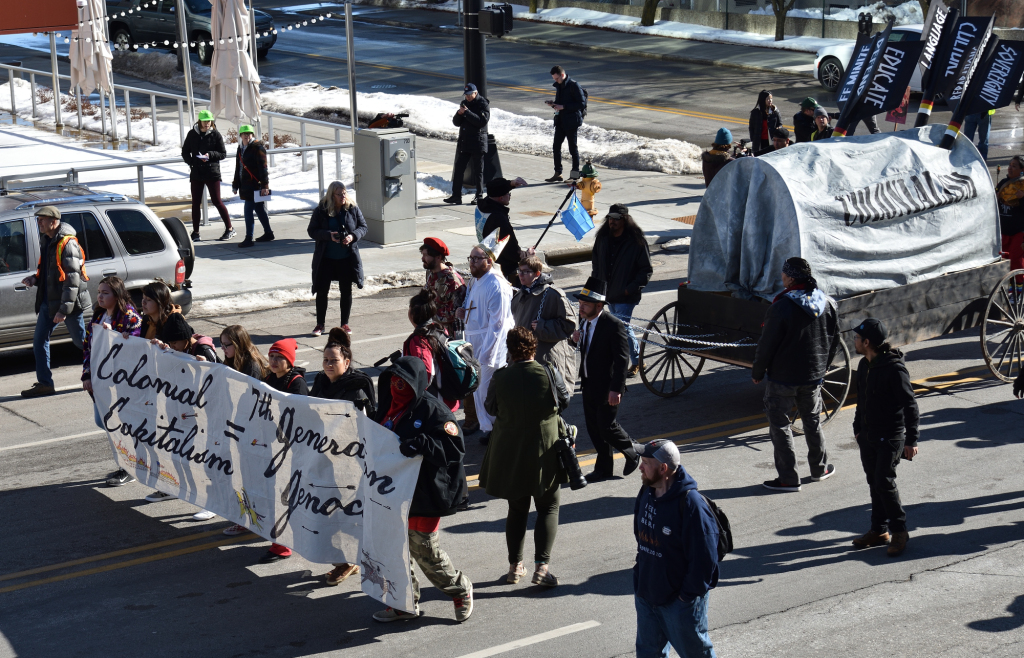
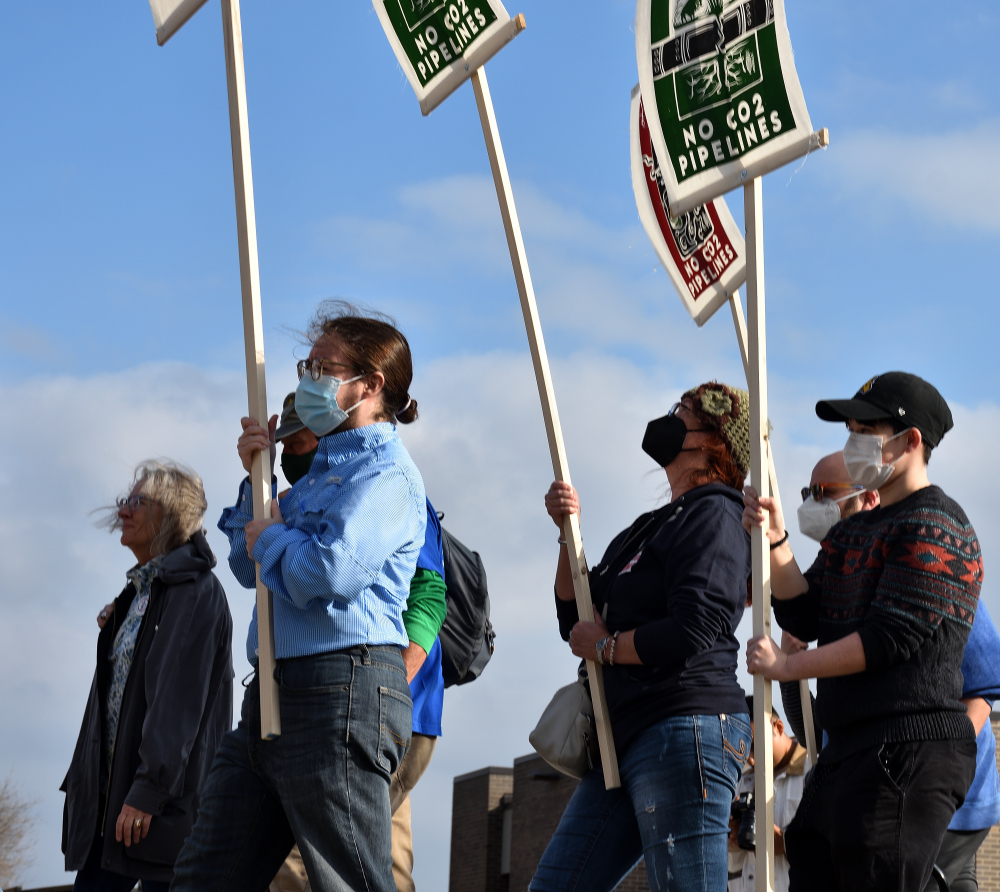
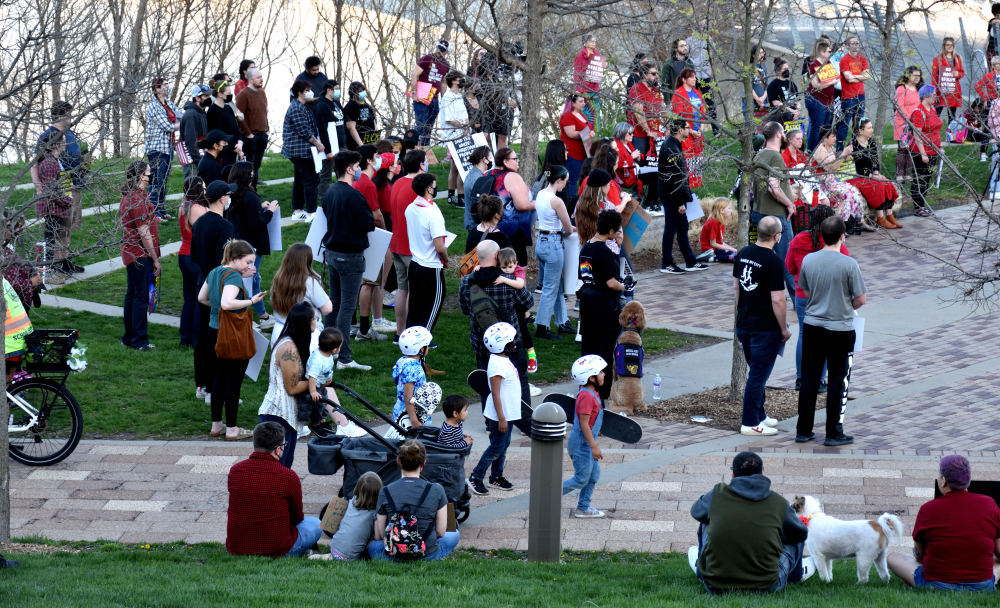
Climate Justice March, Des Moines, Iowa

Then

Environment

I’ve had my own experiences of looking back and trying to help people “to see beyond our own time“. Over fifty years ago, I moved to Indianapolis, a big change for a farm boy. I was not prepared for the noxious clouds of auto exhaust enshrouding the city. I was led to live without a car. Of course, that was not the status quo.

Looking back to that time, I feel sorrow for what might have been. How different the world would be if we had rejected the car culture in this country. Our cities and towns would have been built to be walkable. Land would not be covered by asphalt and concrete. Most importantly, we would have been able to live in a sustainable manner and would not be on a path toward extinction.

Looking back now, who doesn’t wish we had rejected the car culture in this country? Wish we had not let banks and fossil fuel companies rape the earth?

If those who lived prior to the rise of the car culture could have visited our world today, to see the disastrous consequences we are dealing with now, I believe many people who lived then would have chosen to live a different (sustainable) lifestyle.


Capitalism

Wealth is attended with power, by which bargains and proceedings, contrary to universal righteousness, are supported; and hence oppression, carried on with worldly policy and order, clothes itself with the name of justice and becomes like a seed of discord in the soul.

John Woolman, “A Plea for the Poor.”

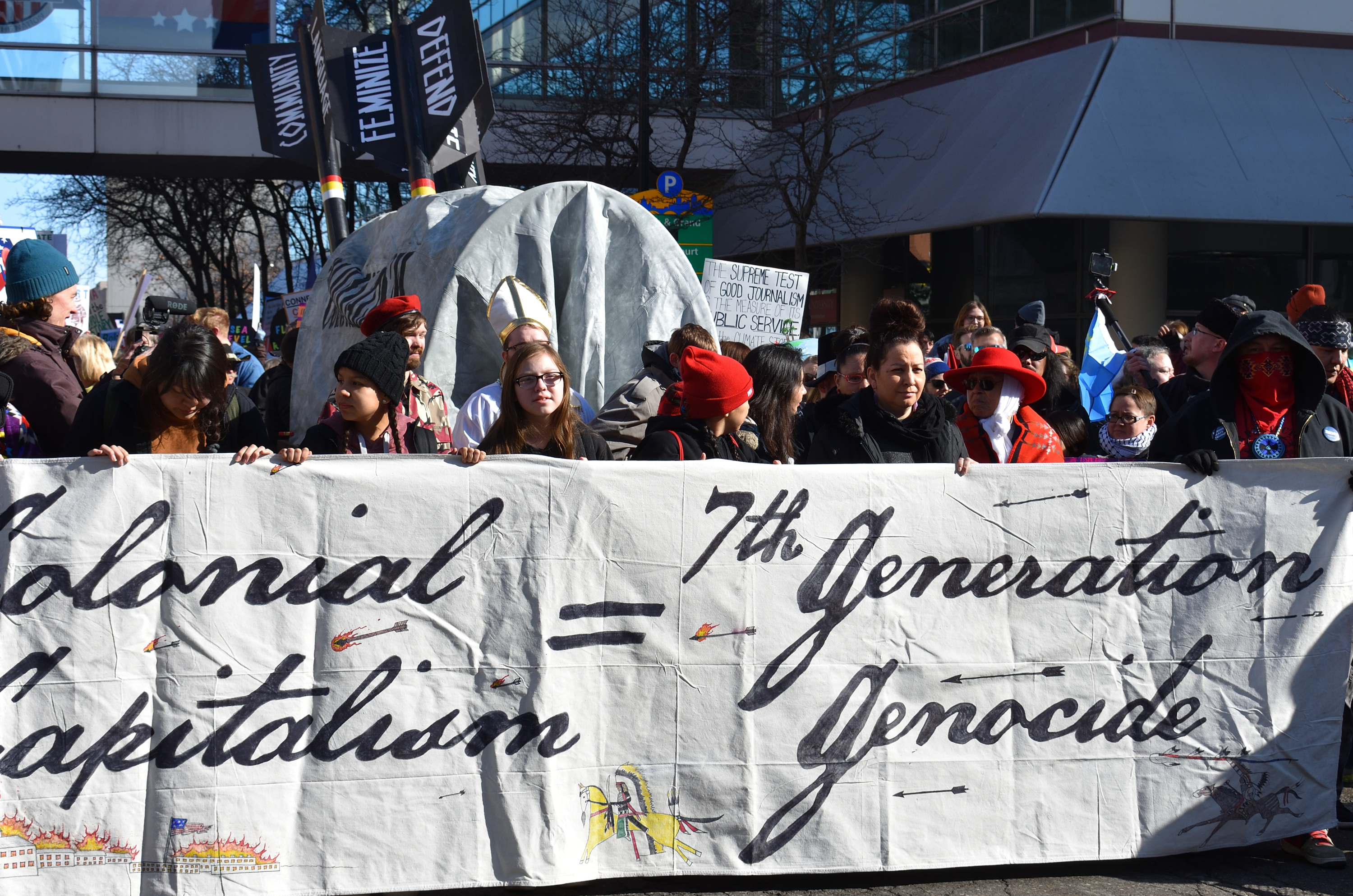
As the sign in the photo above says, Colonial Capitalism = 7th Generation Genocide

Despite trying every way I could think of, regardless of my prayers, I was not able to convince others to give up their car. People chose convenience over care for Mother Earth and future generations.

It is the same when I urge others to build alternatives to capitalism. Those who are comfortable economically strongly resist any suggestion to abandon capitalism. Capitalism is the materialism Martin Luther King warned about. “The giant triplets of racism, materialism and militarism”.

How has hunger for millions become acceptable? Houselessness? Lack of access to medical care? Police brutality? Locking people away for years for nonviolent crime? Profligate consumption of nonrenewable fossil fuels? Poisoning water?

As Americans honor King on his birthday, it is important to remember that the civil rights icon was also a democratic socialist, committed to building a broad movement to overcome the failings of capitalism and achieve both racial and economic equality for all people.

Capitalism “has brought about a system that takes necessities from the masses to give luxuries to the classes,” King wrote in his 1952 letter to Scott. He would echo the sentiment 15 years later in his last book, Where Do We Go From Here: Chaos or Community?: “Capitalism has often left a gap of superfluous wealth and abject poverty [and] has created conditions permitting necessities to be taken from the many to give luxuries to the few.”

In his famous 1967 Riverside Church speech, King thundered, “When machines and computers, profit motives and property rights are considered more important than people, the giant triplets of racism, materialism and militarism are incapable of being conquered.”

“What good is having the right to sit at a lunch counter,” King is widely quoted as asking, “if you can’t afford to buy a hamburger?” In King’s view, the Greensboro lunch counter sit-ins, the voter registration drives across the South and the Selma to Montgomery march comprised but the first phase of the civil rights movement. In Where Do We Go From Here, King called the victories of the movement up that point in 1967 “a foothold, no more” in the struggle for freedom. Only a campaign to realize economic as well as racial justice could win true equality for African-Americans. In naming his goal, King was unflinching: the “total, direct, and immediate abolition of poverty.”

THE FORGOTTEN SOCIALIST HISTORY OF MARTIN LUTHER KING JR. By Matthew Miles Goodrich, In These Times, January 16, 2023


Now

What will the eyes of the future see when they look back upon us today? How will they feel about the state of the world we are leaving them?

What are we willing to do now to make the world a better place for ourselves and future generations?

Will we:

  • Radically reduce our fossil fuel consumption?
  • Continue to build renewable energy infrastructure?
  • Resist false solutions such as carbon capture?
  • Reject capitalism?
  • Reject White superiority?
  • Build Mutual Aid communities?

There is an urgent need for reflection on these questions. And to seek and implement ways to answer them.


mutual aid is the new economy. mutual aid is community. it is making sure your elderly neighbor down the street has a ride to their doctor’s appointment. mutual aid is making sure the children in your neighborhood have dinner, or a warm coat for the upcoming winter. mutual aid is planting community gardens.

capitalism has violated the communities of marginalized folks. capitalism is about the value of people, property and the people who own property. those who have wealth and property control the decisions that are made. the government comes second to capitalism when it comes to power.

in the name of liberation, capitalism must be reversed and dismantled. meaning that capitalistic practices must be reprogrammed with mutual aid practices.

Des Moines Black Liberation

“Quakers will only be truly prophetic when they risk a great deal of their accumulated privilege and access to wealth. Prophets cannot have a stake in maintaining the status quo. Any attempt to change a system while benefiting and protecting the benefits received from the system reinforces the system. Quakers as much as anyone not only refuse to reject their white privilege, they fail to reject the benefits they receive from institutionalized racism, trying to make an unjust economy and institutionalized racism and patriarch more fair and equitable in its ability to exploit. One cannot simultaneously attack racist and patriarchal institutions and benefit from them at the same time without becoming more reliant upon the benefits and further entrenching the system. Liberalism at its laziest.”   

Scott Miller

How can Friends achieve the 2022 theme of World Quaker Day, “Becoming the Quakers the World Needs,” while functioning in a blatantly and politically corrupt, racialized world? In engagement with this exciting theme, offered by the Friends World Committee for Consultation (FWCC), the Black Quaker Project would like to remind Friends of the tools at our disposal to challenge those aspects of society which we wish to change and to see changed. Our fractured societies are further divided by enormous gaps of inequality in almost every imaginable category—psychological, social, political, cultural, economic. How might we, as Quakers, achieve justice, equity, and peace under these circumstances? 

Black Quaker Project

New Perspectives

I grew up in Quaker communities, which defined my justice work for much of my life.

Then a decade ago I was led to engage with a number of communities, working outside Quaker meetings. By engagement I mean spending significant time in these communities. These experiences have taught me decidedly different approaches to justice work. These new perspectives convince me that Quakers, particularly White Quakers, need to change how we think about and do justice work.

My perspectives include:

  • The need to advocate for Indigenous leadership to help protect and heal Mother Earth.
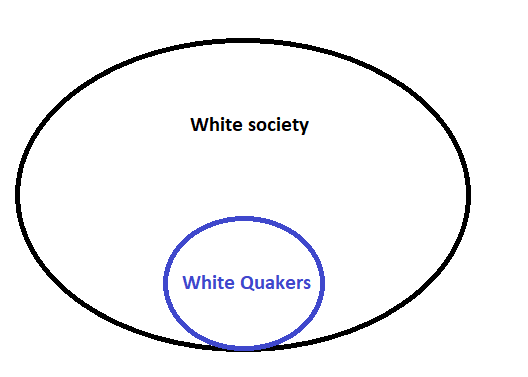
  • Black, Indigenous and other people of color (BIPOC) do not see any distinction between White Quakers and other White people in this country.
  • The capitalist economic system is fundamentally unjust.
    • Capitalism transfers great wealth to the wealthy by exploiting and oppressing those who aren’t.
    • Capitalism impoverishes millions of people
    • Capitalism is economic slavery
    • Capitalism treats natural resources as commodities to be exploited for profit
    • Capitalist systems do not feel the need to conserve resources
  • Police and prisons must be abolished.
    • The criminal justice system enforces the policies of the White dominant culture.
    • The criminal justice system violently targets BIPOC people
    • It is inhumane to lock people in cages.
  • White Quakers are settler-colonists. We continue to live on and profit from Indigenous lands.
  • The involvement of some White Quakers in the native boarding schools and how to begin healing related to that, is crucial for authentic relations between White Quakers and native peoples.
    • I have witnessed the multigenerational trauma affecting Indigenous people today.
  • Increasingly, as environmental chaos worsens, responding to the disastrous consequences will consume our attention and resources.
Black, Indigenous and other people of color (BIPOC) do not see any distinction between White Quakers and other White people in this country.

The most significant new perspectives are about the capitalist economic system. I hadn’t been as aware of many of the injustices fueled by capitalism prior to spending time in oppressed communities. Now I have witnessed the devastating effects of capitalism in these communities.

The nearly universal resistance to my attempts to convince White people to build systems not based upon capitalism is because the system works for them.

Capitalism is an unjust system. A different system is required. Mutual Aid is such a system.

Justice cannot be attained by incremental changes to an unjust system.

Accelerating environmental chaos is increasingly disrupting life as we know it. Which means, among other things, that the current political and economic systems in this country will continue to collapse. Now is the time to envision and build alternatives such as mutual aid.

Justice cannot be attained within an unjust system

Our Quaker Queries recognize the injustices of our capitalist economic system.

‘We are part of an economic system characterized by inequality and exploitation. Such a society is defended and perpetuated by entrenched power. “

The advice also says “we envision a system of social and economic justice that ensures the right of every individual to be loved and cared for…” 

Faith and Practice, Iowa Yearly Meeting (Conservative)

This is well summarized by my friend Ronnie James. We work together at Des Moines Mutual Aid.

I’m of the firm opinion that a system that was built by stolen bodies on stolen land for the benefit of a few is a system that is not repairable. It is operating as designed, and small changes (which are the result of huge efforts) to lessen the blow on those it was not designed for are merely half measures that can’t ever fully succeed.

So the question is now, where do we go from here? Do we continue to make incremental changes while the wealthy hoard more wealth and the climate crisis deepens, or do we do something drastic that has never been done before? Can we envision and create a world where a class war from above isn’t a reality anymore?”

Ronnie James, Des Moines Mutual Aid

This is a simplified schematic of the consequences of White dominance (Red), and the alternatives for a transition to justice and disaster preparedness (Green).


Implementing the transition to a more just society will be impeded by

  • Environmental chaos
  • Corrupt and failing institutions
  • Authoritarianism

This diagram shows the current systems in the column labeled White.
The column under Black, Indigenous and other people of color shows the injustices resulting from the current systems.
The Red/Green New Deal shows how we can address these injustices.
The solid red column indicates the challenges to moving to systems of justice, sustainability, and resilience.


I’ve written about these concepts on my blog: https://quakersandreligioussocialism.com/

Three Years Later

Don’t you find there are periods of rapid change interspersed among long plateaus in your life? Although those plateaus are becoming fewer and lasting shorter periods of time.

The last three years have been a time of momentous change, both in my life, and in the world. I’m trying to explain what has been happening to me, because these experiences convince me we must all make similar changes if we are going to make the major adjustments needed to try to mitigate deepening environmental damage. The world has been spiraling out of control these past three years, dramatically impacting all our communities and individual lives. I think of these changes as related to the idea of a house of cards. The cards in this case being dollars of the capitalist economy.

(c)2023 Jeff Kisling

Foundational Stories

I was born into a rural Iowa Quaker community and have been a Quaker all my life. I attended Scattergood Friends School, a Quaker boarding high school on a farm in Eastern Iowa.

Recently I was challenged to consider what my foundational stories are, how they began, how they changed over time, and what they are now. I’ve been writing this series of blog posts about these stories, which are related to the intersections between my Quaker faith, protecting Mother Earth, and photography. You can read my foundational stories here: https://quakersandreligioussocialism.com/foundational-stories/

I spent my entire adult life in Indianapolis. I arrived in 1970 to spend two years in a Quaker community organizing project, Friends Volunteer Service Mission. To support myself financially, I received on-the-job training to be a respiratory therapy technician. I later obtained a degree in Respiratory Therapy, and a career in neonatal respiratory therapy, and then thirty years doing research in infant lung development and disease in Indianapolis at Riley Hosptial for Children, Indiana University Medical Center. I retired and returned to Iowa in the summer of 2017.

Part of the Mother Earth piece of my foundational stories was “driven” by a spiritual leading that showed me I could not contribute to the pollution from owning a personal automobile, so I didn’t. That had all kinds of repercussions.

Although my leading to try to live without a personal automobile grew over time, the actual decision came about abruptly. I had a couple of used cars but felt increasingly uncomfortable having one. When my car was totaled in an accident, I took the opportunity to see if I could live without a car in the city. It took some time to work out the bus schedules, especially because I was working all kinds of hours and on weekends. And I had to learn how to shop such that I could carry everything home.

But because we derive our sense of identity and socioeconomic status from work embedded in a profit driven economy, transformative day-to-day self-sufficient activities, when they are applied in an urban or suburban setting, give rise to second set of intangible sociocultural barriers that involve taking significant social risks. Peter Lipman the former (founding) chair of Transition Network and Common Cause Foundation encourages us to take these social and cultural risks. But what exactly are the more difficult risks needed to move us in the right direction? It is important to identify intangible socioeconomic challenges in order to side-step them.

In short, our identities are tied up in what we do for a living and how we do what we do for a living must radically change. Because, let’s be honest, living and working, having lifestyles and livelihoods that are truly regenerative and sustainable look nothing like how most of us currently live and work.

Against the Economic Grain: Addressing the Social Challenges of Sustainable Livelihoods by Kim Kendall, originally published by Resilience.org, January 27, 2023

It was difficult for us (environmentalists) to find pressure points, places where we could call attention to the existential threats of environmental chaos from burning fossil fuels. In 2013, activists recognized the application for approval of the Keystone XL Pipeline as such an opportunity. This decision was solely up to President Obama, allowing us a focus for our efforts. I was trained as an Action Lead in the Keystone Pledge of Resistance in 2013. There I learned many skills related to community organizing. Four of us trained about forty people in the Indianapolis community, and organized many demonstrations and actions against fossil fuel companies and the banks that fund them.
https://jeffkisling.com/2018/06/05/lessons-learned-from-the-keystone-pledge-of-resistance/

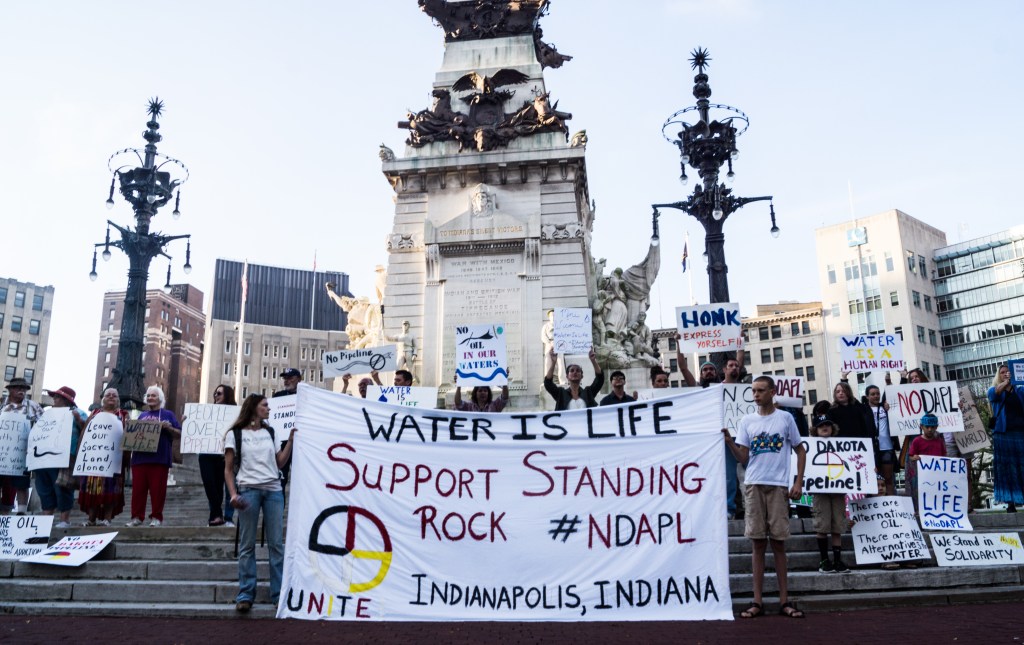
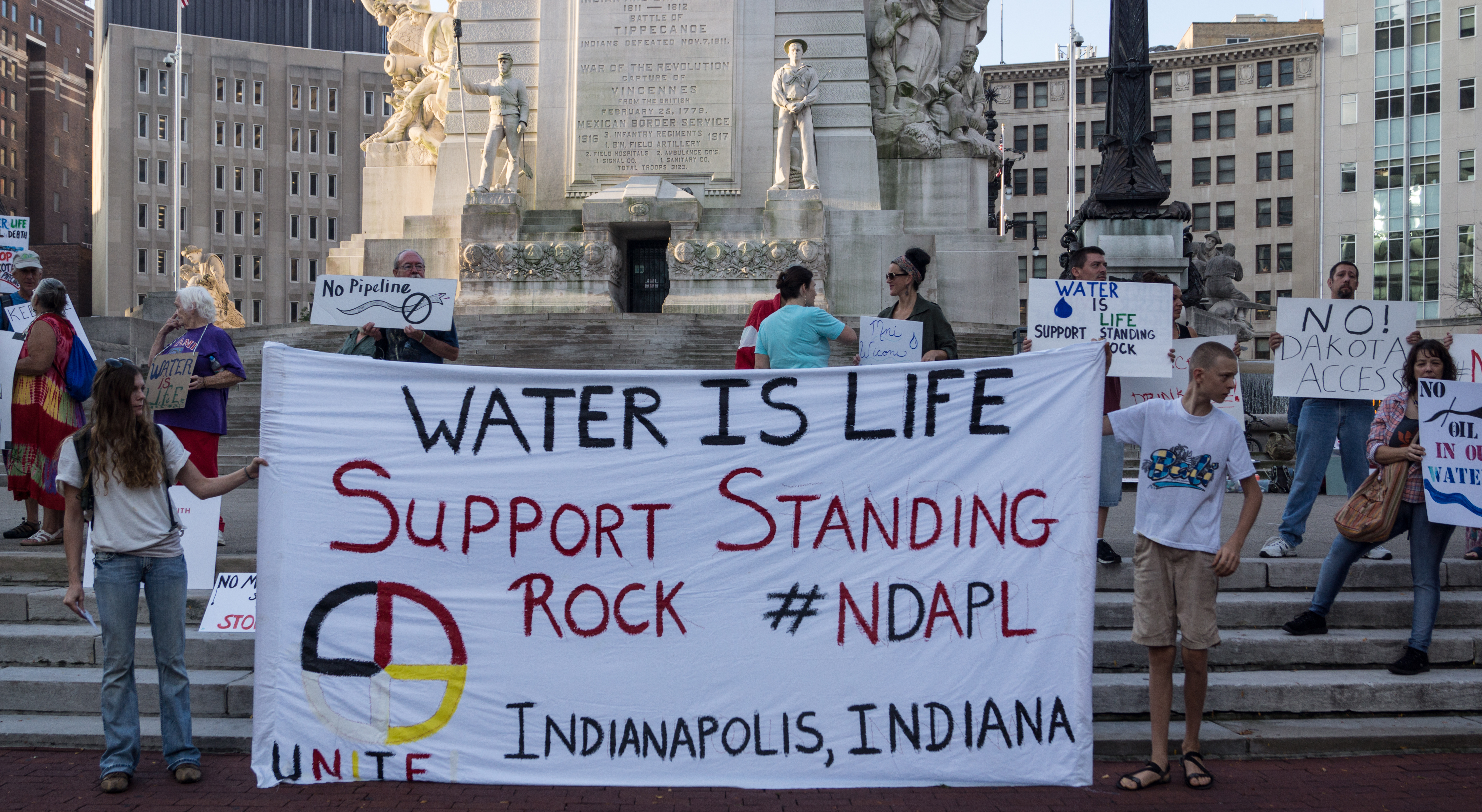
We were able to train others in those skills later when the White Pines Wilderness Academy in Indianapolis wanted to bring attention to the dangers of the Dakota Access Pipeline (DAPL).


Wet’suwet’en peoples

I was always looking for news about fossil fuels and our environment. This blog post from 1/14/2020 describes my discovery of the Wet’suwet’en peoples and their struggles against the Coastal GasLink (CGL) liquid natural gas pipeline being constructed through their pristine territory in British Columbia.

I have just begun to learn about the Wet’suwet’en people. A friend of mine from the First Nation-Farmer Climate Unity March traveled to the Unist’ot’en camp about 4 years ago and found it to be a life-changing experience. I also asked other friends I made during the March about this, and they indicated support for these people.

You may wonder why I am trying to learn and write about the Wet’suwet’en people now. The literal answer is I saw this article recently: Hereditary First Nation chiefs issue eviction notice to Coastal GasLink contractors. TC Energy says it signed agreements with all 20 elected First Nations councils along pipeline’s path. Joel Dryden · CBC News · Posted: Jan 05, 2020.

Any efforts to stop pipelines catch my interest.

Wet’suwt’en People, Jeff Kisling, 1/14/2020

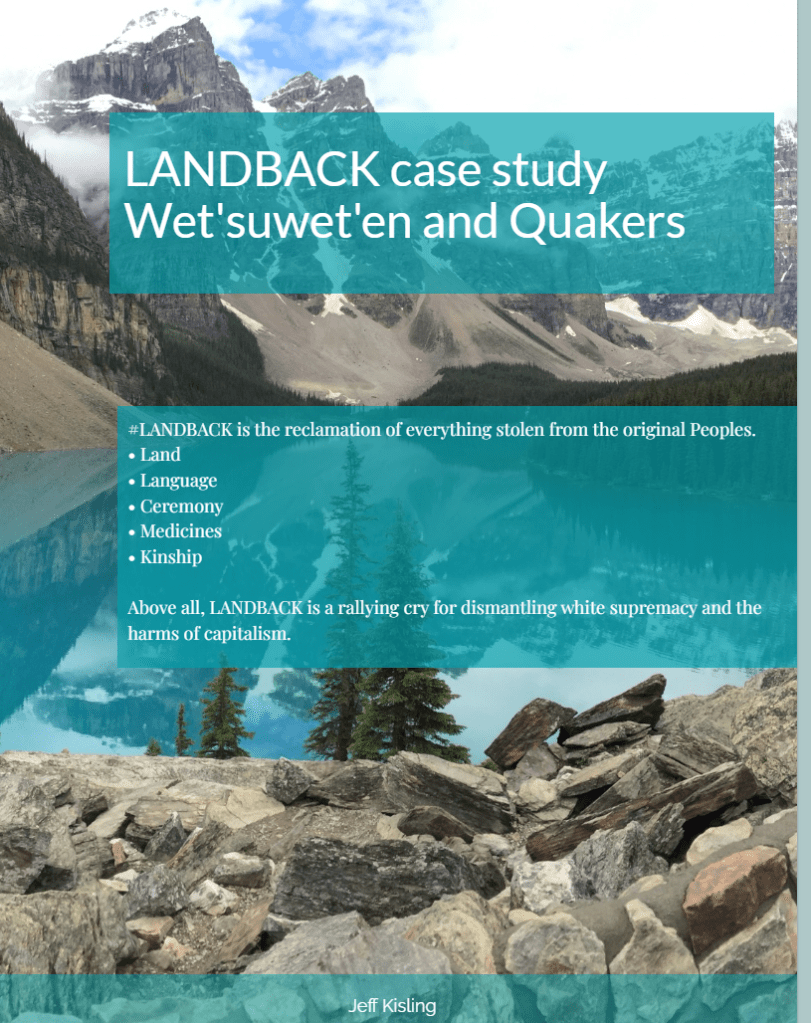
I wrote this booklet about the Wet’suwet’en struggles, including some videos of confrontations with Royal Canadian Mounted Police (RCMP). Assault rifles trained on unarmed youth.


Spirit led connection to Mutual Aid

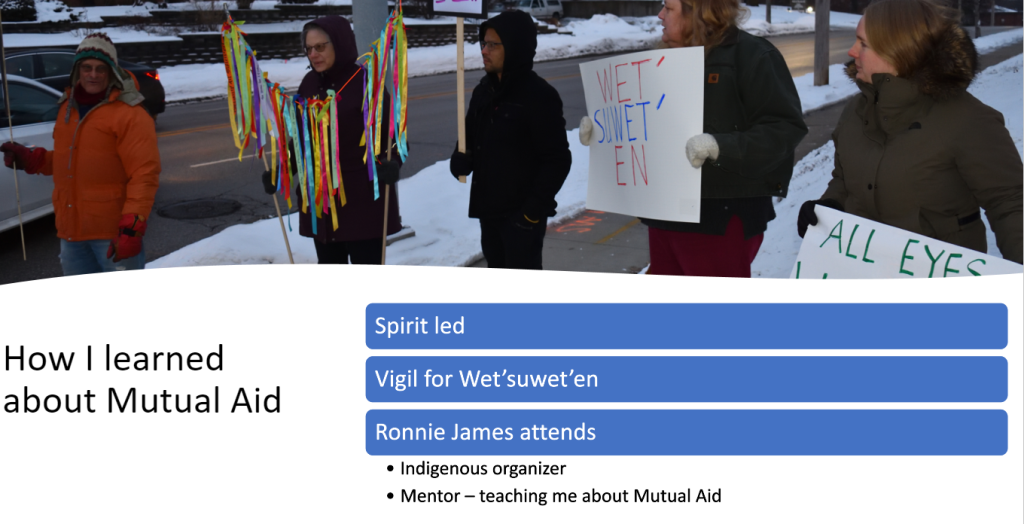
The title THREE YEARS LATER refers to my introduction to Des Moines Mutual Aid a little over three years ago. I took the photo below on Feb 7, 2020, when a small group of us organized a vigil in support of the Wet’suwet’en. I know the Spirit led Ronnie James, from Des Moines Mutual Aid, to join us. He was surprised that anyone outside his circle knew what was happening to the Wet’suwet’en. Ronnie is an Indigenous organizer working with the Great Plains Action Society (GPAS), and as such was interested to see if these were people who could become allies.

That meeting changed my life in many ways, all stemming from what I was learning from Ronnie and others about Mutual Aid, which has become the focus of my justice work since.

Over the years I’ve enjoyed documenting justice actions photographically. I like the challenge of an ever-moving group of people, the varieties of signs, the reactions of the people and the public. But for the past several years posting photos of demonstrations is discouraged if people’s faces are visible. Which police sometimes later use to bring charges against those people.

Ronnie and I are both part of Des Moines Mutual Aid’s free food project. The Wet’suwet’en being part of our history, we continue to support them. Because of COVID and people wearing masks, we were comfortable taking this photo during one of our Mutual Aid gatherings for the food project.

Des Moines Mutual Aid supports Wet’suwet’en peoples’ struggle again Coastal GasLink natural gas pipeline

Three Years Later

And yet, three years later, the Wet’suwet’en peoples’ struggles continue.

FOR IMMEDIATE RELEASE
March 29, 2023
Contact: Jennifer Wickham, Media Coordinator, Gidim’ten Checkpoint, yintahaccess@gmail.com, 778-210-0067

URGENT MEDIA ADVISORY: RCMP C-IRG Raid Wet’suwet’en Village Site, Make 5 Arrests 

VIDEO AVAILABLE HERE

WET’SUWET’EN TERRITORY (Smithers, BC) – This morning, a large force of RCMP C-IRG raided a Gidimt’en village site and arrested five land and water defenders, mostly Indigenous women, including Gidimt’en Chief Woos’ daughter. The raid accompanied a search warrant for theft under $5000 with no clear relation to the Gidimt’en village site.

This large-scale action by the RCMP’s Community Industry Response Group (C-IRG) involved more than a dozen police vehicles and officers drawn from throughout British Columbia. The arrests come just weeks after the Civilian Review and Complaints Commission (CRCC) announced they have “initiated a systemic investigation into the activities and operations of the RCMP “E” Division Community-Industry Response Group (C-IRG).”

In the days leading to this police action, RCMP C-IRG have been found patrolling Wet’suwet’en traplines and cultural use areas, harassing and intimidating Wet’suwet’en members and disrupting constitutionally protected Wet’suwet’en cultural activities. Members of a private security firm hired by Coastal Gaslink pipeline, Forsythe, have also escalated harassment and surveillance efforts against Wet’suwet’en members in recent days. 
Both the RCMP’s C-IRG unit and Forsythe are named as defendants in an ongoing lawsuit launched by Wet’suwet’en members, which alleges that police and private security have launched a coordinated campaign of harassment and intimidation in an effort to force Wet’suwet’en people to abandon their unceded territories. 

Sleydo’, spokesperson for Gidimt’en Checkpoint, said: 

“This harassment and intimidation is exactly the kind of violence designed to drive us from our homelands. The constant threat of violence and criminalization for merely existing on our own lands must have been what our ancestors felt when Indian agents and RCMP were burning us out of our homes as late as the 50s in our area. The colonial project continues at the hands of industry’s private mercenaries–C-IRG”

The arrests come days before Indigenous delegates are set to arrive at Royal Bank of Canada’s Annual General Meeting to oppose expansion of fossil fuels without consent on their territories, including Wet’suwet’en Hereditary Chiefs who oppose RBC’s funding of the Coastal Gaslink pipeline.

Wet’suwet’en Hereditary Chief Na’Moks offered the following:

“This is harassment, and exactly what Royal Bank of Canada is funding. Ahead of its shareholder meeting next week, RBC continues to fund corporate colonialism, and displace Indigenous peoples from our lands at gunpoint – all for a fracked gas pipeline we cannot afford now or in the future. In the context of the theft of our ancestral land, alleging stolen saws and clothing is outrageous.”

https://www.yintahaccess.com/?link_id=0&can_id=c209e67251859e28ba86a98fe9ff687a&source=email-take-the-streets-with-us&email_referrer=email_1865847&email_subject=take-the-streets-with-us

Yesterday morning at my Quaker meeting, we considered the following set of questions related to our environmental responsibilities.

ENVIRONMENTAL RESPONSIBILITY

ADVICE

All of creation is divine and interdependent: air, water, soil, and all that lives and grows. Since human beings are part of this fragile and mysterious web, whenever we pollute or neglect the earth we pollute and neglect our own wellsprings. Developing a keen awareness of our role in the universe is essential if we are to live peacefully within creation.

The way we choose to live each day‑‑as we manufacture, package, purchase and recycle goods, use resources, dispose of water, ‑design homes, plan families and travel‑affects the present and future of life on the planet. The thought and effort we give to replenishing what we receive from the earth, to keeping informed and promoting beneficial legislation on issues which affect the earth, to envisioning community with environmental conscience, are ways in which we contribute to the ongoing health of the planet we inhabit.

Preserving the quality of life on Earth calls forth all of our spiritual resources. Listening to and heeding the leadings of the Holy Spirit can help us develop qualities which enable us to become more sensitive to all life

QUERY

  • What are we doing about our disproportionate use of the world’s resources?
  • Do we see unreasonable exploitation in our relationship ‑with the rest of creation?
  • How can we nurture reverence and respect for life?  How I can we become more fully aware of our interdependent relationship with the rest of creation?
  • To what extent are we aware of all life and the role we play? What can we do in our own lives and communities to address environmental concerns?

Faith and Practice, Iowa Yearly Meeting (Conservative)


Quakers, abortion, and the white Christian problem

The Policy Committee of the Friends Committee on National Legislation (FCNL) is asking Quaker meetings for input for a statement about reproductive justice and abortion.

In the interest of time, I have not yet converted this to a blog post. You should be able to read and/or download “Quakers, Abortion, and the White Christian Problem” using the link below. We plan to discuss this at my Quaker meeting this weekend.

I began collecting various statements about abortion from my Yearly Meeting. Reproductive justice has always been a concern of Indigenous people in this country, so I also included some writings from my Indigenous friends. As can be seen in this document, young people, and especially my Indigenous friends see abortion as a problem of White Christians. I’m wondering what my White Quaker Friends think about that. Does that change how White Friends think and act about reproductive justice? Isn’t this an opportunity to build community amongst all of us?

DISCLAIMER: I am the author of this, and it is not an official publication of any group or organization.


Imperialist contradictions

I’ve had a lifelong struggle to call attention to this country’s flagrant disregard for the need to protect nonrenewable sources of energy and the mounting environmental devastation from our greenhouse gas emissions. Obviously, these are also global issues. We are depleting fossil fuel supplies of the entire world. And our gigantic fossil fuel emissions affect the world.

It is often pointed out that those nations with the lowest emission are most affected by the environmental damage done by “developed” countries.

I haven’t learned enough about these global impacts. This recent paper, Eight Contradictions in the Imperialist ‘Rules-Based Order’ that I’ve been writing about is helping with my education.
(See: https://quakersandreligioussocialism.com/?s=imperialism )


Eight Contradictions in the Imperialist ‘Rules-Based Order’

  • The contradiction between moribund imperialism and an emerging successful socialism led by China.
  • The contradiction between the ruling classes of the narrow band of imperialist G7 countries and the political and economic elite of capitalist countries in the Global South.
  • The contradiction between the broad urban and rural working class and sections of the lower petty bourgeoisie (collectively known as the popular classes) of the Global South versus the US-led imperial power elite.
  • The contradiction between advanced rent-seeking finance capital versus the needs of the popular classes, and even some sections of capital in non-socialist countries, regarding the organisation of societies’ requirements for investment in industry, environmentally sustainable agriculture, employment, and development.
  •  The contradiction between the popular classes of the Global South and their domestic political and economic power elites.
  •  The contradiction between US-led imperialism versus nations strongly defending national sovereignty.
  • The contradiction between the millions of discarded working-class poor in the Global North versus the bourgeoisie who dominate these countries.
  • The contradiction between Western capitalism versus the planet and human life.

The eighth contradiction summarizes the fundamental contradiction, the contradiction between Western capitalism versus the planet and human life.

The inexorable path of this system is to destroy the planet and human life, threaten nuclear annihilation, and work against the needs of humanity to collectively reclaim the planet’s air, water, and land and stop the nuclear military madness of the United States. Capitalism rejects planning and peace. The Global South (including China) can help the world build and expand a ‘zone of peace’ and commit to living in harmony with nature.

With these changes in the political landscape, we are witnessing the rise of an informal front against the US-dominated imperialist system. This front is constituted by the convergence of:

  • Popular sentiment that this violent system is the main enemy of the people of the world.
  • Popular desires for a more just, peaceful, and egalitarian world.
  • The struggle of socialist or nationalist governments and political forces for their sovereignty.
  • The desires of other Global South countries to reduce their dependence on this system.

The main forces against the US-dominated imperialist system are the peoples of the world and the socialist and nationalist governments. However, there must be space provided for integrating governments that wish to reduce their dependency on the imperialist system.

The world currently stands at the beginning of a new era in which we will witness the end of the US global empire. The neoliberal system is deteriorating under the weight of numerous internal contradictions, historical injustices, and economic unviability. Without a better alternative, the world will descend into even greater chaos. Our movements have revived hope that something other than this social torment is possible.

CONTRADICTIONS OF THE IMPERIALIST ‘RULES-BASED ORDER’ by Vijay Prashad, Tricontinental: Institute For Social Research, March 10, 2023


What can those of us in capitalist systems do? We must find alternatives. For me, this has been to become involved in Mutual Aid.
(See: https://quakersandreligioussocialism.com/?s=mutual+aid )


Contradictions of the Imperialist ‘Rules-Based Order’

Have your views about our environmental situation changed? It is more difficult to deny environmental damage in the face of all kinds of climate chaos occurring globally.

Did you know the U.S. Military emits more carbon dioxide than many nations?

This leads to an existential paradox. If we are ever going to begin to mitigate greenhouse gas emissions, we must end military operations. Could this be a path to peace? Or will imperialism continue to feed increasing environmental devastation?

The new document described below, “Eight Contradictions in the Imperialist ‘Rules-Based Order’” identifies conflicts between imperialist nations and the rest of the world.


The Bulletin of the Atomic Scientists has now moved the Doomsday Clock to 90 seconds to midnight, the closest it has been to the symbolic time of the annihilation of humanity and the Earth since 1947. This is alarming, which is why leaders in the Global South have been making the case to halt the warmongering over Ukraine and against China. As Namibia’s Prime Minister Saara Kuugongelwa-Amadhila said, ‘We are promoting a peaceful resolution of that conflict so that the entire world and all the resources of the world can be focused on improving the conditions of people around the world instead of being spent on acquiring weapons, killing people, and actually creating hostilities’.

In line with the alarm from the Doomsday Clock and assertions from people such as Kuugongelwa-Amadhila, the rest of this newsletter features a new text called Eight Contradictions in the Imperialist ‘Rules-Based Order’ (which you can download as a PDF here). It was drafted by Kyeretwie Opoku (the convenor of the Socialist Movement of Ghana), Manuel Bertoldi (Patria Grande /Federación Rural para la producción y el arraigo), Deby Veneziale (senior fellow, Tricontinental: Institute for Social Research), and me, with inputs from senior political leaders and intellectuals from across the world. We are offering this text as an invitation to a dialogue. We hope that you will read, circulate, and discuss it.

We are now entering a qualitatively new phase of world history. Significant global changes have emerged in the years since the Great Financial Crisis of 2008. This can be seen in a new phase of imperialism and changes in the particularities of eight contradictions.

CONTRADICTIONS OF THE IMPERIALIST ‘RULES-BASED ORDER’ by Vijay Prashad, Tricontinental: Institute For Social Research, March 10, 2023

Eight Contradictions in the Imperialist ‘Rules-Based Order’

  • The contradiction between moribund imperialism and an emerging successful socialism led by China.
  • The contradiction between the ruling classes of the narrow band of imperialist G7 countries and the political and economic elite of capitalist countries in the Global South.
  • The contradiction between the broad urban and rural working class and sections of the lower petty bourgeoisie (collectively known as the popular classes) of the Global South versus the US-led imperial power elite.
  • The contradiction between advanced rent-seeking finance capital versus the needs of the popular classes, and even some sections of capital in non-socialist countries, regarding the organisation of societies’ requirements for investment in industry, environmentally sustainable agriculture, employment, and development.
  •  The contradiction between the popular classes of the Global South and their domestic political and economic power elites.
  •  The contradiction between US-led imperialism versus nations strongly defending national sovereignty.
  • The contradiction between the millions of discarded working-class poor in the Global North versus the bourgeoisie who dominate these countries.
  • The contradiction between Western capitalism versus the planet and human life.

In my mind, Indigenous nations, Indigenous homespaces, Indigenous homelessness must be engaged in a radical and complete overturning of the nation-state’s political formations and a refusal of racial capitalism. My vision to create Nishnaabeg futures and presences must structurally refuse and reject the structures, processes and practices that end Indigenous life, Black life and result in environmental desecration. This requires societies that function without policing, prisons, and property.

Nishnaabeg formations of nationhood mean a radical overturning of the current conditions and configurations within which we live—an absolute refusal of capitalism.

Maynard, Robyn; Simpson, Leanne Betasamosake. Rehearsals for Living (Abolitionist Papers) (p. 125). Haymarket Books. Kindle Edition.

Changing course

How straight has the course of your life been?

During my life I’ve changed course many times. Sometimes a change was forced upon me, sometimes a voluntary change. Sometimes both.

I grew up on farms and in small towns in rural Iowa. I hadn’t lived in any cities prior to moving to Indianapolis in 1971. That was a culture shock. I had a tough time seeing how many cars there were and could see and smell the auto exhaust (prior to catalytic converters). I had a Spiritual vision of my beloved Rocky Mountains hidden in clouds of exhaust. That vision played a huge role in the rest of my life.

In one way you might say my vision was wrong. The Rocky Mountains have not, yet, been hidden by smog. Although they are engulfed with greenhouse gases.

In the late sixties we traveled to California. As we approached Los Angeles, our eyes began to water, and we coughed a lot. We were told we would get used to it. And the mountains and hills around Los Angeles were veiled in auto exhaust.

I’d always had objections to people owning personal automobiles. Why own a complex machine that sits idle most of the time? Vast amounts of land became covered by highways. Those in large cities routinely sat in traffic for a long time each day. All the traffic and parking infrastructure, and police. Interstate highways cut through the middle of communities. Little or no mass transit was being created.

I’d also always been interested in science. I learned how fossil fuels were formed, how long that took. And, most importantly, that meant fossil fuel sources needed to be protected, because they were not renewable. Our profligate waste of fossil fuels was energy stolen from future generations.

When I first moved to Indianapolis, it was to join the Friends Volunteer Service Mission (VSM). There, wages from one year of working were saved to support yourself to do service work in that neighborhood the second year. So, there was no money for a car. At the end of those two years, I tried to avoid having a car. But the Metro city bus schedule did not always extend to the hours I was working, nor always run in the neighborhoods I lived in. When someone in the neighborhood offered to sell me his used car for $50, I bought it.

Necessary Evil?

But all this weighed on me spiritually. I knew it was not right to have a fossil fuel-based society/economy. And yet, I began to think having a car was a “necessary evil”, as so many people told me. But how could “evil” be “right”?

After a few years, my car was involved in a traffic accident. Fortunately, no one was hurt, but the car was totaled.

I clearly remember a Spiritual leading, telling me that this was an opportunity to find an alternative to a necessary evil. I had put a lot of prayer and thinking into my discomfort in having a car all during the time I had one.

I had been making some changes that made this look possible now. I moved nearer downtown, since that is where the Medical Center where I was doing research was located. I had to be within walking or running distance of work in case the bus schedule changed. Or more commonly, to get to work on the weekends when the bus schedule was scaled back.

I also made sure a laundromat and grocery store were within walking distance. I had been learning how to shop in a way that I could carry everything home.

Opportunities

My grandmother, Lorene Standing, said the will of God is often revealed in a series of small steps. The above is an illustration of that. With the pieces now in place, I wondered if the accident provided a new opportunity to try to live without a car. I remember a feeling of unease, whether I could really do this. At the same time, there was a much greater awareness that this might be the time. If not, I feared I would fall into the trap of owning a car. There was the fallback possibility, to get a car if this experiment didn’t work out.

Many adventures resulted from making the decision to give up a car. It lifted the burden of the spiritual weight of having a car. It showed me and others that having a car was not a necessary evil. A witness.

Just because you can’t make a difficult choice at one point in your life, doesn’t mean the opportunity won’t come around again.

Changing Course

At the beginning I said sometimes change is forced upon us, sometimes a voluntary choice, sometimes both. Perhaps what we thought was forced upon us was actually a spiritual leading. If that is true, shouldn’t we be paying more attention to the Spirit in our lives?

How did we get here?

I often reflect upon how I don’t know what I’ll end up writing on any given day. I thought I’d be writing about a Zoom meeting I attended that was hosted by Climate Mobilization, an organization that has been going through changes in their approach to call attention to our climate emergencies. I’ve been following their work for years.

Tuesday night was an introduction to Climate Mobilization’s change of course that I’ll be writing more about. I was fascinated to see the emergence of a national/international plan to prepare for climate survival. And to see the pieces that have been coming together for me over the past five years are the same that Climate Mobilization has been going through.

You can see these points in the diagram below.

  • Emphasis on working locally
  • Mutual Aid
  • Indigenous sovereignty
  • Abolition
  • Prefigurative solutions
  • Healing
    • Emotional
    • Spiritual
    • Physical
    • Transformative Mutual Aid Practices (T-MAPs)


Spirit, Justice, Mutual Aid, Healing and Survival

A number of ideas have come together for me lately. So, I’ve taken some time to write the following, putting them all together.

The PDF of Spirit, Justice, Mutual Aid, Healing and Survival can be found below. There is a button to download the PDF.

This is the link to the same PDF document online: spirit-justice-mutual-aid-healing-and-survival.pdf

Additionally, I’ve published an eBook version of the same document here:
Spirit, Justice, Mutual Aid, Healing and Survival eBook version

Feel free to leave comments below.


Spirit, Justice, Mutual Aid, Healing and Survival

They Found Us

Following are stories about the documentary They Found Us by Curt Sipihko Paskwawimostos who is a member of George Gordon First Nation. My friend Christine Nobiss is also a member and has been working to get funds to support the video. The documentary is about the search for unmarked graves at their rez, George Gordon First Nation.

If you click on this image, you will see a remarkable and powerful 3D image that can be moved using your mouse. In an eerie and disturbing way, you find the children.

Well my documentary They Found us got a nomination for best documentary Althens Film Freeway fest. If I win I will be put in for best movie of the year. We’re I would be going to Athens Greece 🇬🇷 for the film fest 🤞🤞🤞❤️❤️❤️🦅🦅🦅
Let’s just see what happens ❤️❤️
Curt Sipihko Paskwawimostos


As described in the following letter, the project was originally for a compilation of Elder’s narratives. But during the initial interviews, the findings of the 215 bodies outside the Kamloops residential school changed the direction of the documentary. To focus on the process that George Gordon’s First Nation was undertaking related to the unmarked graves or bodies at the GGFN reserve’s residential school.

March 27, 2022

This letter in regards to a request for financial support for a documentary title “They Found Us”, to support community presentations of this film that I produced.

My name is Curt Young and I a member of the George Gordon’s First Nation.  I am a descendant of Mike Longman, along with my mother Longman-Young; both members of this nation.  The development of this documentary was an intent for myself to learn more about my maternal familial lineage, as I had not grown up on GGFN and wanted more connections to my cultural heritage.  I applied for the “Peoples Investment Grant”, while residing in Calgary and was a successful candidate.  These funds were intended to financially support a compilation of Elder’s narratives, however, during the initial interviews, the findings of the 215 bodies outside of the Kamloops residential schools, inspired myself to change the direction of the documentary.  I decided to focus more on the process that GGFN reserve’s undertaking of a ground search outside of the local residential school; to see if there were any unmarked graves or bodies buried there. 

Over the past year, I have made three trips to GGFN to obtain footage of the community’s initial activities related to the ground search of the area.  Aside from the footage of the community, I also have compiled interviews from GGFN members, and other Indigenous people, including leaders and Elders, that have shared their own narratives and experience with residential schools.  The budget that I was provided by the grant I received was allocated to travel costs associated with these trips to GGFN, along with the rental of video technological equipment, necessary to create the documentary.  I have spent time and effort into producing this documentary and have been promoting it through various online platforms, along with connections I have within Indigenous communities, both urban and rural.  I have much interest in public showings of this documentary, particularly since June is coming up, with it being National Indigenous Peoples month.  One showing that I have confirmed is the first week of June; at Fort Calgary.  Although I am quite excited for the interest and opportunities, I would like to honour my home community and acknowledge the stories that are compiled in my documentary, by having the first public showing of “They Found Us” on GGFN.

In order for myself to bring the documentary to GGFN I am requesting funds to support my travel, accommodation and honorarium for traditional drummers and possibly a dancer to create a healing and culturally safe space for a community show.  My first showing that I have booked for this documentary is June 4, 2022, thus, I am asking to have funds to showcase the documentary on GGFN prior to this date. 

Curt Sipihko Paskwawimostos


History of involvement of Iowa Yearly Meeting (Conservative) Friends

My relative, Curt Sipihko Paskwawimostos, created “They Found Us”. It’s a documentary about the search for unmarked graves at our rez, George Gordon First Nation. I hope we can bring it here to Iowa in the near future. My cousin Janna Pratt is featured in the film.

“I thought it would be important to document these searches and capture some of the stories told by members that were forced to go to these institutions. It’s a first hand look into some of the experiences survived in residential school.”

The film delves into members’ recollections along with the process towards the first ground search of Gordon Residential School before Ground Penetration Radar (GPR) in 2021. This is only the beginning…

I want to say thank you to Jeff Kisling and the Iowa Quaker community for the donation that will help get the film seen. If others would like to help support this work, hit me up.

Sikowis (Christine) Nobiss


During the 2017 annual sessions of Iowa Yearly Meeting (Conservative) there was panel discussion about building bridges with native peoples. The panel consisted of Peter Clay, an Iowa Friend, Donnielle Wanatee from the Meskwaki Settlement, and Sikowis (Christine) Nobiss, one of the most active Indigenous leaders in the Midwest. All three have played a large role in my connections with Native Americans since. 

In February 2018, I was part of a group who went to Minneapolis to protest US Bank’s funding of oil pipelines. Sikowis spoke at that gathering. 

I began to get to know Sikowis when she and I were among a small group of native and non-native people who walked and camped for eight days along the route of the Dakota Access pipeline, from Des Moines to Fort Dodge, Iowa. Iowa Friend Peter Clay was also on this First Nation-Farmer Climate Unity March.  Jon Krieg (AFSC) joined us for the first day. And my Scattergood School roommate Lee Tesdell participated in one of the evening discussions during the March. Another Iowa Yearly Meeting Friend, Liz Oppenheimer, organized a time of worship sharing and prayer among Friends each morning, supporting our sacred journey. 

Last year I was clerk of Iowa Yearly Meeting (Conservative)’s Peace and Social Concerns Committee. The committee had a small budget to support organizations doing justice work. Last year we were led to a choice of rather than giving token amounts to a number of organizations, to instead see if an opportunity arose to give the entire budget to make an impact on the work that presented itself. I believe because of our discussions about the residential schools, Sikowis asked if Quakers could support showings of the film “They Found Us” that had been made about the residential school of her nation, the George Gordon First Nation. Our Peace and Social Concerns Committee gladly agreed to donate our budget to this.


Ay hai kitatamihin, 
Sikowis (Fierce), aka, Christine Nobiss, she/her
Plains Cree/Saulteaux, George Gordon First Nation
Executive Director, Great Plains Action Society
sikowis@greatplainsaction.org 
Web – greatplainsaction.org
FB – @GreatPlainsActionSociety
IG – @greatplainsactionsociety
Tw – @PlainsAction