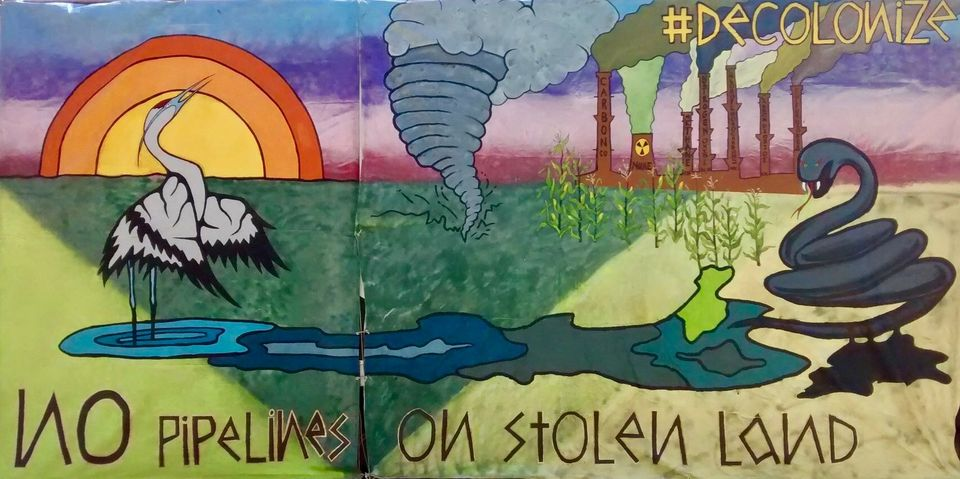
INDIGENOUS COMMUNITIES RISE TO RESIST CARBON PIPELINES

NOTE: I am truly blessed to have many Indigenous friends, many who are involved in the Great Plains Action Society (GPAS), including the founder Sikowis Nobiss. As a White person I’ve tried hard to learn how to appropriately engage with my friends. I’ve made mistakes.
I’ve written a lot about my experiences, hoping other White people might benefit.
(See: http://bit.ly/3FIx6yd)


This is a continuation of a series of posts related to The Great Carbon Boondoggle report about proposed carbon pipelines in the Midwest, and the resistance to them.

The first paragraph of the following section of the report highlights the environmental racism common to pipeline projects in this country. The original route of the Dakota Access pipeline was changed after the people of Bismarck, North Dakota raised concerns about the impact on their drinking water. The new route was near the Standing Rock Reservation.

Environmental racism is one of the reasons Des Moines Black Liberation Collective is part of the Buffalo Rebellion. (See: bit.ly/3PL3G79)


INDIGENOUS COMMUNITIES RISE TO RESIST THE PIPELINE

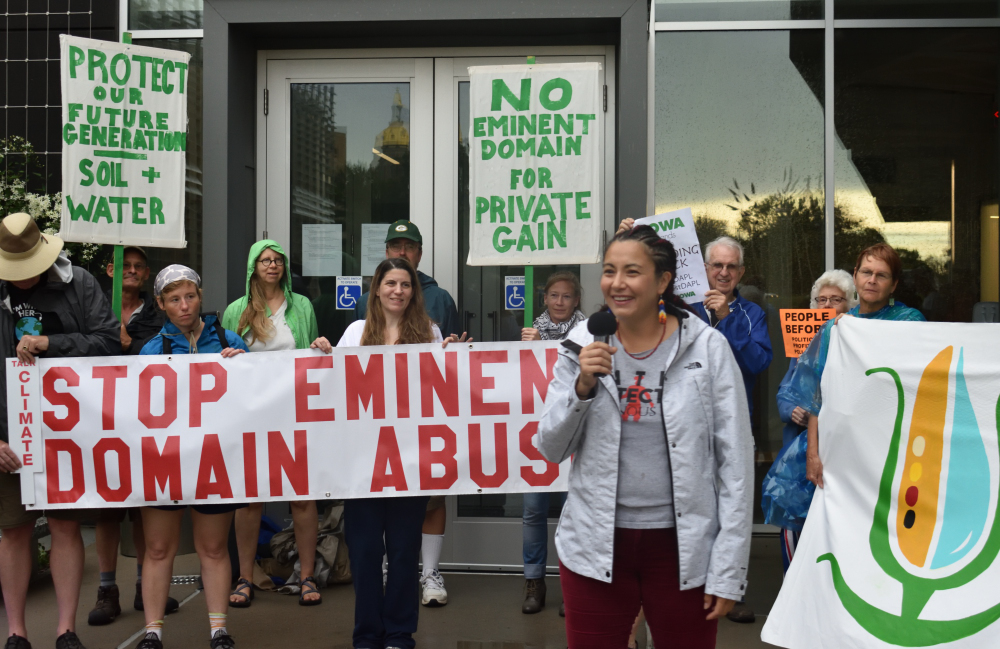
The proposed route for Summit’s pipeline will pass near several Native American reservations and cities with high Indigenous populations across the Midwest. This has sparked massive resistance from frontline communities, all too familiar with the devastation these projects bring. While the landowners’ opposition has garnered most of the media coverage, Indigenous groups are firmly against the pipeline. Great Plains Action Society (GPAS), a non-profit advocating for Indigenous communities throughout the Midwest, opposes the Midwest Carbon Express, stating it “only serves the interests of the fossil fuel industry.” GPAS is working alongside area tribes, including the Ho-chunk (Winnebago) and Umonhon (Omaha) Nations, to mobilize against the project.

On June 2, 2022, the Winnebago Tribe of Nebraska — which has reservations in Dakota County, Nebraska, and Woodbury County, Iowa — requested that the Iowa Utilities Board (IUB), the US Army Corps of Engineers and the two counties, conduct independent environmental impact studies of the pipeline. The request was filed given Summit’s proposed pipeline route comes near their land and the Missouri River. On October 6, 2022, the IUB denied the request, stating, “IUB will consider specific environmental issues raised by the IUB and the parties in the Summit Carbon docket as part of the public evidentiary hearing and in consideration of whether to grant Summit Carbon a hazardous liquid pipeline permit.” [35] The decision follows the precedent set by the IUB in 2015 during approval for the Dakota Access Pipeline, where the regulatory body found “no explicit legal requirement, in statute or in rules, for an independent environmental impact report as a part of the permit proceeding.” [36]

The Great Carbon Boondoggle, Inside the Struggle to Stop Summit’s CO2 Pipeline, The Oakland Institute

The IUB’s rejection of an independent environmental impact study on the project has heightened fears of the devastation that would occur in the event of a pipeline rupture. According to the Iowa Chapter of Physicians for Social Responsibility, in the case of a rupture, “extremely cold liquid CO2 forms a cloud that settles on the ground and displaces oxygen — potentially sickening or killing people and animals for miles around and rendering internal combustion engines inoperable.” [37]
In February 2020, a carbon pipeline in Yazoo County, Mississippi, exploded and immediately impacted residents of the nearby small town of Sartia. Just minutes after the explosion, people passed out up to three quarters of a mile away from the pipeline. “I thought I was gonna die,” said Linda Garrett, a Sartia resident. [38] The explosion led to 45 people being hospitalized and the evacuation of 300 residents. Following the rupture, the Yazoo County Emergency Management Agency Director, who oversaw the response effort, warned, “We got lucky…If the wind blew the other way, if it’d been later when people were sleeping, we would have had deaths.” [39]

For some Winnebago tribe members, the question is not if the pipeline will rupture but when. “Pipelines break all the time as you are putting manmade material against Mother Nature, something we cannot control.” [42] A rupture could be catastrophic, especially if it occurred near tribal lands with limited response resources. “I like to think we are resourceful on the reservation but when the pipeline breaks, how are we going to be able to get people the help that they need? We don’t have the capacity as first responders and emergency personnel to protect our people in that situation.” [43]
Given the lack of experience dealing with large-scale carbon pipeline ruptures, even larger urban areas are currently unprepared, as they lack the necessary special equipment and emergency response training. [44] With majority of the Indigenous people living outside the reservation land and in nearby cities that will be near the proposed pipeline route, they too will be in danger in case of a rupture. Sikowis Nobiss, Executive Director for GPAS, also noted the danger a rupture will pose to farmworkers, “There are areas with large groups of migrant workers and it is doubtful they be given the necessary protective equipment in case of a pipeline rupture. So far, nobody is talking to them about this project and their communities are unaware of the dangers.”

Indigenous communities have also raised concerns with the project degrading the land and disturbing sacred ceremonial and burial sites. [45]

Indigenous communities, rightfully, are also sounding the alarm on the impact an influx of transient pipeline construction workers will have. In the past “man-camps” — built for out of state workers for large construction, fossil fuel, or natural resource extraction projects — have led to increased risk of violence towards Indigenous communities. [49] The former UN Special Rapporteur on the Rights of Indigenous Peoples, James Anaya, corroborated, “Indigenous women have reported that the influx of workers into Indigenous communities as a result of extractive projects also led to increased incidents of sexual harassment and violence, including rape and assault.” [50]

Calling for a “reduction and phasing out of fossil fuels as a wider part of a just transition,” GPAS challenges CCS projects like the Midwest Carbon Express for delaying necessary action. Sikowis Nobiss, Executive Director for GPAS, has called for necessary investments to restore prairie across Iowa and the Midwest. “The colonial capitalist model sees our prairie land as ‘empty trash’ when in fact restoring it would control erosion and sequester lots of carbon — solving many of the biggest issues caused by Big Ag.” [54] Indigenous communities have experience resisting past pipeline projects and are building from it in resisting Summit. “Carbon pipelines are nothing new to us. Standing Rock educated us on how to build power within our own communities — but not only that — it taught us how to build that resistance against the pipeline route,” said Etringer. [55] Mobilization of Indigenous communities against the project stems from a commitment to protect the land despite historical injustices. Sikowis Nobiss explained what is driving these efforts: “We continue to put aside the historical trauma we face to help protect stolen land… this hurts your head and your heart, but we continue to support this work.” [56]


Great Plains Action Society’s Statement on C02 Pipelines

Great Plains Action Society is firmly opposed to proposed carbon capture and sequestration or storage (CCS) projects (aka, CO2 Pipelines) such as Summit’s Midwest Carbon Express, Navigator’s Heartland Greenway, and Wolf Carbon Solutions’ ADM pipelines. The reasons for our opposition are numerous, however, our greatest concern is that CCS only serves the interests of the fossil fuel industry and that the government will sanction further land theft and harm to communities on Indigenous territories. Carbon capture and sequestration is by design a way to prolong the usage of fossil fuels while reducing CO2 emissions. Amidst this climate emergency, we must demand a reduction and phase out fossil fuels as a wider part of a just transition. 

We are also concerned about intense water usage as drought and warmer temperatures are greatly affecting access to clean water. Fossil fuel companies have known that their products were contributing to climate change for over forty years and now they see CCS as a government bail-out with many governmental subsidies providing just the type of perverse incentive for CCS operators to manipulate the system. Additionally, there are the same concerns present with other pipeline projects in the area regarding degradation of the land, disturbance of sacred ceremonial and burial sites. CO2 pipelines are also dangerous because when they rupture, they can spread over 1300 ft in under 4 min making it impossible to breathe and for vehicles to drive. First responders are not at all prepared to deal with such a catastrophe and many have been pushing back C02 pipelines for this reason alone. Furthermore, Indigenous communities will inevitably face encroachment on to treaty land, including environmentally racist moves on behalf of individual states to make sure that CCS does not negatively affect wealthy, white communities with influential power.

CCS is greenwashing rather than a solution to the climate emergency that Iowans deserve, as Indigenous people, we remain committed to the water, the land, and the future generations of Iowans.  

http://bit.ly/3PLkhrN


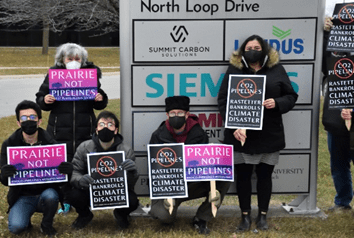
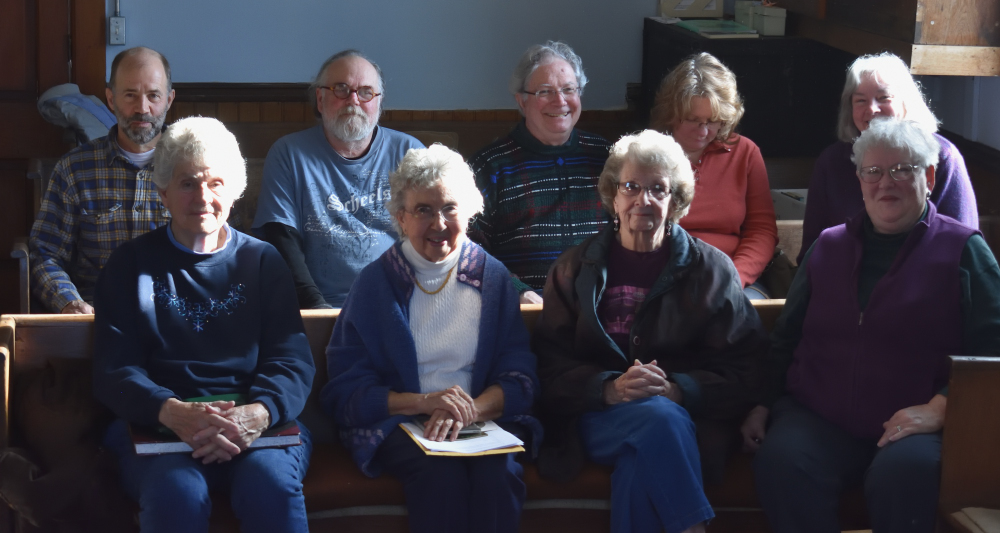
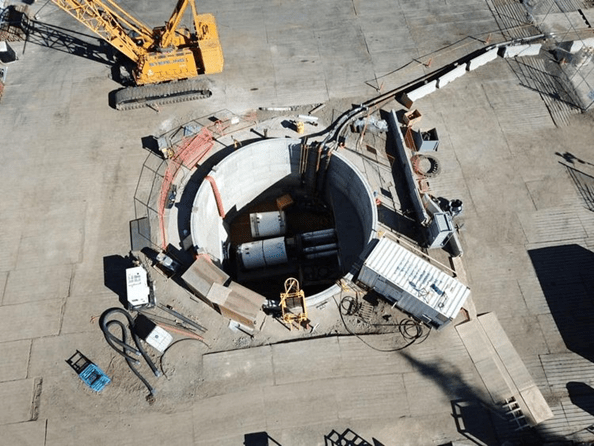
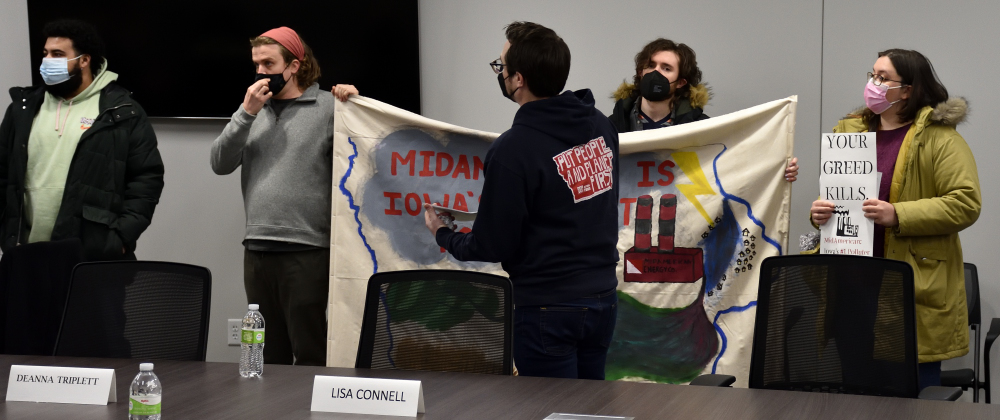
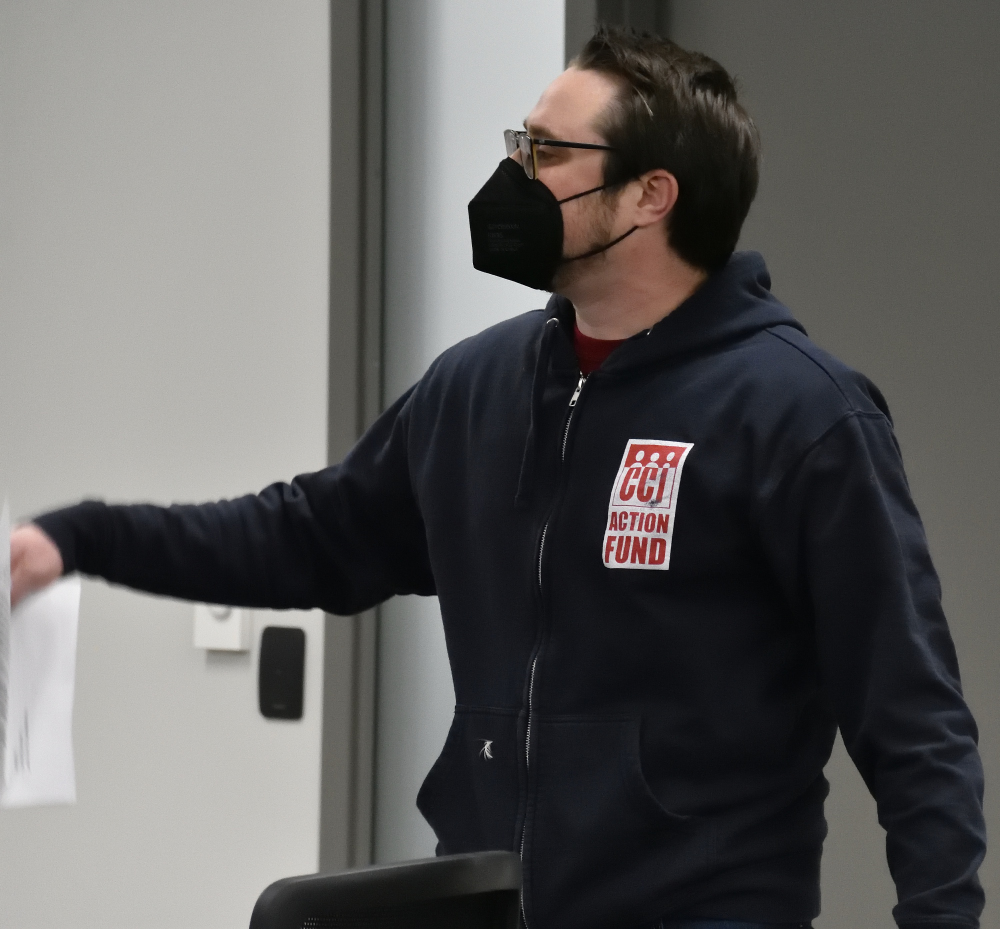
Here are some photos I’ve taken related to our Buffalo Rebellion’s carbon pipeline resistance.


Endnotes

35 Iowa Utilities Board. “IUB Addresses Request for Environmental Impact Study on Proposed Summit Carbon Solutions CO2 Pipeline.” Press Release. October 6, 2022.
https://iub.iowa.gov/press-release/2022-10-06/iub-addresses-request-environmental-impact-study-proposed-summit-carbon
36 Eller, D. “Iowa pipeline regulators reject tribe’s request for environmental impact study.” Des Moines Register, October 10, 2022.
https://www.desmoinesregister.com/story/money/business/2022/10/10/winnebago-tribe-loses-bid-require-summit-carbon-pipeline-iowa-environmental-impact-study/69545547007/

37 Zegart, D et al. Fact Sheet: CO2 Pipeline Safety. Iowa Chapter Physicians for Social Responsibility, September 14, 2022.
https://psriowa.org/PDFs/ccs2022/2022-09-14_fact_sheet_co2_pipeline_safety.pdf
38 Warden, B. “Residents near CO2 pipeline rupture in Mississippi share their story.” DakotaNewsNow, October 6, 2022.
https://www.dakotanewsnow.com/2022/10/06/residents-near-co2-pipeline-rupture-mississippi-share-their-story/
39 Zegart, D. “The Gassing of Sartia.” HuffPost, August 26, 2021.
https://www.huffpost.com/entry/gassing-satartia-mississippi-co2-pipeline_n_60ddea9fe4b0ddef8b0ddc8f

42 Direct communication with Trisha Etringer, Operations and Missing and Murdered Indigenous Relatives Director, Great Plains Action Society. October 11, 2022.
43 Ibid.
44 Iowa Sierra Club Chapter. “Carbon Pipelines: A Disaster Waiting to Happen.” Webinar. September 19, 2021. https://www.youtube.com/watch?v=1K_w5VzBZ6s
45 Great Plains Action Society. “No CO2 Pipelines.”
https://www.greatplainsaction.org/ccs?fbclid=IwAR3-8F-0Db5iijQl95YhMf_AhiI44yzbUrJafW3UH6fmzfXRbh9D8hJJCjs
49 Great Plains Action Society. “The Impact of CO2 Pipelines and ‘Mancamp Construction.” Webinar. September 19, 2022
https://www.facebook.com/GreatPlainsActionSociety/videos/623167659476503
50 Great Plains Action Society. “UN PFII Intervention on Man-Camps and Violence in Indigenous Communities.” May 3, 2019.
https://www.greatplainsaction.org/single-post/un-pfii-intervention-on-man-camps-and-violence-in-indigenous-communities
54 Direct communication with Sikowis Nobiss, Executive Director, Great Plains Action Society. October 13, 2022.
55 Direct communication with Trisha Etringer, Operations and Missing and Murdered Indigenous Relatives Director, Great Plains Action Society. October 11, 2022.
56 Direct communication with Sikowis Nobiss, Executive Director, Great Plains Action Society. October 13, 2022.


The Great Carbon Boondoggle

Publisher: The Oakland Institute is an independent policy think tank bringing fresh ideas and bold action to the most pressing social, economic, and environmental issues. This work is licensed under the Creative Commons Attribution 4.0
International License (CC BY-NC 4.0). You are free to share, copy, distribute, and transmit this work under the following conditions:
Attribution: You must attribute the work to the Oakland Institute and its authors.
Non-Commercial: You may not use this work for commercial purposes.

ACKNOWLEDGEMENTS
This report was authored by Andy Currier, Eve Devillers, and Frédéric Mousseau and draws from the previous Oakland Institute publication: The Midwest Carbon Express: A False Solution to the Climate Crisis.
Special thanks to the landowners and Indigenous community members who shared their experiences. Several remain anonymous to protect their identities

The Great Carbon Boondoggle, Inside the Struggle to Stop Summit’s CO2 Pipeline, The Oakland Institute
Truthsgiving 2022 Pledge

Sadly, but importantly, white settler colonists such as me, at least those paying attention, are learning a great deal about the genocide of native peoples, in large part facilitated by the institutions of forced assimilation. Sometimes referred to as Indian boarding or residential schools, though school is a misnomer, an example of whitewashing. The remains of thousands of native children are being located on the grounds of these institutions in this country and Canada.
whitewash: deliberately attempt to conceal unpleasant or incriminating facts about (someone or something):

The following was written by my friend Sikowis Nobiss.

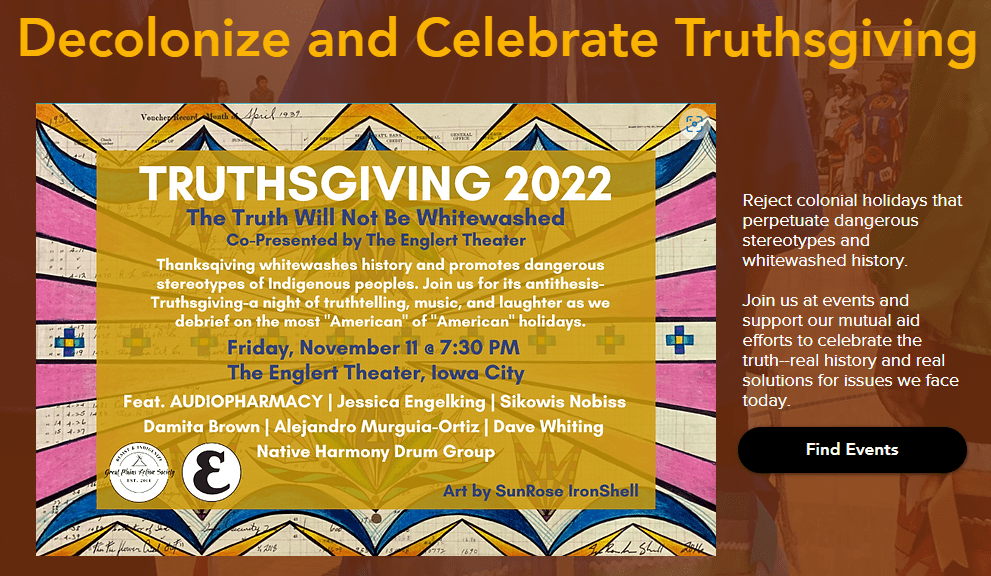
There are many settler colonial mythologies about Native Americans. These widely held but false beliefs are rooted in deeply entrenched discriminatory attitudes and behaviors that are perpetuated by institutionalized racism. One of the most celebrated mythologies is the holiday of Thanksgiving, which is believed, since 1621, to be a mutually sanctioned gathering of “Indians” and Pilgrims. The truth is far from the mythos of popular imagination. The real story is one where settler vigilantes unyieldingly pushed themselves into Native American homelands, and forced an uneasy gathering upon the locals.

In the words of Wamsutta Frank James, Wampanoag, “the Pilgrims had hardly explored the shores of Cape Cod four days before they had robbed the graves of my ancestors, and stolen their corn, wheat, and beans.” These words came from his 1970 Thanksgiving Day speech, which he wrote for the annual celebration of the landing of the Pilgrims held every year in Plymouth, Massachusetts. However, this speech was never presented; the organizers of the celebration reportedly asked to see his speech ahead of time, according to James’ obituary in the Boston Globe, and allegedly asked him to rewrite it on the basis that his words were not aligned with the popular mythology. He instead declared Thanksgiving a National Day of Mourning.

Thanksgiving Promotes Whitewashed History, So I Organized Truthsgiving Instead by Sikowis, aka, Christine Nobiss, Bustle, November 16, 2018


This website of the Great Plains Action Society has many resources for those who want to learn more. TRUTHSGIVING. The Truth will not be whitewashed.


“The following resources are available so that folks can learn more about Indigenous perspectives on Thanksgiving, the land they live on, how to be a good ally, and how they can decolonize their minds in order to abolish personal and institutionalized white supremacy.” https://www.truthsgiving.org/resources

Foundational Stories: What’s next? 11/4/2022

[My foundational stories are related to the intersections between my Quaker faith, protecting Mother Earth, and photography. My faith led me to try to share my spiritual experiences and show my love for the beauty of Mother Earth through photography.]

Reflecting and praying about my foundational stories has taken a long and circuitous path. From how my stories began, how they evolved, and what their status is now. https://quakersandreligioussocialism.com/foundational-stories/

Having finally written about where things stand now, I’ve been led to see the process doesn’t end there.

What’s next?


Photography

As mentioned, photography is one part of my foundational stories. Photography is usually a Spiritual exercise for me. Something that soothes my spirit. And a way to share beauty with others. I’m about to go out into the pouring rain this morning. I like to capture raindrops on plants. Not so much getting cold and wet, but that’s part of it.


There are so many things to discuss and do about where to go from here. What follows is just one example of something that can be done now. Doing is the significant part.

Faith

Only the Creator knows what’s next. Faith has been and continues to be where I seek guidance. What role does faith play in the lives of others? How do we make Spiritual connections, build Spiritual communities?

What (more) can we do to acknowledge past and/or current injustices? What are we called to do about these injustices?

Mother Earth

Mother Earth is severely damaged and the many, severe consequences are increasingly widespread and catastrophic.

We cannot achieve a sustainable and just society unless we change to

  • Simpler lifestyles, much less production and consumption, much less concern with luxury, affluence, possessions and wealth.
  • Small, highly self-sufficient local economies, largely independent of the global economy. 
  • More cooperative and participatory ways, enabling people in small communities to take control of their own development.
  • A new economy, one that has no growth, is not driven by profit or market forces,  produces much less than the present economy, and is provides sufficient for satisfactory lifestyles for all.
  • Some very different values, especially frugality, self-sufficiency, giving, sharing and cooperating, and the rejection of acquisitiveness and competition.

The Simpler Way: Working for transition from consumer society to a simpler, more cooperative, just and ecologically sustainable society. https://thesimplerway.info/


Now?

Most of the world is overwhelmed by so many pressing problems. Rather than working on solutions, there seems to be a global malaise. My experience and Spiritual guidance have been to focus on a specific problem. One thing you can actually do.

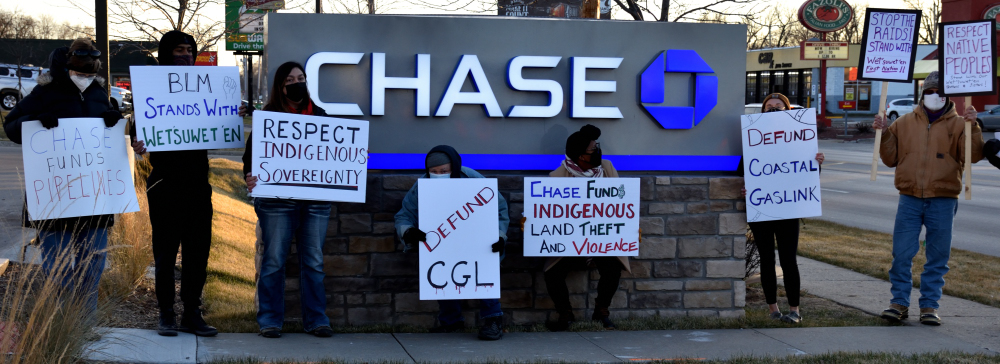
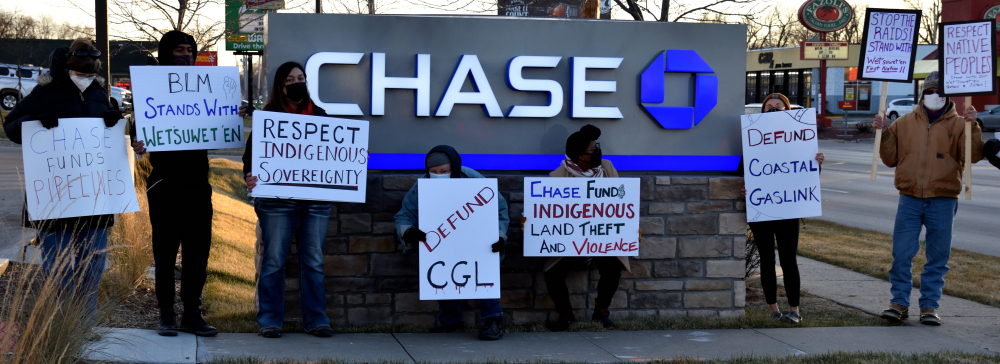
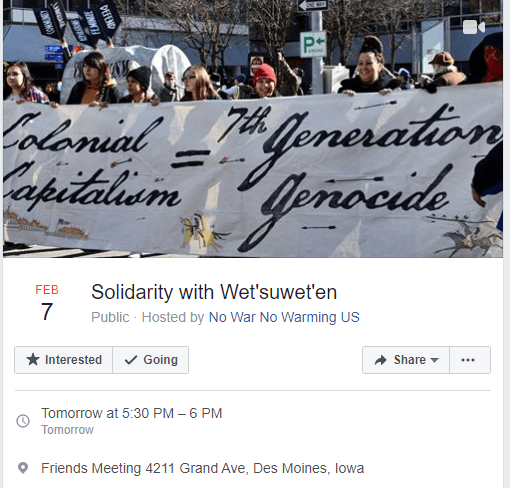
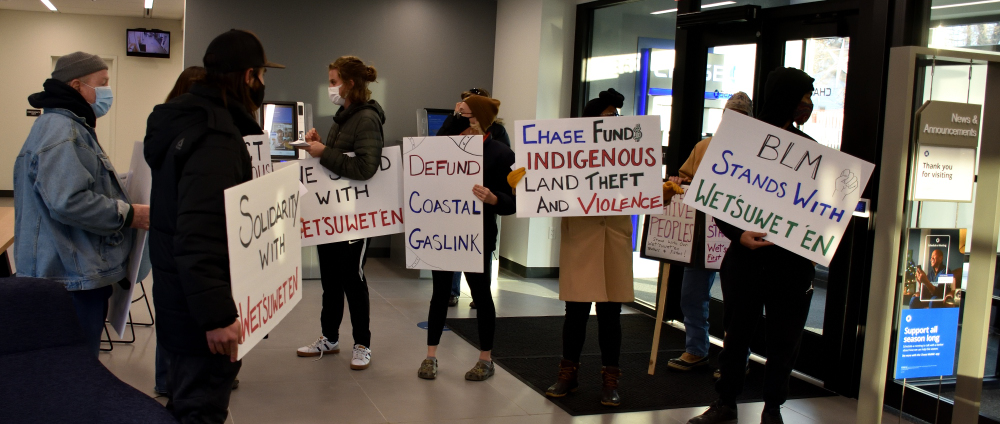
As an example, I’ve been led to support the Wet’suwet’en peoples’ call for international acts of solidarity on February 5th as they continue their years long work to stop the construction of the Coastal GasLink pipeline through their pristine lands. Armed Royal Canadian Mounted Police have provided protection for the construction, and much of the pipeline is complete. There is great urgency now because drilling under the river has begun.

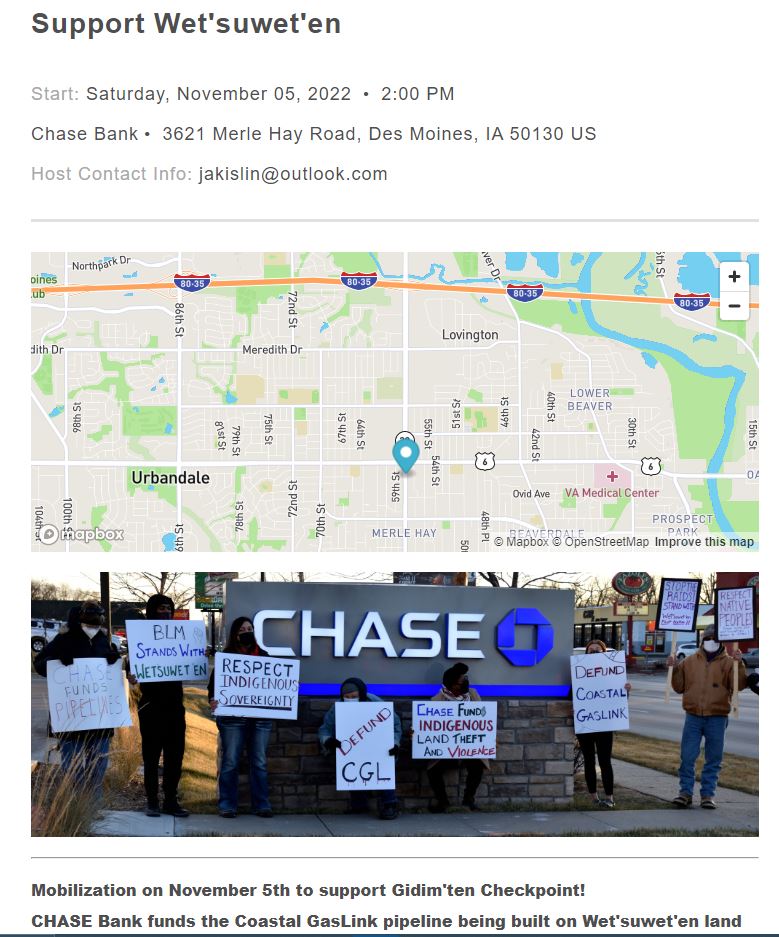
You can look for such an event near you here although there are only two events in the U.S. That’s discouraging but makes it all the more important to show up, even though I might be the only one at the CHASE bank tomorrow.
https://actionnetwork.org/event_campaigns/drilling-under-wedzwin-kwa-allid-mobilization

You can learn more about the Wet’suwet’en from this eBook I just completed:
https://designrr.site?i=gzmf&t=2bb0c9 To be an ally you must understand the history and issues.


Foundational stories now: Quaker faith

[My foundational stories are related to the intersections between my Quaker faith, protecting Mother Earth, and photography. My faith led me to try to share my spiritual experiences and show my love for the beauty of Mother Earth through photography.]

I’ve been praying and struggling for many days to discern how to express the state of my Quaker faith today. Quakerism is the faith community I was born into and have remained in. I was raised in a White Quaker family and community. I had a Spiritual experience at the Bear Creek Meetinghouse when I was about ten years old, an experience that I have drawn upon for the rest of my life. I attended Scattergood Friends School, a Quaker high school, and Earlham College, a Quaker institution.

One of the reasons I accepted the challenge of reflecting on my foundational stories is because of my crisis of faith now.

I think it is common for people to be disappointed by their faith community at various times, for a variety of reasons. That has been true for me. Coming of age during the Vietnam War I wished more young men had resisted the draft. I wish we all had done more to reign in the use of fossil fuels. And that White people like myself had worked, harder to acknowledge our complicity in the oppression of Black, Indigenous, and other people of color (BIPOC), of various gender identities, and certain social and economic classes. I wish we were working harder now on acknowledging and trying to heal these injustices.

This country was built on the historical injustices of the institution of slavery, and the genocide and removal of Indigenous peoples from their lands. And the forced assimilation of native children in institutions where they were often physically and sexually abused, where thousands of children were killed or died.

Many people, including Quakers today question how complicit our ancestors were in these injustices. There were White Quakers who were involved in the slave trade, and who enslaved Black men, women, and children. Our ancestors were settler colonists. As are we who are now living on these lands. Quakers were involved in the Indian residential schools.

being involved with others in wrongdoing

complicity

These issues often generate significant emotional responses. I don’t have all the answers. But I have had spiritual and community experiences that I am led to speak and work from today. Many of these experiences have led me to understand we are living in a country, a society of structural racism and white superiority. As much as many of us White Quakers wish it weren’t so, our skin color automatically gives us many significant advantages in this country.

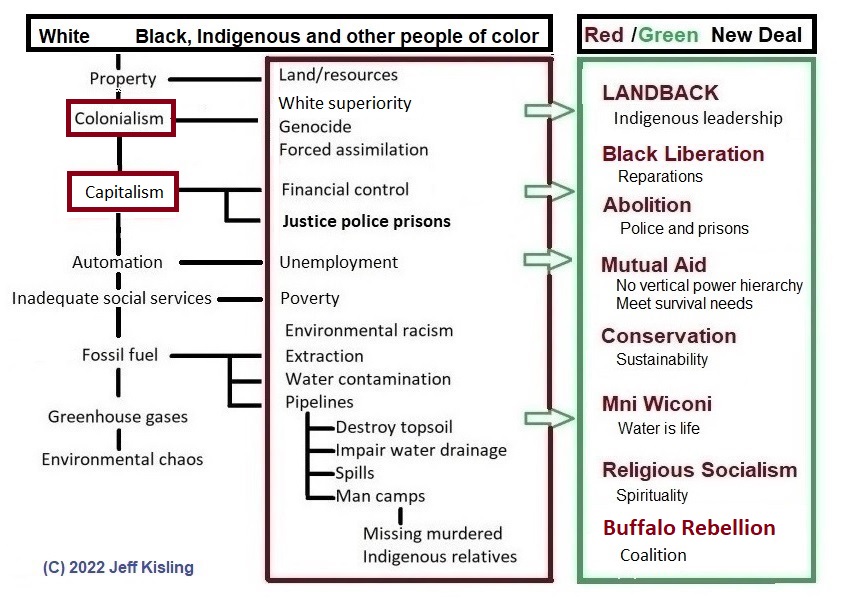
Our mainstream social, economic, and political systems are predicated on White superiority and dominance. I say mainstream because many people, including myself, are building alternative systems today. I’ve been deeply involved in Mutual Aid for a couple of years and believe this to be part of the answer. Mutual Aid is included in the following graphics.

NOTE: White supremacy is different from white superiority. “White supremacy or white supremacism is the belief that white people are superior to those of other races and thus should dominate them.”

Wikipedia

I’ve also seen in the lives of my friends what I once thought of as isolated historical traumas have been passed from generation to generation. They profoundly affect the lives of people today. What does that mean for White Quakers now?


“…capitalism and colonialism created structures that have disrupted how people have historically connected with each other and shared everything they needed to survive. As people were forced into systems of wage labor and private property, and wealth became increasingly concentrated, our ways of caring for each other have become more and more tenuous.”

Dean Spade, Mutual Aid: Building Solidarity During This Crisis (and the Next) (Kindle Locations 111-121). Verso

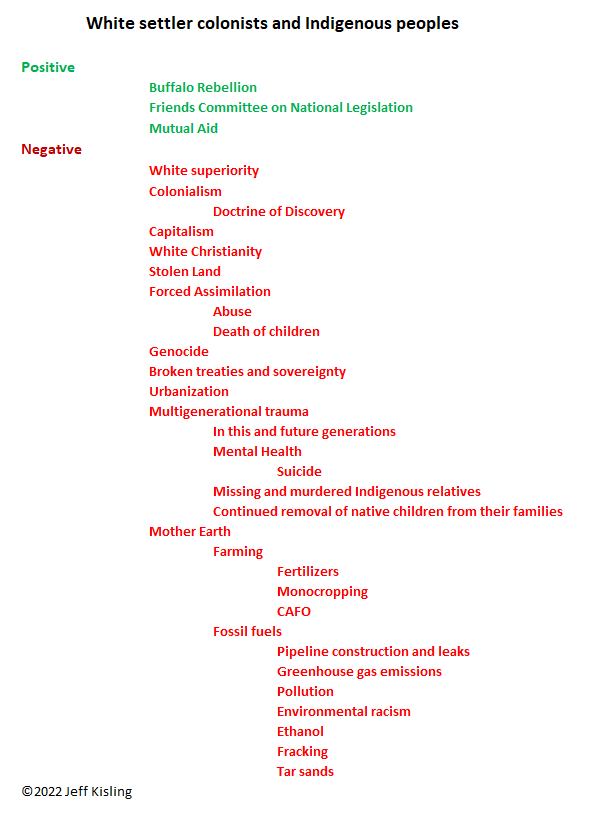
Following is another way of looking at the relationships between White settler colonists and Indigenous peoples. White Quakers need to acknowledge that when our ancestors came to these Indigenous lands, they were settler colonists. And since we are still occupying these lands, we are settler colonists, too. Some White Quakers were involved in the forced assimilation of Indigenous children. We are implicated in most of the “negative” things listed below.

Acknowledgement of wrongs is the necessary first step in the healing process.


On the positive side are Mutual Aid, the Buffalo Rebellion, and the Friends Committee on National Legislation (FCNL). I’ve written a lot about my experiences with Mutual Aid https://quakersandreligioussocialism.com/mutual-aid/

I’m fortunate to be part of the Buffalo Rebellion, a newly formed Green New Deal coalition in Iowa formed to protect the planet by demanding change from politicians and convincing the public that climate should be a priority. Buffalo Rebellion, is a coalition of grassroots, labor, and climate justice organizations growing a movement to pass local, state, and national policies that create millions of family-sustaining union jobs—ensuring racial and gender equity and taking action on climate at the scale and scope the crisis demands. It was formed in November 2021 and consists of: 

The Friends Committee on National Legislation (FCNL) has years of experience advocating for legislation related to Native American affairs. Recently FCNL has been supporting legislation to form a Truth and Healing Commission related to the Indian Boarding Schools. I’ve been blessed to have many years of experience with FCNL and have been working with my native friends in creating connections with FCNL, including several visits to our US Senators.


We need settlers to organize and join the campaign

Yesterday I wrote about a solidarity organizing call to support the Wet’suwet’en peoples that will occur this Wednesday, October 19, 2022. Yesterday’s post included links to the many articles I’ve written over the past several years in solidarity with the Wet’suwet’en peoples’ struggles to protect their lands from the construction of the Coastal GasLink pipeline.

A fundamental principle of solidarity is to follow the leadership of those who are experiencing injustice. Settlers are at this moment being asked to join the campaign. We need settlers to organize and join the campaign – please click here to register

But we are all suffering the injustices of the fossil fuel industry’s rape of Mother Earth.

The drilling under the Wedzwin Kwa has begun, bringing greater urgency to stop the pipeline construction. It is heartbreaking to watch Wet’suwet’en Chief Na’Moks see the gigantic pipeline hole in this video.


The struggle of the Wet’suwet’en and the solidarity actions must also be seen in the broader international context. In the past year we have seen mass movements erupt in country after country—in Hong Kong, France, Catalonia, Haiti, Chile, Bolivia, Ecuador, Lebanon, Iraq, and Iran, to mention a few. We also saw the mass climate change protests and movements that swept the world, including a large demonstration in Toronto and a truly massive one in Montreal.

For the Wet’suwet’en, other Indigenous communities, and their allies it’s not just about questions of title and pipelines, but centuries of colonialism, subjugation, and genocide, as well as decades of austerity, growing poverty and inequality, the lack of jobs, unaffordable housing, and poor pay. Enough is enough—and after people saw the recent RCMP invasion of Wet’suwet’en lands, they had had enough.

The power of the people is on display across the world. There is a renewed sense of confidence in those fighting inequality and injustice and a growing realization that we are fighting against common enemies—the capitalist class and its state. The Wet’suwet’en are at the forefront of this struggle in Canada, literally on the front lines, and this is why many people—who face the same enemies—have come out to support them and join the fight.

Solidarity with the Wet’suwet’en: Revolution, not Reconciliation! by ROB LYON
Socialist Revolution, FEBRUARY 24, 2020

Dear allies of the Wet’suwet’en,

Teaming up with Decolonial Solidarity, we have decided to merge our press conference with their organizing call on October 19th. I am writing to invite you to join us.

We need a large number of allies to carry our message. Drilling under Wedzwin Kwa is illegal and must stop. We are staying in this fight despite this setback.

The call will feature Wet’suwet’en hereditary chiefs statements as well as an invitation to settler allies to become accomplices.

Please click here to register for the updated webinar on October 19th 2022 at 8pm ET / 5pm PST.

I am inviting you to join us in pushing back against this injustice. We need settlers to organize and join the campaign – please click here to register.

Misiyh,
Jen Wickham


Life without a car

Aside from the spiritual leadings that guided me to my career, being led to live without a car and struggling to convince others to not use fossil fuels were the most important spirit-led actions of my life. This also created a great deal of tension with my Quaker meeting. I made a lot of mistakes related to this over the years. When I say “I made mistakes” that’s a clue that I didn’t always hear, or follow what the Spirit was guiding me to do.

Growing up on farms, I had the connections to the land and creatures and the cycles of the seasons common to farmers. Scattergood Friends School is on a farm, the name changed to Scattergood Friends School and Farm since I attended. Working on the farm was an important part of our education. Over the years this has expanded significantly. In the Sophomore year we raised pigs as part of our biology class.

Being led to live without a car was at the intersection of my foundational stories, my Quaker faith, protecting Mother Earth, and photography.


I am very grateful my parents chose to take us on camping trips across the United States for our summer family vacations, specifically selecting National Parks to camp in.  Actually camping in the Parks was key to the whole experience.  Our first camper was a King camper, which was an aluminum trailer with a canvas covered framework that unfolded to form the top half when we stopped at the campsite.  Being in the woods, hearing the sounds of the wind and wildlife and the glacier streams rush over the boulders, feeling the cold at night, and smelling the pine trees made the experience so much better than traveling into the park during the day and returning to a motel at night.

Hiking through the meadows and forests and upon mountainsides with countless, stunning vistas, were life changing experiences for me.  I was overwhelmed by the intense beauty.  Rocky Mountain National Park was our favorite, and we returned there time and again as we were growing up. We quickly found that not many people traveled too far from the parking areas, and with even a short hike we were practically alone in the woods.  Hikes of just a mile or two brought us to lakes, canyons, waterfalls, cliffs, meadows, snowfields, boulder fields, and rock walls to climb. Places we were able to appreciate alone.

Quaker worship was a natural extension of the quiet of the mountains.

I hadn’t reflected much on why we sought opportunities to be by ourselves in the mountains. It just seemed a much better experience that way. Now I think it was related to feeling closer to God when we were deep in the quiet of the forests. Having grown up in Quaker communities, I was used to worshiping in silence, as we do so we can hear the whisper of the Spirit. Being enveloped in the silence of the mountains was a natural extension of Quaker worship. Or rather, Quaker worship was a natural extension of the quiet of the mountains. Quiet rather than silence.

This was also a reciprocal relationship. I was always challenged to find ways to share my spiritual experiences with others. These experiences are ineffable, that is they can’t be adequately expressed with words. But art can often better express spirituality. So I hoped some of my photographs might show glimpses of the Spirit.

The writer’s lonely, harrowing struggle to give shape to his or her elusive vision of the world—to complete a book, to discover among the fragments of a thought or a dream the precise image needed to breathe life into a poem—is a familiar chapter in the annals of pain and grief.

How can we save the wilderness? I was a mountain climber whose affection for the high peaks had evolved gradually into political commitment to the cause of preservation. I was, too, a fledgling writer searching for direction. I knew the importance of craft, experience, doggedness, and the other familiar requisites for literary success, but I lacked vision—an understanding of my relationship to the world.

How could we convince lawmakers to pass laws to protect wilderness? (Barry) Lopez argued that wilderness activists will never achieve the success they seek until they can go before a panel of legislators and testify that a certain river or butterfly or mountain or tree must be saved, not because of its economic importance, not because it has recreational or historical or scientific value, but because it is so beautiful.

I left the room a changed person, one who suddenly knew exactly what he wanted to do and how to do it. I had known that love is a powerful weapon, but until that moment I had not understood how to use it. What I learned on that long-ago evening, and what I have counted on ever since, is that to save a wilderness, or to be a writer or a cab driver or a homemaker—to live one’s life—one must reach deep into one’s heart and find what is there, then speak it plainly and without shame.

Reid, Robert Leonard. Because It Is So Beautiful: Unraveling the Mystique of the American West . Counterpoint. Kindle Edition

One reason I began to write was to explore why I took a given photograph.  I hadn’t appreciated this until I was repeatedly told the same thing, which is that a photograph can help the viewer see the subject in a way they hadn’t before.  So as I prepare to shoot a picture, I think about what I am trying to show with it, how to compose it, and set the exposure and focus in such a way as to create the photograph as closely to the image I am envisioning, as possible. 

Note that I said “envision”. I don’t take photos to be as realistic as possible, which would be like make a Xerox copy of a scene.

My hope is that some of my photographs might help others to see and understand the subject as I understand it, and may see/understand it differently than before viewing the photo.

One of the many things I’m learning from Indigenous ways is the Spirit is in all things, including animals, plants, water, sky and mountains. I felt this deeply when I was in the forests and mountains. I’ve heard others express this in various ways as feeling closer to God, and that was how I felt.

This spiritual connection I developed with the mountains, lakes and forests had profound consequences in my life.

When I moved to Indianapolis in 1971, the city was enveloped in smog. This was before catalytic converters, which began to appear in 1975. When I saw the polluted air, I had a profound spiritual vision of the Rocky Mountains being hidden by clouds of smog. The possibility that I would no longer be able to see the mountains shook me to my core.

Long’s Peak from Moraine Park, Rocky Mountain National Park, Colorado

I was thinking specifically about the photo above, and how terrible it would be to no longer be able to see Long’s Peak. Although I now have many photos of the same view, I was thinking of this black an white photo specifically when I had that vision even though the quality isn’t near what I get now with a digital camera. I developed the film and the print of this in a darkroom. This is the image connected to my vision.

From that moment on I saw cars as evil because of the damage they were doing. I decided I could not be part of that, and have lived without a car since then. I began my lifelong study of environmental science and work to try to bring awareness about the catastrophic damage being done to Mother Earth. Although I give thanks that catalytic converters took care of the visible smog, I knew of the continued damage and consequences of the tons of carbon dioxide and other gases coming from the exhaust of ever increasing numbers of cars.

I saw automobiles as the ‘seeds of war’.  Many wars are literally fought over fossil fuel supplies. But these seeds of war are found in the way we live our lives.

“I told [the Commonwealth Commissioners] I lived in the virtue of that life and power that took away the occasion of all wars… I told them I was come into the covenant of peace which was before wars and strife were.” 

George Fox

“Oh! that we who declare against wars, and acknowledge our trust to be in God only, may walk in the light, and therein examine our foundation and motives in holding great estates! May we look upon our treasures, and the furniture of our houses, and the garments in which we array ourselves, and try whether the seeds of war have nourishment in these our possessions, or not. Holding treasures in the self-pleasing spirit is a strong plant, the fruit whereof ripens fast.” 

John Woolman

It was camping in the national parks, and spiritual connections to the lakes, forests, wildlife, sky and mountains, that made me become a lifelong environmental activist. And photography was how I tried to express that for myself, and others. I knew environmental damage from burning fossil fuels would damage the mountains, forests and rivers, so I tried to preserve those scenes with photographs. Significant damage will happen with higher air temperatures, forest fires, infestation with migrating insects, torrential downpours, and drought.

It is sad to think such photographs might be historic records of the way things used to be, and no longer are. This is actually one of the reasons I am led to write my foundational stories, wondering if I shouldn’t do more to use photography to try to create change.

Recently at the annual meeting of Iowa Yearly Meeting (Conservative) I was grateful to be asked to show my photographs during one of the evening programs. The program was titled “Finding Truth and Beauty.” For about an hour the meetinghouse full Quakers watched the slideshow of photos in silence. Then, as the slideshow continued, Friends (Quakers) were invited to share their thoughts, which many did. I was grateful for this experience of sharing photos that had a spiritual significance for me, with my Quaker community in the context of silent worship.


My story of Cars as weapons of mass destruction was included in this book by my friends at Sustainable Indiana.
https://jeffkisling.com/2015/09/13/cars-as-weapons-of-mass-destruction/

Dear allies of Gidim’ten checkpoint

Dear allies of Gidim’ten checkpoint,

As you will know, we have reached another flashpoint in the Wet’suwet’en’s struggle against the CGL pipeline. Having fought to protect the sacred headwaters of Wedzwin kwa, they are now faced with the possibility of imminent drilling. Today, the hereditary chiefs are holding a press conference and issuing an eviction notice. They are issuing a call to action, which we are relaying to you.

The chiefs are calling for people to take on three targets: BC government, contractors, and the funder, RBC. Decolonial Solidarity members will rally to pressure the latter. For organized groups, we are issuing a call for in-person action. For everyone else, we are inviting you to call the global head of sustainability at RBC.

Click here to access a one-click-to-call action

We have managed to get this man’s personal phone number. It is important that we stay polite and firm in denouncing the actions of the bank. Remember: it can freeze its investment until the hereditary chiefs consent to the project. It can stop the drilling. It is this man’s job to ensure that the bank is sustainable. Let’s remind him there’s a ways to go.

Call the head of sustainability!

Wet’suwet’en Land Defenders have not given up and nor will we. We will continue to build our movement, to show solidarity, to turn up at branches, to talk to our neighbors and to passers by, to mobilize in protest, to confront RBC executives, and to send our love to the admirable Land Defenders whose leadership has inspired us throughout these difficult times.

In solidarity,
The organizing team

(This message from decolonial solidarity on behalf of the Gidimt’en land and water protectors is forwarded with the permission of the Unist’ot’en  in solidarity with their neighboring clan within the Wet’suwet’en Nation.)

Unist’ot’en Solidarity Brigade robertages@telus.net


ALL OUT FOR WEDZIN KWA

There is fatigue with the constant struggle to protect the water and Mother Earth. And yet, there is a true emergency now as Coastal Gaslink is on the brink of drilling under the Wedzin Kwa in the Wet’suwet’en territories in British Columbia.

READY TO TAKE ACTION?

In the long work of elevating Wet’suwet’en hereditary governance, there are many ways that supporters can step into movement through action.

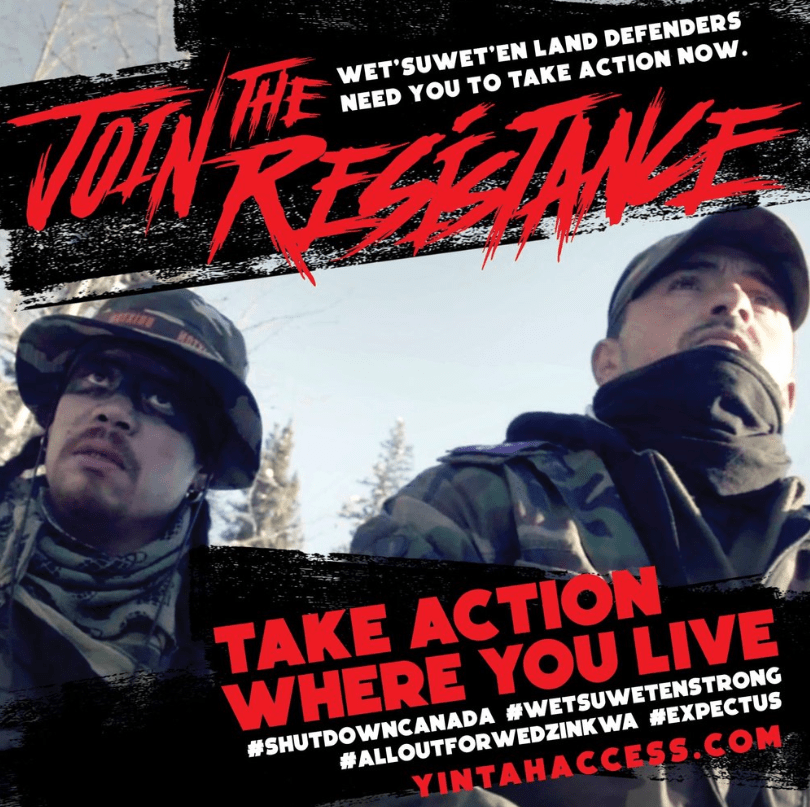
Ways you can help: https://www.yintahaccess.com/take-action-1

Please continue to organize in support of #wetsuwetenstrong. Thank you to everyone who has stood up.

A toolkit can be found here:
https://docs.google.com/document/d/1xenvlytUvfA5OIthZTaCfoUjjtCrcZNy3RCsVzlWGEQ/preview


Urgent Update: Coastal Gaslink Poised to Drill Wet’suwet’en Headwaters

2022-09-18 – Coastal Gaslink equipment is now in position to drill beneath the Wedzin Kwa river, which provides drinking water for Wet’suwet’en villages and has served as a key salmon spawning area for millenia.

Wet’suwet’en territory is unceded, unsurrendered, and sovereign, and Wet’suwet’en people have never provided Free, Prior, and Informed Consent to the Coastal Gaslink pipeline’s destructive construction operations.

To date, Wet’suwet’en resistance to drilling beneath Wedzin Kwa has delayed the destruction of Wet’suwet’en waters for approximately two years. In the fall of 2021, Wet’suwet’en and allies sustained a two-month long blockade of this drill site called Coyote camp, until a series of militarized RCMP attacks on Wet’suwet’en community members and supporters resulted in dozens of arrests.

In advance of CGL’s drilling operations, Wet’suwet’en community members have faced increased surveillance and harassment from RCMP’s C-IRG unit (a police unit created to facilitate pipeline construction) and a series of private security contractors. Wet’suwet’en village sites remain under 24 hour surveillance, while police have made several arbitrary violent arrests, including with pepper spray.

RCMP and CGL’s private security contractor Forsythe were served a lawsuit by Wet’suwet’en community members who have been subject to this continuous surveillance and harassment.

Wet’suwet’en hereditary chiefs and community members recently hosted a week of ceremony to protect and honour Wedzin Kwa, included rafting tours of a historic Wet’suwet’en village site within the headwaters area.

We will never stop defending our yintah the way our ancestors have done for thousands of years. The pipeline will never be put into service.

Urgent Update: Coastal Gaslink Poised to Drill Wet’suwet’en Headwaters


RCMP Refuses to Respond to Gidimt’en Lawsuit, Continue Surveillance and Harassment of Land Defenders as Coastal GasLink Poised to Drill Headwaters


A detailed account of much of what has been done, and ways you can help, can be found here: https://quakersandreligioussocialism.com/2022/05/27/wetsuweten-emergency/

Radio interview this June with Ed Fallon about the Wet’suwet’en.

Ed Fallon and I discuss the Wet’suwet’en struggles on the Fallon Forum

January, 2020, Bear Creek Friends (Quaker) meeting sent the following letter to British Columbia Premier, John Horgan.

John Horgan.
PO BOX 9041 STN PROV GOVT
VICTORIA, BC V8W 9E1.
Email premier@gov.bc.ca

John Horgan,

We’re concerned that you are not honoring the tribal rights and unceded Wet’suwet’en territories and are threatening a raid instead.
We ask you to de-escalate the militarized police presence, meet with the Wet’suwet’en Hereditary Chiefs, and hear their demands:
That the province cease construction of the Coastal Gaslink Pipeline project and suspend permits.
That the United Nations Declaration on the Rights of Indigenous Peoples (UNDRIP) and tribal rights to free, prior and informed consent (FPIC) are respected by the state and RCMP.
That the Royal Canadian Mounted Police (RCMP) and associated security and policing services be withdrawn from Wet’suwet’en lands, in agreement with the most recent letter provided by the United Nations Committee on the Elimination of Racial Discrimiation’s (CERD) request.
That the provincial and federal government, RCMP and private industry employed by Coastal GasLink (CGL) respect Wet’suwet’en laws and governance system, and refrain from using any force to access tribal lands or remove people.

Bear Creek Monthly Meeting of Friends (Quakers)
19186 Bear Creek Road, Earlham, Iowa, 50072


#RCMPOffTheYinta #KillTheDrill #WetsuwetenStrong #AllOutForWedzinKwa

Seven Weeks of Action for Seven Generations: Week Two!

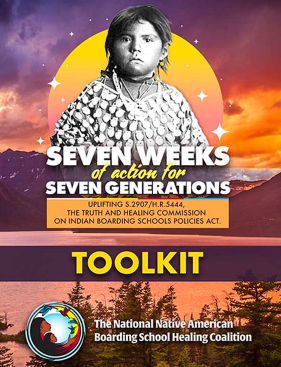
This is week 2 of Seven Weeks of Action for Seven Generations.
[See week 1 information here]

A fundamental principle of working with those experiencing injustice is to wait for that community to ask you for help. This Seven Weeks campaign is what Indigenous peoples are asking us to do.

https://www.facebook.com/photo?fbid=411792764439084&set=a.317125480572480

National Native American Boarding School Healing Coalition

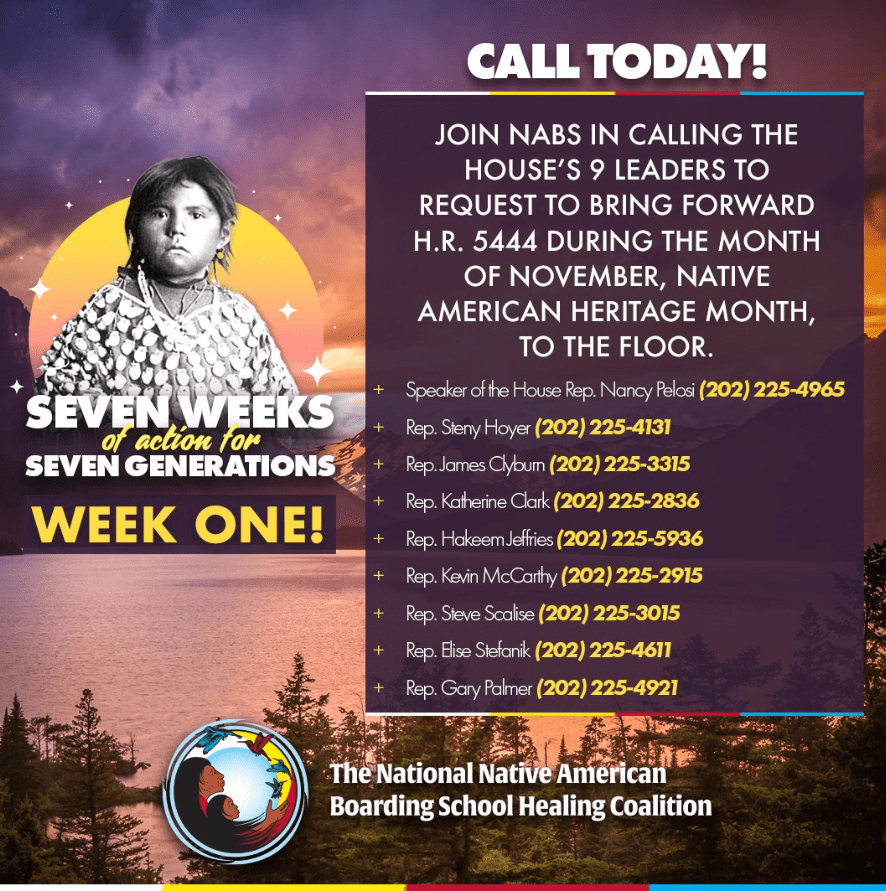
Join NABS in Week 2 of 7 Weeks of Action for 7 Generations, highlighting the need to pass H.R. 5444, the Truth and Healing Commission on Indian Boarding School Policies Act in the U.S.

Please CALL the Congressional Members listed today and request they bring “H.R. 5444, the Truth and Healing Commission on Indian Boarding School Policies Act” to the floor for a vote in House and Pass H.R. 5444

 #NABS #Time4Justice

NOTE: Please include calls to those who don’t represent your Congressional district. They are making decisions that affect us all.


All of this may be news to you, but for Indigenous people, this report simply confirms painful truths their families have long known. Survivors left these institutions abused, in poor health and without the language and cultural knowledge to connect with the homes they returned to. The way these children were raised in boarding schools — with fear, shame, violence and servitude — was in complete conflict with the way their tribal communities would have raised them; with love, identity and purpose.  

In short, the pain of these survivors is the foundation of modern Indigenous life.  

This federal policy created generations of trauma that tribes continue to navigate as they reclaim everything these institutions tried to destroy. For every language learner, for every heirloom seed planted, for every newborn receiving a traditional name instead of an English one, there are people struggling with trauma, battling addiction and trying desperately to survive a world that doesn’t fit or understand them.  

Guest column: Pain of boarding school survivors is foundation of modern Indigenous life by Portia K. Skenandore-Wheelock, The Oklahoman, July 8, 2022
(FCNL Congressional Advocate, Native American Advocacy Program)


This is a video my friend Rodger Routh made when he joined a few of us when we spoke to Senator Ernst’s staff recently. Besides making the phone calls listed above, you can request a meeting with the local staff of your representatives.

Preserving Subpoena Power

One September 1, I had a Skype meeting with Reid Willis in Senator Grassley’s Washington, DC, office. Reid was familiar with the history of Indian Boarding Schools. He told me Senator Grassley agreed with intent of S 2907 with two exceptions. Or, as a friend says, he doesn’t support it.

  • He feels the commission would duplicate work already being done by the Department of Interior’s Federal Indian Boarding School Initiative.
  • And particularly because he is the Ranking Member of the Senate Judiciary Committee, he doesn’t think that such a commission should have subpoena power.

The Federal Indian Boarding School Initiative lays the groundwork for continued work of the Interior Department.

Federal Indian Boarding School Initiative

In June 2021, Secretary of the Interior Deb Haaland announced the Federal Indian Boarding School Initiative, a comprehensive effort to recognize the troubled legacy of federal Indian boarding school policies with the goal of addressing their intergenerational impact and to shed light on the traumas of the past.

The announcement directed the Department, under the leadership of Assistant Secretary for Indian Affairs Bryan Newland, to prepare a report detailing available historical records relating to federal Indian boarding schools and to develop the first official list of sites. On May 11, 2022, Secretary Haaland and Assistant Secretary Newland released Volume 1 of the investigative report. This report lays the groundwork for the continued work of the Interior Department to address the intergenerational trauma created by historical federal Indian boarding school policies. It reflects an extensive and first-ever inventory of federally operated schools, including profiles and maps.

Federal Indian Boarding School Initiative

I am pleased to release the first volume of the report, which represents the first attempt to produce a historical list of all Federal Indian boarding schools, to collect information about known and possible student burial sites, and to lay out a critical historical overview that sheds light on the damaging consequences of these policies and marks a path toward redressing their lasting consequences. A second volume will follow and will serve as a roadmap for continuing the compilation of records, in order to further efforts to heal the intergenerational trauma and associated economic, health, social, spiritual, and political impacts created by these failed policies.

Deb Halland,
Secretary of the Interior


https://secureservercdn.net/198.71.233.187/ee8.a33.myftpupload.com/wp-content/uploads/2022/03/2022-Truth-and-Healing-Commission-on-Indian-Boarding-School-Policies-Act-FINAL.pdf

Preserving Subpoena Power

One area of particular concern is whether the Truth and Healing Commission would have subpoena power. The bill, in its current form, allows for the commission to subpoena organizations involved in the operation of Native boarding schools. Some lawmakers have expressed concern that this would grant too much power to the investigation, outside of what is legally necessary.

Supporters of the bill, however, argue that without subpoena powers, the ability of the commission to conduct its investigation would be severely hindered.

“I do believe there needs to be some requirement that any entity, including state governments and churches, who operated boarding schools and received Federal funding or support must make any relevant documentation available to the Commission,” said Kirk Francis, chief of the Penobscot Nation, during the Senate hearing.

“I do believe there needs to be some requirement that any entity, including state governments and churches, who operated boarding schools and received Federal funding or support must make any relevant documentation available to the Commission,” said Kirk Francis, chief of the Penobscot Nation, during the Senate hearing.

The House Education and Labor Committee will consider the Truth and Healing bill next before it can go to the House floor for vote. This is a critical time for faith communities, Quaker meetings, and lawmakers in Congress to support the commission and uphold support for subpoena powers. Without access to records and documents, the commission cannot effectively bring justice to the countless victims and their families.

Lawmakers Make Progress on Native Boarding School Legislation by Seneca Ransom, Friends Committee on National Legislation, July 12, 2022


Open Letter Campaign: Truth and Healing with Friends

The Great Plains Action Society has published an “Open Letter Campaign: Truth and Healing with Friends”, which includes information about using FCNL’s letter writing templates for supporters of the bill to use to contact their representatives in Congress about this legislation.

Open Letter Campaign: Truth and Healing with Friends, Great Plains Action Society


National Native American Boarding School Healing Coalition

Week One of Seven: Help us bring justice, accountability, awareness, and healing by telling the unvarnished truth about America’s history and genocide committed against Indigenous Peoples by way of Federal Indian boarding school policies. NABS asks that you please call the U.S. House leadership and request “they bring forward HR. 5444, the Truth and Healing Commission to the floor to vote on during November which is Native American Heritage Month.” #NABS#Time4Justice


Lobbying Senator Ernst’s staff about S. 2907