Foundational stories: Spiritual Warriors

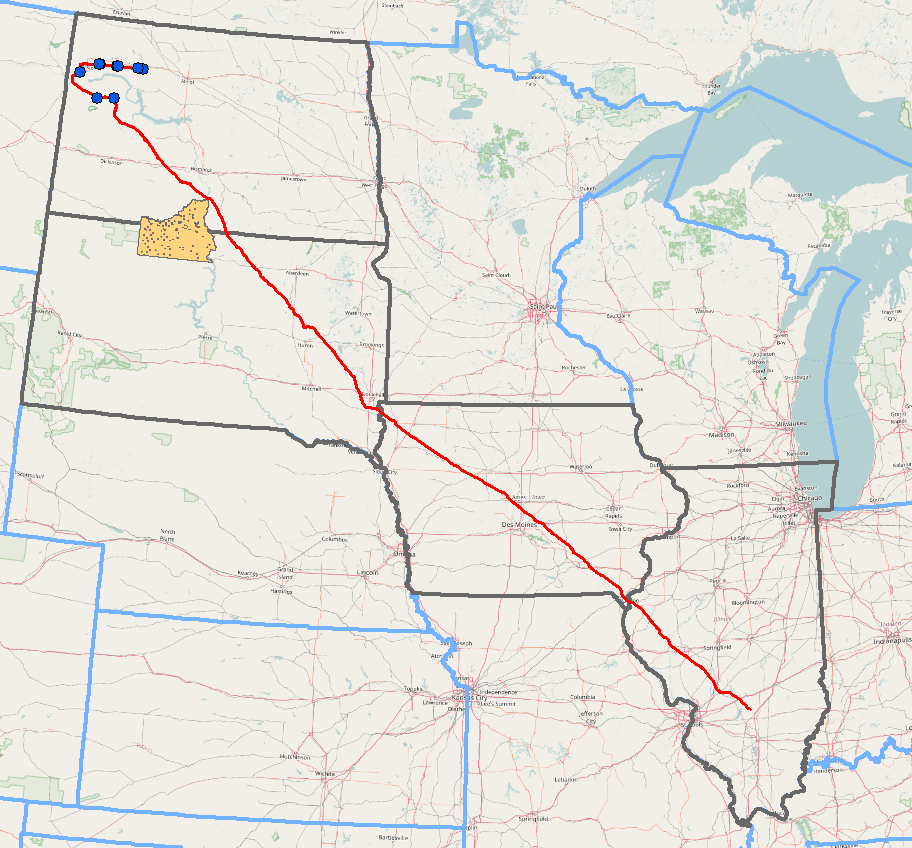
The Keystone pipeline resistance ended with President Obama’s denial of the pipeline’s permit. But then we began to hear about the construction of the Dakota Access Pipeline (DAPL). In one of the most transparent, egregious examples of environmental racism, the route of the pipeline was changed when people in Bismarck, North Dakota, objected to the original plan for DAPL to cross the Missouri River just upstream from them, fearing contamination of their water. So, the route was changed to cross beneath Lake Oahe (Missouri River), at the edge of the border of the Standing Rock Indian Reservation (orange in the map below).
By NittyG – Own work, CC BY-SA 4.0, https://commons.wikimedia.org/w/index.php?curid=52776844

Dakota Access Pipeline route (Standing Rock Indian Reservation is shown in orange)

That new route stimulated months of prayers and ceremonies by hundreds of Native American tribes and thousands of people.

By late September, (2016) NBC News reported that members of more than 300 federally recognized Native American tribes were residing in the three main camps, alongside an estimated 3,000 to 4,000 additional pipeline resistance demonstrators. Several thousand more gathered at the camps on weekends.[7][34][35]

Dakota Access Pipeline protests

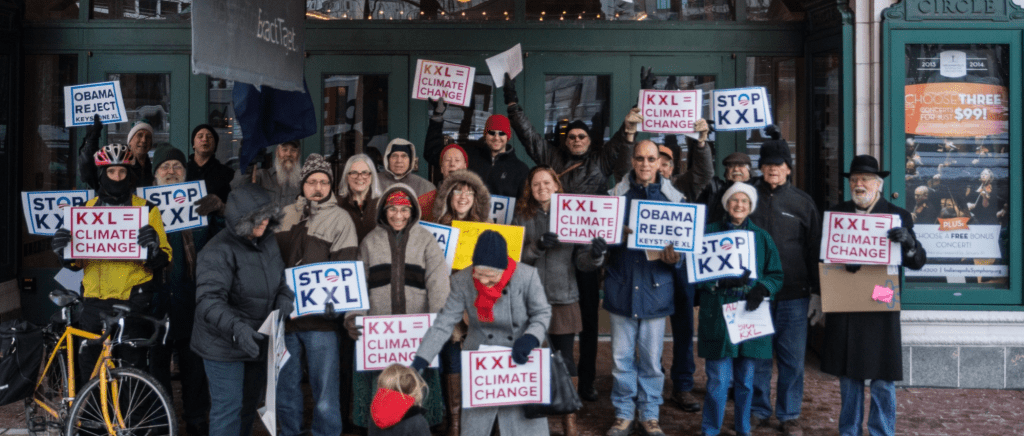
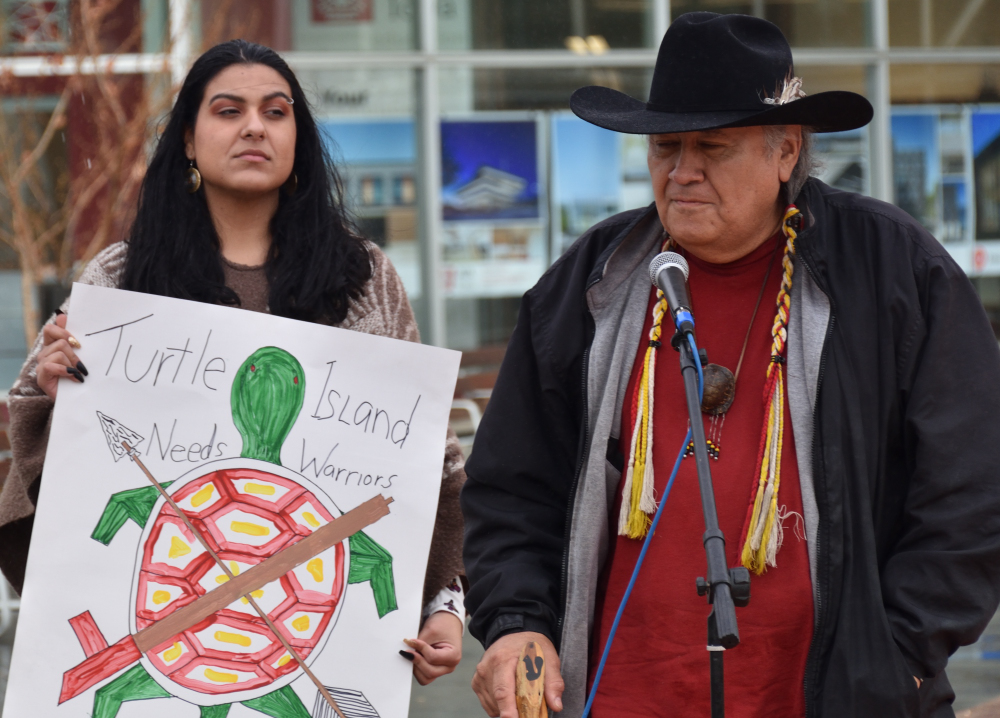
DAPL support begins in Indianapolis

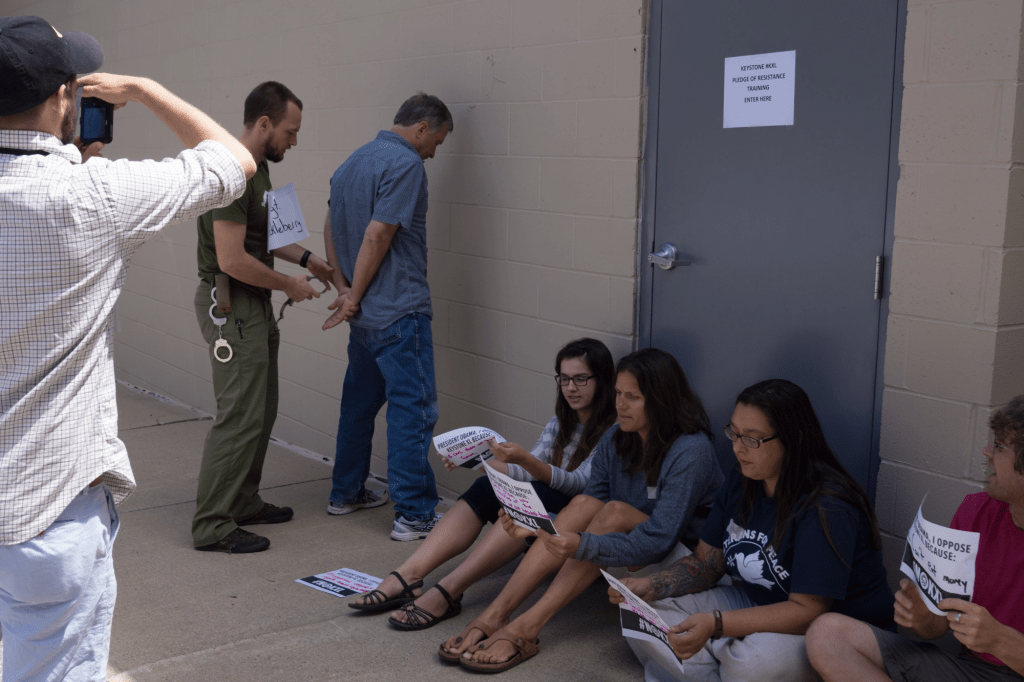
In a recent post (Keystone Pledge of Resistance) I described how Jim Poyser, Ted Wolner, and I were trained to design peaceful, nonviolent civil disobedience actions. And how we trained about fifty people in Indianapolis to participate in such actions.

A Spirit-led connection was made when Jim was talking with Joshua Taflinger about the Dakota Access Pipeline (DAPL). Jim lived near Joshua’s White Plains Wilderness Academy. Joshua wanted to know what he could do locally to bring attention to the Dakota Access pipeline. I say ‘bring attention’ rather than protest, because one of the first things I learned from those opposing DAPL was the difference between protesting and being a water protector.

Water protector was about an integral, Spiritual connection with Mother Earth, and all things human and nonhuman.

Bringing attention to the Dakota Access pipeline (DAPL) in downtown, Indianapolis

Jim told Joshua about the Keystone Pledge of Resistance, and those of us who had been trained to organize public gatherings and actions. And told Joshua we would be glad to support similar efforts to call attention to the dangers of DAPL. We were all excited about helping Joshua and White Plains Wilderness Academy, glad our experience could be useful.

Before getting into what we did related to DAPL, I’d like to express how working with Joshua and his wife Brandi, made me aware of the concept of spiritual warriors.


It may seem odd for a Quaker to speak about warriors. But what I mean by warriors is what Chief Sitting Bull said.

For us, warriors are not what you think of as warriors. The warrior is not someone who fights, because no one has the right to take another’s life. The warrior, for us, is one who sacrifices himself for the good of others. His task is to take care of the elderly, the defenseless, those who cannot provide for themselves and above all, the children, the future of humanity.

Chief Sitting Bull

Warriors today are forging different ways to live together, returning to Indigenous ways to live in community. Mutual Aid is an alternative to our broken systems. Members of Mutual Aid communities are working for the abolition of police and prisons. To escape the colonial capitalist system. Feeding the hungry and finding shelter for the houseless. Collecting clothing.


The following from Joshua, is another example of radically rethinking our stories.

I am inspired to share with you all more directly a post I wrote, because I consider you an established and effective nature/spiritual warrior and believe that there is a need for the perspectives shared in the attached post to be more common thought in the minds of the many.

If you feel truth from this writing, and are inspired, I highly encourage you to re-write your own version, in your own words/perspectives, and post to your network.

With the intention of helping us all wake up, with awareness, clarity, and direction.

..spreading and weaving reality back into the world….

What has risen to the surface at Standing Rock is a physical/spiritual movement. Learn how to quiet your mind. To find the silent receptive space to receive guidance. To learn to adapt and follow the pull of synchronicity to guide you to where you will find your greatest support and strength.

What I have found in my time praying in the indigenous earth-based ways, is that it’s not about putting your hands together and talking to God…. It’s about quieting and connecting with the baseline of creation, of nature. Tuning into the frequency and vibration of the natural world, the nature spirits. The beings and entities that have been in existence, for all of existence, the examples and realities of sustainability and harmony.

It’s about becoming receptive to these things. Being open and flowing with them. The spirit guides us, but we have to make ourselves receptive to feel, sense, and respond to this guidance.

Joshua Taflinger


Each Warrior of the Light contains within him the spark of God. His destiny is to be with other Warriors, but sometimes he will need to practice the art of the sword alone; this is why, when he is apart from his companions, he behaves like a star. He lights up his allotted part of the Universe and tries to point out galaxies and worlds to all those who gaze up at the sky. The Warrior’s persistence will soon be rewarded. Gradually, other Warriors approach , and they join together to form constellations, each with their own symbols and mysteries. 

Coelho, Paulo. Warrior of the Light: A Manual (p. 89). HarperCollins. Kindle Edition


There comes a time when all life on Earth is in danger. Great barbarian powers have arisen.

Although these powers spend their wealth in preparations to annihilate one another, they have much in common: weapons of unfathomable destructive power, and technologies that lay waste our world. In this era, when the future of sentient life hangs by the frailest of threads, the Shambhala warriors appear.

The warriors have no home. They move on the terrain of the barbarian powers. Great courage is required, both moral and physical, for they must go into the heart of the barbarian powers to dismantle their weapons, into the places where the weapons are created, into the corridors of power where decisions are made.

The Shambhala warriors are armed only with the weapons of compassion and insight. Both are necessary. Compassion gives them the energy to move forward, not to be afraid of the pain of the world. Fueled by compassion, warriors engage with the world, step forward and act. But by itself compassion burns with too much passion and exhausts us, so the second weapon is needed — insight into the interdependence of all phenomena.

With that wisdom we see that the battle is not between “good guys” and “bad guys,” because the line between good and evil runs through every human heart. And with insight into our profound interrelatedness, we discern right action, knowing that actions undertaken with pure intent have repercussions throughout the web of life, beyond what can be measured or discerned.

Together these two weapons sustain the warriors: the recognition and experience of our pain for the world and the recognition and experience of our radical interconnectedness with all life.

Adapted from Dugu Choegyal, as recounted by Joanna Macy


The Spiritual Warrior is a person who challenges the dreams of fear, lies, false beliefs, and judgments that create suffering and unhappiness in his or her life. It is a war that takes place in the heart and mind of a man or woman. The quest of the Spiritual Warrior is the same as spiritual seekers around the world.  

www.toltecspirit.com/four-agreements/characteristics-of-a-spiritual-warrior/.

Ideological commitment to destroying life on Earth

The recent article by George Monbiot (excerpts below) explains that the multitude of recent government policies and judicial capitulations that are dismantling any efforts to protect Mother Earth are not based on financial interests. The ideology of the ultra-rich is one committed to destroying life on Earth. “It’s no longer about money for them. It’s about brute power: about watching the world bow down before them. For this rush of power, they would forfeit the Earth.”

As Monbiot writes below, the changes needed to protect Mother Earth and all our relations cannot happen until we change our political systems.

Indigenous peoples have always known how to protect our environment. Which makes the policies of forced assimilation of native children and peoples all the more ignorant and reprehensible. We would not be in this catastrophic situation now if settler colonists had learned from native peoples. Can you imagine what that would have looked like?

What would be the political system that would allow us to honor the earth and each other? One alternative would be to build communities based on the concepts of mutual aid. (see: https://quakersandreligioussocialism.com/mutual-aid/ )

The following is from my mutual aid community, Des Moines Mutual Aid (DMMA).


But the final straw for me was a smaller decision. After two decades of disastrous policies that turned its rivers into open sewers, Herefordshire county council, following a shift from Tory to independent control, finally did the right thing. It applied to the government to create a water protection zone, defending the River Wye against the pollution pushing it towards complete ecological collapse. But in a letter published last week, the UK’s environment minister, Rebecca Pow, refused permission, claiming it “would impose new and distinct regulatory obligations on the farmers and businesses within the catchment”. This is, of course, the point.

When I began work as an environmental journalist in 1985, I knew I would struggle against people with a financial interest in destructive practices. But I never imagined that we would one day confront what appears to be an ideological commitment to destroying life on Earth. The UK government and the US supreme court look as if they are willing the destruction of our life support systems.

But even financial interests fail fully to explain what’s going on. The oligarchs seeking to stamp out US democracy have gone way beyond the point of attending only to their net worth. It’s no longer about money for them. It’s about brute power: about watching the world bow down before them. For this rush of power, they would forfeit the Earth.

Since 1985, I’ve been told we don’t have time to change the system: we should concentrate only on single issues. But we’ve never had time not to change the system. In fact, because of the way in which social attitudes can suddenly tip, system change can happen much faster than incrementalism. Until we change our political systems, making it impossible for the rich to buy the decisions they want, we will lose not only individual cases. We will lose everything.

It’s democracy v plutocracy – this is the endgame for our planet by George Monbiot, the Guardian, July 6, 2022


Reject Learned Helplessness. Be at the IUB tomorrow.

If you’ve been involved in any sort of activism, you know the frustration of the lack of participation by others.

One of my deepest frustrations has been related to the existential threat of environmental collapse. Fifty years ago, I moved to Indianapolis, and was horrified by the foul air, smog you could actually see, and barely breathe. I was led to live without owning a car from that point. And to try to get others to do whatever they could to stop the accelerating environmental devastation. Fifty years later, you can see where we are. In hindsight, we can imagine what might have happened if we had invested in mass transit back then.

I recently learned the term Learned helplessness from “The Vicious Cycle of American Collapse. How Social Collapse Happens-And Why Americans Feel So Powerless to Stop It” by umair haque, Eudaimonia, July 6, 2022

Tomorrow is a chance to reject learned helplessness. Instead, you can show up at the Iowa Utilities Board at 8:30 am. to object to the construction of carbon (CO2) pipelines. (Details below)


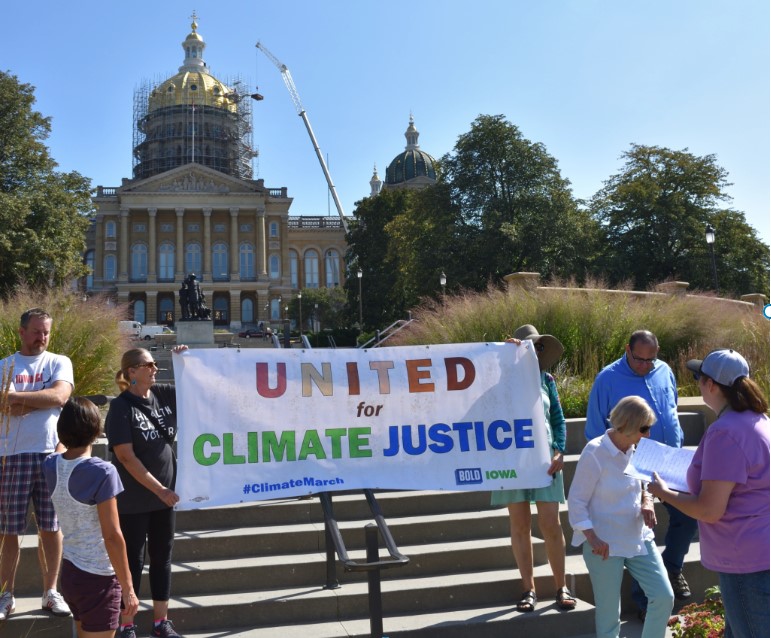
My years in Indianapolis were blessed by connections with wonderful people and organizations fighting for climate justice. I moved to Iowa July 1, 2017, and wondered how I could build new relationships here. By researching using social media, I learn about the work of Ed Fallon and Bold Iowa. I learned of an event to be held at the Iowa State Capitol to petition for the removal Richard W. Lozier, Jr. from the Iowa Utilities Board (IUB) because of his conflicts of interest. This photo of that event illustrates what a small number of people show up.

Although Ed wasn’t there, Sikowis Nobiss did attend. I reminded her we met when she spoke at Iowa Yearly Meeting (Conservative) a few months earlier. We have since worked on many projects together and I consider her a good friend of mine.

The Iowa Utilities Board (IUB) has been the site of a number of environmental protests because one of their functions is to approve pipeline projects.

Two people protesting the Dakota Access oil pipeline were arrested Wednesday in Des Moines after demanding a meeting at the Iowa Utilities Board.

Jessica Reznicek, who was arrested on a trespassing charge, had been fasting for 10 days with Travis O’Brennan, urging the board to revoke permits for construction on the Dakota Access oil pipeline in Iowa.

Two pipeline protesters arrested at Iowa Utilities Board by Charly Haley, and Linh Ta, Des Moines Register, Nov. 20, 2016

In July, 2017, Ruby Montoya, then a 27-year-old former preschool teacher, and Jessica Reznicek, then a 35-year-old activist, were arrested for damaging the sign at the Iowa Utilities Board.

Jessica Reznicek and Ruby Montoya, right, stand in front of the Iowa Utilities Board in July of 2017 and read statements taking credit for acts of sabotage against the Dakota Access pipeline. Courtesy of Des Moines Catholic Worker Archives

“Some may view these actions as violent, but be not mistaken. We acted from our hearts and never threatened human life nor personal property,” Montoya said. “What we did do was fight a private corporation that has run rampant across our country, seizing land and polluting our nation’s water supply. You may not agree with our tactics, but you can clearly see their necessity in light of the broken federal government and the corporations they represent.”

As a result of this admission, Montoya and Reznicek were indicted on nine felony charges of intentionally damaging energy infrastructure — a designation that can render a private, commercial company’s enterprise a matter of federal concern. 

‘You Strike a Match’ Why two women sacrificed everything to stop the Dakota Access pipeline by Julia Shipley, Grist, May 26, 2021

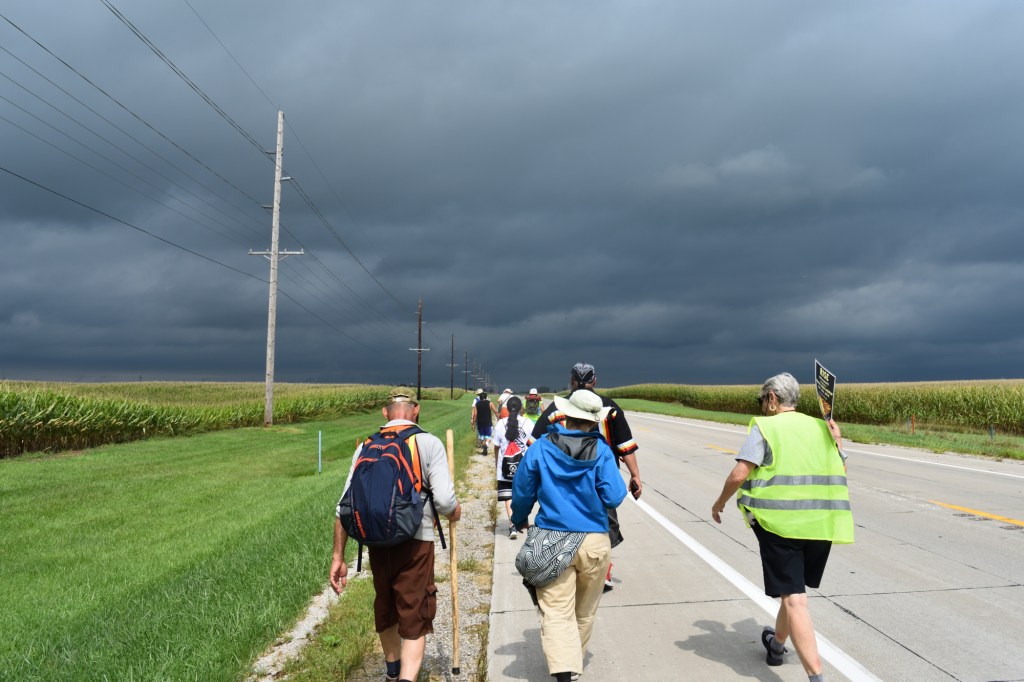
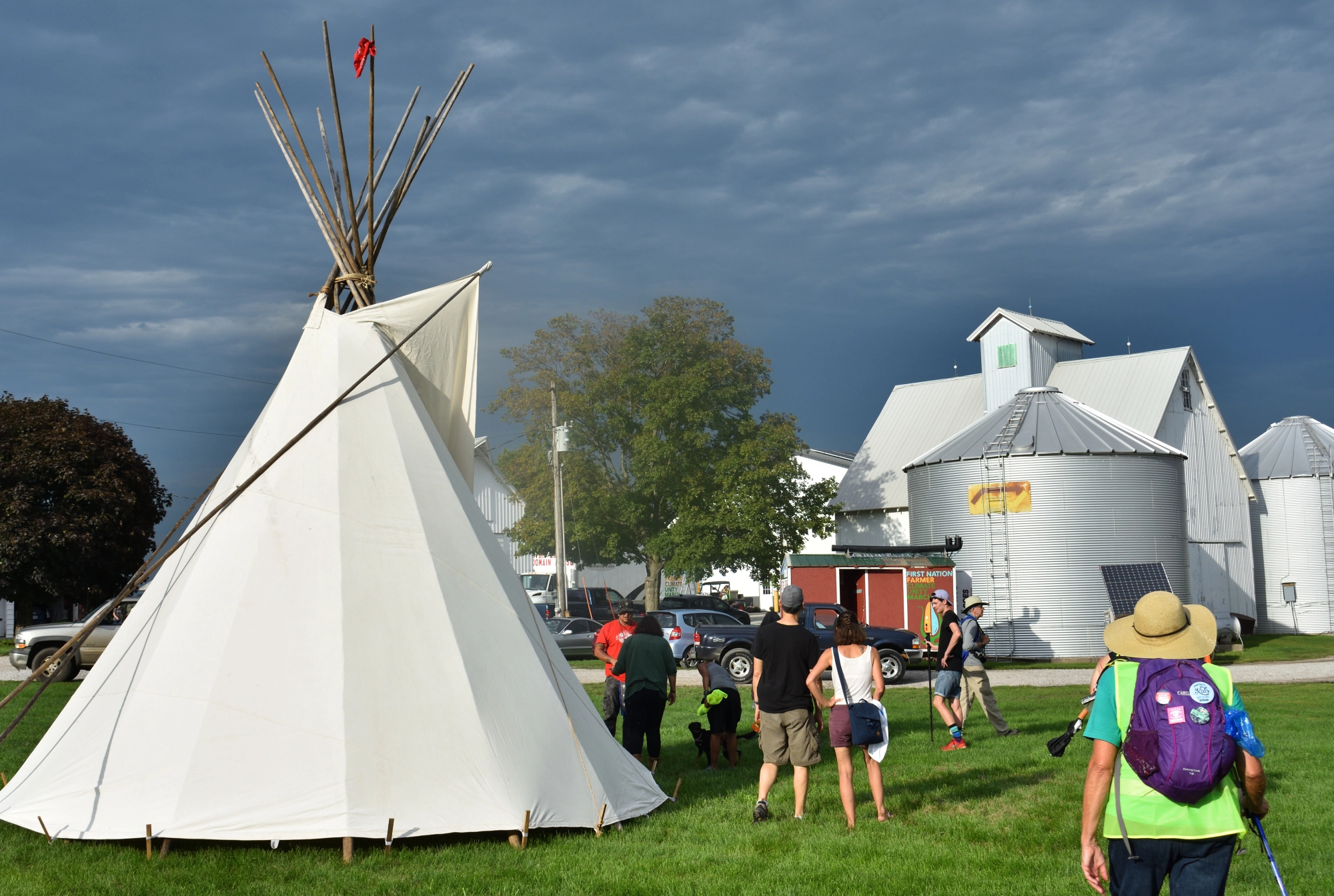
We were at the Iowa Utilities Board September 1, 2018, to start our sacred journey, the First Nation-Farmer Climate Unity March. A small group of us walked and camped along the path of the Dakota Access Pipeline, from our beginning here in Des Moines, to Fort Dodge, a distance of 94 miles, over eight days.

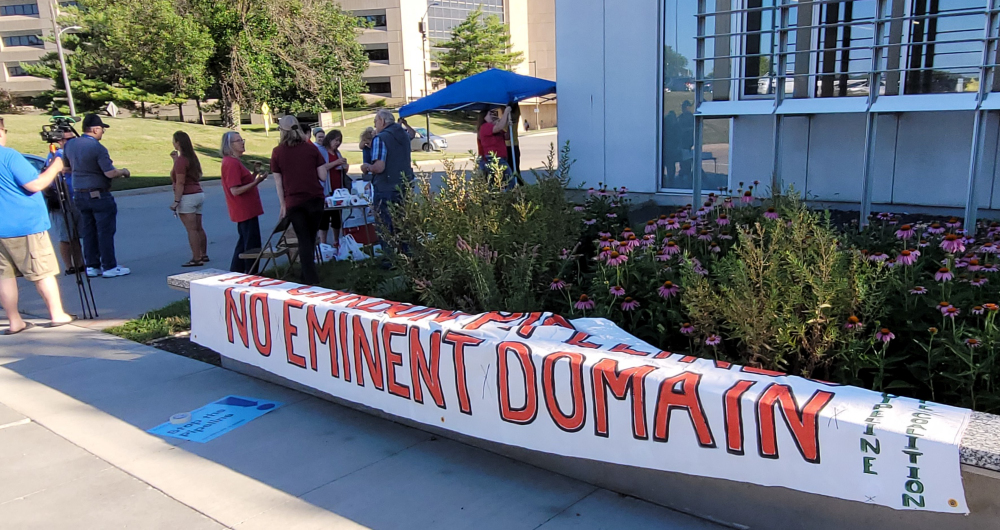
Regina Tsosie sings a song at the press conference at the Iowa Utilities Board regarding the improper use of eminent domain for the Dakota Access Pipeline. And the beginning of the First Nation-Farmer Climate Unity March.


Regina Tsosie sings a song at the press conference at the Iowa Utilities Board regarding the improper use of eminent domain for the Dakota Access Pipeline

Tomorrow, July 12, we will again gather at the Iowa Utilities Board, this time to object to the construction of carbon (CO2) pipelines in Iowa.

https://www.facebook.com/events/509509047578832

Please join us July 12th, 8:30 am at the Iowa Utilities Board (IUB) monthly board meeting. The board is preparing to handle permit requests for three hazardous carbon pipelines in Iowa.

There are many reasons why carbon pipelines should not be built, including:

  • these are unproven processes
  • even though the main argument for carbon pipelines is removal of carbon dioxide from the atmosphere, some of the captured carbon is actually used for more oil fracking
  • the abuse of eminent domain
  • and significant, long-term impacts on farmland.
  • In addition, these are hazardous material pipelines

When a carbon pipeline explodes, huge amounts of carbon dioxide escape into the air, replacing oxygen, and potentially killing people and animals. Such an explosion and some of those consequences actually happened in Satartia, Mississippi. See: CO2 Pipeline Dangers.

No CO2 Pipelines in Iowa


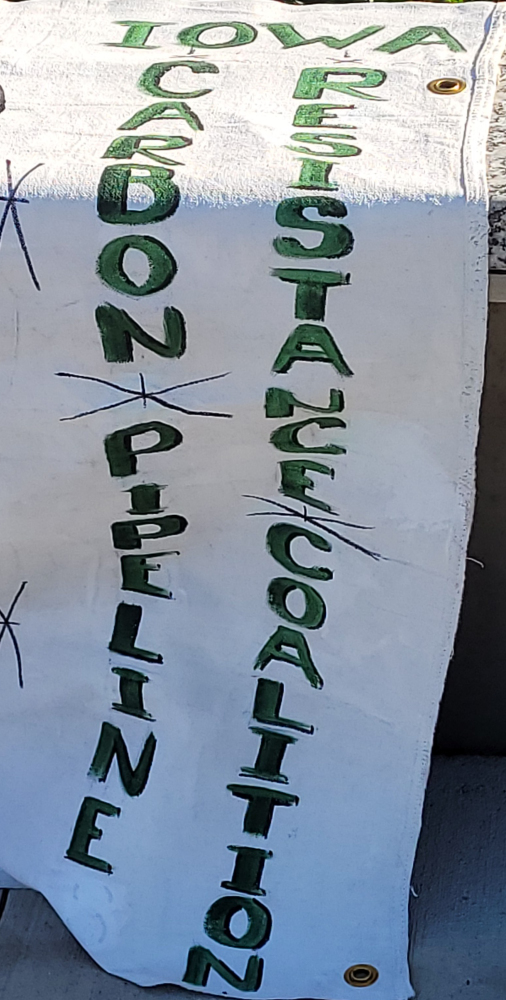
Join the Iowa Carbon Pipeline Resistance Coalition for a rally at the Iowa Utilities Board (IUB) monthly board meeting. We won’t stand by as corporations endanger our land, our communities, and our climate by abusing eminent domain. CO2 pipelines pose a multitude of threats to all Iowans. From destroying farmland to the threat of asphyxiation if a pipeline leaks, Iowans are carrying all the risks, while Wall Street and the fossil fuel industry make off with the reward.

As the Iowa Utilities Board prepares to handle permit requests for three hazardous carbon pipelines, it’s crucial that they know 80% of Iowans oppose using eminent domain for carbon pipelines. It’s time Iowa’s decision-makers learn that we will not accept greedy corporate interests being put before their needs.

Let’s show the Iowa Utilities Board how powerful we are when we stand together!

https://www.facebook.com/events/509509047578832/


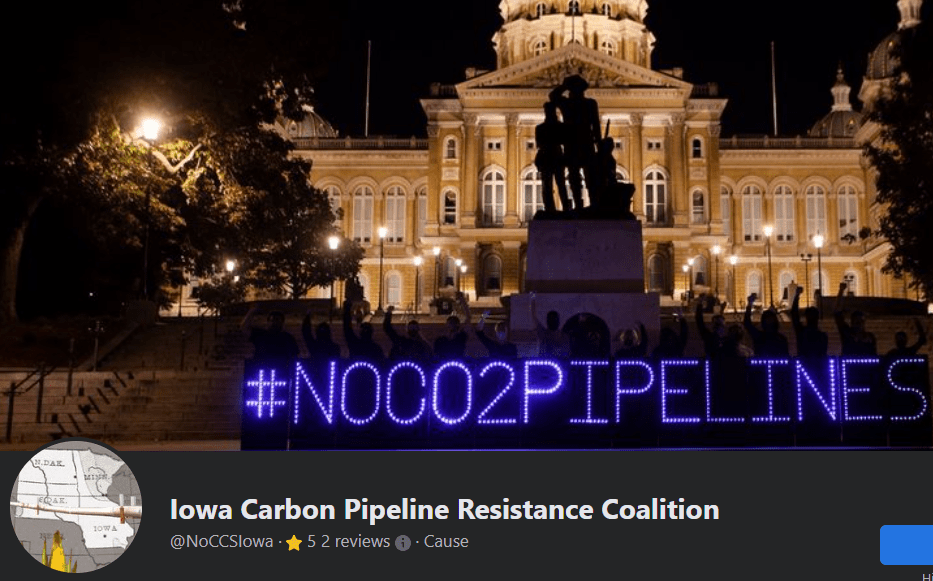
Iowa Carbon Pipeline Resistance Coalition

https://www.facebook.com/NoCCSIowa


Carbon Capture and Storage (CCS) is not the answer to the climate emergency. CCS is unproven, dangerous and delays real solutions to the climate crisis such as energy conservation, regenerative agriculture and renewable energy.
https://www.facebook.com/NoCCSIowa


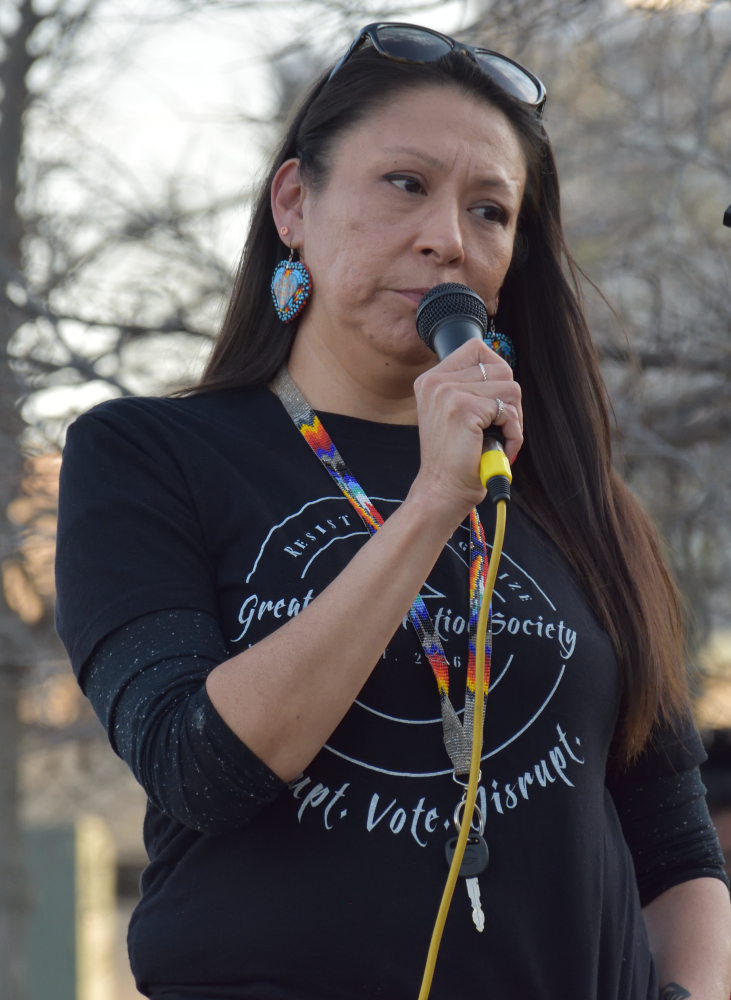
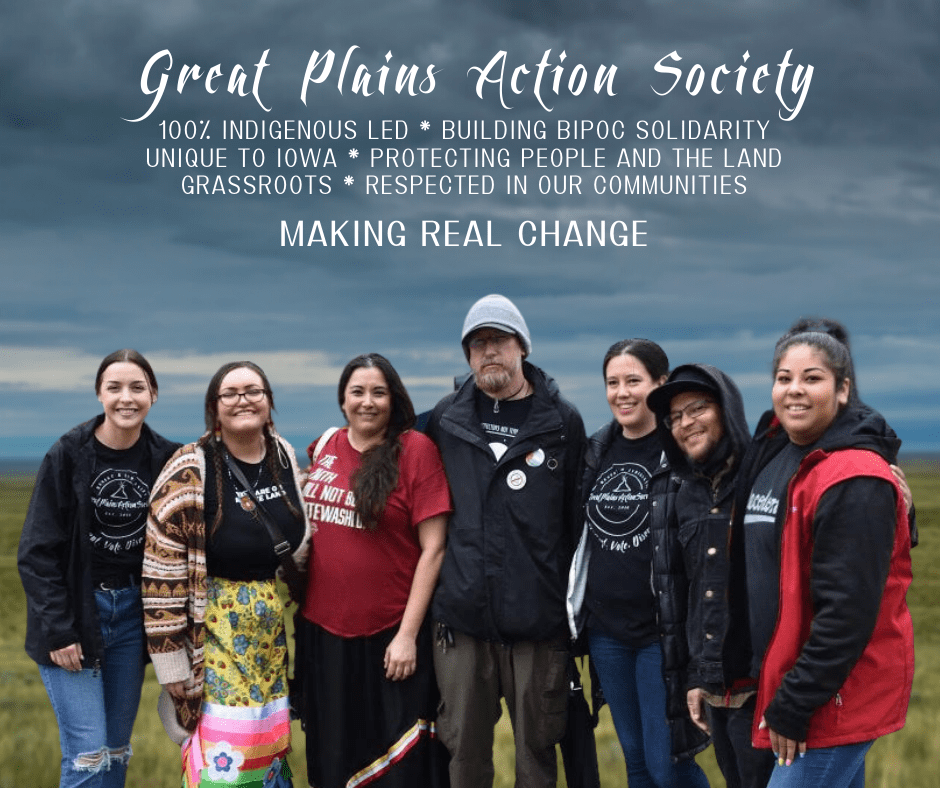
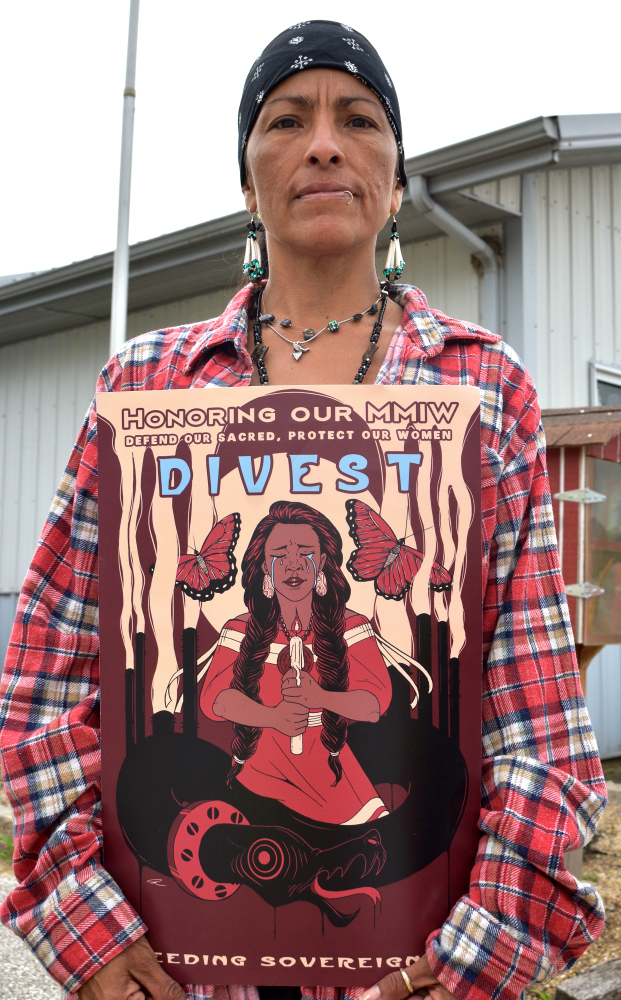
Great Plains Action Society

https://www.facebook.com/GreatPlainsActionSociety

Great Plains Action Society. An indigenous collective working to resist and indigenize colonial institutions, ideologies, and behaviors. https://www.facebook.com/GreatPlainsActionSociety


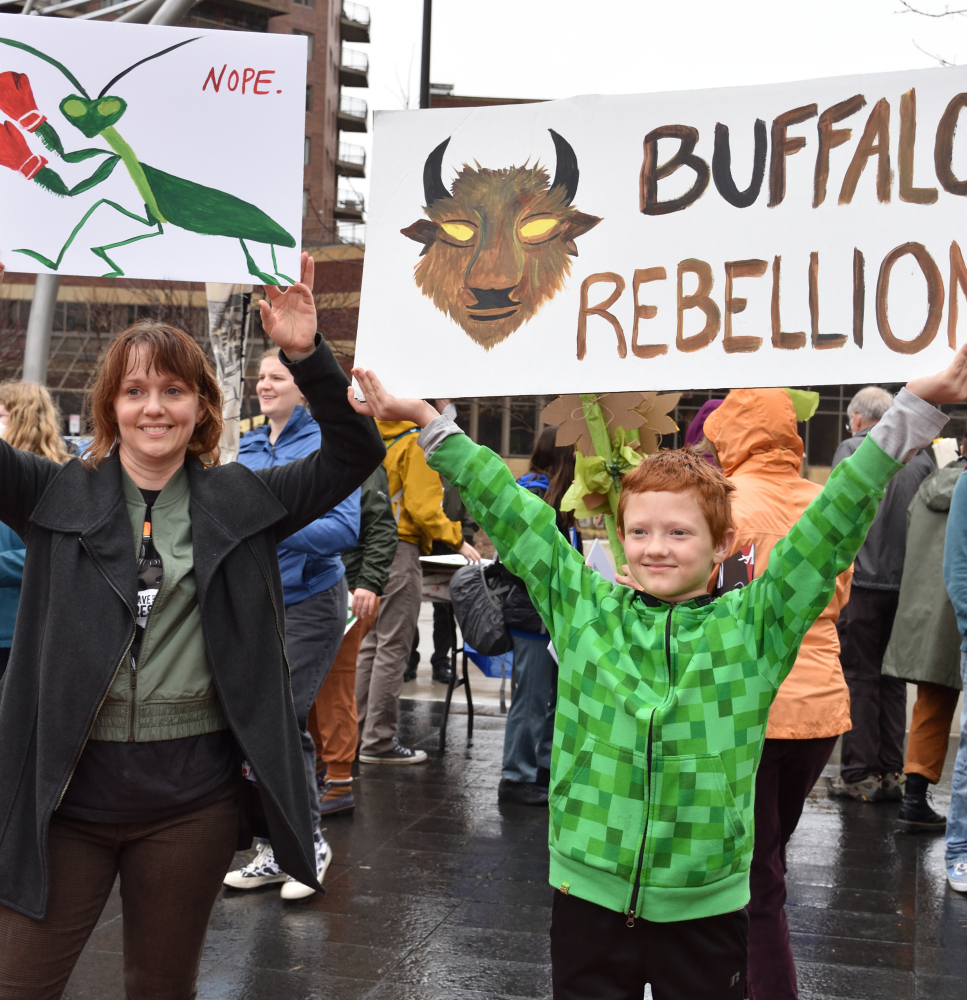
Buffalo Rebellion

https://www.facebook.com/IowaBuffaloRebellion

Buffalo Rebellion is a coalition of Iowa grassroots organizations that are growing a movement for climate action that centers racial and economic justice!

Formed in 2021, Buffalo Rebellion is comprised of seven Iowa organizations: Great Plains Action Society, DSM Black Liberation Movement, Iowa Migrant Movement for Justice, Sierra Club Beyond Coal, Cedar Rapids Sunrise Movement, SEIU Local 199, and Iowa CCI
https://www.facebook.com/IowaBuffaloRebellion


Iowa Sierra Club

https://www.facebook.com/IowaSierraClub/


Ní Btháska Stand

https://www.facebook.com/NiBthaskaStandCollective

Ní Btháska Stand

Direct Action Collaboration between Great Plains Action SocietNí Btháska Stand Collective at Iowa State Capitol sending a strong message to policymakers:

#NoCarbonPipelines
#StopNavigator
#StopSummit
#NoCCS
https://www.facebook.com/NiBthaskaStandCollective


https://www.facebook.com/iowacci

Iowa Citizens for Community Improvement
With thousands of members from all walks of life, we get things done on critical issues
https://www.facebook.com/iowacci


Multigenerational trauma and the US-Dakota War of 1862

I recently learned of yet another injustice in a multigenerational history that began with the genocide and theft of the lands of tribal nations by the white settler-colonialists.

Following are the parts of this trauma that began with the US-Dakota War of 1862.

  • US-Dakota War of 1862
  • The story of the hanging of 38 Dakota men
  • Discussion of this war at the Kheprw Institute
  • The Dakota 38 Memorial Ride
  • The Dakota 38 movie
  • Reconciliation Park and the Names of the executed Indians
  • The removal a controversial outdoor “gallows” sculpture
  • Sales and leases of parcels taken from the Dakota raised nearly $580,000 for the University of Minnesota

Much information about the war can be found on the Minnesota Historical Society website, the US-Dakota War of 1862. “It has been over 150 years since the U.S.-Dakota War of 1862, a disastrous time in Minnesota history. The war had a profound impact in shaping Minnesota as we know it today.”

My friend and roommate from Scattergood Friends School, Lee Tesdell, taught in Mankato, where the hangings occurred, and has spoken about this history with me. I have friends who have participated on the Memorial Ride for the Dakota 38.


The US-Dakota War of 1862 and the hanging of 38 Dakota men

On the day after Christmas in 1862, 38 Dakota men were hanged under order of President Abraham Lincoln. The hangings and convictions of the Dakota 38 resulted from the aftermath of the U.S.-Dakota War of 1862 in southwest Minnesota.

In addition to the 38 men hanged the day after Christmas, there were terrible injustices committed against 265 others in the form of military convictions and inhuman injustices to more than 3,000 Dakota people who were held captive, then forced to march west out of Minnesota.

How It All Started

The conflict erupted when treaties restricted the lands of the Dakota people to an area that could no longer sustain them. Promised compensations were slow or non-existent and the Dakota people feared starvation heading into a brutal Minnesota winter.

The Dakota also faced terrible racism, one white settler historically quoting, “Let them eat grass.”

The Traumatic True History and Name List of the Dakota 38. The Dakota 38 execution was the largest mass execution in the United States and took place on December 26, 1862 by VINCENT SCHILLINGDEC, Indian Country Today, December 26, 2020

“Wakute was our band leader. Some of our relatives in the Canku family were captured in 1862 and sent to Fort Snelling. There was nine of our family that were sent there. And then the rest escaped and went to the Plains. They were implicated for being Dakota. Just being Dakota means that you were guilty before any consideration of being innocent.” 

Dr. Clifford Canku, Sisseton Wahpeton community of Dakota, 2010

The discussion of this war at the Kheprw Institute

As an example of how seemingly disconnected things can be interconnected, on January 20, 2016, I wrote what follows below. It is interesting today to see this connection between our monthly book discussions at the Kheprw Institute, and stories of Indigenous peoples. The Kheprw Institute is a youth mentoring community I was blessed to be part of in Indianapolis. A community working on its own history and multigenerational injustices, in this case related to the institution of slavery and its consequences.

This story also brings Quakers into this history. North Meadow Circle of Friends in Indianapolis, where I attended, participated in a program called Quaker Social Change Ministry, and the Kheprw Institute was the organization we partnered with. Quakers had some involvement with the Indian Boarding Schools.

January 20, 2016

The book we will be reading for the next monthly community discussion at the Kheprw Institute (KI) is An Indigenous Peoples’ History of the United States (ReVisioning American History) by Roxanne Dunbar-Ortiz

One event in that history was the Dakota War.  As series of events led to conditions in which the Dakota were facing starvation.  Armed conflict eventually occurred but didn’t last long.  Afterwards, the largest mass execution by the United States, the hanging of 38 of the Dakota warriors at the same time took place in Mankato, Minnesota, on December 26, 1862, on the order of Abraham Lincoln.

To promote healing and reconciliation related to that, the Dakota created a film, “Dakota 38“, in response to a vision that came to one of them in 2005.  To make the story widely available, the film is distributed free of charge:  https://www.youtube.com/watch?v=1pX6FBSUyQI

This is one of the most powerful videos I have ever seen.  We hear what the riders are thinking as they ride their horses on the 330-mile journey to Mankato through blizzard conditions.  Some of the modern-day warriors also ran the last 90 miles.

Jeff Kisling


The Dakota 38 Memorial Ride

“Today, all the people of the region continue to be affected by this traumatic event. We take the youth on the ride, so that they may connect with their culture in a more physical way. By being a part of the ride they are connecting themselves with their ancestors and their horse relatives. It is through the ride that they are able to see the beauty in the history and their culture.”

SUNKTANKA

The Dakota 38 Plus 2 Memorial Ride is a ride that honors the 38 Dakota men who were hung in Mankato in December of 1862. The ride began from the vision of a Dakota elder and warrior. In this vision riders would ride from Crow Creek, SD to Mankato, MN. Ever since then the ride has continued to happen annually from the beginning year December 2005 to present collecting supporters and new riders along the way.

My name is Winona Goodthunder. My Dakota name is Wambde Ho Waste Win, Eagle Woman with a Good Voice. I have ridden in this ride since 2006, the second year. I was in eighth grade when I started. As the years have gone by the riders that we’ve met every year have become a part of a new kind of family. We are all different even though we are all somehow related. Those of us who are from the Lower Sioux region are used to different types of living than those who come from Canada, Nebraska, South Dakota, and other parts of the world. The differences that we have are forgotten when we come to this ride. We get up early in the morning to get our horses ready together. We ride all day together, and we eat together at night. It is then that our differences merge and we teach each other. The thing that seems to bind us the most is the fact that we can laugh. Humor may not be what is expected on a memorial ride, but it is encouraged for it is stressed that this ride is for forgiveness.

Although our group goes only for the last four days it is enough to establish that sense of family amongst each other. It is from these riders that I’ve learned most about my culture. I have read books, but they cannot foster the feeling that one gets when they are living in an experience such as the ride.

Winona Goodthunder


The Dakota 38 movie

I met Silas, a young man in his twenties from New England, at a servicespace.org retreat. He was a filmmaker, I’d heard. Over the next few days many stories were shared. Silas’ filmmaking was done on a shoestring. He carried his gear in a bag and stayed at friends’ houses when he traveled. I remember Silas telling us about meeting a Native American elder at his home. I wondered how that had happened. The elder talked about a dream he’d had, an important dream, one that he’d tried to ignore. But finally he understood that the dream had to be re-enacted. There would be a ride of Native Americans on horseback, over 300 miles across the Dakotas in the dead of winter, a healing ride to the place where 38 Native Americans had been hung during the presidency of Abraham Lincoln. This ride would have to be filmed the elder told Silas. That’s what you’ll do, he’d said.
     I remember feeling shocked by the story. “Are you going to do it?”  I asked. He was. I didn’t have to ask if there was any money involved. I knew there wasn’t. And I remember being alarmed. My God, what an ordeal! Blizzards and freezing winds! Things could go seriously wrong!
     But Silas went. He went on the ride with his camera and some young assistants not afraid of the risks and ready for a once-in-a-lifetime adventure [Jesse HighEagle, Sarah Weston, Andrew Weston, Wes Schuck, JB Weston and Pancho Ramos Stierle].

A Conversation with Silas Hagerty: Dakota 38 by Richard Whittaker, Works and Conversations, July 28, 2012

The Dakota 38 movie


To download the film in HD, or burn your own DVD for free, visit www.smoothfeather.com/dakota38. In honoring honor native traditions surrounding ceremonies, we are screening and distributing “Dakota 38” as a gift rather than for sale.

In the spring of 2005, Jim Miller, a Native spiritual leader and Vietnam veteran, found himself in a dream riding on horseback across the great plains of South Dakota. Just before he awoke, he arrived at a riverbank in Minnesota and saw 38 of his Dakota ancestors hanged. At the time, Jim knew nothing of the largest mass execution in United States history, ordered by Abraham Lincoln on December 26, 1862. “When you have dreams, you know when they come from the creator… As any recovered alcoholic, I made believe that I didn’t get it. I tried to put it out of my mind, yet it’s one of those dreams that bothers you night and day.”

Now, four years later, embracing the message of the dream, Jim and a group of riders retrace the 330-mile route of his dream on horseback from Lower Brule, South Dakota to Mankato, Minnesota to arrive at the hanging site on the anniversary of the execution. “We can’t blame the wasichus anymore. We’re doing it to ourselves. We’re selling drugs. We’re killing our own people. That’s what this ride is about, is healing.” This is the story of their journey- the blizzards they endure, the Native and Non-Native communities that house and feed them along the way, and the dark history they are beginning to wipe away.

SmoothFeather


Reconciliation Park and the Names of the executed Indians

Forgive Everyone Everything

FORGIVE EVERYONE EVERYTHING is inscribed on a bench in Reconciliation Park, Mankato, Minnesota, where the ride ends. The photo of the memorial shows a list of the names of the 38 Dakota men who were all hanged at the same time in what is now Mankato, Minnesota. A raised wooden platform, with 38 nooses along the sides, was constructed. It is said nearly 4,000 people witnessed this, the largest execution in U.S. history, on December 26, 1862.

As to who needs to be forgiven, there are many answers to that. 

More specifically this history came about as the Dakota were forced into smaller and smaller areas of land, to the point they could not sustain themselves.

This image has an empty alt attribute; its file name is 96766751_rTnbZmN48yVXBZxfPoiyqOQl6MjM_fEEZFr6jKZWb54.jpg
https://foursquare.com/v/reconciliation-park/4d86396a509137040938a75b

Names of the executed Indians

#1 was to be TA-TAY-ME-MA but he was reprieved because of his age and questions related to his innocence

  1. Plan-doo-ta, (Red Otter.)
  2. Wy-a-tah-ta-wa, (His People.)
  3. Hin-hau-shoon-ko-yag-ma-ne, (One who walks clothed in an Owl’s Tail.)
  4. Ma-za-bom-doo, (Iron Blower.)
  5. Wak-pa-doo-ta, (Red Leaf.)
  6. Wa-he-hua, _.
  7. Sua-ma-ne, (Tinkling Walker.)
  8. Ta-tay-me-ma, (Round Wind) — respited.
  9. Rda-in-yan-ka, (Rattling Runner.)
  10. Doo-wau-sa, (The Singer.)
  11. Ha-pau, (Second child of a son.)
  12. Shoon-ka-ska, (White Dog.)
  13. Toon-kau-e-cha-tag-ma-ne, (One who walks by his Grandfather.)
  14. E-tay-doo-tay, (Red Face.)
  15. Am-da-cha, (Broken to Pieces.)
  16. Hay-pe-pau, (Third child of a son.)
  17. Mah-pe-o-ke-na-jui, (Who stands on the Clouds.)
  18. Harry Milord, (Half Breed.)
  19. Chas-kay-dau, (First born of a son.)
  20. Baptiste Campbell, _.
  21. Ta-ta-ka-gay, (Wind Maker.)
  22. Hay-pin-kpa, (The Tips of the Horn.)
  23. Hypolite Auge, (Half-breed.)
  24. Ka-pay-shue, (One who does not Flee.)
  25. Wa-kau-tau-ka, (Great Spirit.)
  26. Toon-kau-ko-yag-e-na-jui, (One who stands clothed with his Grandfather.)
  27. Wa-ka-ta-e-na-jui, (One who stands on the earth.)
  28. Pa-za-koo-tay-ma-ne, (One who walks prepared to shoot.)
  29. Ta-tay-hde-dau, (Wind comes home.)
  30. Wa-she-choon, (Frenchman.)
  31. A-c-cha-ga, (To grow upon.)
  32. Ho-tan-in-koo, (Voice that appears coming.)
  33. Khay-tan-hoon-ka, (The Parent Hawk.)
  34. Chau-ka-hda, (Near the Wood.)
  35. Hda-hin-hday, (To make a rattling voice.)
  36. O-ya-tay-a-kee, (The Coming People.)
  37. Ma-hoo-way-ma, (He comes for me.)
  38. Wa-kin-yan-wa, (Little Thunder.)

The removal a controversial outdoor “gallows” sculpture

In a story emblematic of the great harm that can be done when one culture attempts to tell stories of another, a sculpture of “gallows” was taken down following protests.

The Walker Art Center in Minneapolis has agreed to remove a controversial outdoor “gallows” sculpture following protests by local Native Americans. The large work includes design elements of seven different historical U.S. gallows, including one used to hang 38 Dakota Indians in the state in 1862.

“I regret the pain that this artwork has brought to the Dakota community and others,” museum executive director Olga Viso said in a statement announcing the decision that was posted on Facebook Saturday. “This is the first step in a long process of healing.”

Minnesota Museum To Remove Gallows Exhibit After Native American Protest. The work, which depicts a structure where 38 Dakota Indians were killed, was criticized for being insensitive by Mary Papenfuss, HUFFPOST, May 29, 2017

What led to me writing about this again, today, was learning of yet another part of this history.

The federal government’s hanging of 38 Dakota men from a Mankato, Minn., gallows in December 1862 brought an end to the U.S.-Dakota war. It also triggered a financial bonanza for the University of Minnesota.

Dubbed the “Minnesota Windfall,” sales and leases of parcels taken from the Dakota raised nearly $580,000 for the young university — part of a massive grab of wealth cleaved from Native people and given to American universities.

Troubling stories surface as U probes its history with Native people” by Melissa Olson, North Star Journey, June 30, 2022

OPPOSE CRIMINALIZATION OF LAND DEFENDERS

OPPOSE CRIMINALIZATION OF LAND DEFENDERS:
CONTACT BC ATTORNEY GENERAL DAVID EBY

We are outraged that the B.C. Prosecution Service plans to pursue criminal contempt charges against the 15 people arrested at Gidimt’en Checkpoint Village during the RCMP raid on November 18, 2021.

What’s more, the Crown has until July 7th to decide whether to charge 10 others, including Sleydo’, who were arrested at Coyote Camp on November 19, 2021, with criminal contempt. This criminalization of Wet’suwet’en Land Defenders goes against their inherent rights and title on their unceded territory.

Will you call/email Attorney General David Eby and tell him to refuse intervention? AG.Minister@gov.bc.ca, 205-387-1866. Sample email here

While Wet’suwet’en Land Defenders are grappling with unjust criminal charges, daily RCMP harassment, and imminent drilling under the Wedzin Kwa RBC held a huge golf tournament, the RBC Canadian Open. Luckily, activists were there to show the guests RBC’s true colours. Last Saturday, Decolonial Solidarity organizers joined activists and ravers in solidarity with the Wet’suwet’en people for a rave against RBC!

RBC is the title sponsor of the Canada Open golf tournament in Etobicoke, Toronto. We took the streets and marched to the gates of St. George’s Golf Club to let golf fans know what else their tournament sponsor funds. Equipped with a giant inflatable of RBC CEO Dave McKay, DJs, rappers, megaphones, and bubbles, we brought noise and energy to an otherwise quiet and low-key sport.
 
As the largest investor in the CGL pipeline, RBC needs to be held accountable. Those charged after the arrests in November 2021 include Wet’suwet’en elders, Haudenosaunee members, and legal observers. Recent investigations into the events in November show RCMP officers making racist remarks during the arrests and using coercive tactics to stop the blockade.

These charges are a disgusting and unacceptable demonstration of the law and policing protecting private companies and profits over people, land, and water. In the past, the Crown decided that prosecution of Wet’suwet’en Land Defenders was not in the public interest. We can help this time by telling Attorney General David Eby that it’s not in the public interest now either.
Call/email Attorney General David Eby today and tell him to refuse intervention. AG.Minister@gov.bc.ca, 205-387-1866. Sample email here

You can also check out this map to join an affinity group near you and take part in our Adopt-a-branch campaign targeting RBC.

In Solidarity,
The Decolonial Solidarity Organizing Team

Decolonial Solidarity (DS) is an ally-led Indigenous solidarity campaign. We currently stand in solidarity with Wet’suwet’en land defenders in their fight against the Coastal GasLink pipeline which is being built in their territory without necessary consent and which threatens their lands and waters.

RBC is a primary funder of both Coastal GasLink and fossil fuels more generally. The DS Adopt-a-Branch campaign demands that RBC divest from the Coastal GasLink pipeline and respect Indigenous peoples’ sovereignty and rights. Groups are going to RBC branches regularly and speaking with customers and employees in order to pressure RBC from within.

Our actions are non-violent and completely legal. We are committed to following the guidance of front-line Land Defenders and to long-term solidarity action. Everyone who respects these principles is welcome!

Decolonial Solidarity is an ally-led Indigenous solidarity campaign. Follow us on Instagram @decolonialsolidarity and Twitter @decolonialsol.

https://actionnetwork.org/event_campaigns/looking-for-members-on-cherche-des-membres

Sample email

Honourable David Eby Attorney General
PO Box 9044 Stn Prov Govt
Victoria, BC
V8W 9E2
AG.Minister@gov.bc.ca
Phone: 250 387-1866
Fax: 250 387-6411


Dear Mr. Eby,

I am writing as a concerned citizen about the human rights violations and violations of the UN
Declaration of the Rights of Indigenous People, among other things, that have been happening
in Wet’suwet’en Territory. The Hereditary Chiefs have repeatedly stated they do not consent to
this pipeline and people are being arrested for upholding their laws through their traditional
governance system which has been recognized through the Delgamuukw-Gisdaywa Supreme
Court of Canada victory December 11, 1997.

Recently, your office agreed to intervene to criminalize Indigenous land defenders that were
arrested on November 18th. I urge you to decline intervention on July 7th against Sleydo’ and
others arrested on November 19th, 2021. That would further criminalize the land defenders
currently facing charges as Coastal GasLink is requesting. Violently entering homes without
warrants is not the process for dealing with Wet’suwet’en sovereignty. The Hereditary Chiefs of
the Wet’suwet’en Nation have stated their position and are defending their territory and sacred
headwaters Wedzin Kwa as they have done since time immemorial. We as guests on unceded
land need to respect the decisions of the Hereditary Chiefs and enact reconciliation instead of
disrespecting and criminalizing them further for practicing their culture and laws.

Advocating for climate sanity

I recently discovered papers written by Zhiwa Woodbury, so I don’t yet know how much I will agree with him as I read more. But I agree with the following excerpt. This paragraph strikes a chord in me now, as I am trying to make sense of what is going on in the world today. I recently returned to the concept of sensemaking in Where are we now?

We have a stark choice between our own eventual extermination or a near term transformation. Such a transformation of human culture and the global economy will not come about without a simultaneous shift in collective consciousness. Trauma always raises questions of identity, whether considered at the scale of the individual, a culture, or now with the climate crisis, at the scale of an entire species. The choices we humans are making now – and will continue to make – in response to this spiritual emergency will determine whether we engender spiritual emergence, the messy rebirth of our species, or instead we repeat the kind of Great Dying that once wiped out 95% of all life on the planet, and took 10 million years for the biosphere to recover. My purpose in writing this book is to offer guidance and succor to all who those natural healers and existential professionals in the world, all those who hear the cries of the Earth, and all those advocating for climate sanity in every arena of life, so that we may attend Gaia’s bedside and serve as her spiritual midwives in planetary hospice. Whether Gaia is now dying, just ill, or about to give birth is largely dependent on how we, as a species, respond to her signals and attend to her needs

Climate Trauma, Reconciliation and Recovery by Zhiwa Woodbury

I do believe we are in a spiritual emergency and need a shift in collective consciousness. I often write about spiritual poverty. We spoke about this, too, last night during our weekly (Quaker) Spiritual Sharing Small Group.

We need to be advocating for climate sanity in every arena of life.

I always hesitate to bring this up, but I think we need to speak from our own experience. When I moved to Indianapolis in 1971, I was so horrified by the clouds of smog (before catalytic converters) I decided to live without a car. I know others have done so. But the point is, that was one way of advocating for climate sanity. It is heart wrenching to think of what a different world we would be living in today if fifty years ago we had decided to prioritize mass transit systems. And worked to build our cities and towns as walkable communities.

That was then. What do we do, advocate for, now? Our society clearly continues to refuse to think, let alone do anything about our deepening environmental catastrophe.

Rather than close coal burning plants, more are being built. Rather than stop further fossil fuel pipelines and other infrastructure, more is being built. Crazy schemes like carbon capture are being built. Some of what is captured is used to frack more oil from the ground.

Militaries are the worst polluters. The war in Ukraine and military operations globally need to be stopped immediately. The war in Ukraine is war against Mother Earth.

CLIMATEWIRE | Greenhouse gases trapped 49 percent more heat in 2021 than in 1990, as emissions continued to rise rapidly, according to NOAA.

“Our data show that global emissions continue to move in the wrong direction at a rapid pace,” said NOAA Administrator Rick Spinrad.

NOAA found that carbon dioxide, the most plentiful and long-lived gas, expanded at the most rapid rate over the last 10 years. But the most potent global warmer also broke records: methane increased more than it has since at least the early 1980s, when NOAA began its current measuring record. The methane emitted in 2021 was 15 percent greater than in the 1984-2006 period, and 162 percent greater than preindustrial levels, NOAA found.”

Record Methane Spike Boosts Heat Trapped by Greenhouse Gases. NOAA’s Annual Greenhouse Gas Index finds that greenhouse gases trapped nearly 50 percent more head last year than they did in 1990 by John Fialka, Scientific American, June 1, 2022

We have a stark choice between our own eventual extermination or a near term transformation. Such a transformation of human culture and the global economy will not come about without a simultaneous shift in collective consciousness.”

We are continuing to make this choice now and it’s for our eventual extermination.

What will it take to make the other choice, for a near term transformation? What would this shift in collective consciousness to transform human culture and the global economy be?

This shift in collective consciousness requires a response to our spiritual emergency. Returning to Indigenous ways, the idea of LANDBACK, would be part of a response. For Quakers, fortifying our Spiritual awareness, and acting on what that reveals, could be part of a response. The radical reimagining of our lives, our culture by the concepts of Mutual Aid could also be part of a response.

I was a little surprised when I wrote:

The reason I have been led to experiences with Native people and my Mutual Aid community is because the stories, the value structures I find there are closer to my values than those of White people in general in this country.

And most radical is to change, or return to how we look for and interpret our stories. To embrace spirituality in ourselves and our communities.

Although we rarely speak of it, our shared spirituality is what I have found to be the deepest connection with my Native American and Mutual Aid friends.

Where are we now?


Wet’suwet’en emergency

Last night I attended the online Wet’suwet’en organizing call, along with eight hundred others. We heard from Sleydo’ (Molly Wickham), Chief Woos and Chief Na’ Moks, all of whom I’ve seen in videos and read their writings over the past several years. Below are ways you can support the Wet’suwet’en.

There is great urgency now to #KKillTheDrill, referring to Coastal GasLink’s preparations to start drilling under the Wedzin Kwa, the sacred headwaters of the Wet’suwet’en.


Why do we need your help to #KillTheDrill?

After a decade of fierce resistance, Coastal GasLink is currently preparing the site to  start drilling under the Wedzin Kwa, the sacred headwaters of the Wet’suwet’en since time immemorial. Now is the time to come together and demand drilling stop.

The Coastal Gaslink pipeline and associated LNG terminal is the largest private fracked gas investment in Canadian history. The Wet’suwet’en Hereditary Chiefs have been resisting the construction of the fracked gas pipeline on their territories for more than a decade, and the hereditary chiefs of all five Wet’suwet’en clans have refused to give their consent to the project.

In late April, the UN Committee on the Elimination of Racial Descrimination (CERD) issued Canada a third letter urging Canada to end their colonial violence on the territory. CERD urged Canada to cease construction of the Coastal GasLink pipeline, as well as the TMX pipeline, until free, and prior informed consent was received from the Wet’suwet’en and Secwepemc people (respectively); engage in negotiations with these impacted communities; and end forced evictions from traditional territories. 

And yet, key decision makers continue to ignore these recommendations, continue construction on Coastal GasLink, and condone violence against the Wet’suwet’en on their traditional lands. In late November 2021, the world watched as RCMP conducted militarized raids against Wet’suwet’en Land Protectors at Gidimt’en Checkpoint. Shocking images of assault rifles being pointed at unarmed protectors and doors being hacked down circulated widely, as did reports of humiliating treatment and abuse by RCMP. Now, tensions are rising as drilling beneath the sacred headwaters of the Wedzin Kwa river edges closer. 


The Big Picture: How do we stop the drilling? 

The UN is once again calling out Canada for their colonial violence, and it’s time to strike while there is international attention. So who are those key players? The contractors on the ground, the government officials who condone RCMP harassment and break their own promises of title negotiations and reconciliation,  and the funders behind the scenes.

Taking action during key moments when an issue is in the news cycle or on people’s news feeds can be very impactful in building momentum on a campaign. It helps bring people along who care about the issue but aren’t sure where or how to start. Digital actions are also a great way to mobilize people to take more action in the future! 

Contractors:

NameKey peopleSocials
OJ Pipelines
(Annual General Meeting May 27th 2022, 8am)
Russell Keller, President, Linkedin
Blaine Collet, Senior Director of Indigenous Relations and Community Relations, Linkedin
Phone: 1 780 955 3900
Fax: 1 780 955 3518
Parent Company: Quanta Services Steve Sousa, Managing Director and Chief commercial officer, LinkedinTwitter: @Quanta_Services, Instagram: @Quantaservices, Facebook: Quanta Services

Below are a list of financial institutions in the USA involved in the financing of the CGL pipeline. 

Name of investor/bankTwitter handleEmail address
USA
JP Morgan Chase@jpmorganCEO jamie.dimon@jpmchase.com 
Bank of America@BankofAmericaCEO brian.t.moynihan@bankofamerica.com 
Citi@CitiCEO jane.fraser@citi.com
CEO North America sunil.garg@citi.com
Chief of staff margo.pilic@citi.com
Chief risk officer  zdenek.turek@citicorp.com General counsel rohan.weerasinghe@citigroup.com 
Truist@TruistNews
Fluor Corp@FluorCorp

Sample tweet

I stand with  Wet’suwet’en and demand your immediate divestment + withdrawal of financing for Coastal GasLink and LNG Canada @jpmorgan @BankofAmerica @Citi @TruistNews @FluorCorp @KKR_Co. Stop financing climate chaos and Indigenous rights violation. #WetsuwetenStrong


Government targets: 

NamesKey Locations Socials 
Justin Trudeau, Prime Minister80 Wellington StreetOttawa, ON K1A 0A2Fax: 613-941-6900@JustinTrudeau
John Horgan, Premier of BCBC Legislative Building: 501 Belleville St, Victoria, BC V8V 2L8
Community office, 122 – 2806 Jacklin RoadVictoria, BC V9B 5A4
john.horgan.mla@leg.bc.ca.Telephone: 250-391-2801 Fax: 250-391-2804
@jjhorgan
David Eby, BC Attorney GeneralMLA David Eby’s Community Office
2909 West Broadway (at Bayswater, two blocks west of MacDonald)
Vancouver, BC V6K 2G6Phone: 604-660-1297Email: david.eby.mla@leg.bc.ca 
@Dave_Eby
Mike Farnworth
BC Minister of Public Safety 
MLA Consultancy office:

107A – 2748 Lougheed HwyPort Coquitlam, BC   V3B 6P2
@mikefarnworthbc
Marc Miller, Minister of Crown-Indigenous RelationsMain office – Montréal3175 Saint-Jacques Street, Montréal, Quebec, H4C 1G7Telephone: 514-496-4885Fax: 514-496-8097 Marc.Miller@parl.gc.ca@MarcMillerVM

January, 2020, Bear Creek Friends (Quaker) meeting sent the following letter to British Columbia Premier, John Horgan.

John Horgan.
PO BOX 9041 STN PROV GOVT
VICTORIA, BC V8W 9E1.
Email premier@gov.bc.ca

John Horgan,

We’re concerned that you are not honoring the tribal rights and unceded Wet’suwet’en territories and are threatening a raid instead.
We ask you to de-escalate the militarized police presence, meet with the Wet’suwet’en Hereditary Chiefs, and hear their demands:
That the province cease construction of the Coastal Gaslink Pipeline project and suspend permits.
That the United Nations Declaration on the Rights of Indigenous Peoples (UNDRIP) and tribal rights to free, prior and informed consent (FPIC) are respected by the state and RCMP.
That the Royal Canadian Mounted Police (RCMP) and associated security and policing services be withdrawn from Wet’suwet’en lands, in agreement with the most recent letter provided by the United Nations Committee on the Elimination of Racial Discrimiation’s (CERD) request.
That the provincial and federal government, RCMP and private industry employed by Coastal GasLink (CGL) respect Wet’suwet’en laws and governance system, and refrain from using any force to access tribal lands or remove people.

Bear Creek Monthly Meeting of Friends (Quakers)
19186 Bear Creek Road, Earlham, Iowa, 50072


Gidimt’en social media accounts

Tiktok: Mention @RCMPoffyintah in your caption!


#KillTheDrill #WetsuwetenStrong #AllOutForWedzinKwa

juxtaposition 2

It’s difficult to write this morning. Writing is a spiritual practice for me. But my heart and Spirit are heavy from the news of yet another horrendous school shooting.

There are so many questions, and so few answers.

Just because something like the second amendment is interpreted to enshrine guns doesn’t mean that is the right thing to do. Why do those in power choose guns over the lives of children?

We should beat guns into plowshares.

He shall judge between the nations, and shall arbitrate for many peoples; they shall beat their swords into plowshares, and their spears into pruning hooks; nation shall not lift up sword against nation, neither shall they learn war any more.

Isaiah 2:4

Today’s juxtaposition is related to an online event about the trauma, and deaths that occurred in the Indian Boarding Schools in this country and Canada. The genocide. Trauma that has been passed from generation to generation. Trauma those living today experience.

That is in juxtaposition to the elementary school massacre in Texas yesterday.

Seeking Truth, Healing, and Right Relationship: Quakers and the Legacy of Indian Boarding Schools, MAY 25, 2022, 6:30 – 7:30 PM EDT 

FCNL and Friends advocate in solidarity with Indigenous peoples. Yet, historically, Quakers played a role in colonization and the cultural genocide of Native people through the operation of more than 30 Indian boarding schools. With legislation now before Congress to investigate the legacy of Indian boarding schools, how are Friends communities engaging to address Quaker complicity in these atrocities?

Join us on Weds. May 25 at 6:30 p.m. EDT to learn how FCNL and F/friends are reckoning with this history and advocating in solidarity with Native communities.

In conversation with Paula Palmer and Jerilyn DeCoteau, FCNL’s Congressional Advocate for Native American Advocacy Portia Kay^nthos Skenandore-Wheelock will discuss FCNL’s work to build support for the bipartisan Truth and Healing Commission on Indian Boarding School Policies in the United States Act (S. 2907/H.R. 5444). Paula and Jerilyn will share from their expertise and experience co-directing Towards Right Relationship with Native Peoples with Friends Peace Teams. Director of Quaker Leadership Alicia McBride will moderate the conversation.

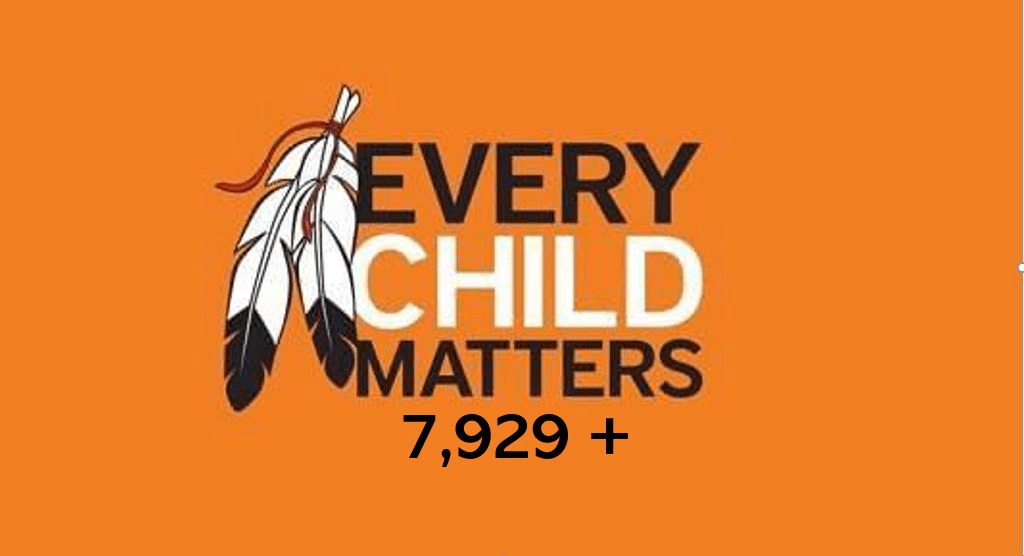
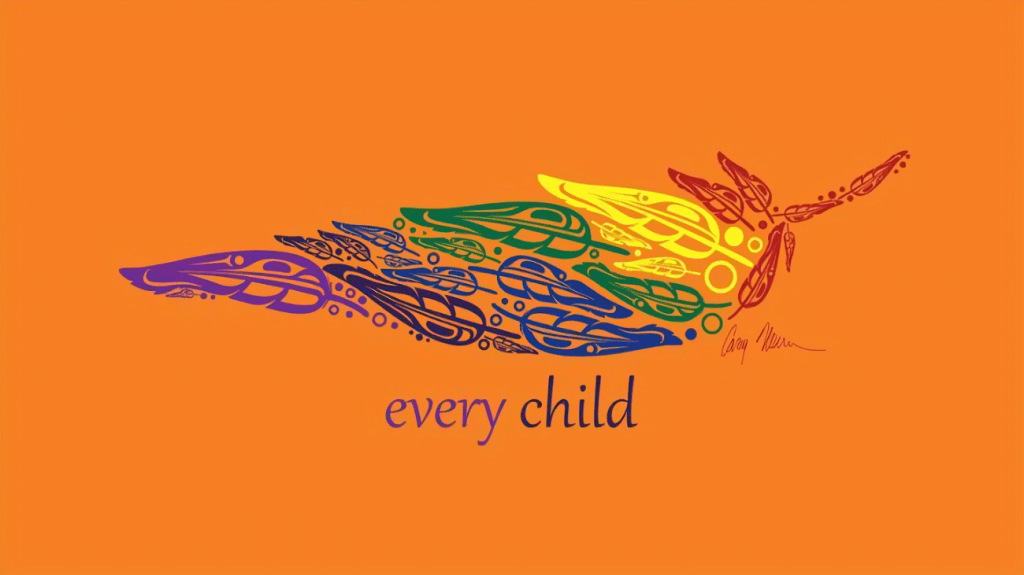
There is a Facebook group, Every Child Matters related to the atrocities of the Indian Boarding Schools. The number on the graphic tracks the number of remains of children found so far.

https://www.facebook.com/groups/125050373031500

A community to provide educational resources, generate awareness, share events and actions, and build community. Recognizing the legacy of colonization in all of Turtle Island, and working together as a community to create a world our 7 generations yet to come can feel proud to be a part of.

“Every person will do their work in their own way as we move forward.

Some will take direct action and take action. That is important. Some will write policy. That is important. Some will do ceremony. That is important. Some will share stories. That is important. Some will build relationships and understanding. That is important. Some will teach. That is important. If we all do what we know how to do, with what we know, it will be good.

Every one and every thing has purpose. Keep your ears and minds and hearts open. Try to listen to each other without forming an opinion. Listen to things as information. You don’t have to agree with it. But you can validate it as someone’s experiences, feelings and ways of healing.”


Following is a link to the poem every child, found on the Intrepid Muse Poetry blog.

https://intrepidmusepoetry.blogspot.com/2022/05/every-child-matters.html

juxtaposition is the title of an earlier blog post.

It is a juxtaposition to see the rapidly accelerating, multiple effects of environmental devastation and chaos versus the struggles of Indigenous peoples trying to protect their pristine lands and waters.
https://quakersandreligioussocialism.com/2022/05/23/juxtaposition/

juxtaposition

It is a juxtaposition to see the rapidly accelerating, multiple effects of environmental devastation and chaos versus the struggles of Indigenous peoples trying to protect their pristine lands and waters. Such as the work of the Wet’suwet’en peoples in British Columbia.

I use the word pristine (in its original condition; unspoiled) when I think and write about the Wet’suwet’en because I am so moved by the beauty I see there. It makes me ill to think of the desecration of those lands and waters that would occur, is occurring there by pipeline construction.

I’ve often written about this photo I took and developed (in a darkroom) of Long’s Peak, in Rocky Mountain National Park, Colorado. When this farm boy from Iowa moved to Indianapolis in 1970, I was horrified by the filthy air (this being before catalytic converters hid the damage). I was devastated by the thought of my beautiful mountains obscured by smog. This led me to live without a car.

Long’s Peak, Rocky Mountain National Park

To save a wilderness, or to be a writer or a cab driver or a homemaker — to live one’s life — one must reach deep into one’s heart and find what is there, then speak it plainly and without shame.

Because It Is So Beautiful: Unraveling the Mystique of the American West by Robert Reid

This video, INVASION, shows many things. Most significantly for me are the images of the beautiful lands and waters. As soon as I saw it, I was drawn to the Wet’suwet’en struggles as if by a powerful magnet. And have done what I could in support since.

Also shown are the violent, militarized invasions (multiple) by the Royal Canadian Mounted Police). And testimony at the United Nations permanent forum on Indigenous issues.


Everybody needs to stand up, not just Indigenous people. Everybody needs to stand up the political powers that be that they need to change. And quit making legislation and policies to make us look like criminals when we’re just trying to protect what is ours. It’s not just this little court house, the whole world is watching what Canada is doing. What the province of BC is doing. They haven’t done their job. They’re skirting the responsibility over to industry. I know I’m doing the right thing.

It’s inspiring to see the support world wide that we have and it’s not just our Indigenous people that are standing up. It’s people all around the world are concerned about the environment. And concerned because they know it impacts them no matter where they live.

(The United Nations) The fifth meeting of the 18th session of the permanent forum on Indigenous issues is called to order.

I am Freda Huson of the Unis’ot’en Wet’suwet’en people of Canada. I am here today to express concerns for human rights violations happening to my people. This year a pipeline company forced a court injunction on us. And if we stop them from entering our territory because they don’t have consent we face arrests.

They are trying to erase us from our own land. All these acts that continue are the acts of genocide. I am here today to make UN aware of our continuous genocide happening in Canada. And to demand that our Indigenous rights and laws are respected.

We’re wondering why our own people weren’t standing up besides us and the more and more we realize that a lot of my family that are standing up, all the females in my family. We’ve done a lot of healings in our lives, we’ve gone through the same trauma as everybody us in our reservations. That’s the reason why we’re able to stand up and stand up against what we know is wrong. So that’s what we identified, that other people aren’t able to stand up, because they’re still stuck in their trauma and oppression. And everything that comes with being oppressed and living in a system that discriminates against you.

Partial transcript from the video INVASION.


The struggles continue. This Thursday there will be an emergency Wet’suwet’en solidarity call out event.


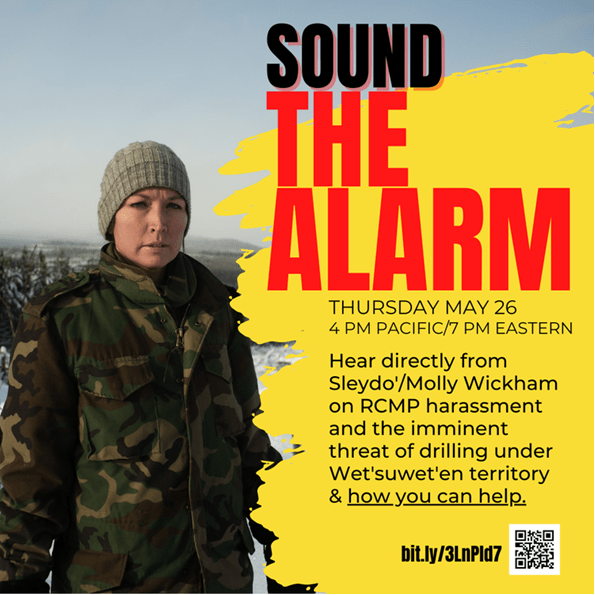
SOUND THE ALARM
Emergency Wet’suwet’en solidarity call out event, featuring Sleydo’
Thursday, May 26, 4pm PT / 7pm ET
Drilling underneath the sacred waters of the Wedzin Kwa could begin any day on Wet’suwet’en territory. On Thursday May 26, join us for “Sound the Alarm for Wet’suwet’en ” a live zoom meeting at 4pm PT / 7pm ET. 
With Sleydo’ Molly Wickham of Gidimt’en Checkpoint, together we’ll understand the situation on the ground and strategize together about how to #KillTheDrill.

https://bit.ly/3LnPld7 

#KillTheDrill

Emergency Wet’suwet’en solidarity call out event

I have been working to support the Wet’suwet’en peoples in British Columbia in their struggles to stop the construction of the Costal GasLink pipeline through their pristine lands and waters since January 2020. See: https://landbackfriends.com/?s=wetsuweten+wet%27suwet%27en

SOUND THE ALARM
Emergency Wet’suwet’en solidarity call out event, featuring Sleydo’
Thursday, May 26, 4pm PT / 7pm ET
Drilling underneath the sacred waters of the Wedzin Kwa could begin any day on Wet’suwet’en territory. On Thursday May 26, join us for “Sound the Alarm for Wet’suwet’en ” a live zoom meeting at 4pm PT / 7pm ET. 
With Sleydo’ Molly Wickham of Gidimt’en Checkpoint, together we’ll understand the situation on the ground and strategize together about how to #KillTheDrill.
 REGISTER NOW  

Dear friends, allies and comrades,

While we try to live out our daily lives and conduct cultural practices with our elders and children, police barge into our homes without permission — everyday, with at least six officers — intimidating us, surveilling us, illegally arresting, and detaining people on our own lands. 

It’s a story as old as the colonial violence against Indigenous Peoples to steal land, resources, and wealth. The sad truth is, it’s what’s happening right now: They want to intimidate us off our land so Coastal GasLink can start drilling in less than one month under our sacred headwaters, Wedzin Kwa. 

In March 2020, thousands of you took to the streets, railways, ports and highways to stand with Wet’suwet’en and demand Coastal GasLink cease construction. We made global headlines — forcing Justin Trudeau and John Horgan to commit to entering into discussions with Wet’suwet’en Hereditary chiefs. [1]

But they haven’t made any progress with us on those title discussions, haven’t stopped construction and haven’t pulled RCMP or CIRG off of our territories.  In fact, things have gotten worse. The UN has issued yet another letter to the so-called governments of Canada and BC, calling for an end to police violence and to halt construction. [2] 

We need your help to stop the drilling and make them listen, and we want to give you an update with all the information you need to act. Will you join me and Sound the Alarm for Wet’suwet’en on Thursday May 26 at 4 pm PT / 7pm ET on Zoom? In this call, you’ll hear from me and other Wet’suwet’en hereditary chiefs and learn about what you can do to support us in our fight against CGL. 
[YES] 
Here are the details: 
What: Sound The Alarm For Wet’suwet’en 
When: Thursday May 26, 4 pm PT/7 pm ET 
Where: https://bit.ly/3LnPld7 
 
The Supreme Court of Canada, under the Delgamuukw v. British Columbia legal case, recognized that the Wet’suwet’en people never ceded our title to our land. [3] Yet over and over, both the so-called governments of British Columbia and Canada have paid lip service to reconciliation, claiming they respect Indigenous peoples’ rights. 
 
And now, we face losing our land, our water, our way of life. It’s why I’m reaching out now, because we need to raise the alarm so people everywhere know what is at stake, and rise up in massive opposition to help stop the drilling. 

Will you join the call to Sound the Alarm for Wet’suwet’en on Thursday May 26 at 4 pm PT / 7 pm ET to learn how you can help stop the drilling and stand with Wet’suwet’en?
[YES] 

[Can’t make it? Help promote the event!]
The amount of pressure and stress I feel everyday knowing that my people and our land is under threat is made worse by the constant police presence — showing up at my house unannounced and questioning us for living our lives. My children are 2, 6 and 10 years old. They shouldn’t have to bear this burden — and they’ve done nothing to deserve this treatment. 

At the same time, I feel immense hope. I believe in the thousands of people who have shared their outpouring of love and support for Wet’suwet’en. I’m energized by the beauty I see in the Wedzin Kwa river, everyday, and grateful for how the land provides for me, my family, and my community.  Will you stand with me and join the call to Sound the Alarm for Wet’suwet’en on Thursday May 26? 
[YES] 
With gratitude, 
Sleydo’, 
Spokesperson for Gidimt’en Checkpoint, Cas Yikh House, Wet’suwet’en 
 
Sources
[1] https://www.cbc.ca/news/politics/trudeau-urges-patience-pipeline-dispute-1.5484087

[2]https://www.cbc.ca/news/canada/british-columbia/un-committee-elimination-racial-discrimination-indigenous-coastal-gaslink-trans-mountain-1.6407798
[3] https://www.bctreaty.ca/sites/default/files/delgamuukw.pdf


We want to keep you up-to-date
Gidimt’en Checkpoint is a reoccupation site of Cas Yikh (Grizzly Bear House) territory where Wet’suwet’en people are asserting their jurisdiction over their unceded land. 
The Coastal Gaslink pipeline and associated LNG terminal is the largest private fracked gas investment in Canadian history. The Wet’suwet’en Hereditary Chiefs have been resisting the construction of the fracked gas pipeline on their territories for more than a decade, and the hereditary chiefs of all five Wet’suwet’en clans have refused to give their consent to the project.
After a decade of fierce resistance, Coastal GasLink is getting closer to drilling under the Wedzin Kwa, the sacred headwaters of the Wet’suwet’en since time immemorial. Now is the time to come together and demand drilling stop.
 COME TO CAMP  
 REGISTER FOR WEBINAR  

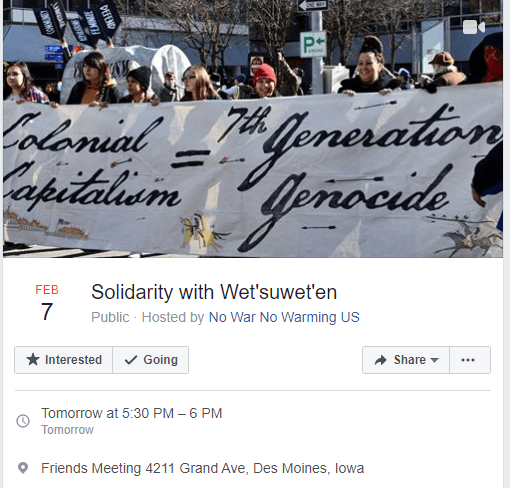
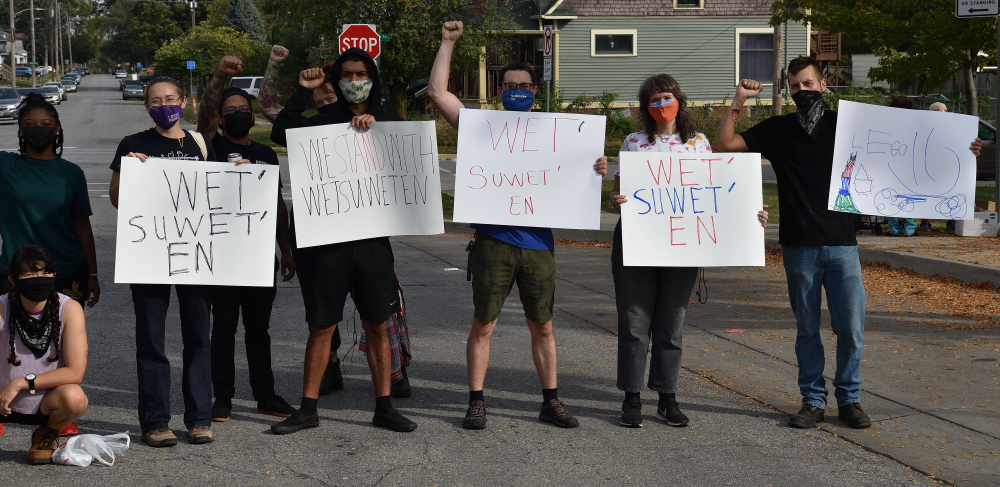
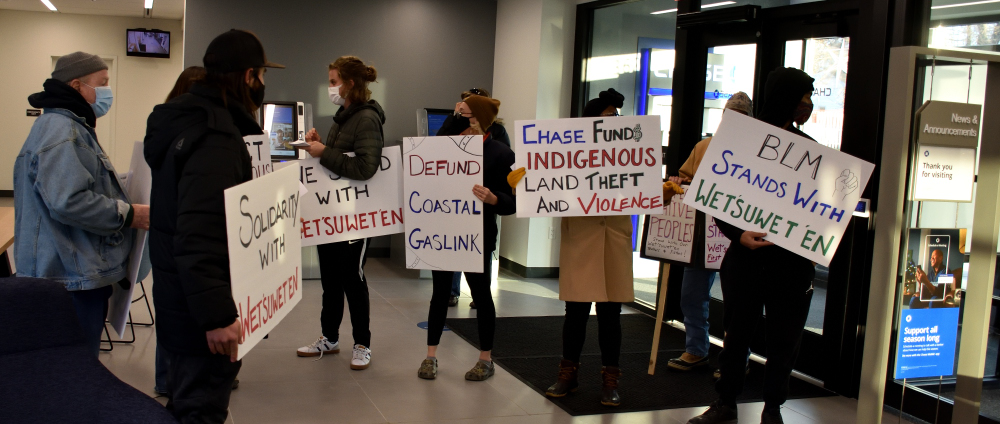
Our Latest Iowa Solidarity with Wet’suwet’en Event

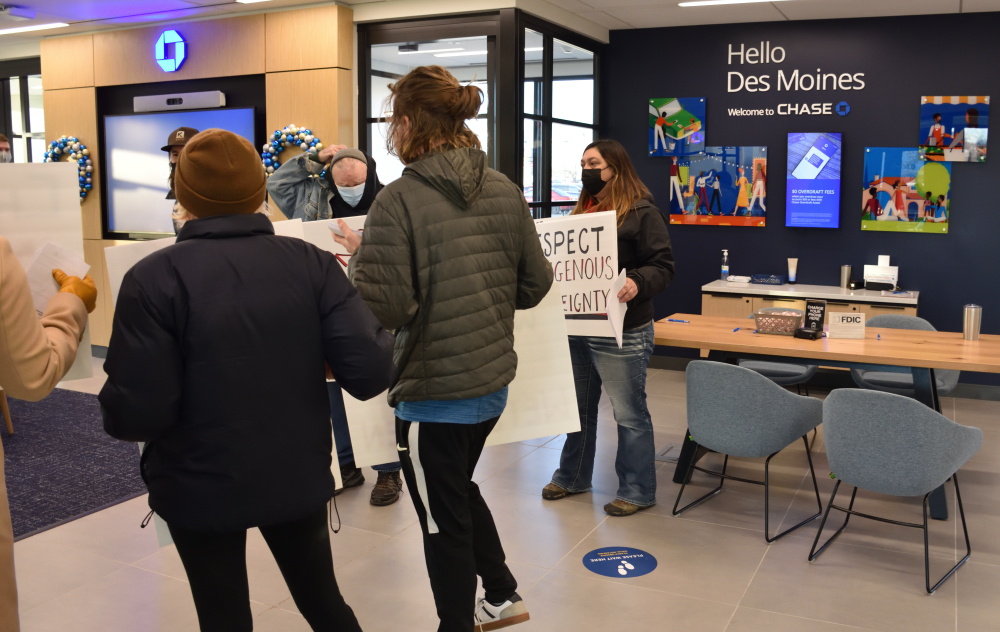
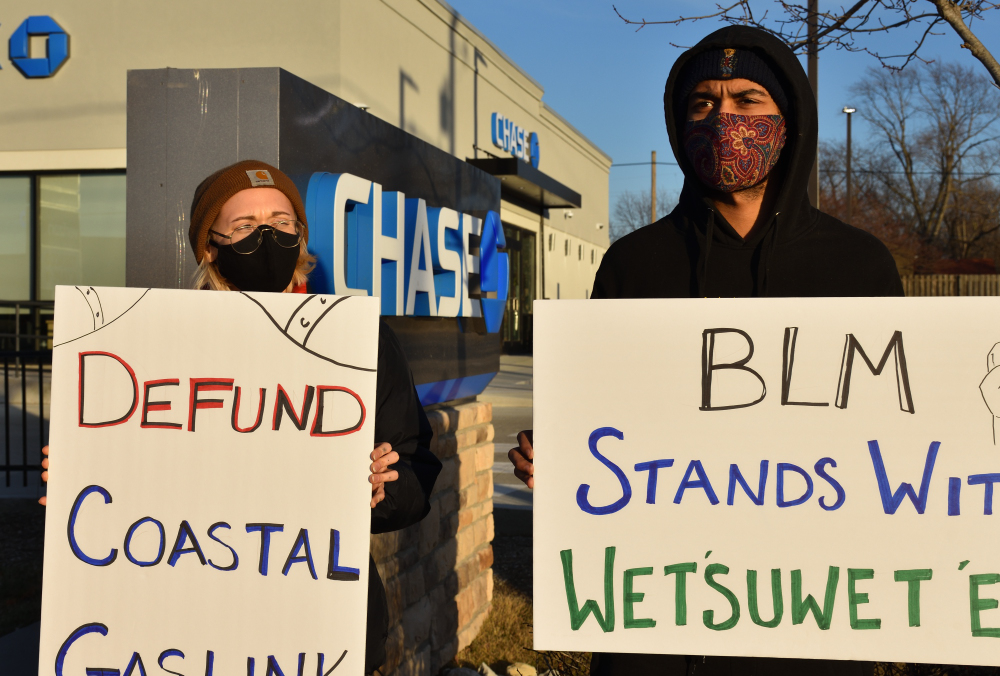
On December 22, 2021, we went to Chase bank in Des Moines to protest the bank’s funding of fossil fuel projects. In support of the Wet’suwet’en’s calls for solidarity.


#KillTheDrill