It’s difficult to not feel overwhelmed and deep despair. On top of everything else, it looks like a global civil war erupting between supporters of Israel and those of Palestine. I hope those reports are exaggerated. It’s hard to trust any type of media these days.
Although it might not seem much compared to living without food, water, shelter, power, and constant bombardment, awaiting a ground invasion, I’m deeply concerned about my friends and neighbors. For a long time, I’ve been aware of the impact of our own traumas. Isolation, increased rates of suicide, and giving up. There is a sense that things will only get worse on multiple fronts.
There are the usual calls to contact our Congresspeople, but they can’t even organize themselves, let alone listen to us.
He begins by saying “This essay is written for white men written by a white man. It’s a working draft. Comments welcome.” Keeping that in mind, I believe there are things he says that can be helpful to a broader audience, for those of us who struggle to find ways to work for justice. Who feel there isn’t anything we do that might make a difference.
The struggle to end racism and white supremacy is heroic work, but where do white men fit into the movement?
White men are at the top of the white supremacy hierarchy. It shouldn’t be surprising if some Black, Indigenous, and other people of color (BIPOC) don’t trust us.
Some might reasonably worry that asking white men to be heroes in this work would trigger ‘White Savior’ behavior, where a white man acts from a presumed position of superiority to “rescue” BIPOC.
That would be a big step in the wrong direction.
More white men are needed in the struggle against racism. I believe we can be anti-racism heroes, but it means undoing old programming and rethinking what it means to be a hero.
I am trying to wake up to ways that my culture – including white supremacy and patriarchy – has shaped me, a white man born in the late 1950s. Growing up, I read comic books – Batman, Superman, Spiderman, Flash, the Green Lantern and more. I watched Gunsmoke on TV, in which Marshall Matt Dillon single-handedly dealt with the violence of the Old West.
They informed my understanding of a hero as a lone actor who rarely if ever asked for help.
…
These stories have a hallmark of white supremacy: Individualism.
In the end, it’s about one lone white guy (or white Hobbit) accomplishing a seemingly impossible task. In the three stories above, they save humanity.
Those stories have the hallmark of white supremacy: Individualism.
Rethinking the Hero’s Journey
The hero often doesn’t realize they need a challenge. Thus, they don’t know they must search for their own challenge. They need to be aware of friends and mentors who can shed some light and point them on a new path. This path has different challenges: more self awareness, self control, and compassion.
Who is a hero in this context? Someone who faces the truth, stays grounded, and doesn’t let himself get lost in either self criticism or defensiveness.
A hero takes risks, and has the integrity to admit mistakes.
I aspire to talk less and listen more.
A hero is humble.
Finding your power
The message of that blog post, the message I want to share with you, is we need to find where our particular talents connect with the justice work. This work is difficult enough to do without forcing yourself to do things you think you should do, but don’t excite you.
I was blessed to discover this early in my justice work, though it took some time to realize it. In my case, my passion is photography. In the PDF file below I go into this in great detail. But to summarize:
I learned how to work in a photographic darkroom while in high school, Scattergood Friends School
At twenty years of age, I joined the Friends Volunteer Service Mission in inner-city Indianapolis, where I was led to work with kids. One of the things we did was ride our bicycles around the city, taking photos (35 mm film). Then we developed the negatives and printed the images in a bathroom darkroom
My photos were published in a book about the new addition to the Indianapolis Central Library.
Other photos were published on an Indiana state government website to attract filmmakers to the city.
I took and shared a lot of photos of public demonstrations related to the Keystone XL and Dakota Access pipelines in Indianapolis
Working with the Kheprw Institute, a black youth mentoring community, I was asked to give photography classes.
I continued to take photos of similar events when I moved to Iowa. I was honored when my justice advocate friends began to ask me to come to their/our events in order to document them.
I found my power in photography. I urge you to focus on what your power is. You already have your power, but you might not be seeing it in this context. If you don’t love what you are doing, you should make a change.
This is the story, not yet complete, of my journey related to justice and photography.
Judy Plank was a good friend of mine. She was always present and helpful as we worked together on peace and justice issues for Iowa Yearly Meeting (Conservative).
I was glad she asked me to take photos of her for the jacket of her book, Paradise Still Has Snakes. (the first of the photos below).
I will miss her.
Judy Ann Plank
Dec 14, 1942 – Oct 12, 2023
Obituary
Judy Plank, 80 of Le Mars, Iowa, passed away on Thursday, October 12, 2023 at the Good Samaritan Society of Le Mars.
There will be a Memorial Service at a later date. Expressions of sympathy may be expressed to the family through www.rexwinkelfh.com
Judy Ann Juhl was born on December 14, 1942, the oldest child of Howard ‘Bud’ and Jean (Stowater) Juhl of rural Remsen. Judy grew up on the family farm between Marcus and Remsen. She had fond memories of her childhood pet Holstein milk cow, ‘Coke’.
She started school at Meadow Township county school and when it closed, she then attended Marcus Public School and graduated in 1960. She then attended Westmar College in Le Mars for one year. While at Westmar, Judy met her husband to be, Kenneth Paul Plank. They were united in marriage at Faith Lutheran Church in Marcus, Iowa on December 27, 1961.
Twenty years later she graduated with a BA degree in sociology from Southwest State University in Marshall, MN. She later also received an associate degree in accounting. Judy’s sporadic work history included: working in a welfare department briefly, in a residence for the mentally handicapped for three years, and primarily providing childcare in her home.
Judy and Paul enjoyed traveling, from Costa Rica to Alaska. At a young age, Judy was always an avid reader. This led her to writing prose and poetry. It also culminated in the writing of her autobiographical published book, Paradise Still Has Snakes. She enjoyed gardening and having her hands in the dirt. She also enjoyed baking and sharing her ever-present zucchini bread.
Judy’s spiritual journey led her to the Religious Society of Friends (Quakers). As a member of the Paullina Friends Meeting, she served on many committees and was also actively involved in the Iowa Yearly Meeting. She was a longtime member of the Northwest Iowa Peace Links.
Judy was always a champion for the downtrodden. She described herself as a progressive/socialist peace activist and was an avid protestor. Her strong belief in peace, nonviolence, and social justice was the guiding light in her political and social involvement. After Paul’s retirement, they began wintering near Douglas, Arizona. There she was at the founding of Healing our Borders, a group attempting to stop the increasing deaths of migrants crossing the borders and to change the nation’s immigration policies. She attended weekly vigils remembering those who perished at the border and handed out blankets to protect migrants from the cold. Judy was also proud of the work she did co-facilitating teaching ‘Alternative to Violence Project’ workshops at the Ford Dodge Correctional Facility. She was also a part of the ‘New Roads Reentry’ team helping men back into society following a prison sentence.
Judy was an active member of the Plymouth County Democrats. She was not afraid to knock on doors or hold up a sign on a street corner for her cause.
Judy’s greatest joy was spending time with her family and friends.
Judy will be lovingly missed by her husband, Paul; son: Kipp Plank of Sioux City; 4 grandchildren: Nick Plank, Lacey Overman, Athena Marshall (Mason Bakker) all of Le Mars, and Rick Plank of Los Angeles, California; 4 great grandchildren: Jade, Alex, Boston, and Pierce; brothers: Mark (Cheryl) Juhl and Dale (Faith) Juhl both of Remsen, IA; nieces, nephews, cousins, and friends.
Judy is preceded in death by her parents; daughter, Kristine Redhouse; and granddaughter in law, Jen Plank.
Each year the International Day of Peace (IDP) is observed around the world on 21 September. The UN General Assembly has declared this as a day devoted to strengthening the ideals of peace, through observing 24 hours of non-violence and cease-fire. Never has our world needed peace more.
This year’s theme is Actions for Peace: Our Ambition for the #GlobalGoals. It is a call to action that recognizes our individual and collective responsibility to foster peace. Fostering peace contributes to the realization of the Sustainable Development Goals (SDGs) and achieving the Sustainable Development Goals will create a culture of peace for all.
For some time the Spirit has been calling my attention to peace in many different ways.
I was led to take the photo below of the peace symbol on a coffee mug
I’ve been concerned but not surprised to learn of the heavy military recruitment of teens in public schools today
That made me turn my attention to conscientious objection. I discovered my Quaker meeting, Bear Creek Friends, had done significant work on conscientious objector counseling years ago. I had not known about that because I was living in Indianapolis at that time
My story about my struggles to become a draft resister
My Scattergood School classmate’s story of his imprisonment for draft resistance: The Barrett Family’s Peace Testimony by Daniel Barrett
The Moral Integrity of Muhammid Ali
I remember the day of the National Moratorium to End the War in Vietnam, October 15, 1969, when the entire student body of Scattergood Friends School had a peace march from the school to the University of Iowa (about twelve miles) to participate in actions there
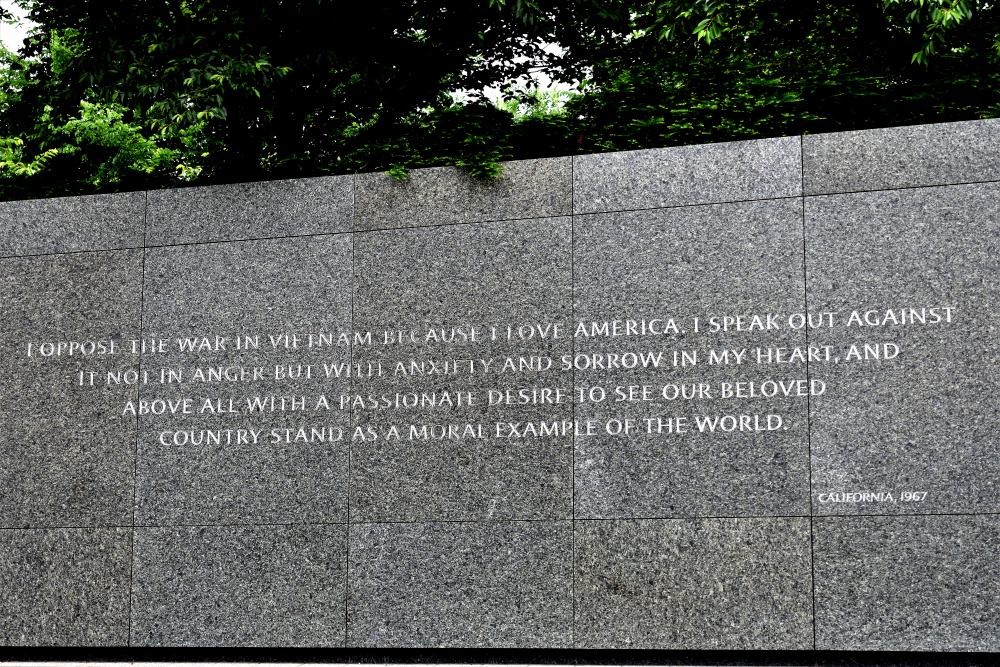
I’m reminded of Martin Luther King’s brave stance against the Vietnam War despite objections from his community
I was led to read the wonderful book Don’t Think Twice by Alison Lohans, which is a novel about the peace activities of a family set in the time of the Vietnam War. Alison and I have exchanged messages about this.
Yesterday, during our weekly Friends Committee on National Legislation (FCNL) Witness Wednesday Silent Reflection we considered the following prompt and query.
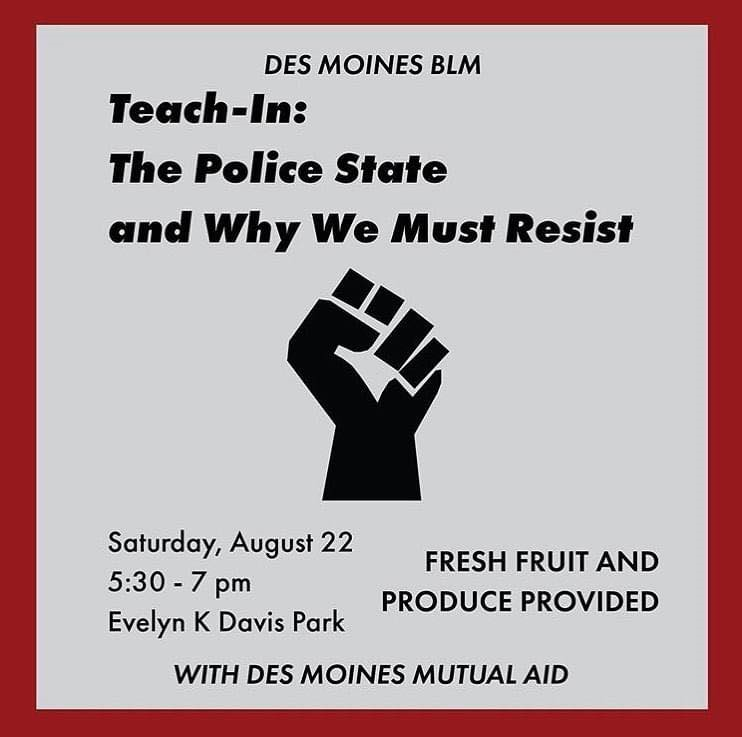
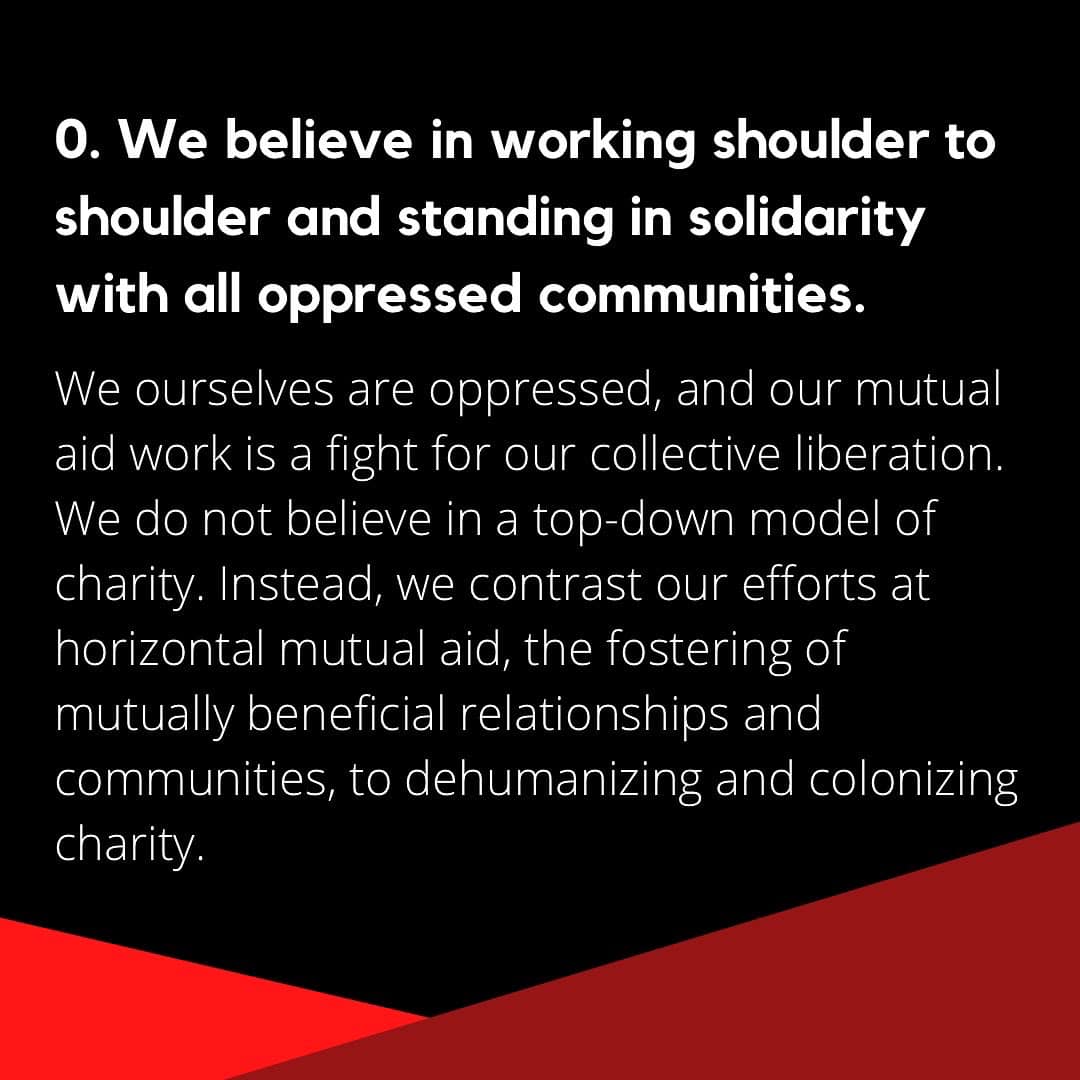
During my three years of experience with Des Moines Mutual Aid, I’ve become MUCH more aware of the internal war of the state against us.
“If, however, the peace testimony is the outward evidence of God’s work among us, then committing to it will lead us into prayerful sacrifice and radical solidarity with victims of violence. The cause of peace will encourage us to take unpopular stands for unpopular causes, because our faith is in a God who does not allow us to use violence even for a noble cause. We will be led to share our faithfulness to the Lamb and His war in a spirit of love and humility, inviting others into a new way of living.”
Query: How do you live a commitment to peace? How do you invite others into a new way of living?
I don’t know why I was prompted to take this photo of a coffee cup yesterday
An Epistle to Friends Concerning Military Conscription
Dear Friends,
It has long been clear to most of us who are called Friends that war is contrary to the spirit of Christ and that we cannot participate in it. The refusal to participate in war begins with a refusal to bear arms. Some Friends choose to serve as noncombatants within the military. For most of us, however, refusal to participate in war also involves refusal to be part of the military itself, as an institution set up to wage war. Many, therefore, become conscientious objectors doing alternative service as civilians, or are deferred as students and workers in essential occupations.
Those of us who are joining in this epistle believe that cooperating with the draft, even as a recognized conscientious objector, makes one part of the power which forces our brothers into the military and into war. If we Friends believe that we are special beings and alone deserve to be exempted from war, we find that doing civilian service with conscription or keeping deferments as we pursue our professional careers are acceptable courses of action. But if we Friends really believe that war is wrong, that no man should become the executioner or victim of his brothers, then we will find it impossible to collaborate with the Selective Service System. We will risk being put in prison before we help turn men into murderers.
It matters little what men say they believe when their actions are inconsistent with their words. Thus we Friends may say that all war is wrong, but as long as Friends continue to collaborate in a system that forces men into war, our Peace Testimony will fail to speak to mankind.
Let our lives speak for our convictions. Let our lives show that we oppose not only our own participation in war, but any man’s participation in it. We can stop seeking deferments and exemptions, we can stop filling out Selective Service forms, we can refuse to obey induction and civilian work orders. We can refuse to register, or send back draft cards if we’ve already registered.
In our early history we Friends were known for our courage in living according to our convictions. At times during the 1600’s thousands of Quakers were in jails for refusing to pay any special respect to those in power, for worshiping in their own way, and for following the leadings of conscience. But we Friends need not fear we are alone today in our refusal to support mass murder. Up to three thousand Americans severed their relations with the draft at nation-wide draft card turn-ins during 1967 and 1968. There may still be other mass returns of cards, and we can always set our own dates.
We may not be able to change our government’s terrifying policy in Vietnam. But we can try to change our own lives. We must be ready to accept the sacrifices involved if we hope to make a real testimony for Peace. We must make Pacifism a way of life in a violent world.
We remain, in love of the Spirit, your Friends and brothers,
Don Laughlin Roy Knight Jeremy Mott Ross Flanagan Richard Boardman James Brostol George Lakey
Stephen Tatum Herbert Nichols Christopher Hodgkin Jay Harker Bob Eaton Bill Medlin Alan & Peter Blood
We organized a draft conference at Scattergood Friends School in 1969
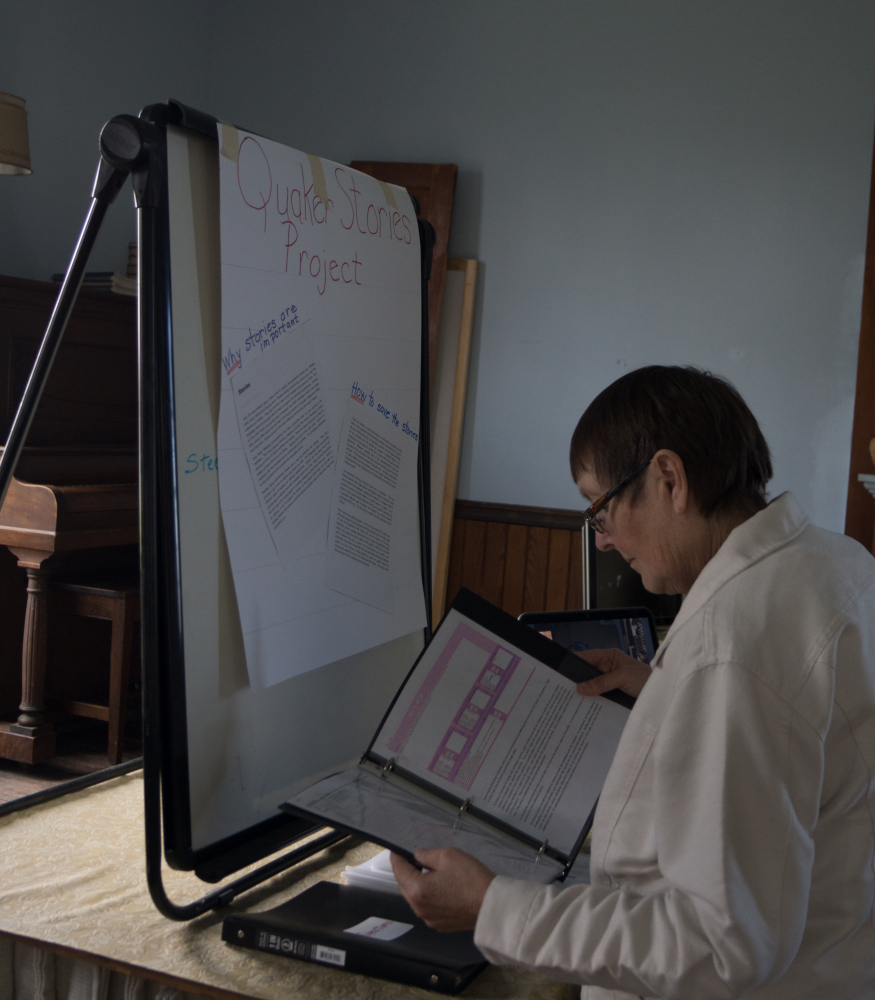
Alberta Kisling was passionate about preserving stories and wrote and collected them during her life. The Quaker Stories website was created so these stories could be told.
Centering Down at Bear Creek by Alberta Kisling
Catch the mind Don’t let it wander – Center The facing bench is empty Where are they? Oh, there they are Sitting so tall So stern Faces lined, eyed downcast Always there. There – out the window The old school house Where are your children school house? Do they remember you? Yes, I feel them here They are whispering Good morning – how is thee?
Resurrection
by Alberta Kisling
Out of the crumbles of dust and termites come memories of children’s voices at play or reciting, first-day school and committee meetings. We Quakers reflect on the old school house that is gone.
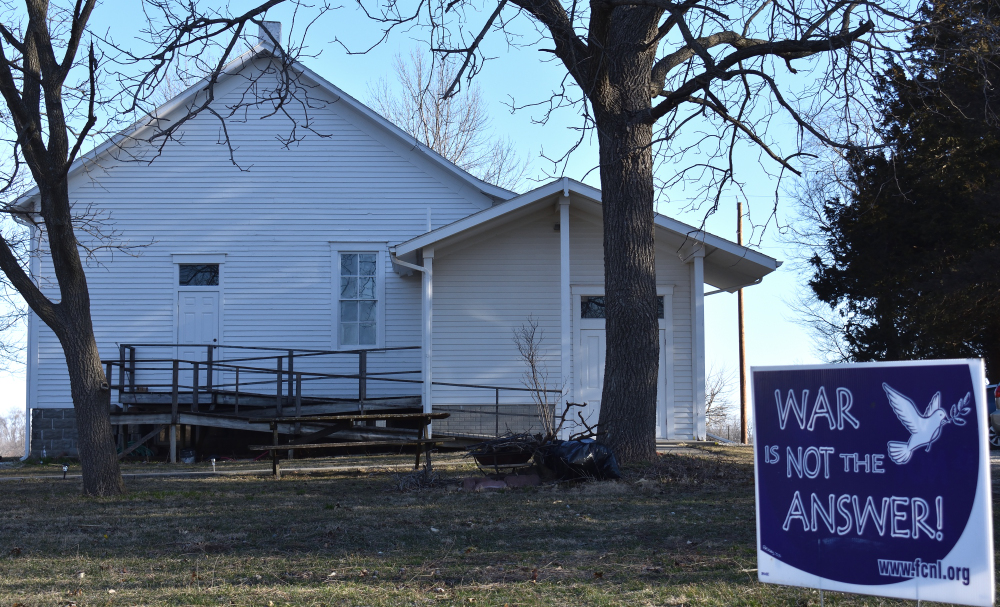
Old school house at Bear Creek Friends Meeting
But look! Rising from the ruins of the past; a new building! Many windows for quiet gazing across the fields. Our spirits are lifted as our eyes are drawn heavenward. Skylights, and a loft for rest, and quiet meditation.
Already there have been worship groups, committee meetings, and students sleeping (?) all night. The rain barrel waters the new circle garden.
We are breathless as we absorb its beauty. We are enthralled as we contemplate the endless possibility of its future. The first of the past are weaving themselves into the miracle of new life in our beautiful, precious Quaker Cottage.
Lorene Standing
by Alberta Kisling
Mother seldom lost her temper but there were occasions that would try the patience of a saint!
Mother had gathered walnuts and wanted to dry them so she could shuck the hulls off. So she decided to put them up on the tin roof of our house so the squirrels wouldn’t get them. Imagine her dismay when it rained and black walnut stain filled our cistern.
One wash day she had carried in buckets of water and filled the copper tub on the stove to heat. After she had transferred the hot water from the wood burning cookstove to the washing machine, added the Fels-Naptha soap she had ground off a hard bar, and sorted all the clothes; whites, colored and very, very dirty chore clothes, she attempted to start the gas engine on the washing machine. She kicked and kicked and it wouldn’t start. She took out the spark plug and cleaned it, put it back and tried and tried again!
“Well Sam Hill and Seven Stakes!” she said–as near to cussing as I ever heard.
When she was working at the County Home she used a step ladder to climb up on the kitchen counter to paint the wall. When she stepped back on the ladder it shifted and she fell, catching her leg in the ladder, causing a serious compound fracture. She didn’t call us until she had been in the hospital for three days and Aunt Lydia said, “if you don’t call your daughter, I will.”
She was so angry that she hadn’t been more careful.
Several in our creative writing group are writing life histories for their families. A number of people here at the Village have already written books. Have you considered how you will pass on your family history?
There are many ways to do this and you don’t have to be a gifted writer to do it. Making a recording is a wonderful way! To be able to hear your voice after you are gone is a precious gift to give.
Have you ever interviewed family members, dear friends, or someone you admire? It helps to have questions that trigger memories and special stories: who was your best friend, what were your favorite games, describe a typical school day, how did you decide your life work what was the saddest day in your life, what was your favorite book, song, trip, pet? You can create the questions to glean the information you want.
Look through your photographs. Many of those pictures will trigger a story or a piece of history that is important. It is so easy to reproduce pictures and they are a great addition to any story. Make sure they are labeled and dated.
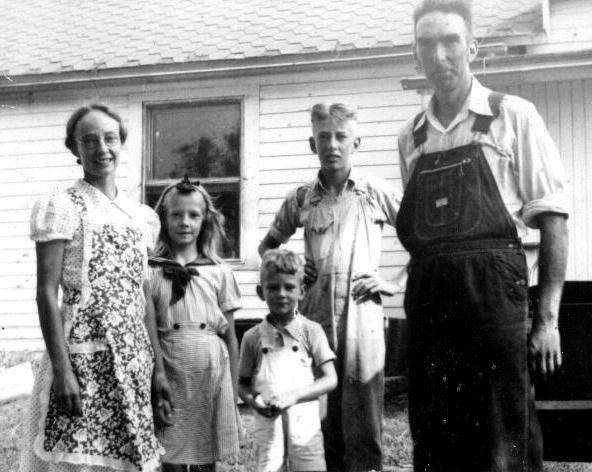
Lorene, Alberta, Ellis, Wilden and Albert Standing
My mother placed great importance on passing on our family history. I have a tape recording of an interview with her and my father. Occasionally I have questions I wish I had asked–too late now.
We all have family stories that happened before we were born. Those should be passed along also. Here is one from my father’s childhood. The crows were a nuisance near my father’s rural farm home. He and his sister spotted a nest in a nearby tree and decided to kill the baby crows. My father climbed the tree, and looked at the baby birds and hollered down “I can’t do it”. She called “Throw them down, I’ll do it.” Down came a baby bird. “Stop” she shouted, “Don’t throw any more.”
Sometimes it may seem the younger generation isn’t interested in the family history or some family heirlooms. It is just not on their radar yet. The day will come when they will truly value you stories and they will be so grateful you passed on the gifts that were given to you.
Family Camping
by Alberta Kisling
The highlight of our summers were camping trips. As we endured the hot, dry summers and every activity resulting in sweat running down our flushed faces and our energy draining as we pulled those icky, tough weeds or pushed and shoved the mower through heavy grass, we could hardly wait to hear the water rushing and bubbling over the rocks in Big Thompson Canyon and breathing the crisp air of Rocky Mountain National Park.
We always had a contest of who could see the mountains first – a great help as we restlessly endured the hot, barren prairie of Nebraska. As we drove into Estes Park the kids began to chatter and jump up and down. “There are the go carts, there is the amphitheater, hope we can get a camp spot in Moraine Park”! Soon we can hear the groans and moans as Dad drove around and around searching for the perfect spot. “Randy, you go sit on that picnic table to hold this spot as we look for a better one.” We would eventually return to pick up several disgruntled kids and begin the process of setting up camp. The children worked quickly so they could explore our area and climb the rocks. Eventually Burt and I would stretch out in our lawn chairs gazing in awe and wonder at Longs Peak and smelling the beautiful pine trees. Ground squirrels scurried around hoping for a tossed peanut and we smiled and sighed – it was worth the long, long trip, packing, aching heads and back.
Supper was simple but typical camp food. The most wonderful smell as the bon fire began to burn brightly. Where are our sticks – finally found them and then the smell of hot dogs roasting and sizzling and the little blazes as the marshmallows catch fire. There are homemade cookies loaded with chocolate chips and brownies. The smores are sticky and sweet and of course called for more.
Soon we join our fellow campers trudging along the gravel path to the amphitheater The Ranger is friendly and tells us fascinating stories of the area. We smell popcorn as we plod happily home but we are cold!! Everyone hurries to climb into the warm sleeping bags. “Ok Mom, you were reading ‘Hans Brinker and the Silver Skates – Remember?”
We feel so close to God under the starry sky, so thankful for our safe travels, healthy family, and for Beautiful, Beautiful Colorado!!!
Some Remarkable Quaker Women
by Alberta Kisling
Deborah Standing
While I didn’t know my Great Grandmother, many stories have been passed along. To leave her home in civilized England and travel with her husband and five sons to a strange, new pioneer land surely took enormous courage! There was no electricity, no running water, mud roads—a very primitive life. Each Standing reunion we do a choral reading written by Martha Foster that describes her and her husband going to meeting with a horse and buggy with five sons dressed in white shirts and bow ties. She was blessed with a kind, considerate husband who helped around the house. For example, pumping the water from the well and carrying it into the house to heat it for doing the laundry. Her husband Charles was a gifted Quaker minister. The Standings wanted a good education for their children and supported the Bear Creek School and later, Scattergood School. Several brothers married Nicholson sisters and both families had many artists, writers, and poets.
Eva Delitha Heald Stanley
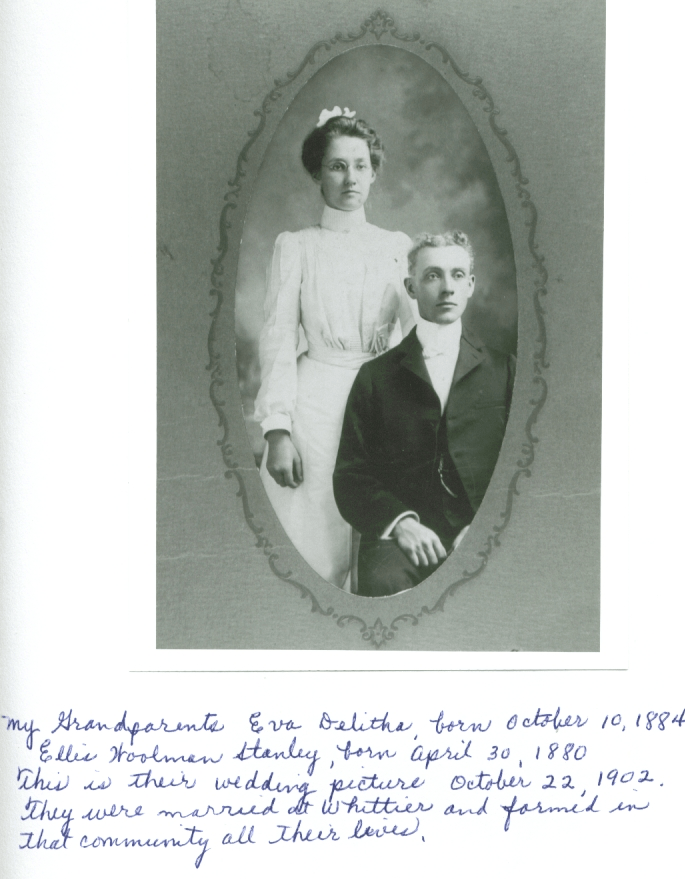
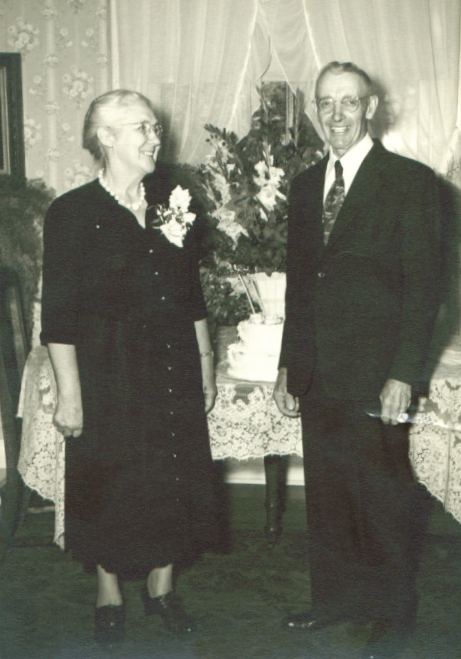
Eva contracted tuberculosis as a young bride. Ellis, her husband, took her to several doctors in Cedar Rapids and they all said there was no cure and she would die. In the little Quaker village in Whittier, Iowa, there was a homeopathic doctor. Dr. Ross came by horse and buggy several times a day and her remedies cured Grandma Eva. Grandma studied the different remedies and relied on homeopathic medicine the rest of her life. She taught her children and Grandchildren how to use the remedies, also. She and Grandpa had five daughters—Lorene, Irma, Hazel, Wilma and Clyda. She always helped milk the cows, raised lots of chickens, had a big garden, and canned a lot of food. She was known for her beautiful flowers, her good cooking, and her friendly hospitality. Grandpa didn’t believe in commercial fertilizer. He built up his soil with manure and rock phosphate. Grandpa ground the wheat they raised and Grandma baked her own bread. She also sold extra to neighbors and to the Health Store in Cedar Rapids.
She and Grandpa got up very early to chore, followed by a big breakfast. The breakfast dishes were left on the table and they retired to the parlor for Bible Reading every day.
There were few nursing homes in her day, and she took care of a number of elderly relatives in their final days.
Amy Lorene Stanley Standing
The oldest daughter of Ellis and Eva Stanley, she was raised on their farm near Whittier, Iowa. As the oldest of five girls she was the outdoor girl. She loved working outside, helping chore, working in the garden—fixing things. She wasn’t fond of cooking and inside jobs. She attended Scattergood School where she met her future husband, Albert Standing, and graduated from Olney Boarding School. She attended teacher training at William Penn College and taught school at Whittier. After their marriage she and Albert farmed at Whittier and Earlham. They had a hard life during the depression with little money and three children, Wilden, Alberta, and Ellis. She was very frugal, recycled whatever could be used. She thought of herself as shy—worked very hard for people who needed help. She could be depended upon, served on many committees but was the worker not the chair who received recognition.
Leanore Goodenow
Leanore was Director of Scattergood School, where I was a student for four years. She was the person who had the most influence on my life. Scattergood gave regular written reports instead of letter grades. While at public school I easily received A’s; at Scattergood the reports were not so good. She always expected more. I learned to work harder, set higher goals, and make better use of my time. We were heavily scheduled and free time was spent “volunteering” at work needed at the school. To this day I feel guilty if I’m wasting time.
Leanore came to Iowa Yearly Meeting when Scattergood had been closed for years. She started it up with a small staff and student body. She was a strong director, frugal, attending to details, excellent at fund raising, and she rebuilt the School—students, staff, and Instruction, Art, Main, and Science Buildings, and Boys Dorm. Her influence on the many students who attended, the faculty, the Committee, and the Yearly Meeting are immeasurable. Burt and I both served on the Committee as did our son Jeff. Our children all attended the school. It continues to be a very important part of the Yearly Meeting.
Some Quaker Mothers of our Organizations
Patricia Newkirk
When she came to William Penn House things really starting looking nice—paint happened, bookcases appeared, things just looked spiffy. She was there with a friendly smile and howdy! Never mind that Byron was down below chopping up the old piano and laying carpet half the night. We sure miss Patricia.
Olive Wilson
Olive was the Clerk of Everything—Mapleside Meeting, Iowa Yearly Meeting, Scattergood School, FCNL—and many other organizations I don’t know about. She edited “Iowa Peace Links”. She wrote her Congressmen endlessly, had letters to the editor printed often—worked and worked and worked some more for peace and justice. Besides that she and Warren raised three children, farmed, and worked for their meeting, community, and projects dear to the hearts. She was an amazing example.
KONICA MINOLTA DIGITAL CAMERA
Kathy Guthrie
When I was on Field Committee for FCNL Kathy was the staff person responsible for Field Committee. She worked for FCNL for many years in many capacities. She knew everyone, kept informed on what was happening, worked smoothly behind the scenes, could suggest people from all over the U.S. who might be able to fill a certain position. She was the one who welcomed you and made you feel a part of the group.
Dear Birdie, I can’t tell you how honored I was to be included in the absolutely wonderful group of Quaker women. To be listed in the same area as Olive Wilson—well, I don’t deserve it, but as I said, I’m extremely honored. I was inspired to add a Quaker mother to your list. I could think of several, Alison Oldham, for one, but decided to go with the first Quaker in my life–my mother’s favorite aunt (and mine as well).
With warm regards,
Kathy
Bessie Benson Gormong
My great aunt, Bessie Benson Gormong, was my introduction to what it was like to be a Quaker. She grew up in rural southern Indiana, 9th in a family of 11 children. She was the only girl to go to college, was a dairy farmer’s wife and partner in running the farm. They were both very involved in Western Yearly Meeting, Bloomingdale Quarter, and she in USFW. They were no doubt the backbones of a tiny country Quaker church, Benson Chapel. Bessie named her daughter for Susan B Anthony, took us to see Lincoln’s home in Springfield, and read and thought about and discussed current events. When I recall how racist and narrow minded my grandmother (her sister) and grandfather were, I think it’s a true miracle that she had such a world view. For a woman born in 1908, she not only was really a believer in equal rights for races, but for accepting differences in sexual orientation. I have always felt that being a Quaker means standing on the shoulders of giants. One of those sets of shoulders is my beloved aunt.
Kathy Guthrie
Bonfires
by Alberta Kisling
Often as we walk along in the fall we see a whiff of smoke and soon the nostalgic odor of burning leaves overwhelms our senses. What wonderful memories!!
We remember coming home on the school bus and entering the kitchen to the sight of our mother canning tomatoes. After a warm cup of tomato juice, butter and crackers, we hurry out to rake up leaves. Running and jumping into piles of leaves used some of our excess energy, and later lighting a fire helped ward off the chilly breeze.
Bonfires were central to our camping memories. After attending the Ranger’s program in the amphitheater, we would gather around the fire and enjoy a cup of hot chocolate and make some smores.
Various gatherings of your groups usually had a time of singing around the campfire. We loved those old camp songs, we loved the fellowship and sharing with our friends and the burning embers as the fire died down etched the blessing of time, friends, sharing in our memory.
Bear Creek Meeting has been the location of many bonfires. Often while cleaning the meetinghouse for a large occasion, we would gather around the fire—tired, dirty, planning for a special event. Other times our Standing family reunion was held there and we would gather in the evening for stories, singing, and, or course, smores.
There was no central heating in our childhood home. Different kinds of fires burned there—a quick summer fire in the cook stove was usually corn cobs, fires to heat in the cold winter months were usually wood and coal, each with a distinctive odor. On cold winter mornings we listened for the sounds of fire building and would race across cold floors to sit on the warm oven door of the cook stove.
Interesting how different odors bring forth certain memories. After hot, dry days a soft rain brings forth the sweet, moist smell of grass. Bacon frying, breakfast on the farm, coffee, chatting with friends or family around the kitchen table, chocolate cake—anticipation of dessert—maybe company coming—bread baking—so, so special the ultimate heartwarming food of the fortunate family where food sustains not only the body but the Spirit of Love which surrounds the gathering together as friends.
Eva D. Stanley
by Alberta Kisling
2/17/1944
I think everywhere there are those factions to contend with. Some want to be at the head of everything and often those are the least desirable, and the ones that might do better are shy, afraid to say what they think, so are just still and let the others ride over them and carry on. It is just that lack of true Christian principles and kindly loving care that has broken up so many meetings, and scattered the sheep. If we all could strive harder, and try faithfully to do our part, and in a kindly way say what we feel to be right, our meetings would have more life and we would be guided by our Heavenly Father to do and say what we are required to, be it ever so little. We all need to walk closer to God that he may guide us, otherwise our efforts are in vain. Maybe it is your place to talk plainly to …, in a kindly way. Maybe they do not realize just where they are and what doing.
Eva D Stanley
Albert and Lorene Standing
by Alberta Kisling
My Mother Lorene Stanley Standing was born on a farm near Whittier, Iowa. She attended Scattergood and Olney Boarding Schools. She taught school in Whittier for several years before she married. My Father, Albert Standing was born on a farm near Earlham, Iowa and was raised in the Bear Creek neighborhood. He attended Scattergood where he met my Mom. They were married in 1926 and were financially impacted by the great depression. Their neighbors lost their jobs so Mom and Dad gave them milk from their cows green beans from their garden and oatmeal. This was very typical of how they lived their lives. Many, many times they would help people who were having problems. They never received or wanted recognition. They worked hard, lived simply and cared for those who needed help.
After Dad died we took Mom on a trip to Colorado. We had never heard of altitude sickness and drove this 90+ year old lady up the mountains to Rocky Mountain National Park. The next morning she came out of the bedroom and said “I’m sick” She was a great believer in Homeopathic Medicine and always carried some with her. “What medicine do you need” I asked “I need Tylenol” “Have you ever taken Tylenol? I asked” ”No but I need it now.”
They were faithful Quakers all their lives, serving on committees, caretakers of the Whittier Community Building for years after they retired and Dad mowed the Cemetery for years. They both took care of Grandma.
There was a family in Whittier – a member of the community said it was a sad day for Whittier when they moved here. Mom did not agree, she had her name on the list to be called if any of their children got sick at school – she would go get them. She taught the girls to cook and sew. They gave the family food when the father was unemployed.
This is what young Jeff Kisling said at his Grandmother Lorene’s Memorial Service “We don’t know what happens after we die, but one aspect of life after death we do know about is the influence of someone like Lorene and Albert continues to exert on the lives of those who know and loved them. Not only do memories of them continue to comfort us, but what they said, how they lived, things they did with us and for us remain with us always.”
Mom’s birthday 2012
Friends Committee on National Legislation (FCNL)
Mom and Dad were deeply involved in the work of FCNL for most of their lives. Dad was instrumental in collecting money for the construction of the FCNL offices in Washington, DC. They pulled me into this work, too. I’m glad I was attending the FCNL Anual Meeting as a member of the General Committee in 2012, when they were honored by Executive Secretary, Joe Volk. (They were both extremely embarrassed by the attention).
This morning my Quaker Meeting (Bear Creek) will be considering how we work for peace and nonviolence. Each month we consider queries from our (Iowa Yearly Meeting Conservative)’s Fath and Practice. This month’s queries relate to peace and nonviolence.
“[We] seek to live in the virtue of that life and power that takes away the occasion of all wars.” George Fox
ADVICE
We seek peace within our own lives. Sometimes there are barriers to peace within families and meetings, and among individuals. Anger and frustration may result in hurtfulness which leaves physical, sexual or emotional wounds. Healing and forgiveness are possible when our hearts are opened to the transforming love that comes from the Spirit Within. The violence we oppose is not only war, but all unloving acts.
Friends seek peaceful resolution to conflicts among nations and peoples. Wars can easily erupt when nations depend upon armed forces as an option for defense and order. To oppose war is not enough if we fail to deal with the injustices and inequalities that often lead to violence. We need to address the causes of war, such as aggression, revenge, overpopulation, greed, and religious and ethnic differences.
QUERY
What are we doing to educate ourselves and others about the causes of conflict in our own lives, our families and our meetings? Do we provide refuge and assistance, including advocacy, for spouses, children, or elderly persons who are victims of violence or neglect?
Do we recognize that we can be perpetrators as well as victims of violence? How do we deal with this? How can we support one another so that healing may take place?
What are we doing to understand the causes of war and violence and to work toward peaceful settlement of differences locally, nationally, and internationally? How do we support institutions and organizations that promote peace?
Do we faithfully maintain our testimony against preparation for and participation in war?
Faith and Practice. Iowa Yearly Meeting (Conservative)
In preparation for our (Bear Creek) worship sharing related to peace and nonviolence this morning, I thought this would be a good time to read that pamphlet. I was impressed with what I read. I try to avoid including too much material from other sources when I write, but the following are very helpful queries from the document.
Several Quaker Meetings have come to us to express challenges in their work on peace and social concerns. They’ve said, in effect: “We’re exhausted. We see so many problems in the world and we try to take action on too many of them. In the end, we’re left feeling frazzled and spread too thin. How does Canadian Friends Service Committee navigate this challenge? How can we decide what causes to take up?”
In response to these questions and requests for help, CFSC has written a new pamphlet. Aimed at Quaker Meetings, the pamphlet explores what discernment is, what a leading is, and how to use Quaker decision-making processes to select what peace and social justice work to take on.
Queries to Test that the Concern or Leading is Grounded in Spirit
“…Appreciate that doubt and questioning can also lead to spiritual growth and to a greater awareness of the Light that is in us all.”
Advices & Queries
Having considered what concerns, leadings, and discernment mean and how Quakers engage in discernment processes, you can now turn to queries that you and the Meeting may find helpful in discerning if a leading or concern is grounded in the Spirit.
Personal reflection
Are you experiencing a concern or a leading? Is it genuinely from God?
The following queries may assist with providing clarity on this:
Is it an immediate reaction to something or is it coming from a deeper place? Can you distinguish the concern or leading that has arisen from the range of concerns that you are generally preoccupied with or want to act on?
Is the compulsion to do something stemming from your ego’s need for acceptance, belonging, or control? Are you experiencing a compulsion to rescue others, to save the world, or to act on your own? Are there expectations, hopes, assumptions, impulses, and underlying family patterns” shaping your sense of the concern or leading? 27 Is this genuinely motivated by love and compassion? Is it coming from the heart in unity with the mind?
What experiences led to this concern or leading?
Is this a desire that someone else do something or is it a call to act yourself?
Is it associated with an unnerving persistent “turmoil and disquiet that won’t go away?
Can you explain the faith basis of the concern or leading and how it is in keeping with Friends’ testimonies?”
Is now the time and, if so, will you remain in this for the long
Are you willing to accept difficulty and censure.
How is this concern or leading currently being addressed?
Would acting on this result in any harm to you and/or the community?
Once it is clear what you must do, is there a feeling of centredness and peace that is unlike the preceding turmoil?
Role of the Monthly Meeting
“A concern that is brought before a meeting should be considered with the greatest love, kindness and discipline. Much as we like to support our Friends in the things for which they have an unbounded enthusiasm, it is no kindness to recognize as a concern something which has not received the fullest attention possible.”—Britain Yearly Meeting
A broad array of leadings and concerns come to Meetings. These may be referred to a Peace and Social Action Committee (PSAC) or discernment may be done by the Meeting as a whole. If the Meeting has a PSAC, is its role to assist with discernment and:
a) make recommendations to the Meeting and help Friends prioritize and unite on engaging in action together as a Meeting; or b) provide coordination, guidance, and support for Friends in carrying out, as individuals, leadings and concerns that have been tested?
Whether discernment is done by the Meeting as a whole, or a PSAC, queries to assist with this stage of the discernment process can be found below. In some cases, a Meeting for Clearness can also be useful. Note, too, that a Meeting may choose to act on a concern arising from a partnership (for instance with other faith communities) in addressing a matter of common interest even in the absence of a leading from any individual in the Meeting. The following queries may assist a gathered Meeting or PSAC at this stage of the discernment process:
Is the concern or leading and proposed action self-serving?
“Knowledge about something generally does not give rise to a true leading or concern. It is when a Friend is intimately acquainted with a situation that the Spirit’s call to action arises.
Does the leading come out of direct experience?
Does the Friend have an established relationship with those who are the focus of the concern (for example, do they work with incarcerated persons if the concern is about incarceration)?
Can the individual be patient for better clarity and others’ guidance, and wait for way to open?
What is the faith basis of the concern or leading? Can it be explained?
What is distinctively Quaker about the concern or leading, and about the way we might be called to act? Is it in keeping with the testimonies of the Society? Why should Friends be doing this work?
Is this individual or group right to believe that this concern or leading has been ‘laid upon’ them by God?
Is the individual jumping on a bandwagon or bringing something unique?
Yes, the Concern or Leading is Grounded in Spirit—Now What?
“The way people are going to work together has to reflect and foster sustainability of the outcomes.”
Lucy Lemieux
Once it has been determined that the concern or leading is truly from divine guidance, further discernment is needed around what action to take. Is there a request to the Meeting or PSAC to act on this concern or leading? Are others drawn to the concern, making it necessary to discern whether a larger body of Friends will take this up and what the key focus will be?
Yesterday, April 4th, was the anniversary of the assassination of Martin Luther King, Jr. Every year there is a solemn gathering at the Kennedy-King Park in downtown Indianapolis to commemorate the speech that Bobby Kenndy gave there in 1968, announcing King’s death. This was in the days before cell phones, and that was the first time most in the crowd heard the news. The Indianapolis police pleaded with him not to go to that neighborhood, fearing they could not protect him from the crowd. Indianapolis was one of the few major cities in the country where riots did not occur that night.
That event in Indianapolis was supposed to have been a campaign stop for Kennedy’s Presidential bid. Kennedy received the news on the plane to Indianapolis. There was no time to prepare a speech. The video at the end of this is the extemporaneous speech Kennedy gave that night.
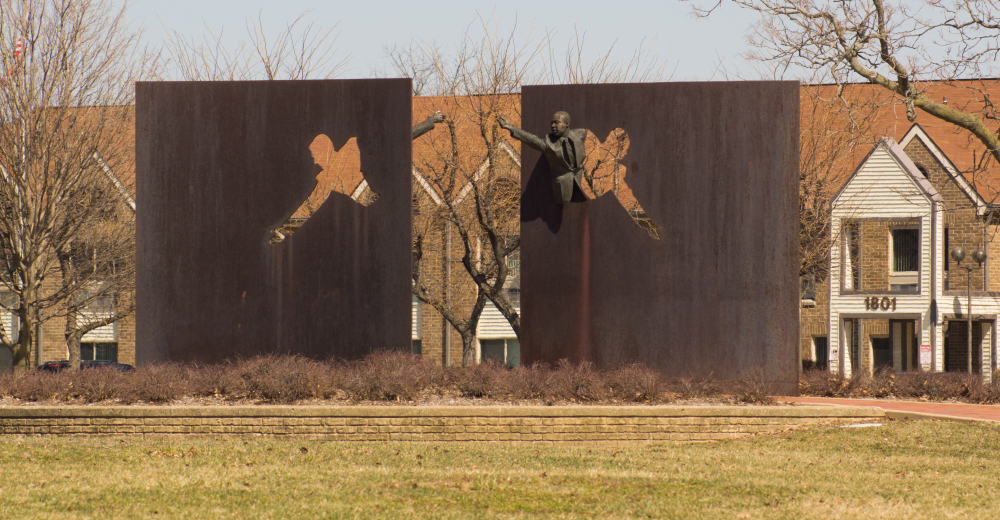
There is a remarkable sculpture at the Kennedy-King Park symbolizing the connections between Martin Luther King, Jr, and Robert Kennedy.
(c)Jeff Kisling, Kennedy-King Park, Indianapolis, IN
Martin Luther King has been an important part of my life. I was coming of age during his time, a Junior at Scattergood Friends School when he was killed. I had so much trouble trying to sort out what I should do about the Vietnam War. Martin Luther King was criticized by people in the civil rights movement when he began to speak out against the war, but that was a great help to me.
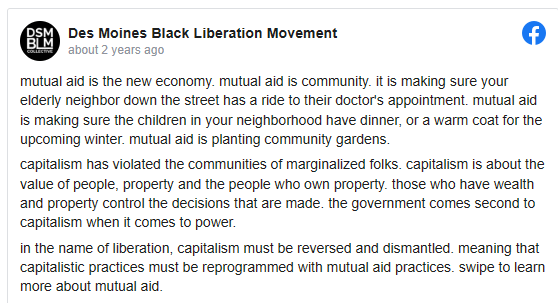
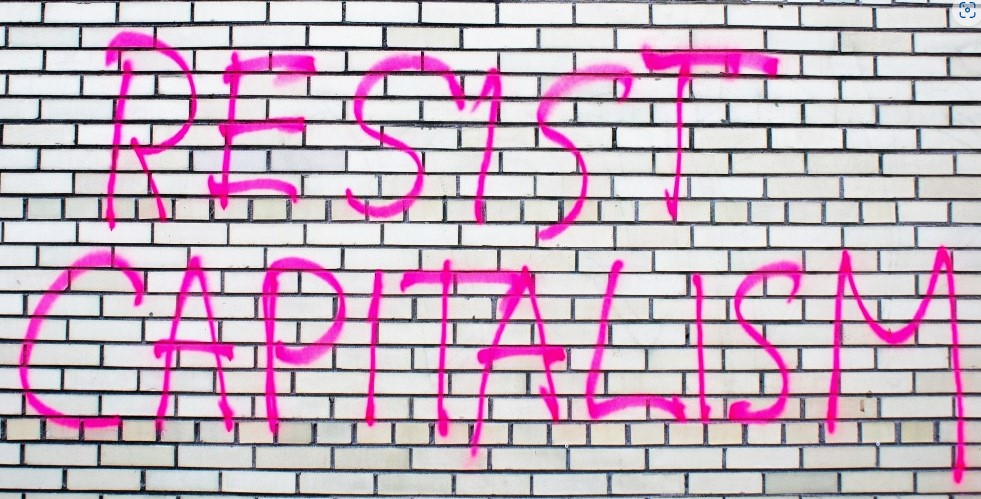
These days I’m working to replace capitalism by building mutual aid communities. Martin Luther King, Jr.’s work was as much about economics and poverty as it was about racial equality.
“I am much more socialistic in my economic theory than capitalistic,” Martin Luther King admitted to Coretta Scott, concluding that “capitalism has outlived its usefulness.”
Speaking at a staff retreat of the SCLC in 1966, King said that “something is wrong … with capitalism” and “there must be a better distribution of wealth” in the country. “Maybe,” he suggested, “America must move toward a democratic socialism.”
For King, the only solution to America’s crisis of poverty was the redistribution of wealth. In a 1961 speech to the Negro American Labor Council, King declared, “Call it democracy, or call it democratic socialism, but there must be a better distribution of wealth within this country for all God’s children.”
Although seldom recognized, Martin Luther King Jr. was anti-war. His politics should be applied to demand an end to NATO and the war in Ukraine, say activists.
“We are here, honoring the legacy of Dr. Martin Luther King Jr.,” said co-executive director of The People’s Forum, Claudia De La Cruz, to a crowd of hundreds gathered in Times Square, in front of the US Army Recruiting Station, on January 14. “We are here to reclaim his legacy and say: no to war.”
The organizers and workers mobilized to demand an end to NATO and a peaceful resolution to the ongoing war in Ukraine. The rally and march was organized by the Act Now to Stop War and End Racism (ANSWER) Coalition, a US anti-war organization, and the People’s Forum. Activists raised slogans to demand a peaceful resolution of the war through negotiations rather than continued US weapons funding. Banners read “Money for our needs/Not the war machine” and “No to NATO/Yes to peace”.
With Congress passing a massive spending bill in December, containing over $44 billion in US aid to Ukraine, the United States is now set to spend over $100 billion total on the Russia–Ukraine War. Activists are demanding that these billions be used instead to fund public services, such as education, jobs and healthcare.
…
“We have to continue to fight for integration, collaboration, negotiations, because that’s been the only way of resolving conflict. War is a tool of our enemy,” said De La Cruz, in closing, to the crowd assembled inside The People’s Forum. “The only legit war is class war.”
I’m of the firm opinion that a system that was built by stolen bodies on stolen land for the benefit of a few is a system that is not repairable. It is operating as designed, and small changes (which are the result of huge efforts) to lessen the blow on those it was not designed for are merely half measures that can’t ever fully succeed.
So the question is now, where do we go from here? Do we continue to make incremental changes while the wealthy hoard more wealth and the climate crisis deepens, or do we do something drastic that has never been done before? Can we envision and create a world where a class war from above isn’t a reality anymore?”
Ronnie James
The major threat of Martin Luther King Jr to us is a spiritual and moral one. King’s courageous and compassionate example shatters the dominant neoliberal soul-craft of smartness, money and bombs. His grand fight against poverty, militarism, materialism and racism undercuts the superficial lip service and pretentious posturing of so-called progressives as well as the candid contempt and proud prejudices of genuine reactionaries. King was neither perfect nor pure in his prophetic witness – but he was the real thing in sharp contrast to the market-driven semblances and simulacra of our day.
Martin Luther King Jr turned away from popularity in his quest for spiritual and moral greatness – a greatness measured by what he was willing to give up and sacrifice due to his deep love of everyday people, especially vulnerable and precious black people. Neoliberal soul craft avoids risk and evades the cost of prophetic witness, even as it poses as “progressive”.
If King were alive today, his words and witness against drone strikes, invasions, occupations, police murders, caste in Asia, Roma oppression in Europe, as well as capitalist wealth inequality and poverty, would threaten most of those who now sing his praises.
Today, 50 years later the US imperial meltdown deepens. And King’s radical legacy remains primarily among the awakening youth and militant citizens who choose to be extremists of love, justice, courage and freedom, even if our chances to win are that of a snowball in hell! This kind of unstoppable King-like extremism is a threat to every status quo!
On the one-year anniversary of the Russia-Ukraine conflict, China has released a peace plan (below). The U.S. has portrayed this in a negative light, but Ukraine, France, and Russia have expressed interest in the plan. This is one example of China providing leadership for peace. In another example, Saudi Arabia and Iran agreed to reestablish relations on March 10 after a round of successful talks that took place in Beijing.
On 24 February 2023, the Chinese Foreign Ministry released a twelve-point plan entitled ‘China’s Position on the Political Settlement of the Ukraine Crisis’. This ‘peace plan’, as it has been called, is anchored in the concept of sovereignty, building upon the well-established principles of the United Nations Charter (1945) and the Ten Principles from the Bandung Conference of African and Asian states held in 1955. The plan was released two days after China’s senior diplomat Wang Yi visited Moscow, where he met with Russia’s President Vladimir Putin. Russia’s interest in the plan was confirmed by Kremlin spokesperson Dmitry Peskov shortly after the visit: ‘Any attempt to produce a plan that would put the [Ukraine] conflict on a peace track deserves attention. We are considering the plan of our Chinese friends with great attention’.
Ukraine’s President Volodymyr Zelensky welcomed the plan hours after it was made public, saying that he would like to meet China’s President Xi Jinping as soon as possible to discuss a potential peace process. France’s President Emmanuel Macron echoed this sentiment, saying that he would visit Beijing in early April. There are many interesting aspects of this plan, notably a call to end all hostilities near nuclear power plants and a pledge by China to help fund the reconstruction of Ukraine. But perhaps the most interesting feature is that a peace plan did not come from any country in the West, but from Beijing.
Wang Yi, director of the Office of the Foreign Affairs Commission of the Communist Party of China (CPC) Central Committee, called the agreement (between Saudi Arabia and Iran) a victory for peace. He was right. That two nations with complex differences and disputes were willing to sit down with their Chinese counterparts to work toward peace in a region that’s been devastated by war and external interference is indeed a major victory.
…
Contrary to the U.S. narrative, China’s leadership has injected confidence into a world of uncertainty and strife. In the field of global politics, China has demonstrated through concerted action just how serious it is about the cause of peace. The landmark diplomatic achievement between Saudi Arabia and Iran does not exist in a vacuum. It is part of China’s overall leadership role in the larger global movement to democratize international relations and move away from destructive hegemonism.
In this video, Hassan El-Tayyab, Friends Committee on National Legislation’s legislative director for Middle East policy discusses the Saudi-Iran deal.
Hassan El-Tayyab, Friends Committee on National Legislation
(from the video transcript)
Hassan El-Tayyab is a legislative director for Middle East policy at Friends Committee on National legislation and he joins us now from Washington. Thank you very much for joining us and it’s interesting the Chinese have been the mediators in this because usually we would associate the United States with sort of Middle East issues particularly with Saudi Arabia.
Thank you so much for having me on to discuss this really crucial issue and the relationship between Saudi Arabia and Iran has fluctuated over the decades but as you mentioned at the top of the segment has been really tense in recent years and this recent agreement to normalize relations mediated by China as really a sea change in the Middle East and through this move China has demonstrated its ability to resolve conflicts impartially rather than relying solely on arms sales on the contrary the United States has had a habit of taking sides and conflicts such as the war in Yemen and as the Region’s largest weapons dealer.
Looking at China’s increasing involvement and mediating these conflicts in the Middle East I think really they (U.S.) should look at this as a positive development that we should all welcome because regional stability is good for the United States, it’s good for the region, and it’s obviously good for the whole world and in terms of regional stability.
They (U.S.) should take advantage of this opportunity to shift its approach in the Middle East away from hegemony away from dominance away from endless war to towards diplomacy towards restraint and towards supporting regional power sharing deals like the one we’re seeing play out right now.
Perhaps the most interesting feature is that a peace plan did not come from any country in the West, but from Beijing
When I read ‘China’s Position on the Political Settlement of the Ukraine Crisis’, I was reminded of ‘On the Pulse of Morning’, a poem published by Maya Angelou in 1993, the rubble of the Soviet Union before us, the terrible bombardment of Iraq by the United States still producing aftershocks, the tremors felt in Afghanistan and Bosnia. The title of this newsletter, ‘Birth Again the Dream of Global Peace and Mutual Respect’, sits at the heart of the poem. Angelou wrote alongside the rocks and the trees, those who outlive humans and watch us destroy the world. Two sections of the poem bear repeating:
On the Pulse of Morning
Each of you, a bordered country, Delicate and strangely made proud, Yet thrusting perpetually under siege. Your armed struggles for profit Have left collars of waste upon My shore, currents of debris upon my breast. Yet today I call you to my riverside, If you will study war no more. Come, Clad in peace, and I will sing the songs The Creator gave to me when I and the Tree and the rock were one. Before cynicism was a bloody sear across your Brow and when you yet knew you still Knew nothing. The River sang and sings on.
…
History, despite its wrenching pain Cannot be unlived, but if faced With courage, need not be lived again.
China’s Position on the Political Settlement of the Ukraine Crisis
2023-02-24 09:00
1. Respecting the sovereignty of all countries. Universally recognized international law, including the purposes and principles of the United Nations Charter, must be strictly observed. The sovereignty, independence and territorial integrity of all countries must be effectively upheld. All countries, big or small, strong or weak, rich or poor, are equal members of the international community. All parties should jointly uphold the basic norms governing international relations and defend international fairness and justice. Equal and uniform application of international law should be promoted, while double standards must be rejected.
2. Abandoning the Cold War mentality. The security of a country should not be pursued at the expense of others. The security of a region should not be achieved by strengthening or expanding military blocs. The legitimate security interests and concerns of all countries must be taken seriously and addressed properly. There is no simple solution to a complex issue. All parties should, following the vision of common, comprehensive, cooperative and sustainable security and bearing in mind the long-term peace and stability of the world, help forge a balanced, effective and sustainable European security architecture. All parties should oppose the pursuit of one’s own security at the cost of others’ security, prevent bloc confrontation, and work together for peace and stability on the Eurasian Continent.
3. Ceasing hostilities. Conflict and war benefit no one. All parties must stay rational and exercise restraint, avoid fanning the flames and aggravating tensions, and prevent the crisis from deteriorating further or even spiraling out of control. All parties should support Russia and Ukraine in working in the same direction and resuming direct dialogue as quickly as possible, so as to gradually deescalate the situation and ultimately reach a comprehensive ceasefire.
4. Resuming peace talks. Dialogue and negotiation are the only viable solution to the Ukraine crisis. All efforts conducive to the peaceful settlement of the crisis must be encouraged and supported. The international community should stay committed to the right approach of promoting talks for peace, help parties to the conflict open the door to a political settlement as soon as possible, and create conditions and platforms for the resumption of negotiation. China will continue to play a constructive role in this regard.
5. Resolving the humanitarian crisis. All measures conducive to easing the humanitarian crisis must be encouraged and supported. Humanitarian operations should follow the principles of neutrality and impartiality, and humanitarian issues should not be politicized. The safety of civilians must be effectively protected, and humanitarian corridors should be set up for the evacuation of civilians from conflict zones. Efforts are needed to increase humanitarian assistance to relevant areas, improve humanitarian conditions, and provide rapid, safe and unimpeded humanitarian access, with a view to preventing a humanitarian crisis on a larger scale. The UN should be supported in playing a coordinating role in channeling humanitarian aid to conflict zones.
6. Protecting civilians and prisoners of war (POWs). Parties to the conflict should strictly abide by international humanitarian law, avoid attacking civilians or civilian facilities, protect women, children and other victims of the conflict, and respect the basic rights of POWs. China supports the exchange of POWs between Russia and Ukraine, and calls on all parties to create more favorable conditions for this purpose.
7. Keeping nuclear power plants safe. China opposes armed attacks against nuclear power plants or other peaceful nuclear facilities, and calls on all parties to comply with international law including the Convention on Nuclear Safety (CNS) and resolutely avoid man-made nuclear accidents. China supports the International Atomic Energy Agency (IAEA) in playing a constructive role in promoting the safety and security of peaceful nuclear facilities.
8. Reducing strategic risks. Nuclear weapons must not be used and nuclear wars must not be fought. The threat or use of nuclear weapons should be opposed. Nuclear proliferation must be prevented and nuclear crisis avoided. China opposes the research, development and use of chemical and biological weapons by any country under any circumstances.
9. Facilitating grain exports. All parties need to implement the Black Sea Grain Initiative signed by Russia, Türkiye, Ukraine and the UN fully and effectively in a balanced manner, and support the UN in playing an important role in this regard. The cooperation initiative on global food security proposed by China provides a feasible solution to the global food crisis.
10. Stopping unilateral sanctions. Unilateral sanctions and maximum pressure cannot solve the issue; they only create new problems. China opposes unilateral sanctions unauthorized by the UN Security Council. Relevant countries should stop abusing unilateral sanctions and “long-arm jurisdiction” against other countries, so as to do their share in deescalating the Ukraine crisis and create conditions for developing countries to grow their economies and better the lives of their people.
11. Keeping industrial and supply chains stable. All parties should earnestly maintain the existing world economic system and oppose using the world economy as a tool or weapon for political purposes. Joint efforts are needed to mitigate the spillovers of the crisis and prevent it from disrupting international cooperation in energy, finance, food trade and transportation and undermining the global economic recovery.
12. Promoting post-conflict reconstruction. The international community needs to take measures to support post-conflict reconstruction in conflict zones. China stands ready to provide assistance and play a constructive role in this endeavor.
I’ve had a lifelong struggle to call attention to this country’s flagrant disregard for the need to protect nonrenewable sources of energy and the mounting environmental devastation from our greenhouse gas emissions. Obviously, these are also global issues. We are depleting fossil fuel supplies of the entire world. And our gigantic fossil fuel emissions affect the world.
It is often pointed out that those nations with the lowest emission are most affected by the environmental damage done by “developed” countries.
I haven’t learned enough about these global impacts. This recent paper, Eight Contradictions in the Imperialist ‘Rules-Based Order’ that I’ve been writing about is helping with my education. (See: https://quakersandreligioussocialism.com/?s=imperialism )
Eight Contradictions in the Imperialist ‘Rules-Based Order’
The contradiction between moribund imperialism and an emerging successful socialism led by China.
The contradiction between the ruling classes of the narrow band of imperialist G7 countries and the political and economic elite of capitalist countries in the Global South.
The contradiction between the broad urban and rural working class and sections of the lower petty bourgeoisie (collectively known as the popular classes) of the Global South versus the US-led imperial power elite.
The contradiction between advanced rent-seeking finance capital versus the needs of the popular classes, and even some sections of capital in non-socialist countries, regarding the organisation of societies’ requirements for investment in industry, environmentally sustainable agriculture, employment, and development.
The contradiction between the popular classes of the Global South and their domestic political and economic power elites.
The contradiction between US-led imperialism versus nations strongly defending national sovereignty.
The contradiction between the millions of discarded working-class poor in the Global North versus the bourgeoisie who dominate these countries.
The contradiction between Western capitalism versus the planet and human life.
The eighth contradiction summarizes the fundamental contradiction, the contradiction between Western capitalism versus the planet and human life.
The inexorable path of this system is to destroy the planet and human life, threaten nuclear annihilation, and work against the needs of humanity to collectively reclaim the planet’s air, water, and land and stop the nuclear military madness of the United States. Capitalism rejects planning and peace. The Global South (including China) can help the world build and expand a ‘zone of peace’ and commit to living in harmony with nature.
With these changes in the political landscape, we are witnessing the rise of an informal front against the US-dominated imperialist system. This front is constituted by the convergence of:
Popular sentiment that this violent system is the main enemy of the people of the world.
Popular desires for a more just, peaceful, and egalitarian world.
The struggle of socialist or nationalist governments and political forces for their sovereignty.
The desires of other Global South countries to reduce their dependence on this system.
The main forces against the US-dominated imperialist system are the peoples of the world and the socialist and nationalist governments. However, there must be space provided for integrating governments that wish to reduce their dependency on the imperialist system.
The world currently stands at the beginning of a new era in which we will witness the end of the US global empire. The neoliberal system is deteriorating under the weight of numerous internal contradictions, historical injustices, and economic unviability. Without a better alternative, the world will descend into even greater chaos. Our movements have revived hope that something other than this social torment is possible.
What do you know about China? I’m beginning to learn how little I know. I’m just beginning to learn about socialism with Chinese characteristics, so I don’t know how successful socialism is there.
I recently wrote about a new text called Eight Contradictions in the Imperialist ‘Rules-Based Order’, (see: Contradictions of the Imperialist ‘Rules-Based Order’). I have been increasingly concerned about this country’s militarism and authoritarianism. Increasing poverty and failure to address anything related to increasingly severe climate chaos. And the choice that MUST be made between protecting our environment versus continuation of military operations and war.
The world currently stands at the beginning of a new era in which we will witness the end of the US global empire. The neoliberal system is deteriorating under the weight of numerous internal contradictions, historical injustices, and economic unviability.
Vijay Prashad, Tricontinental: Institute for Social Research
…leaders in the Global South have been making the case to halt the warmongering over Ukraine and against China. As Namibia’s Prime Minister Saara Kuugongelwa-Amadhila said, ‘We are promoting a peaceful resolution of that conflict so that the entire world and all the resources of the world can be focused on improving the conditions of people around the world instead of being spent on acquiring weapons, killing people, and actually creating hostilities’.
The first of the Eight Contradictions in the Imperialist ‘Rules-Based Order’ is the contradiction between moribund imperialism and an emerging successful socialism led by China.
This contradiction has intensified because of the peaceful rise of socialism with Chinese characteristics. For the first time in 500 years, the Atlantic imperialist powers are confronted by a large, non-white economic power that can compete with them. This became clear in 2013 when China’s GDP in purchasing power parity (PPP) overtook that of the United States. China accomplished this in a much shorter period than the West, with a significantly larger population and without colonies, enslaving others, or military conquest. Whilst China stands for peaceful relations, the US has become increasingly bellicose.
The US has led the imperialist camp since World War II. Post-Angela Merkel and with the advent of the Ukraine military operation, the US strategically subordinated dominant sections of the European and Japanese bourgeoisie. This has resulted in weakening intra-imperialist contradictions. The US first permitted and then demanded that both Japan (the third-largest economy in the world) and Germany (the fourth-largest economy) – two fascist powers during World War II – greatly increase their military expenditure. The result has been the ending of Europe’s economic relationship with Russia, damage to the European economy, and economic and political benefits for the US. Despite the capitulation of most of Europe’s political elite to full US subordination, some large sections of German capital are heavily dependent on trade with China, much more than on their US counterparts. The US, however, is now pressuring Europe to downgrade its ties to China.
The US has led the imperialist camp since World War II. Post-Angela Merkel and with the advent of the Ukraine military operation, the US strategically subordinated dominant sections of the European and Japanese bourgeoisie. This has resulted in weakening intra-imperialist contradictions. The US first permitted and then demanded that both Japan (the third-largest economy in the world) and Germany (the fourth-largest economy) – two fascist powers during World War II – greatly increase their military expenditure. The result has been the ending of Europe’s economic relationship with Russia, damage to the European economy, and economic and political benefits for the US. Despite the capitulation of most of Europe’s political elite to full US subordination, some large sections of German capital are heavily dependent on trade with China, much more than on their US counterparts. The US, however, is now pressuring Europe to downgrade its ties to China.
More importantly, China and the socialist camp now face an even more dangerous entity: the consolidated structure of the Triad (the United States, Europe, and Japan). The US’s growing internal social decay should not mask the near absolute unity of its political elite on foreign policy. We are witnessing the bourgeoisie placing its political and military interests over its short-term economic interests.
The centre of the world economy is shifting, with Russia and the Global South (including China) now accounting for 65% of the world’s GDP (measured in PPP). From 1950 until the present, the US share of the global GDP (in PPP) has fallen from 27% to 15%. The growth of the US’s GDP has also been declining for more than five decades and has now fallen to only around 2% per year. It has no large new markets in which to expand. The West suffers from an ongoing general crisis of capitalism as well as the consequences of the long-term tendency of the rate of profit to decline.
I had not known about socialism with Chinese characteristics.
Socialism with Chinese characteristics
Socialism with Chinese characteristics (Chinese: 中国特色社会主义; pinyin: Zhōngguó tèsè shèhuìzhǔyì) is a set of political theories and policies of the Chinese Communist Party (CCP) that are seen by their proponents as representing Marxism–Leninism adapted to Chinese circumstances and specific time periods, consisting of Deng Xiaoping Theory, Three Represents (Jiang Zemin), Scientific Outlook on Development (Hu Jintao), and Xi Jinping Thought on Socialism with Chinese Characteristics for a New Era.
Have your views about our environmental situation changed? It is more difficult to deny environmental damage in the face of all kinds of climate chaos occurring globally.
Did you know the U.S. Military emits more carbon dioxide than many nations?
This leads to an existential paradox. If we are ever going to begin to mitigate greenhouse gas emissions, we must end military operations. Could this be a path to peace? Or will imperialism continue to feed increasing environmental devastation?
The new document described below, “Eight Contradictions in the Imperialist ‘Rules-Based Order’” identifies conflicts between imperialist nations and the rest of the world.
"The bottom line is that this money that is used to buy weapons to enable Russia and Ukraine to kill one another could be better utilised to promote development – in Ukraine, Africa, Asia, and in Europe itself."
The Bulletin of the Atomic Scientists has now moved the Doomsday Clock to 90 seconds to midnight, the closest it has been to the symbolic time of the annihilation of humanity and the Earth since 1947. This is alarming, which is why leaders in the Global South have been making the case to halt the warmongering over Ukraine and against China. As Namibia’s Prime Minister Saara Kuugongelwa-Amadhila said, ‘We are promoting a peaceful resolution of that conflict so that the entire world and all the resources of the world can be focused on improving the conditions of people around the world instead of being spent on acquiring weapons, killing people, and actually creating hostilities’.
In line with the alarm from the Doomsday Clock and assertions from people such as Kuugongelwa-Amadhila, the rest of this newsletter features a new text called Eight Contradictions in the Imperialist ‘Rules-Based Order’(which you can download as a PDF here). It was drafted by Kyeretwie Opoku (the convenor of the Socialist Movement of Ghana), Manuel Bertoldi (Patria Grande /Federación Rural para la producción y el arraigo), Deby Veneziale (senior fellow, Tricontinental: Institute for Social Research), and me, with inputs from senior political leaders and intellectuals from across the world. We are offering this text as an invitation to a dialogue. We hope that you will read, circulate, and discuss it.
We are now entering a qualitatively new phase of world history. Significant global changes have emerged in the years since the Great Financial Crisis of 2008. This can be seen in a new phase of imperialism and changes in the particularities of eight contradictions.
Eight Contradictions in the Imperialist ‘Rules-Based Order’
The contradiction between moribund imperialism and an emerging successful socialism led by China.
The contradiction between the ruling classes of the narrow band of imperialist G7 countries and the political and economic elite of capitalist countries in the Global South.
The contradiction between the broad urban and rural working class and sections of the lower petty bourgeoisie (collectively known as the popular classes) of the Global South versus the US-led imperial power elite.
The contradiction between advanced rent-seeking finance capital versus the needs of the popular classes, and even some sections of capital in non-socialist countries, regarding the organisation of societies’ requirements for investment in industry, environmentally sustainable agriculture, employment, and development.
The contradiction between the popular classes of the Global South and their domestic political and economic power elites.
The contradiction between US-led imperialism versus nations strongly defending national sovereignty.
The contradiction between the millions of discarded working-class poor in the Global North versus the bourgeoisie who dominate these countries.
The contradiction between Western capitalism versus the planet and human life.
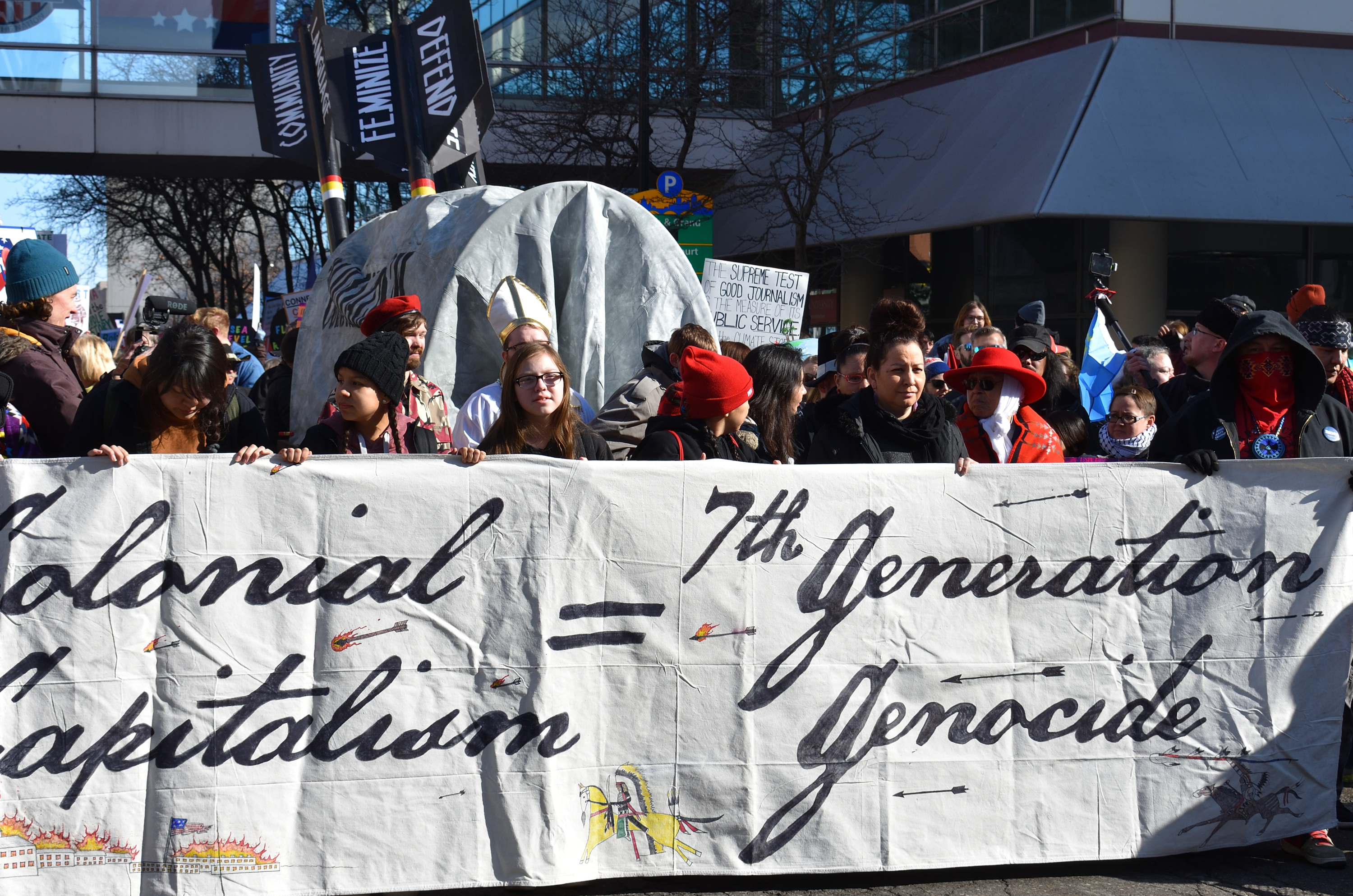
In my mind, Indigenous nations, Indigenous homespaces, Indigenous homelessness must be engaged in a radical and complete overturning of the nation-state’s political formations and a refusal of racial capitalism. My vision to create Nishnaabeg futures and presences must structurally refuse and reject the structures, processes and practices that end Indigenous life, Black life and result in environmental desecration. This requires societies that function without policing, prisons, and property.
Nishnaabeg formations of nationhood mean a radical overturning of the current conditions and configurations within which we live—an absolute refusal of capitalism.
Maynard, Robyn; Simpson, Leanne Betasamosake. Rehearsals for Living (Abolitionist Papers) (p. 125). Haymarket Books. Kindle Edition.






















































 Quakers and Mutual Aid