Foundational Stories: Acts of Faith Part 1

Recently a Quaker friend challenged us to consider what our foundational stories are, how they began, how they changed over time, and what they are now. I’ve been writing a series of blog posts about my foundational stories, which are related to the intersections between my Quaker faith, protecting Mother Earth, and photography.

Earlier I wrote Foundational Stories: Quaker Faith. I said we express our faith by telling stories about our faith-based decisions and actions.  To continue telling my foundational stories related to faith, I’m led to share some of my Spirit-led stories.

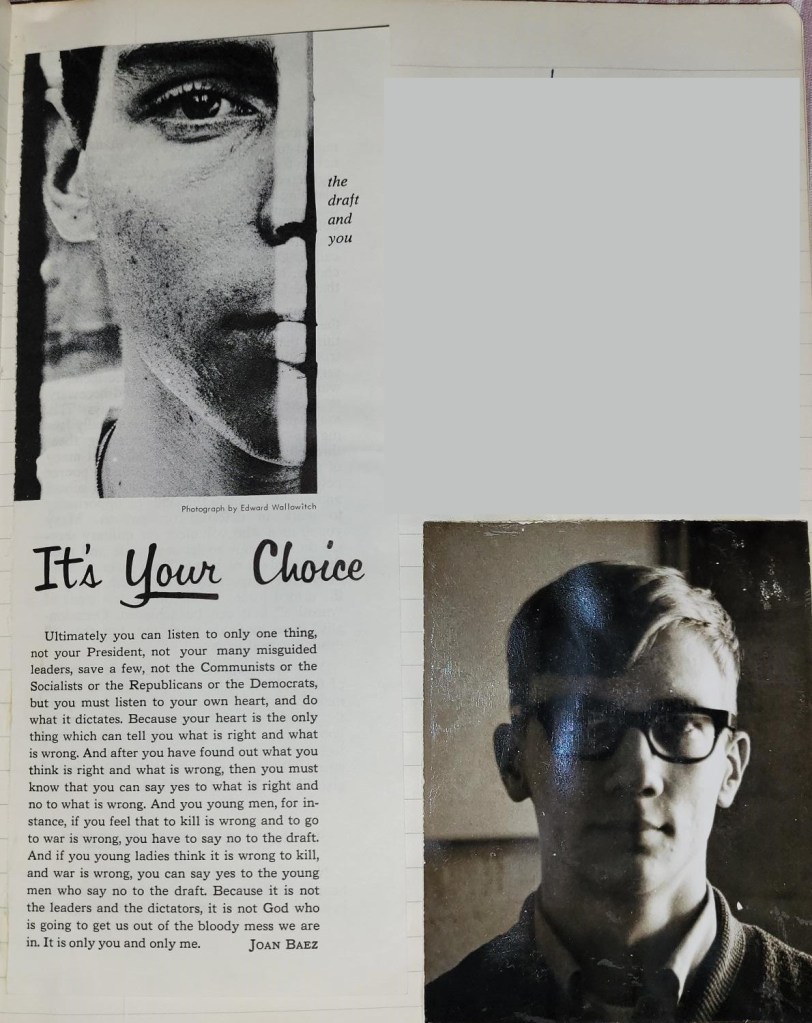
In the last post I wrote about my first spiritual challenge-how I came to be a draft resister at the time of the Vietnam War. I have become aware that many people today have almost no real conception of war, unless someone they love is in the armed forces. Something that happened fifty years ago is relegated to the history books.

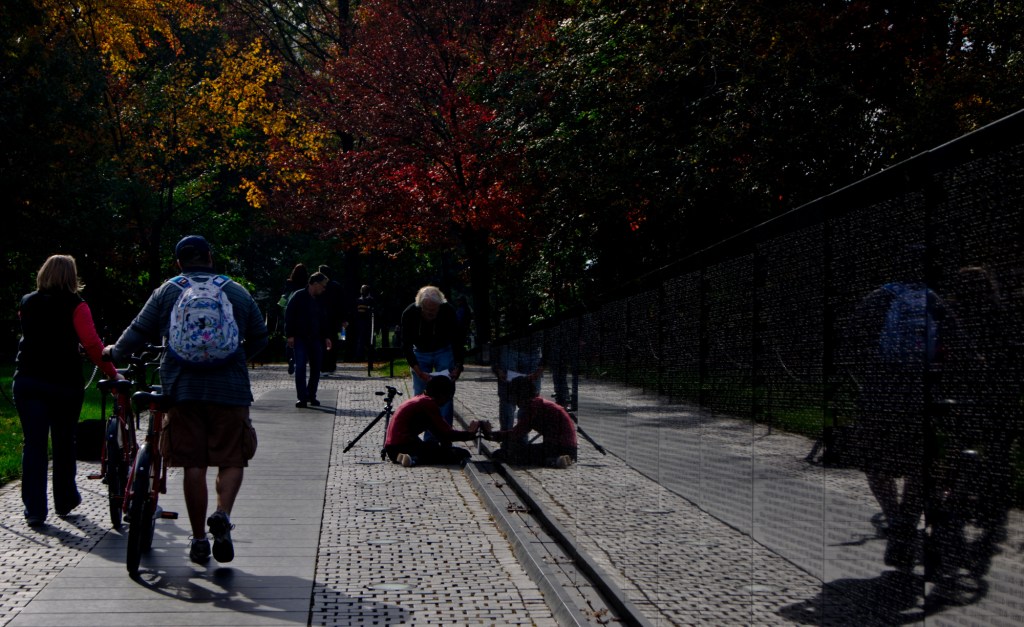
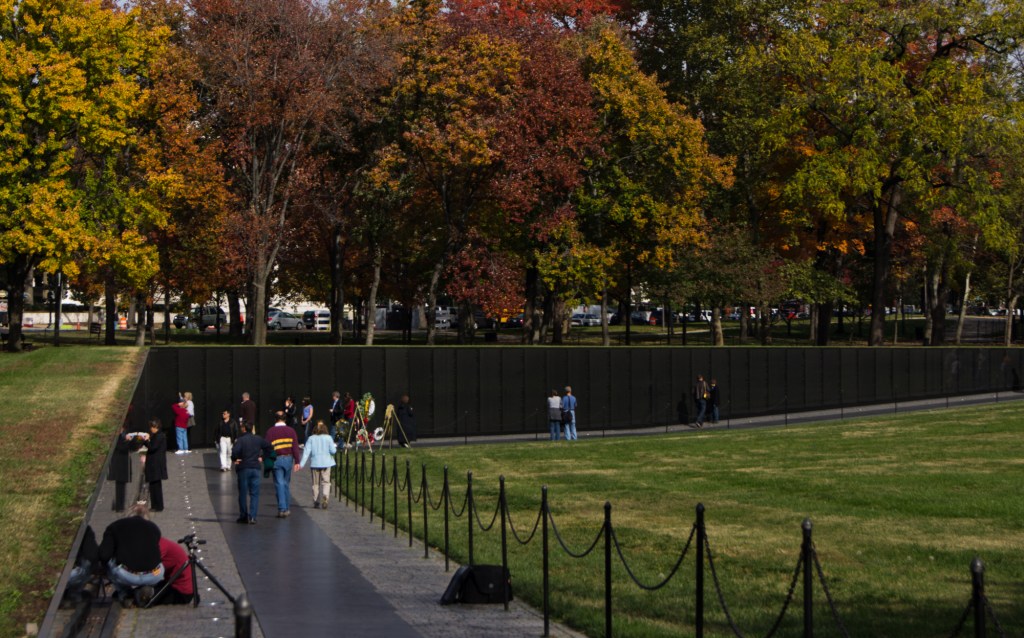
Photography is one of the three pieces of my foundational stories. I’ve taken the photos I share in my blog posts, including these from the Vietnam War Memorial in Washington, DC.
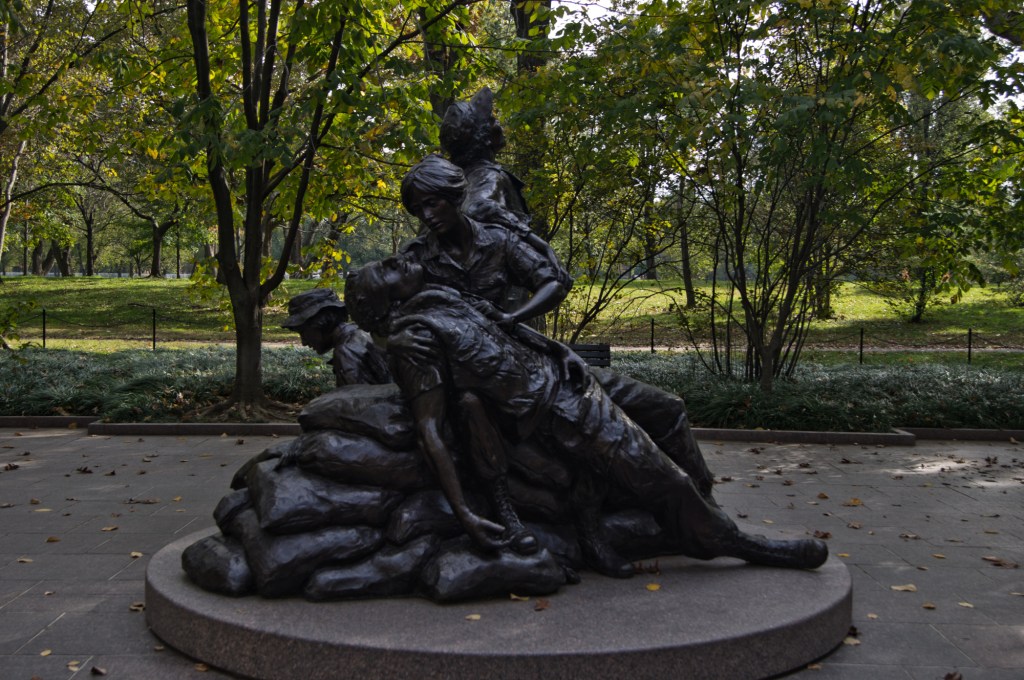
I have so many photos from Washington, DC, because of my years on the Friends Committee on National Legislation’s General Committee, which held annual meetings every November. Agreeing to be on the General Committee was another spirit-led decision. I was concerned about agreeing to do that because of the travel involved. I refused to have a car for environmental reasons (also spirit-led). So I took 22 hour train trips from Indianapolis to Washington for those meetings. Again I had many rich experiences and got to know Friends from all over the country. Today I attend the weekly Zoom worship sharing meeting, FCNL’s Witness Wednesday Silent Reflection. Your are welcome to join every Wednesday at 4:15 Central times.  fcnl.org/ww-stream

In the previous post about Quaker Faith I wrote about my struggles at that time that led me to be a draft resister. That was such a huge issue that there were many stories within the stories about the war.

Vietnam War

Yesterday I wrote in detail about some of my experiences related to the war in Vietnam. I was a student at Scattergood Friends School and really struggled with my leading to resist the draft.

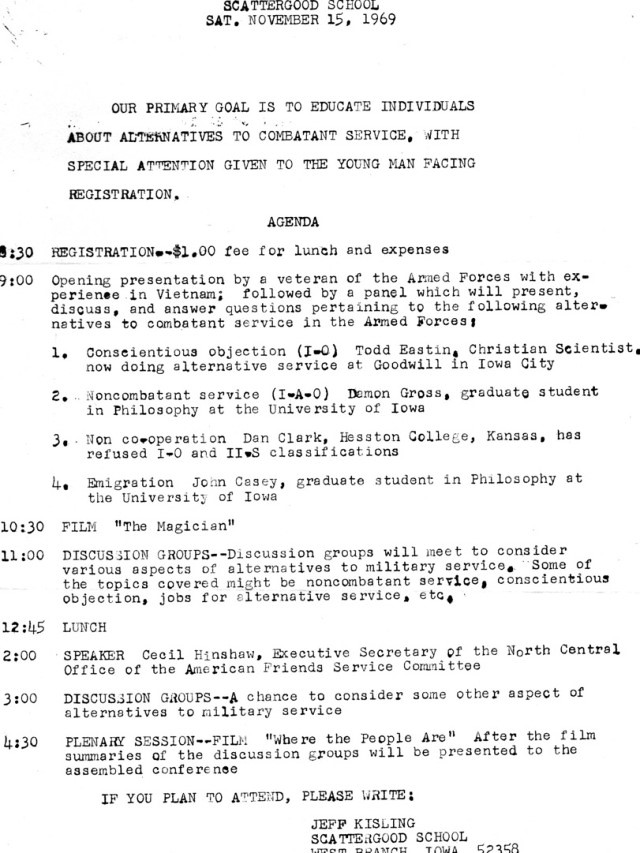
My first experience in organizing occurred at this time, when I helped organize a draft conference at Scattergood. This was held on one of the national days of the Moratorium to End the War in Vietnam.
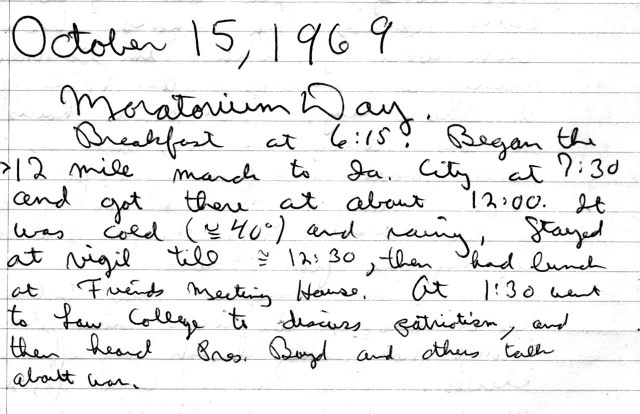
During another of the National Moratorium days to end the war in Vietnam in 1969, Bob Berquist, our Scattergood government teacher, suggested we go to the nearby town of West Branch and talk with people there about the war. (Scattergood is located on a farm.) He drove three of us into town, stopped at a random house, and stayed in the car while we went up to the door. I still remember how scared I was. But it was a real education to find how unpopular the war was at every house we visited. People seemed to appreciate the chance to share their feelings. Although I was very uncomfortable with the idea, because of my strong spiritual feelings against war, I felt I should do this. And as with every other time I followed those leadings, I benefited in many ways. They were/are always growing experiences.

Earlham College

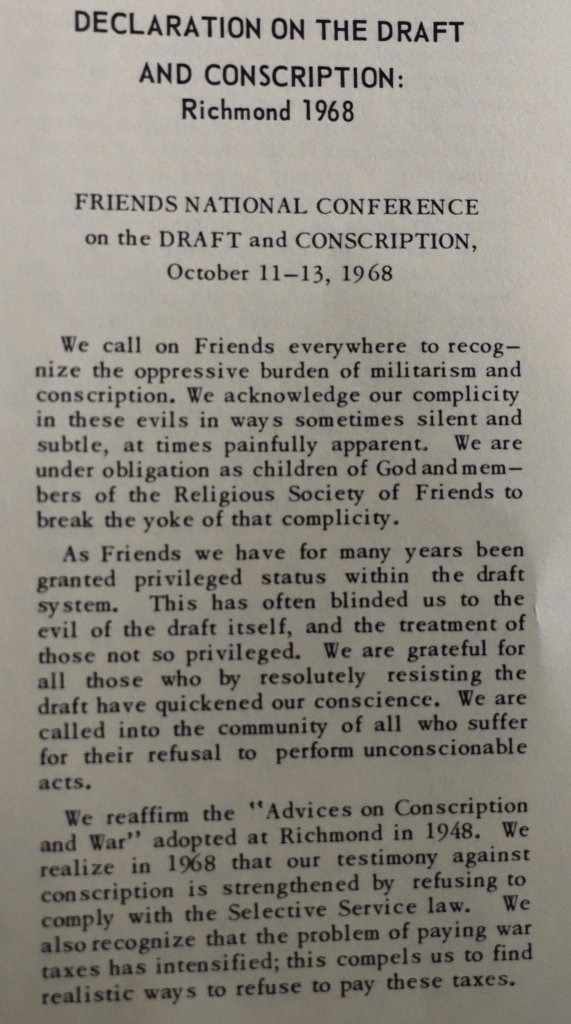
After Scattergood I attended Earlham College, a Quaker school in Richmond, Indiana. I had gone to the college in 1968, while a student at Scattergood, for a conference of Quakers from across the nation who gathered to write what became the Declaration on the Draft and Conscription: Richmond 1968.

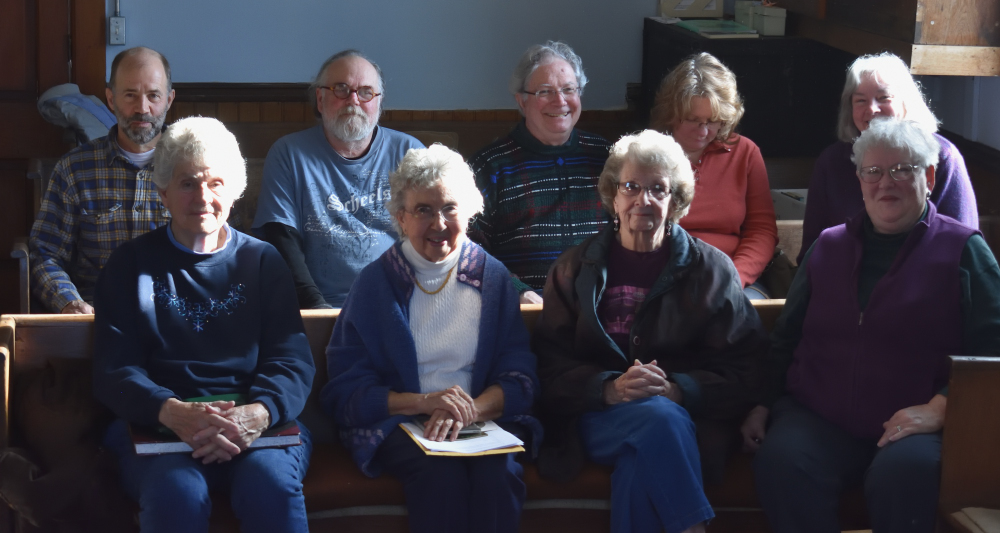
There was a small group of Quaker students, Young Friends, which were an important part of my spiritual life at Earlham. Although I left Earlham after one year, I returned at the time I was preparing to turn in my draft cards. We held the meeting for worship described here.

4:00 pm. Went to Meeting for worship. Jan Cole, Al Ingles, Dav Nagle, Marggie Schutz, Margaret and Lewis Taylor, Becky Gibson, Jim Bay, Ruby, and several others attended.

Al had read my letter to the draft board and my statement on the draft earlier, and asked if I would let him read it during Meeting. I told him that would be alright, so he did.

Al spoke of support and the future and how God spoke through me. I would hope that would be true but felt unworthy.

Margaret Taylor spoke of Iowa Friends who had always spoken against war and done what they felt right. She spoke of her support for me.

Becky Gibson spoke, very movingly, about finding who you are, and how important it is to do what is right.

Then Dav spoke, also very movingly. He is certainly an able minister—one of the people I love and respect very much. He seems always to be close to the center. He said severing ties with Selective Service is a major decision—but ALL decisions are major when they deal with principle and the Spirit. All, each of our decisions must be integral. “Severing ties with Selective Service is not an isolated act in this life of Jeff’s.”

After a good while I felt moved to speak. When confronted with a decision, we are told to do God‘s will. But God’s will is so difficult to discern among many influences—people, law, self (selfishness and pride). Realizing this, Thomas A’ Beckett said, “I am loathsome.” This was how I felt at times. But after he said that, he heard what he believed to be the voice of God saying “Nevertheless, I love.

Journal 1/30/1972


I felt very uncomfortable having a student deferment from the draft. And as can be seen from this letter to my parents, I continued to work through what I was going to do about the war.

You want me to be practical; not so idealistic. But what you might see as idealistic, I see not only as practical, but necessary in order to be true to my code of life. And if you forsake your principles and all that you believe in, what do you have left?

The most difficult part of this decision has been that I would hurt you. But how far should a man go trying to protect those that he loves, at the same time denying the principles that give his life meaning?

Letter to my parents from Earlham College

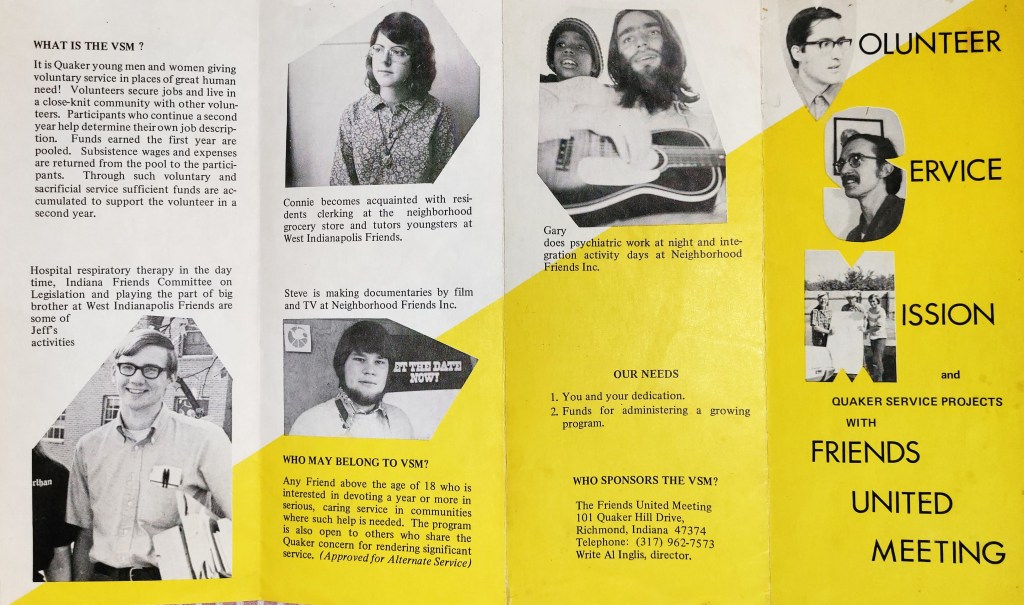
I previous wrote about the Friends Volunteer Service Mission (VSM) that was related to my Vietnam War decisions and actions. One of the significant consequences of my participation in VSM were the friendships I made with the kids in the neighborhood as I described in that post about VSM.

As I found over and over again as I worked in various community organizing situations, the most important thing is to build friendships. When I was about to leave VSM in Indianapolis and return to Iowa, the neighborhood kids made a meal of spaghetti, baked a chocolate cake, and gave me a record album of Jim Croce they knew I liked.

In Iowa I took classes at the community college, including photography (one area of my foundational stories), But I missed the kids in Indianapolis so much that I decided to return there. The family of several of those kids invited me to live with them while I looked for a job and a place to live. There wasn’t a significant difference in our ages, although at that age a difference of a year or two seemed big. I was about 21 and they were around 14 years old.

When I was first in Indianapolis, I received on-the-job training as a respiratory therapy technician. On my return to Indianapolis I got a job in the respiratory therapy department of Indiana University Medical Center.

At the Medical Center I worked with women on the labor and delivery ward. I was at times present for the miracle of birth.

Many of the women referred to the Medical Center had high risk pregnancies. Respiratory therapists from Riley Hospital for Children, which was part of the Medical Center, would come to help stabilize infants who had various conditions that needed to be taken to the Neonatal Intensive Care Unit at Riley.

It was definitely spirit-led that when I saw the skills those respiratory therapists had, I wanted to be trained to do that. I was able to transfer to the respiratory therapy department at the Childrens Hospital. After an introduction to respiratory care for general pediatric patients I was eventually trained to work in the Neonatal Intensive Care Unit (NICU). At one time I was the respiratory therapy supervisor for the NICU.

Permission was obtained to publish this photo, which was part of an article in the Indiana Business Journal

I hadn’t decided what I would study at college. The Medical Center had a degree program for Respiratory Therapy. Much as I loved my work, I hadn’t thought of applying to the Respiratory Therapy program. For one thing there were usually about two hundred applicants for each class of fifteen.

But on the day the applicants were being interviewed, the Clinical Instructor of the program came and pulled me off my patient assignments and took me to be interviewed. He was familiar with my work and wanted me to be in the class. I was selected to enter the program. These spirit-led steps resulted in me getting a degree in Respiratory Therapy and this became my career for my entire working life.

This is enough for today. I can tell it is going to take several more blog posts to tell more of my faith-based stories.


Post Script: I feel blessed to have been led to keep a Journal for a few years. I began that during the time I was struggling with the draft decision. This is a link to some of those Journal entries:

https://jeffkisling.com/?s=%22scattergood+journal%22

Foundational Stories: Quaker Faith

Recently a Quaker friend challenged us to consider what our foundational stories are, how they began, how they changed over time, and what they are now. I’ve been writing about my foundational stories, which are related to the intersections between my Quaker faith, protecting Mother Earth, and photography.

This challenge comes at a time when I’m considering changes in those three things. Thus far my blog posts have been about how these stories began and have evolved.

I’m at the point of considering what those stories are now. A couple of days ago I wrote about the current state of how I care for Mother Earth.

Now I’ll try to express the current state of my Quaker faith, which will be the most difficult of the three parts of my foundational stories to write.

Part of what I was taught is we should not call attention to ourselves. But I have been led, as part of my faith, to share stories about my experiences and faith. The way we live our lives is how we express our faith. We share our faith by telling stories about these faith-based actions. The main reason photography is such a large part of my foundational stories is because photos can be a way to share my spiritual experiences.

I often think about what Noah Baker Merrill, a Quaker, wrote about this.

“We need to be careful when we talk about humility. The kind of humility this work brings isn’t the kind that would have us reject or repress our gifts. This kind of false humility leads us to oppress each other in the name of preventing pridefulness. This happens far too often.”

Noah Baker Merrill, “Prophets, Midwives, and Thieves: Reclaiming the Ministry of the Whole.”

Or as my friend Ronnie James, another storyteller says, “anyways, brag, brag, blah, blah”.


Religious faith is a matter of beliefs and, sometimes, spiritual experiences. I’ve heard not everyone has had, or at least not recognized, spiritual experience(s). I find it very interesting that those Friends (Quakers) who have said they had spiritual experience(s), have all said something like “and that’s all I’ll say about that”. That’s understandable because we don’t have the language to express this. Which makes it difficult to write about faith. Also, there is something about protecting something that is so intimate and profound in our lives.

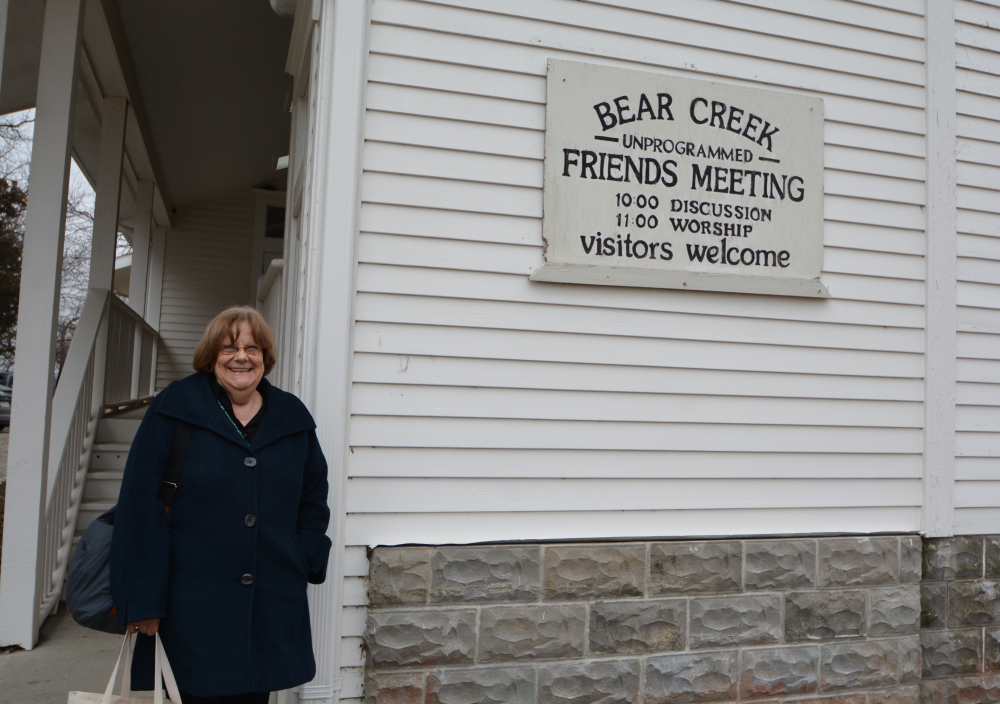
My first spiritual experience was when I was about ten years old during meeting for worship at the Bear Creek meetinghouse. “And that’s all I’ll say about that”. Except to say I had no doubt about the presence of the Spirit in the world from that day on. I know I am blessed to have had that, and subsequent spiritual experiences.

Another Friend said his first spiritual experience came when he was about that age. This makes me realize we should pay attention to what young people experience. I love the native concept of children as sacred beings.

The concrete expression of our faith is seen in our actions in this world. This might mean we are led to act in ways contrary to the laws or conventions of the society we live in. Which is often not easy to do. Peer pressure can be a powerful force. There might be significant monetary costs and/or legal penalties. Quakers were once (still?) known as “peculiar people”. When there are conflicts between our spiritual beliefs and the laws of the government, people of faith try to obey the creator. Unfortunately, many times it is apparent that people who identify themselves as religious do not act according to the beliefs they profess. This lack of spiritual integrity results in many people rejecting organized religion.


The first time I was confronted with a situation where my beliefs were contrary to the laws of the land related to registration for the Selective Service System. I attended Scattergood Friends School, a Quaker boarding high school, during the time of the Vietnam War (1960’s). A military draft was being used to conscript young men into the armed forces. Quakers do not believe in war nor in participating in the military. Those with religious objections to serving in the military could apply for Conscientious Objector (CO) status, which if granted, would allow them to do two years of alternative service, such as working in a hospital instead of military service.


My Quaker friend and mentor, Don Laughlin, collected these stories of Quakers who opposed war and conscription.


I turned eighteen years of age while a Senior at Scattergood (1969). Young men were required to register for the Selective Service System at that age. The choices were either to do so, or apply for Conscientious Objector status, or do neither and face imprisonment.

I really struggled with whether I should accept alternative service, or not cooperate with the Selective Service System. I studied and prayed a great deal. I was convinced that alternative service was going along with the system. The question was whether to take the safer path of conscientious objection, or risk prison by resisting the draft.

I recognized this decision would set the course for the rest of my life. Which is why this is part of my foundational stories. If I compromised about this, I would likely do so in similar circumstances for the rest of my life. I would always be aware that I had not acted according to my beliefs.

The following Epistle, and the examples of the men who refused to cooperate with the military, many of whom did serve time in prison, showed me there were those who acted according to their beliefs despite the consequences.

The following is an excerpt from a statement by a group of Quaker young men at that time, including Iowa Yearly Meeting (Conservative) Quakers Don Laughlin and Roy Knight.

Those of us who are joining in this epistle believe that cooperating with the draft, even as a recognized conscientious objector, makes one part of the power which forces our brothers into the military and into war.  If we Friends believe that we are special beings and alone deserve to be exempted from war, we find that doing civilian service with conscription or keeping deferments as we pursue our professional careers are acceptable courses of action.   But if we Friends really believe that war is wrong, that no man should become the executioner or victim of his brothers, then we will find it impossible to collaborate with the Selective Service System.  We will risk being put in prison before we help turn men into murderers.

It matters little what men say they believe when their actions are inconsistent with their words. Thus we Friends may say that all war is wrong, but as long as Friends continue to collaborate in a system that forces men into war, our Peace Testimony will fail to speak to mankind.

Let our lives speak for our convictions. Let our lives show that we oppose not only our own participation in war, but any man’s participation in it.
In our early history we Friends were known for our courage in living according to our convictions. At times during the 1600’s thousands of Quakers were in jails for refusing to pay any special respect to those in power, for worshiping in their own way, and for following the leadings of conscience.

We may not be able to change our government’s terrifying policy in Vietnam.  But we can try to change our own lives.  We must be ready to accept the sacrifices involved if we hope to make a real testimony for Peace.  We must make Pacifism a way of life in a violent world.

We remain, in love of the Spirit, your Friends and brothers,

An Epistle to Friends Concerning Military Conscription

This story would not be complete without including another important part of this decision, which was the tensions with my parents. They were against the war but wanted me to accept Conscientious Objector status. They were very upset when I said I couldn’t do that. I understood they didn’t want me to face prison and life as a felon, but they didn’t understand why I knew I must resist. I felt betrayed by their lack of support. Looking back from this time, it is easier to accept what they were doing out of love.

I mailed the following to the draft board today (2/6/1972), along with my registration certificate and classification (1-0) card: 

2/6/1972 

Dear members and clerk of the draft board:    

I have received an order to report for civilian work February 1, 1972. 

I want to thank you for your concerned questions at my personal appearance, when we were considering my position as a conscientious objector.  I have appreciated Mrs. Landon’s kindness and consideration, even when I returned my draft cards.  Thank you for giving me more time to consider this decision.  I hadn’t realized what a powerful affect that action would have on some people.  The extra time gave them, and me, a chance to come to grips with the decision and its consequences.  However, my beliefs have remained basically the same and the time has come to act accordingly.    

I am sure none of us really want war.  Many are convinced that was is a ‘necessary evil’—the only way to achieve peace.  I think I can understand that, and I do respect those who sincerely believe it—their sacrifice has been very great.    

But I do not believe war is the way to peace.  True peace is a personal, internal, spiritual matter.  When we come to know and love ourselves and our God, then and only then do we have peace.  From this point, peace and love will flow from us and should engulf those we live and work with.  This is the only way to find and promote peace. 

In this matter, war has no place.    

The enclosed attempts to illustrate my beliefs in relation to the Selective Service System.  I hope this will help you to understand why I feel I cannot cooperate with the Selective Service System.  I want it to be clearly understood that I am not doing alternative service.  It is not my choice.  There is nothing else I can do. 

Love, 
Jeff Kisling 


Letter to my draft board 

I write concerning my relationship with the Selective Service System.  There are many alternatives.  In fact, someone once said the only alternative not open to a young man facing the draft is that of being left alone.  I explored several of these.  I applied for and was granted conscientious objector status (1-0).  Then I had a student deferment, which made me very uneasy.  I am now doing work which should qualify as alternative service, but for reasons I will attempt to explain herein, I find this alternative to be unacceptable. 

I find it difficult to understand why one young man must explain his decision to do civilian work for a non-profit organization while another need make no explanation, indeed is encouraged to fight and perhaps kill other human beings.  But it is one’s duty to explain one’s actions in order that others might understand, and perhaps follow.  Noncooperation is less understood than conscientious objection, so I feel all the more compelled to try to present an explanation.  I must try to explain, to spare my family the burden of doing so, for they neither clearly understand nor agree with my decision.  (Note:  they fully supported alternative service, but didn’t want to see me imprisoned). 

This decision grew out of my experience as a member of the Society of Friends.  Meetings of the Society of Friends can be a source of strength and guidance as one begins and continues to search for meaning in life.  Quakers have always believed that there is that of God in every man, that each of us has the ability to communicate with that of God in us, and the responsibility to respond to that of God in everyone.  It is evident that Jesus had communion with God—evident in the actions of his life and in his teachings—culminating in “not as I will, but as thou wilt.”  This is the essence of Jesus’ teaching—that God’s will can be discerned and should be obeyed even at the cost of doubt and persecution.  Quakers readily accept Jesus as an exceptional person and try to live up to the principles he gave us to live by.  But we are even more concerned that we obey that Inner Light to which He was so sensitive, so we and have personal contact with and guidance from God.  Thus, Quakers try to minimize distractions from “this (secular) world” in order to discern the will of God in their hearts and His presence in their midst.  They gather together in a simple room and settle down together, searching in silence—each contributing to the spirit of the meeting as a whole.  There are times when a member feels he has been ‘moved by the spirit’ to share with the group, in which case the meeting considers the message in further silence. 

There is a spirit which comes from the silence which gives direction to life.  The spirit is often difficult to discern because of our ties to ‘this world.’  We are afraid or too proud to give up our desire to ‘reason through’ decisions.  Thus we develop a system of beliefs and guidelines composed of traditional beliefs, our own reasoning, and as much guidance from the Inner Light as we are willing to seek and accept.  Thus our decisions, being not entirely grounded upon our faith, may not always be ‘right’.  But we can do no more, nor should we do less, than follow our conscience as occasions arise—always seeking to become more attuned to the spirit.    

Adolescence is that period when one begins to seriously consider ‘who he is’ and his purpose in the world.  It is a time when one has so many question and so few answers.  The extent to which a young person searches for, and finds answers to these questions is dependent upon guidance given by parents, peers, school and church; the degree to which this guidance corresponds to his own experience and needs; and his own self-discipline and desire to continue the search.  Too often the leadership and resources are not available; he is ‘turned off’ by inconsistencies or shallowness or insincerity on the part of those he looks to for guidance and example; or materialistic demands distract from the search. 

The draft requires fundamental moral decisions at this time in life.  This may not be bad in itself, but tremendous pressure is brought to bear to influence the decision—tradition, parental and peer pressure, the law, etc.  The Selective Service System tries to attract men to the armed forces by relying on these pressures and by not making alternatives widely known.  The pressures in this case are for action which is contrary to the experience and desires of most young men—frustrating, anguishing when one is searching for truth, honesty and integrity.  This type of experience stifles personal growth and leads to the loss of a spirit of idealism and faith in the goodness of men.  Can there be a graver crime than that of destroying the spirit and dreams of the young?  Only that of destroying life itself, and the Selective Service System is directly implicated in both.    

Most of us agree that conscription and war are unjust-evil.  The question is, how do we deal with evil?  ‘Resist not evil’—a phrase widely known but little understood and less obeyed.  ‘Do not set yourself against one who wrongs you’ (NEB) is a better way to put it, I think.  In setting ourselves against those who harm us, we look, to some extent, for some way to hurt, or at least hinder them.  We look for the worst in others and play upon their weaknesses rather than looking for the best and trying to fortify it.  Out task is to overcome evil by doing good.    

The time we spend ‘resisting evil’ could be better spent in trying to find out where we can do better ourselves.  You do not change others by opposing them—rather, by respecting and trying to understand and learn from them, you can both benefit and move nearer the truth.  A life of example—showing the possibilities and fruits of a life lived in love and concern for others, is the only way to overcome evil. 

I do not want my example to be alliance with evil.  Thus, I cannot serve with the Selective Service System.  However, I will not set myself against it.  I will break my ties with Selective Service, and concentrate on the difficult task of working for peace in whatever way I can.    

The conclusion to my draft story is that I was drafted at a time when men were not being drafted for the armed forces. A Supreme Court case declared this to be illegal, so my order to report for civilian service was invalidated and I wasn’t prosecuted.  I did finish my two years with Friends Volunteer Service Mission in Indianapolis. 


Letters to and from Bear Creek Monthly Meeting 

Homer Moffitt, Clerk 
Bear Creek Monthly Meeting 

Dear Friends, 

I am thankful for your kind letters and encouragement concerning my work in Indianapolis.  I am learning much about love, and as I respond to the love of others, and they to mine, we are all amazed at how it grows. 

I am enclosing a statement I have written concerning conscription, and my decision not to cooperate with the Selective Service System any more.  I sent a copy of that statement, along with my draft cards, to my draft board. 

Again, I tried very hard to follow the leading of the inner light.  If I alone were making the decision, this would probably not be my choice.  Thomas a’ Beckett, torn between his obligations to the Church and those to the State, was searching for guidance.  When he realized all the forces that influence him—selfish desires for power and personal gain, fear of punishment or displeasing people, etc., he said. “I am loathsome.”  But then he heard what he believed to be the voice of God saying, “Nevertheless, I love.” 

I, too, feel shamed when I realize the factors that often influence my decisions and actions.  On this matter, I have tried very hard to be sensitive to the will of God, and hope to do so in the times to come.  Still somewhat uncertain that my choice is right, I am comforted in knowing that He still loves. 

Love, 
Jeff Kisling 

In reply: 

Dear Jeff, 

We have found your statement explaining your relationship to the Selective Service System very moving.  Several of us are aware that your decision on this has been a difficult and lonely one.  We want to assure you of our love and support as you meet the events which result from your courageous stand. 

On behalf of the Peace Committee of Bear Creek Monthly Meeting 


Friends Volunteer Service Mission

As I continue to write about my foundational stories, I was reminded of this document that describes the two years I spent in Indianapolis in the early 1970’s at the Friends Volunteer Service Mission.

“Alternative Service During the Vietnam War’ may be confusing to those who know I was a draft resister. At the time I joined the Indianapolis VSM Unit, I was struggling to discern whether I could accept doing alternative service. Joining VSM was a backup plan if I decided to do that

In the end I was led to turn in my draft cards, to resist the draft. And expected to be arrested as a result. But I was finding VSM so rewarding, I remained there for the two-year period.

During this time, the US Supreme Court case of another draft resister affected my situation, so I was not arrested.

Re-reading this fifty years later, the style and thinking seem a bit awkward, but I guess that is part of the story, as well.


Joy is the justice we give ourselves

The following story and poem are from an online magazine I recently discovered, Emergence Magazine.

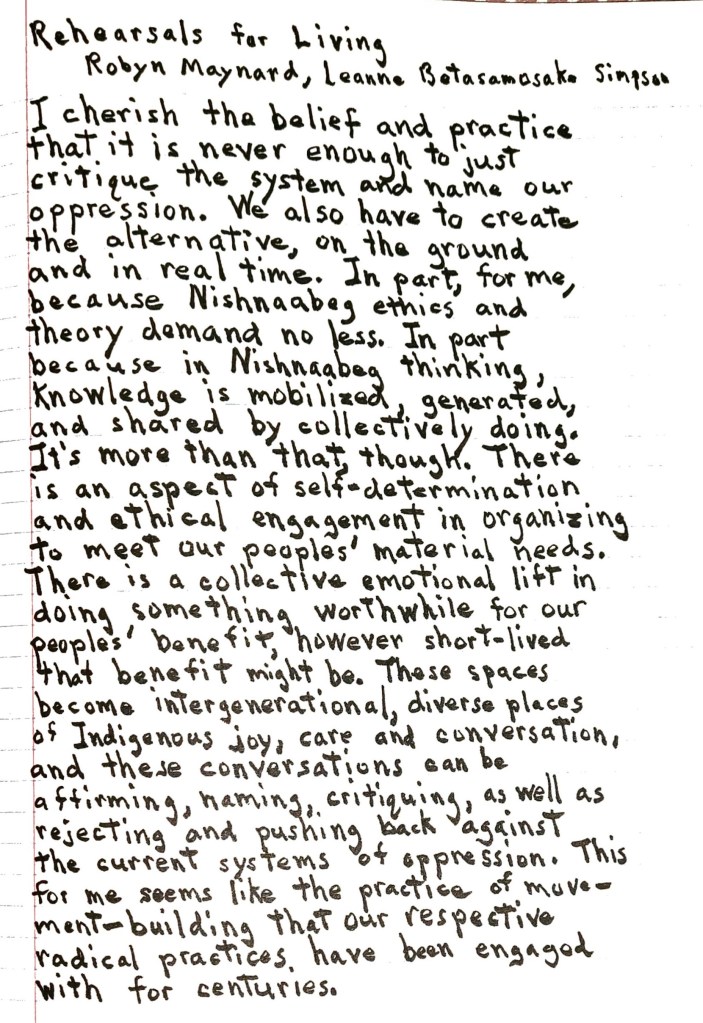
The title caught my attention because joy is one of the main benefits of Mutual Aid communities. It has been true for my involvement in Des Moines Mutual Aid for the past two years. Especially in these times of growing fear about the baffling breakdown of so many things we took for granted, finding joy is so important. This quote from the book “Rehearsals for Living” by Robyn Maynard and Leanne Betasamosake Simpson describes this well.

“Rehearsals for Living” by Robyn Maynard and Leanne Betasamosake Simpson

Roots anchor and support us. Firmly and deeply established, they can carry us through difficult times. When we do the work of rooting, we find those threads that can nourish us in the face of adversity.

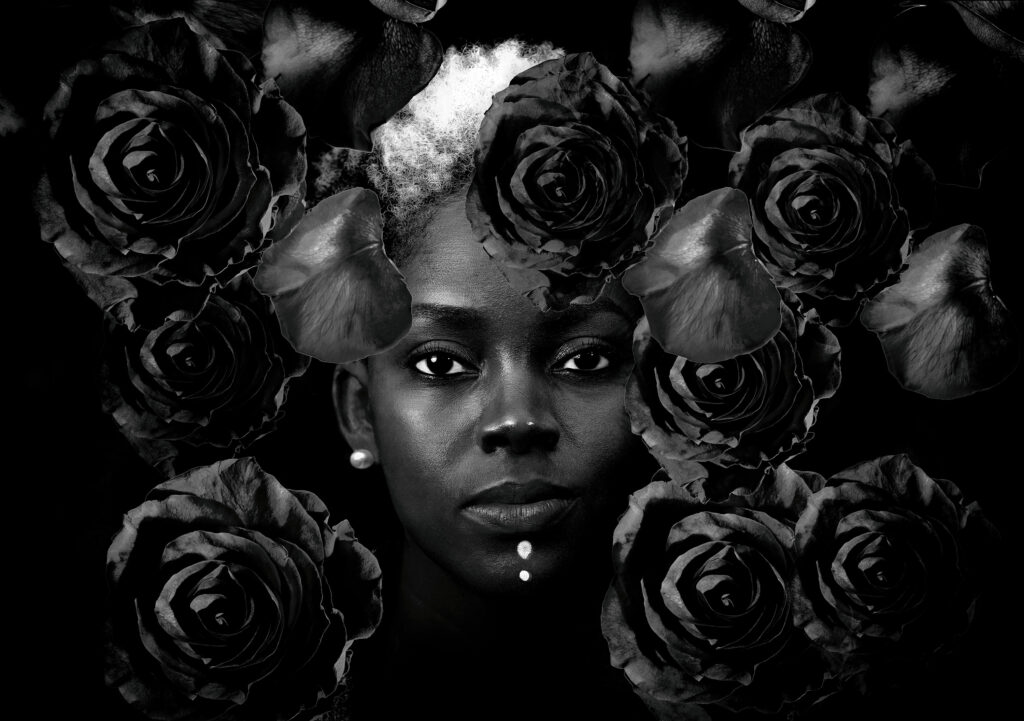
In “Joy Is the Justice We Give Ourselves,” poet J. Drew Lanham grounds his vision of racial justice in quiet moments of awe in nature. Celebrating radical acts of joy, he lifts up liberation, reparations, and deep connection to ancestors and the living world.

Emergence Magazine

Joy is the justice
we give ourselves.
It is Maya’s caged bird
sung free past the prison bars,
holding spirits bound—
without due process,
without just cause.

Joy is the steady run stream,
rights sprung up
through moss-soft ground—
water seeping sweet,
equality made clear
from sea
to shining sea,
north to south,
west to east.

Joy is the truth,
crooked lies hammered straight,
whitewashed myths
wiped away.
Stone Mountain
—just stone.
Rushmore
—no more.
Give the eagles
their mountains back.

(continues…)

Joy is the justice we give ourselves

CONTRIBUTOR BIOS

POET
J. Drew Lanham is a birder, naturalist, and hunter-conservationist. He is the author of The Home Place: Memoirs of a Colored Man’s Love Affair with Nature, which received the Reed Award from the Southern Environmental Law Center and the Southern Book Prize, and was a finalist for the John Burroughs Medal. His essays and poetry can be found in Orion, Audubon, Flycatcher, and Wilderness, and in the anthologies The Colors of Nature, State of the Heart, Bartram’s Living Legacy, and Carolina Writers at Home. He is an Alumni Distinguished Professor of Wildlife Ecology and Master Teacher at Clemson University.

PHOTOGRAPHER
Sheila Pree Bright is an acclaimed fine-art photographer known for her series Young Americans, Plastic Bodies, and Suburbia. Her documentation of responses to police shootings in cities across the US inspired her book #1960Now: Photographs of Civil Rights Activists and Black Lives Matter Protests.


Stories and peace

I’ve been working on a series of posts about the evolution of my foundational stories, which are related to the intersection between my Quaker faith, protecting Mother Earth, and photography. (See: https://quakersandreligioussocialism.com/?s=foundational )

Hearing stories of widespread and expanding areas of drought today, I was reminded of The Story of the Drought, part of a project I was involved in related to the Nandi tribe in Kenya.

My friend, neonatologist Jim Lemons, has done a lot of work in Africa related to the Kenya Mothers and Babies Hospital. He knew Indiana University anthropologist Jeanette Dickerson-Putman because of her interest in Africa. When he learned of a project she was interested in, he introduced us to each other.

Jeanette has made several trips to Africa. Recently her interest related to why the violence occurred after the elections in Kenya in 2007. The Nandi tribe was most involved in that. Jeanette found both the Nandi elders and the youth felt tribal knowledge was not being passed between generations, and partially accounted for the violent response after those elections. She wanted to find ways to bridge that gap.

When I learned what she wanted to do, I suggested a story website might be a way to help. Developing a place where Nandi people could learn the language and stories they had lost or never learned. The stories could be seen by those who had moved away from their homelands since the website could be seen from anywhere in the world. I was surprised to learn African people often had cell phones.

Jeanette made recordings of someone reading a story in the native language while the English translation was displayed on a computer or cell phone screen.

We didn’t get to implement the project. But I did create one video of The Story of the Drought from an audio recording she had obtained.

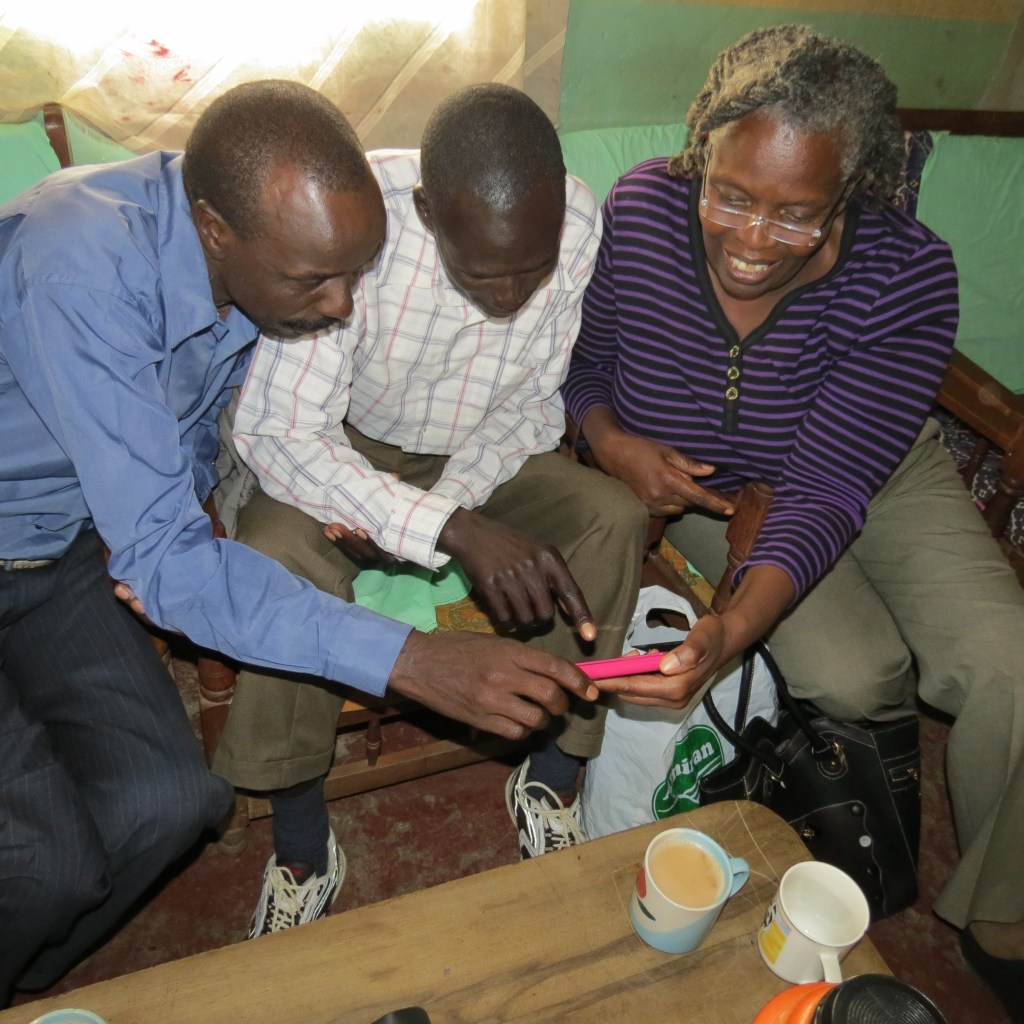
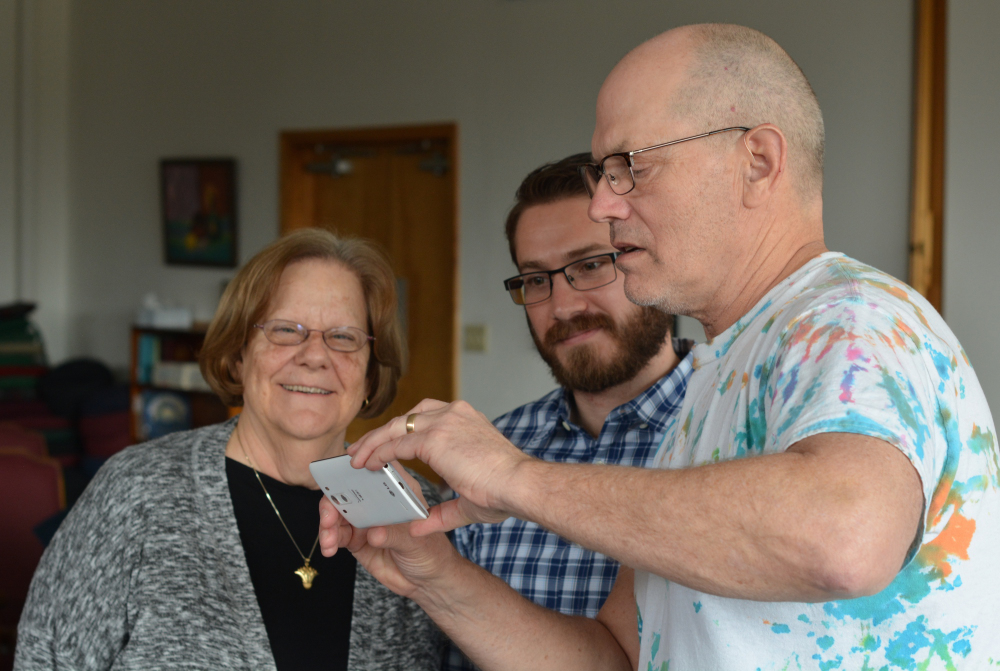
When Jeanette returned to Kenya, she was able to show some Nandi people that story, that I had uploaded to the Internet. This photo shows Nandi viewing that story on a cell phone in Kenya.

Nandi viewing the Drought Story on a cell phone in Kenya

My foundational stories: 1970’s

My previous post was a description of the beginnings of my foundational stories, which related to the intersection between my Quaker faith, protecting Mother Earth, and photography. The intention of this series of articles is to show how these foundational stories changed over time.

The beginnings of the stories were about my struggles and eventual decision to resist the draft. Although I wasn’t prosecuted for that felony offense, there were other consequences. During the time it took for my family to adjust to my intention to resist the draft, I joined the Friends Volunteer Service Mission (VSM) in inner city Indianapolis in 1971. This was a Quaker part of my foundational story.

Quaker

VSM was set up to provide alternative service work for conscientious objectors. The two-year program involved working at the type of job that qualifies for alternative service, most often in a hospital. And saving enough money from that job to support yourself to work full time in the community. Others, not doing alternative service, were also able to apply.

VSM was impactful in my life in two ways. The work I found was in respiratory therapy, then called “inhalation therapy”. I received on-the-job training to do this work during my first year at VSM. After my VSM experience, I obtained a degree in respiratory therapy and worked for about five years as a neonatal respiratory therapist. And for the rest of my career worked in an infant pulmonary function research lab.

VSM was also where I began to learn important (foundational) lessons about community organizing, Quaker faith in action. Others at VSM did what I thought of as traditional organizing, which included many meetings about setting up a neighborhood health clinic or trying to prevent the construction of an interstate highway through the local community.

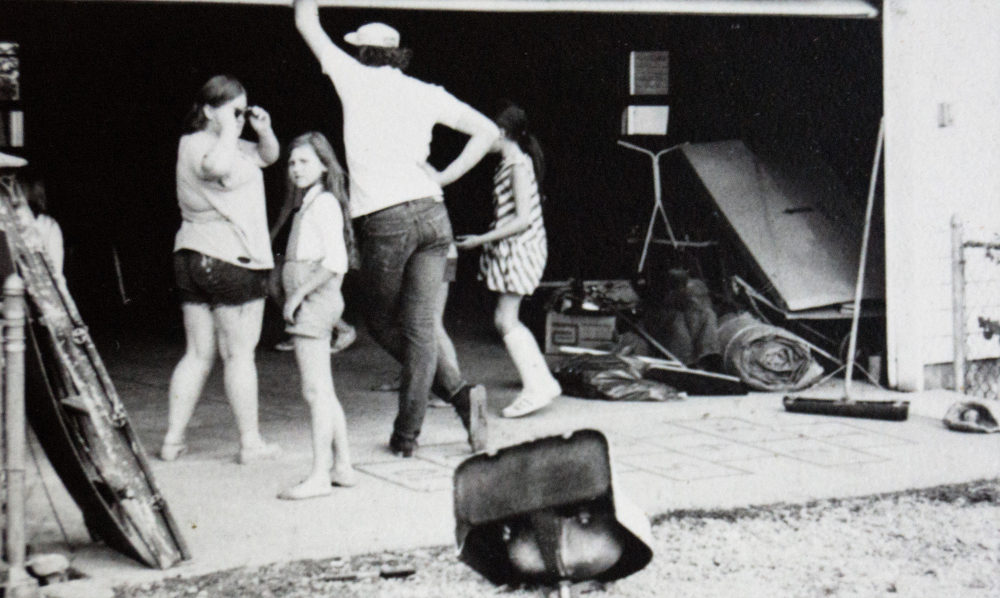
I quickly found I didn’t like that type of community organizing. And felt a little guilty that I didn’t. But I eventually discovered what kind of community organizing I was led to do. During my first year at VSM I spent a lot of time with the kids in the neighborhood. The VSM house was next to Second Friends Church, which had a nice yard where we played games like capture the flag. One of our VSM projects involved setting up a basketball hoop in front of the garage of the church.

There were no programs for kids in the neighborhood and I really enjoyed working with them. When thinking about what to do during my second year at VSM, it became clear I should continue to work with the kids full time. We organized a 4-H club, went swimming, and rode bicycles to shopping centers, where we played “wall ball” on the walls at the back of the stores.

This would determine my approach to social justice work for the rest of my life. What was important was being in the communities where the work was to be done. And to focus on building friendships.


Photography

At VSM, there became another way photography became important in my life. I knew how to set up a basic darkroom and did that in the VSM house bathroom. Photography became one of the kids’ favorite things to do. We would ride around the city on bicycles with a couple of (film) cameras. Then develop the negatives and print the photos. I can still see the wonder in their faces as the image gradually appeared on the paper (in the red light of the darkroom).

Now, fifty years later, on two separate occasions, kids from that time found me on Facebook. They both talked about those darkroom experiences.


Protecting Mother Earth and photography

During this time in Indianapolis (early 1970’s) I didn’t have a car, simply because I couldn’t afford one. So, riding a bicycle everywhere, including to the hospital for work, was my routine.

But moving to Indianapolis had a major (foundational) impact on me, which influenced the rest of my life. I couldn’t believe how foul the air was. I saw clouds of fumes pouring out of the exhaust of every car. This was before the availability of catalytic converters, which cut out the visibility of the exhaust, but didn’t stop the greenhouse gas emissions. No one was talking about global warming and greenhouse gases then.

But I had a profound vision of clouds of pollution blocking the view of my beloved mountains. Specifically, obscuring Long’s Peak in this photo I took and developed around the time I moved to Indianapolis. That horrific vision stayed with me the rest of my life. As a consequence, I refused to have a personal automobile for the rest of my life. (Protecting Mother Earth).

Long’s Peak, Rocky Mountain National Park, Colorado

These are more of the ways my foundational stories are about the intersection between my Quaker faith, protecting Mother Earth, and photography.

Mutual Aid and Ways of War

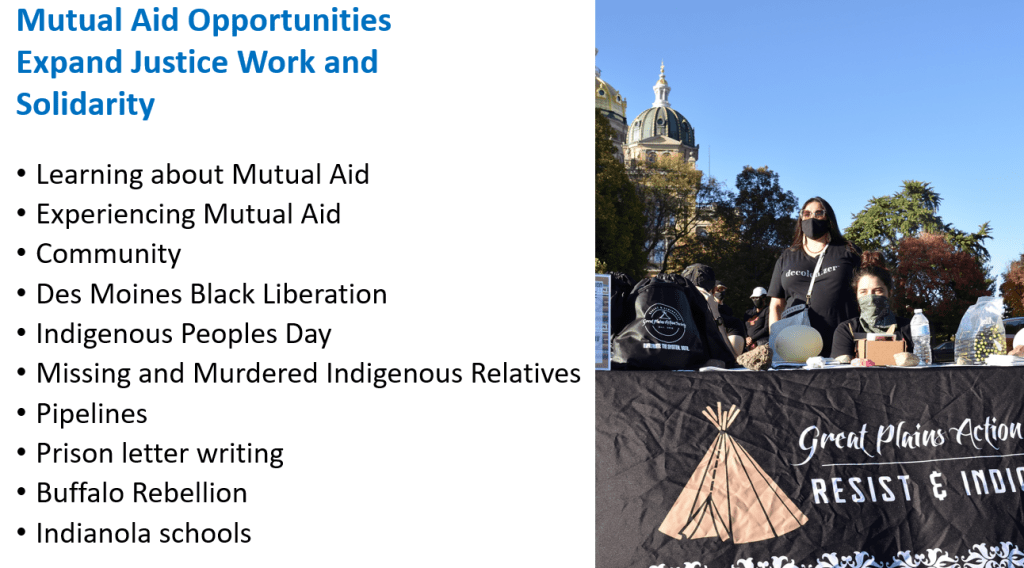
The reason I haven’t published anything for a while is because I’ve been working on a presentation about Mutual Aid that I plan to give when my Quaker yearly meeting, Iowa Yearly Meeting (Conservative) meets this week. It’s been helpful for me to organize my thoughts about Mutual Aid, something that’s become the center of my peace and justice work for over two years. I’m glad to have this opportunity to share this work.

I don’t plan to talk about everything on this list of all that is going wrong now. But it is alarming to see how many of these have escalated recently.


  • Collapse of capitalism
  • Severe drought, floods, heat result in massively diminished food production and famine
  • White supremacy
  • Spiritual poverty
  • Fascism/authoritarianism
  • Broken political system
  • Media as propaganda
  • Domestic terrorism. Armed militias.
  • Militarized police
  • Global militarism
  • Movements of millions of climate refugees
  • Punishment-oriented judicial system
  • Prisons
  • Education discourages critical thinking
  • Continued commodifying all natural resources
  • Continued fossil fuel extraction and burning
  • Factory farming
  • Broken healthcare

Instead, I plan to use this slide about how we can no longer depend on so many systems now. We’re being forced to find alternatives, and Mutual Aid can be the solution. I hope the presentation will result in more Quakers and others getting involved in Mutual Aid work.


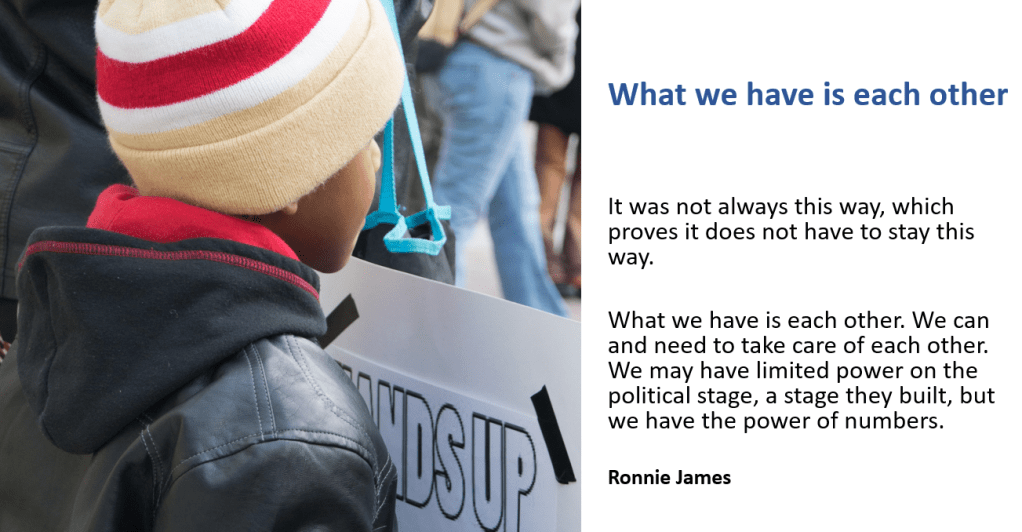
One of the things I’ve been praying about is this statement by my good friend and Mutual Aid comrade, Ronnie James.


Coming of age in the last 1960’s, during the Vietnam War, I saw and was part of the massive antiwar movement in this country. For the past several decades I’ve wondered what happened to the antiwar movement

Then we began to see war coming to the streets of our cities.

  • In 2014, we saw militarized police and tanks in the streets of Furguson, Missouri, following the killing of Michael Brown. Friends of mine from Indianapolis went there during the prolonged unrest. A Quaker friend went.
  • In 2016 the violent attacks of militarized police against the peoples peacefully gathered at Standing Rock were broadcast across the world.
  • At the beginning of 2020, I saw the violent invasion of Wet’suwet’en lands by the militarized Royal Canadian Mounted Police (RCMP). And learned similar invasions occurred in previous years.
  • Also in January 2020, “Des Moines Mutual Aid participated in a march protesting the potential for war or increased hostilities with Iran that followed the fallout of the assassination of Qassem Soleimani by drone strike in Baghdad.”
  • Then the world watched in horror as Derek Chauvin killed George Floyd by pressing on his neck for nine and a half minutes on May 25, 2020. Prolonged nationwide protests occurred in many cities, including Des Moines. Des Moines Mutual Aid established a bail fund that kept every protestor out of jail.
  • Now, militarized police responses have occurred at every protest against so many, ongoing police murders.
  • The war is now on the streets of this country, in the communities of the oppressed.
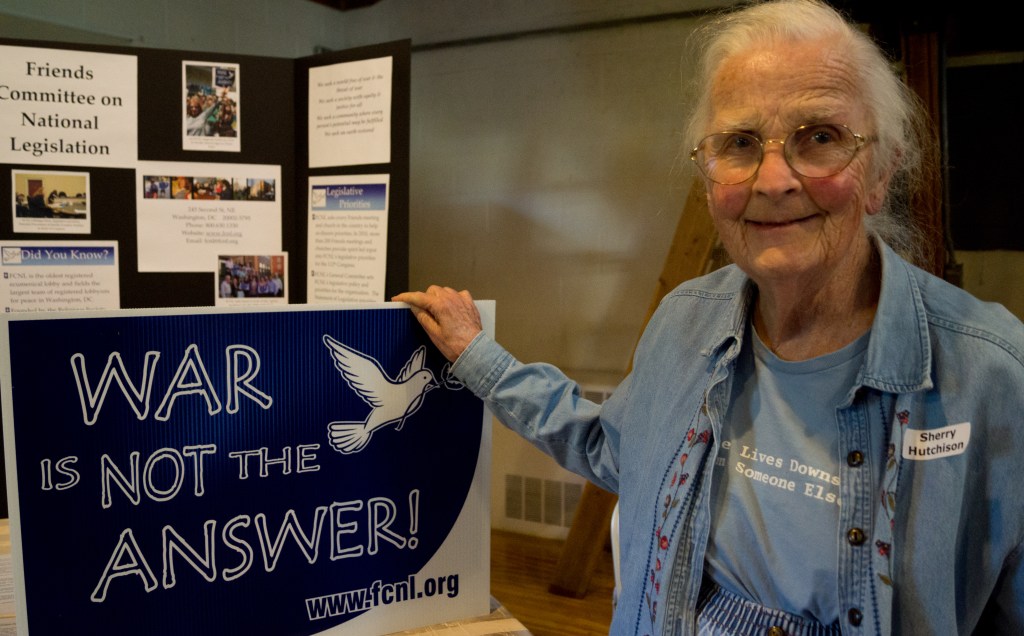
  • Now I think of FCNL’s “War is Not the Answer” signs being about these domestic wars.

I agree with Ronnie, “the more we take care of each other, the less they can fracture a community with their ways of war.” Mutual Aid is how we can take care of each other.


Mutual Aid is how we can work for peace and justice now.


War is Not the Answer

These words were taken from Martin Luther King Jr.’s speech, Beyond Vietnam: A Time to Break Silence, delivered April 4, 1967 at the Riverside Church in New York.

The message – War is Not the Answer – and the signs went viral. FCNL and Friends saw the potency and popularity of the message grew and spread, and the rest is history. With the increasing prospect for an endless war with Iran, War is Not the Answer, has become more relevant.

Friends and other people of faith act when they see broken systems. As we stand on the precipice of another war, Friends are mobilizing across the country to demand Congress halt the spiral into all-out war.

FCNL has distributed more than 2,000,000 “War is Not the Answer” bumper stickers and yard signs since 2002. Demands for the sign are increasing so we are making it available free online for you to download and print. If you’d like to purchase a lawn sign or bumper sticker, you can do so here.

https://www.fcnl.org/resources/war-not-answer

Sherry Hutchison

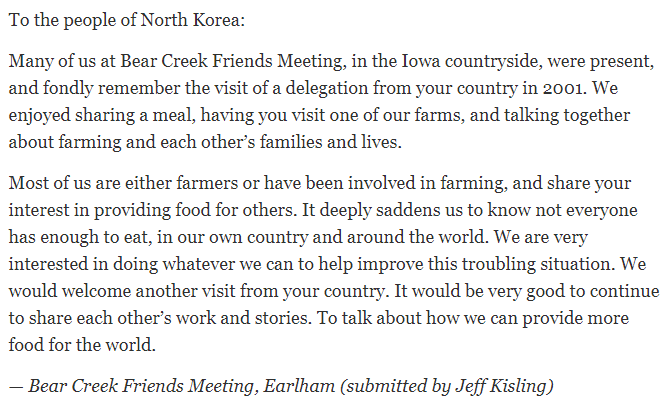
Follow-up on North Korea

In response to a recent blog post, Rising Tensions with North Korea and Farm Diplomacy, Jon Krieg (American Friends Service Committee) who played a key role in this endeavor, wrote, “Isn’t it pretty cool how one thing that feels relatively small at the time can send bigger waves?”

I also heard from another key participant, Dan Jasper who wrote “You’ve done a lot to keep the history alive and I think you documented some important stuff on that post. It was a good trip when Linda and I came to Iowa and this retelling is very timely. We’re in the middle of our Korea peace advocacy week (an annual event where we set up meetings for grassroots folks to speak to their members of congress on Korea related bills). I also recently presented my sabbatical research on the connections between food, climate, and peace at AFSC. I’ve come to believe that it’s no accident that ag offers a place for communities and even adversaries to come together.

We could also set up a meeting with your congressional delegation as a sort of extension of the Korea peace advocacy week.”


Isn’t it pretty cool how one thing that feels relatively small at the time can send bigger waves?

Jon Krieg, American Friends Service Committee

This AFSC website will help you send a letter about tensions in North Korea to your US Congressional representatives.

https://www.afsc.org/action/support-peace-and-humanitarian-cooperation-north-korea

The U.S. must act now to build peace and humanitarian cooperation with North Korea. 

June 25, 2022 marks the 72nd anniversary of the beginning of the Korean War. Though there was a ceasefire in 1953, the United States and North Korea have yet to sign a peace treaty to officially end the Korean War. This open wound is a root cause of the conflict and hostilities still present on the Korean Peninsula today.  
This “forever war” risks further military conflict, fuels arms races, exacerbates global humanitarian crises, and keeps families separated. And it’s time for it to end. 

Join us in calling for peace and humanitarian cooperation today! 


This is the letter that is created from that link. And the response from Senator Chuck Grassley.


As someone concerned about the well-being of the people on the Korean Peninsula and as a supporter of the American Friends Service Committee (AFSC), I ask you to please co-sponsor H.R. 1504 – the Enhancing North Korea Humanitarian Assistance Act. The bill expedites the provision of nongovernmental humanitarian assistance, including life-saving medical care, to the people of North Korea. In the weeks following the COVID-19 outbreak in North Korea, it is critical that you support these measures, which will help private aid organizations respond when the borders reopen.

Please also co-sponsor S. 2688, the Korean War Divided Families Reunification Act, which would require the State Department to work toward reuniting Korean-American families separated by the Korean War.

Help us respond to critical humanitarian needs and reunite Korean Americans with their families in North Korea.

Thank you for your consideration.

Jeff Kisling


June 16, 2022
Dear Mr. Kisling:

Thank you for taking the time to contact me with your support for the Enhancing North Korea Humanitarian Assistance Act (S.690) and the Korean War Divided Families Reunification Act (S.2688). As your senator, it is important to me that I hear from you.

I appreciate hearing your support for the Enhancing North Korea Humanitarian Assistance Act which was introduced by Senator Edward Markey. This legislation, if enacted, would require the Treasury Department to expand existing humanitarian licenses for North Korea to include larger humanitarian projects as opposed to medical supplies and food.

In response to the COVID-19 pandemic, the Treasury Department and the Department of State have expanded licensees for the provision of humanitarian assistance to vulnerable populations in sanctioned countries. That said, I do not believe that the wholesale removal of sanctions on North Korea would alter the regime’s behavior or ensure adequate distribution of relief within the country. Rather, it would provide Kim Jong-Un with resources to continue persecuting the North Korean people and antagonizing the United States and the rules-based international order. 

I also appreciate hearing your support for the Korean War Divided Families Reunification Act. This bill was introduced by Senator Mazie Hirono and if enacted, would require the State Department to report to Congress on its consultations with South Korea about potential opportunities to reunite Korean Americans with family in North Korea. 

Both of these bills have been referred to the Senate Committee on Foreign Relations. Should either of these pieces of legislation come before the full Senate, I will be sure to keep your thoughts in mind.

Again, thank you for taking the time to contact me. Please keep in touch.

   Sincerely,

  Chuck Grassley
  United States Senator

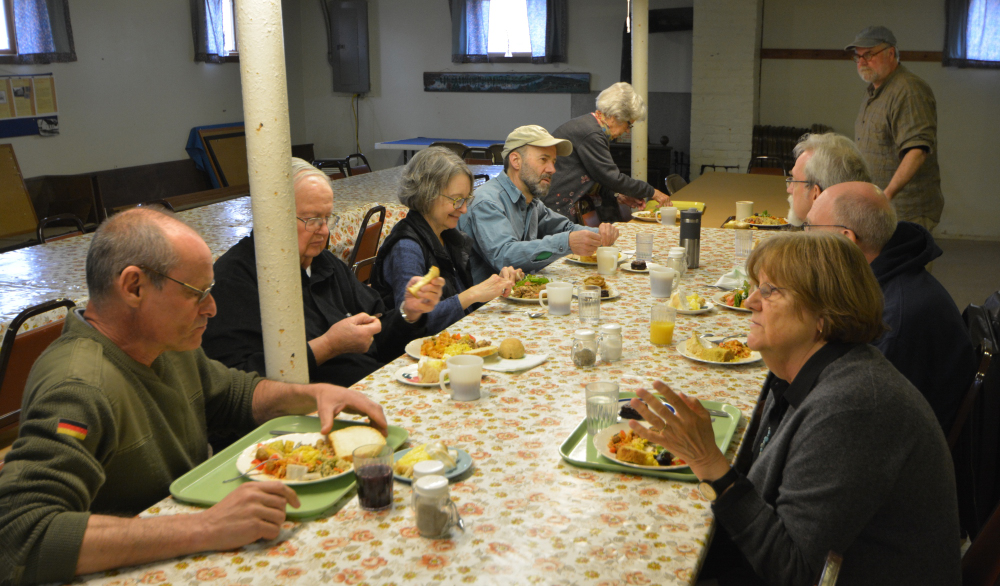
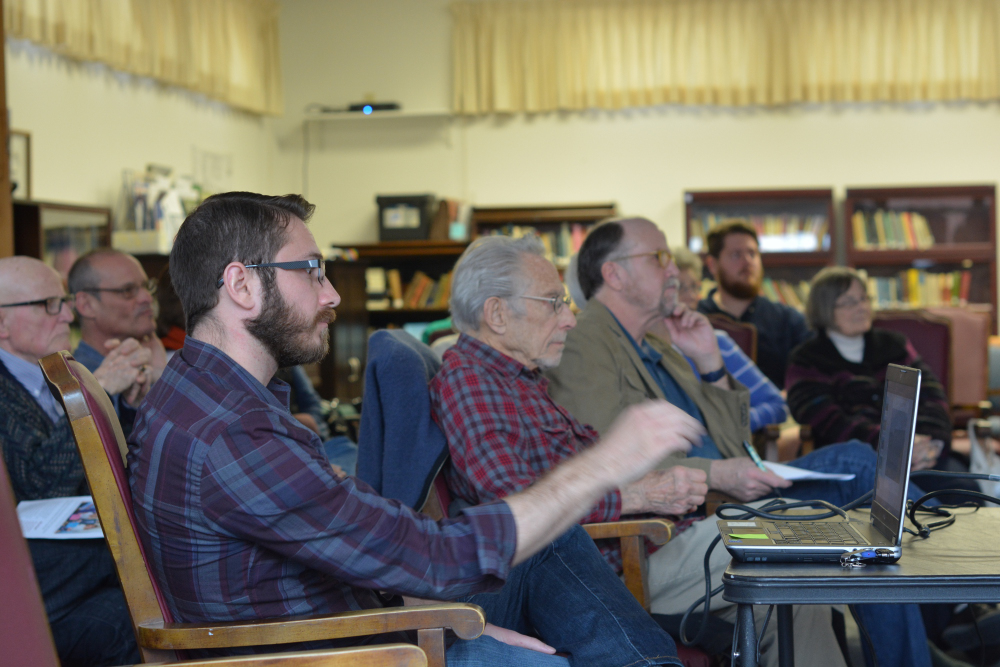
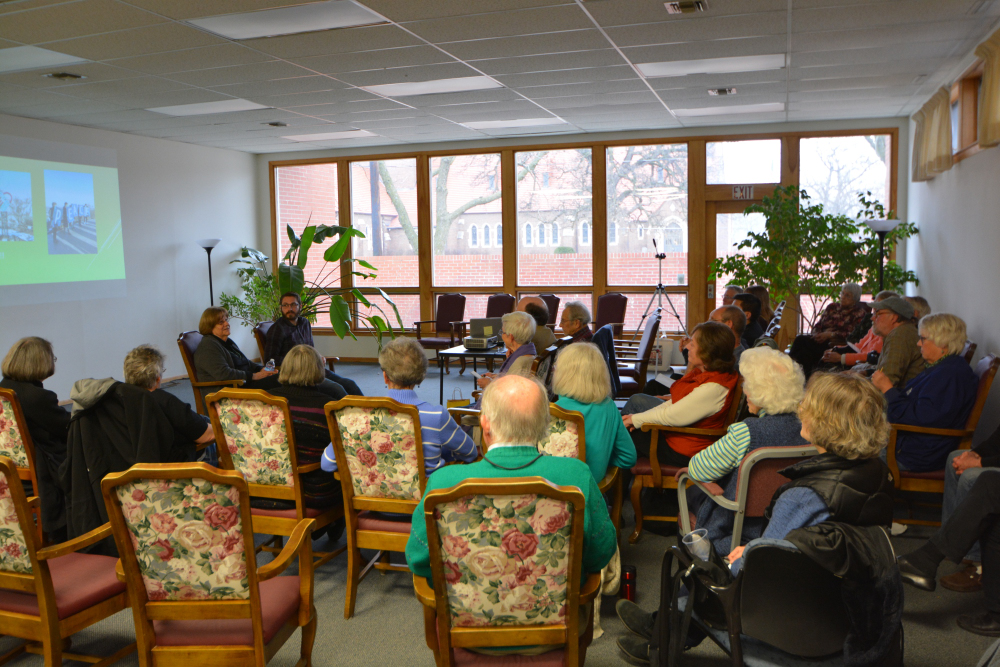
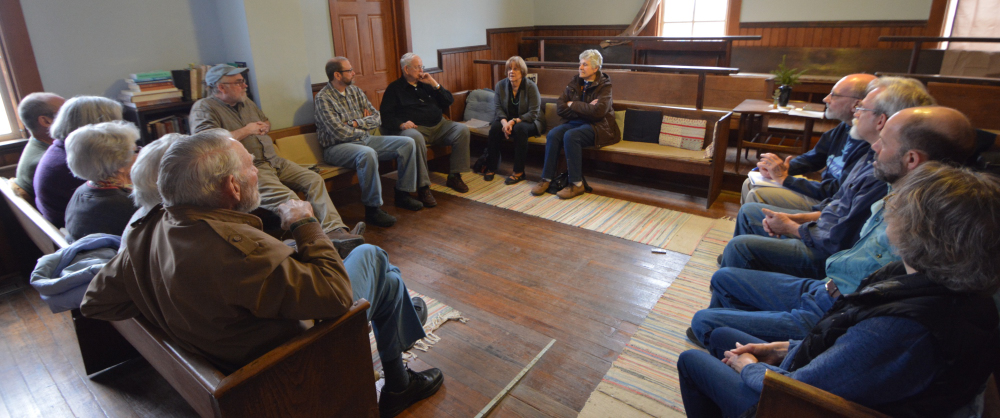
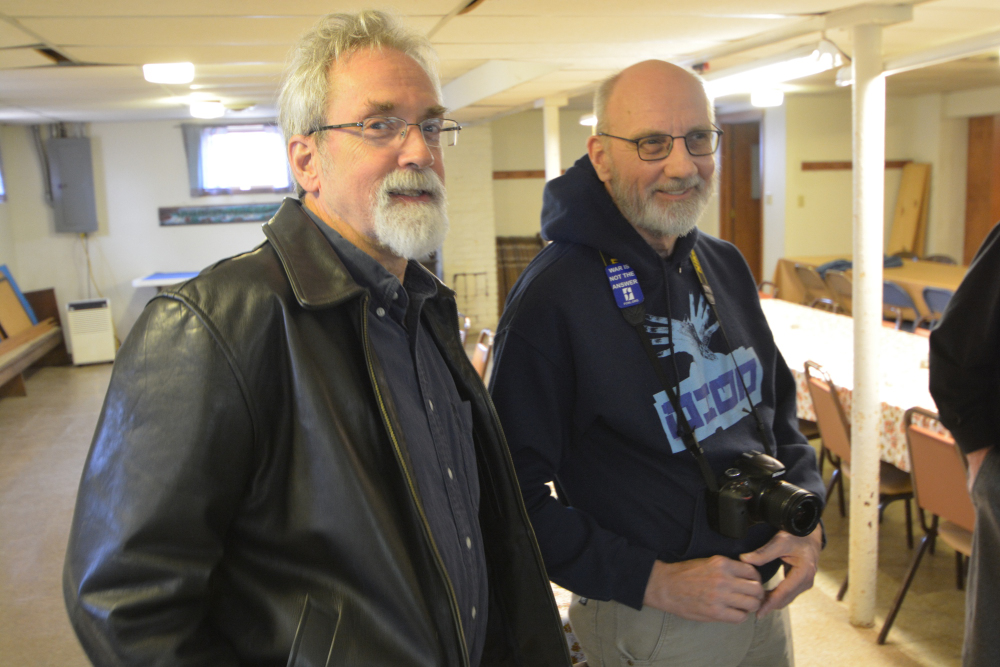
My great thanks to my fellow activist photographer, Jon Krieg, of the American Friends Service Committee (AFSC) for these photos of the visit of Linda Lewis and Dan Jasper, of AFSC, to Iowa to tell us about their work in North Korea, March 2018. (Another activist videographer, Rodger Routh joined us. His video of this visit can be found below). You can see Linda and Dan visited us at Bear Creek Meeting. Russ Leckband presented them with a gift of his pottery. Linda and Dan also spoke at Des Moines Valley Friends Meeting. Also attending was my friend Reza Mohammadi. Ed Fallon interviewed them on his radio program. And I’m glad they were able to visit Scattergood Friends School and Farm where they spoke with Mark Quee and Thomas Weber.

Photos by Jon Krieg, AFSC

A Love Letter to Y’all

I’m looking forward to being with my Des Moines Mutual Aid (DMMA) friends this morning, for our weekly free grocery store, described below.

As a Quaker, I find it particularly interesting that the first public action of DMMA was participation in a peace march.

Originally tweeted by Des Moines Mutual Aid (@dsm_mutual_aid) on January 6, 2021.

A Love Letter to Y’all (a thread)

One year ago yesterday Des Moines Mutual Aid participated in a march protesting the potential for war or increased hostilities with Iran that followed the fallout of the assassination of Qassem Soleimani by drone strike in Baghdad.

This was our first “public” event since adopting the name Des Moines Mutual Aid, a name we gave our crew during our growing work with our relatives at the houseless camps throughout the city and our help with coordinating a weekly free grocery store that has a 50 year history, founded by the Des Moines Chapter of The Black Panther Party For Self Defense.

A year ago we started laying the foundation for work we had no idea what was coming.

As we were adjusting our work with the camps and grocery re-distribution in response to the Covid-19 pandemic, both that continued to grow in need and importance, the police continued their jobs and legacy of brutality and murder.

This nation exploded in righteous rage in response to the pig murders of Breonna Taylor and George Floyd.

DMMA realized we were in a position to organize a bail fund to keep our fighters out of jail, both to keep the streets alive as a new phase of The Movement was being born, and because jails are a hotspot of Covid-19 spread.

Not to mention the racial and economic oppression that is the cash bail system.

In the past year DMMA has expanded it’s work in multiple directions and gained many partners and allies.

We partnered with the Des Moines Black Liberation Movement (@DesMoinesBLM) to create the DSM BLM Rent Relief initiative to help keep families in their homes in the midst of a pandemic and the winter.

The camp work has grown exponentially, but is being managed with our collaboration with Edna Griffin Mutual Aid (@egma_dsm), DSM Black Liberation Movement (@DesMoinesBLM), and The Great Plains Action Society (@PlainsAction).

The bail fund remains successful because of desire from the public and a partnership with Prairielands Freedom Fund (@prairielandsff) (formerly The Eastern Iowa Community Bond Project).

The weekly free food store has maintained itself, carrying on the legacy it inherited.

Every one of our accomplishments are directly tied to the support of so many people donating time, talent, and funds to the work. We are overwhelmed with all of your support and hope you feel we are honoring what we promised.

All of these Mutual Aid projects are just a few of many that this city has created in the last year in response to the many crises we face, not only confronting the problems and fulfilling the needs directly in front of us, but creating a sustainable movement that will be capable of responding to what’s next and shaping our collective futures as we replace the systems that fail us.

These last 12 months have been wild and a real test of all of our capabilities to collectively organize.

But it is clear that we as a city have what it takes to do what is needed in 2021, no matter what crisis is next.

Much gratitude to you all.

In love and rage,
Des Moines Mutual Aid

Originally tweeted by Des Moines Mutual Aid (@dsm_mutual_aid) on January 6, 2021.

Rising tensions with North Korea and farm diplomacy

I recently received the following from Dan Jasper of the American Friends Service Committee (AFSC) about rising tensions between the U.S. and North Korea. The state of Iowa and my Quaker meeting, Bear Creek Friends, have a long history related to North Korea. Dan visited us in Iowa in March 2018.

Tensions between the U.S. and the Democratic People’s Republic of Korea (DPRK or “North Korea”) are on the rise once again. In recent weeks, North Korea has conducted missile tests, and the U.S. and South Korea have responded with missile of tests of their own.

To make matters worse, a recent outbreak of COVID-19 in North Korea threatens a population that is already experiencing shortages of food and basic supplies.

A peace agreement would be a crucial step toward nuclear disarmament, and without it renewed military conflict could erupt at any moment. It would also help reunite thousands of families—including many Korean Americans—who have been separated for over 70 years.

As the pandemic further threatens lives and livelihoods in North Korea, the U.S. must also support private aid organizations providing critical humanitarian assistance in the country. 

Call on Congress today to take action. Urge them to pass legislation to end the Korean War, support nongovernmental aid missions, and reunite families.

Dan Jasper 

Asia Public Education and Advocacy Coordinator 
American Friends Service Committee


Farm Diplomacy

Sept. 1, 2017, Kenneth M Quinn, President of the World Food Prize suggested inviting a North Korean delegation to visit the United States as a way of easing tensions.  In 1959 the Des Moines Register invited Soviet Premier Nikita Khrushchev to come to Iowa to discuss agricultural practices.  The Register’s Lauren Soth won a Pulitzer Prize in 1956 for that editorial, in part because Khrushchev accepted the offer. https://www.pulitzer.org/prize-winners-by-year/1956

In 1959, at what was the most dangerous moment of human history as Soviet and U.S. nuclear weapons were poised to be fired at each other, an event on a farm in Iowa contributed indirectly, but crucially, in keeping those missiles from ever being launched.

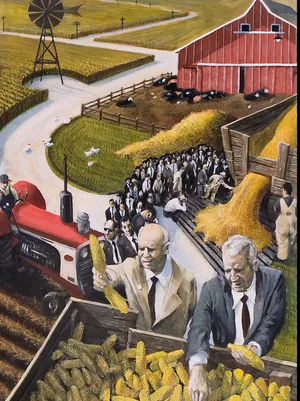
As the artwork that accompanies this essay and hangs in our World Food Prize Hall of Laureates in Des Moines shows, Soviet Premier Nikita Khrushchev traveled to Coon Rapids on Sept. 23 of that year to visit the Roswell Garst Farm. Standing at the corn crib and holding an ear of hybrid corn, the Premier asked Garst why he couldn’t have corn like this in the Soviet Union.

Garst responded by sending his nephew John Chrystal on multiple trips to Russia over the next three-plus decades as an unofficial ambassador of agriculture, sharing aspects of Iowa technology.

Agriculture could be key to easing U.S.-North Korea tensions by Kenneth M. Quinn, Des Moines Register, Sept 1, 2017

After that article was published, Jon Krieg, of the American Friends Service Committee (AFSC) in Des Moines, shared the story below, Growing seeds of relationships with Des Moines Register editor, Lynn Hicks, about AFSC hosting a North Korean agricultural delegation’s visit to Iowa in 2001. October 5, 2017, the Register published the following editorial  Could North Korea’s Kim visit Iowa, as Khrushchev did? 

In 1955, this newspaper invited Soviet leader Nikita Khrushchev to send a delegation to Iowa “to get the lowdown on raising high quality cattle, hogs, sheep and chickens. We promise to hide none of our ‘secrets.’”

The Register’s Lauren Soth won a Pulitzer Prize in 1956 for that editorial, because the Kremlin took note. Exchanges of farmers followed, and hybrid seed-corn entrepreneur Roswell Garst met with Khrushchev in Moscow. And in 1959, Khrushchev shocked the world by accepting Garst’s invitation and visiting his Coon Rapids farm.

Ambassador Kenneth Quinn evoked the Khrushchev visit in a Register op-ed last month. Quinn, president of the World Food Prize, wrote: “With so few good options to defuse the current situation over North Korea’s enhanced strategic capabilities, including possible nuclear-weaponized long-range missiles, using agriculture as a vehicle to reduce tensions would seem worth a try.”  

Could North Korea’s Kim visit Iowa, as Khrushchev did?, the Register’s editorial, Oct 5, 2017

In response to that editorial, Eloise Cranke, the author of the story about the 2001 visit (below) published Farm Diplomacy is a Good Idea, October 6, 2017, in the Des Moines Register.

Thanks to the Register for its Oct. 5 editorial, “Let’s Invite North Korea’s Kim to Iowa.”

It was my distinct pleasure and honor to accompany the five North Koreans who visited an Iowa farm in 2001. What a warm and friendly evening it was, as we gathered for a delicious potluck with friends at the Bear Creek Meeting House.

That kind of one-on-one conversation and exchange of ideas is sorely needed today.

Why not invite Kim Jong Un to Iowa? “Farm diplomacy” helped ease tensions in the 1950s. Why not now? It could be a powerful way to move the conversation with North Korea from bombs and missiles to food and feeding hungry people.

Herb Standing’s words still ring true today, “We must tell people that it is not through missiles and bombs that we find security and peace, but rather through the one-on-one sharing with persons of different countries, cultures and experiences.”

Let’s give it a try.

— Eloise M. Cranke, Des Moines

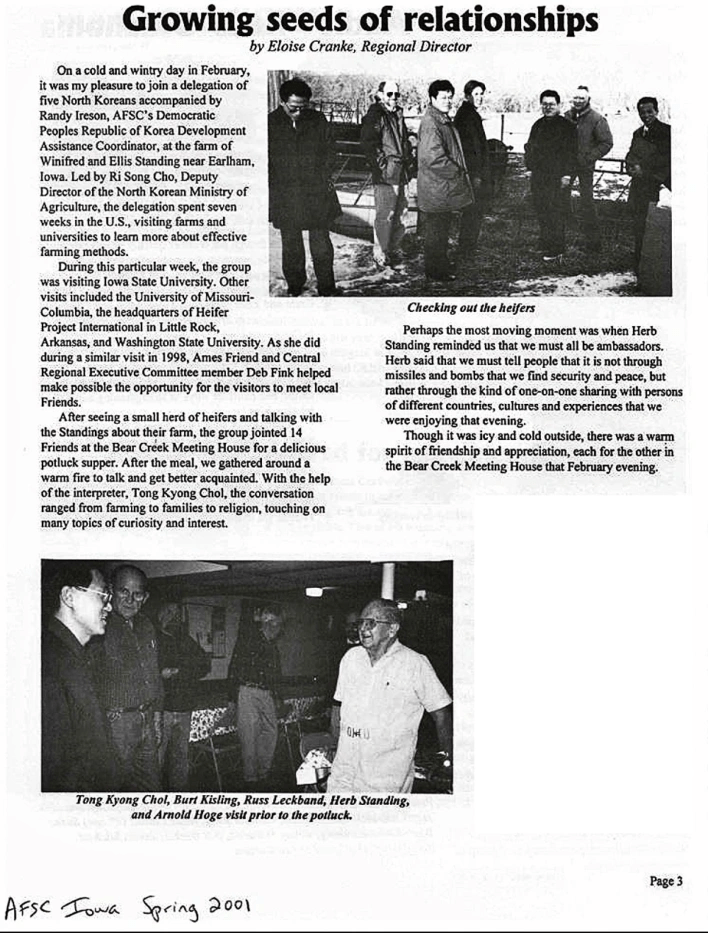
Growing seeds of relationships, Eloise Cranke, Regional Director, American Friends Service Committee, Spring, 2001

I am fascinated by the story of the 2001 visit to my Quaker meeting, Bear Creek, because I wasn’t living in Iowa at the time.  In the photo above, Burt Kisling is my father, Russ Leckband continues to attend Bear Creek, Herbert Standing was a cousin, and Arnold Hoge was the father of Win Standing, whose husband Ellis, is my mother’s brother.  The delegation visited the farm of Ellis and Win.  Then, after the potluck meal at the meetinghouse, I can easily imagine them gathered around the wood burning stove as described above, “…the conversation ranged from farming to families to religion, touching on many topics of curiosity and interest”.


Several of the people who had participated in that visit in 2001, were at Bear Creek meeting the morning of 10/8/2017.  They shared their memories of that time.  Winifred Standing shared what she had written in her journal that day:

Wednesday, February 28, 2001
2 degrees above zero this morn.  Sunny
I made an Economical Sponge Cake and a soybean casserole.  Browned roast.  Lots of phone calls  this morn about wood and about tonight.  I went to meetinghouse–cleaned a bit, set dishes out, got coffee pot ready, etc.   I started cooking roasts at 2:00.  Peeled potatoes.   Eloise Cranke arrived just  before 4.  We visited with her until Randy Iverson and 5 North Koreans arrived.  They looked at our heifers and quizzed Ellis.  Eloise took me to meetinghouse about 5:15 to get supper started.  Ellis brought Dads and Dorothy later.  A good crowd gathered.  A good supper and questions and answers around fireplace after–Home about 9.  We visited and rested.  Seemed a good evening.

We discussed how this might relate to our current political situation.  I said I had shared a recent blog post about this with Iowa Yearly Meeting (Conservative)’s Peace and Social Concerns Committee, Scattergood Friends School, and several people at the Friends Committee on National Legislation (FCNL).  If another North Korean delegation did come, I thought a visit to Scattergood Friends School’s Farm at West Branch would be very beneficial.

The meeting wanted to support the idea of the Des Moines Register inviting another delegation from North Korea to visit us and approved the following letter, which was published by the Register.

https://www.desmoinesregister.com/story/opinion/readers/2017/10/13/letter-welcome-north-korea/761130001/

When we looked into what was being done regarding North Korea at this time (2018) we were surprised to learn that the American Friends Service Committee (AFSC) had been involved in bringing agricultural practices to North Korea for many years. We contacted the people who had been doing this work, Linda Lewis and Daniel Jasper, and they agreed to visit us in Iowa to share what they had been doing in North Korea.

Jon Krieg, AFSC, recorded the following video of the presentation about work Linda and Daniel have been doing in North Korea that was held at Des Moines Valley Friends Meeting on March 18, 2018. Both have been to North Korea and described how the AFSC has used efforts to improve agricultural practices in North Korea to facilitate understanding and build peace between North Korea and the United States since 1980.


Following is an excellent video by Rodger Routh interviewing Linda and Daniel on March 20, 2018, about their work for peace in North Korea. Linda and Daniel were in Iowa to discuss their work with agricultural projects in North Korea and to talk with us about how we might arrange for another North Korean agricultural delegation to Iowa, as happened in 2001, to try to reduce tensions between North Korea and the United States. Unfortunately, another visit has not occurred, so far.


Returning to Dan Jasper’s email about present day tensions with North Korea, Call on Congress today to take action. Urge them to pass legislation to end the Korean War, support nongovernmental aid missions, and reunite families.