No Way Out but War

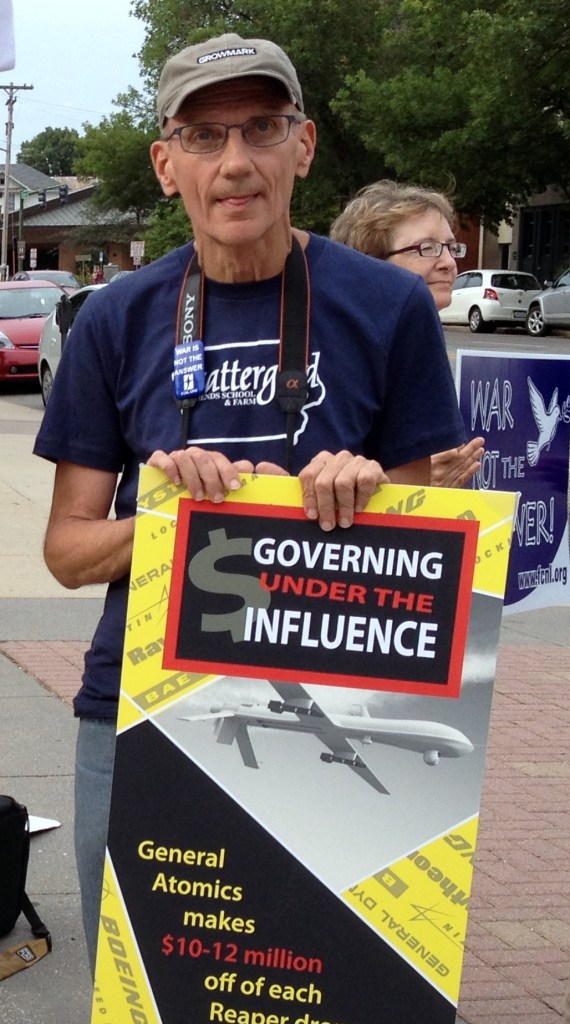
I came of age during the Vietnam War years. Organized a draft conference, walked with the entire student body of Scattergood Friends School (all sixty of us) fourteen miles into Iowa City during the Moratorium to End the War in Vietnam, became a draft resister. The entire country was in an uproar. Young men and their families lived in fear of induction based on a lottery system. Over 58,000 Americans were killed.

A key component to the sustenance of the permanent war state was the creation of the All-Volunteer Force. Without conscripts, the burden of fighting wars falls to the poor, the working class, and military families. This All-Volunteer Force allows the children of the middle class, who led the Vietnam anti-war movement, to avoid service. It protects the military from internal revolts, carried out by troops during the Vietnam War, which jeopardized the cohesion of the armed forces.

NO WAY OUT BUT WAR By Chris Hedges, Scheer Post. May 23, 2022. Permanent War Has Cannibalized The Country. It Has Created A Social, Political, And Economic Morass.

I’ve often despaired at the absence of an antiwar movement since our plunge into a ‘war on terror’ that is an excuse to have military presence and conflict in any place politicians define a threat. To terrorize children by the sounds of drones circulating overhead. With untold civilian casualties from drone strikes. Death by remote control.

What should I have done? What should I be doing now?

Shortly after the Vietnam years, I moved to Indianapolis (1970). The filthy air, the clouds of smoke pouring out of every tailpipe, traumatized me. Especially as I imagined how the air in the beautiful National Parks I had visited might become polluted.

We went on vacation to California around this time. The first day in Los Angeles we could hardly breathe. We coughed and our eyes were irritated. We were told we would get used to it.

It was this war against Mother Earth I devoted my efforts to, including refusing to own a car, which I called a weapon of mass destruction. And against the wars of White supremacy on black, Indigenous, and other people of color (BIPOC).

But the armed wars of this country continued, expanded internationally. And turned inward, bringing the tactics, equipment, and attitudes of war to our cities.

The United States, as the near unanimous vote to provide nearly $40 billion in aid to Ukraine illustrates, is trapped in the death spiral of unchecked militarism. No high speed trains. No universal health care. No viable Covid relief program. No respite from 8.3 percent inflation. No infrastructure programs to repair decaying roads and bridges, which require $41.8 billion to fix the 43,586 structurally deficient bridges, on average 68 years old. No forgiveness of $1.7 trillion in student debt. No addressing income inequality. No program to feed the 17 million children who go to bed each night hungry. No rational gun control or curbing of the epidemic of nihilistic violence and mass shootings. No help for the 100,000 Americans who die each year of drug overdoses. No minimum wage of $15 an hour to counter 44 years of wage stagnation. No respite from gas prices that are projected to hit $6 a gallon.

The permanent war economy, implanted since the end of World War II, has destroyed the private economy, bankrupted the nation, and squandered trillions of dollars of taxpayer money. The monopolization of capital by the military has driven the US debt to $30 trillion, $ 6 trillion more than the US GDP of $ 24 trillion. Servicing this debt costs $300 billion a year. We spent more on the military, $ 813 billion for fiscal year 2023, than the next nine countries, including China and Russia, combined.

We are paying a heavy social, political, and economic cost for our militarism. Washington watches passively as the U.S. rots, morally, politically, economically, and physically, while China, Russia, Saudi Arabia, India, and other countries extract themselves from the tyranny of the U.S. dollar and the international Society for Worldwide Interbank Financial Telecommunication (SWIFT), a messaging network banks and other financial institutions use to send and receive information, such as money transfer instructions. Once the U.S. dollar is no longer the world’s reserve currency, once there is an alternative to SWIFT, it will precipitate an internal economic collapse. It will force the immediate contraction of the U.S. empire shuttering most of its nearly 800 overseas military installations. It will signal the death of Pax Americana.

NO WAY OUT BUT WAR By Chris Hedges, Scheer Post. May 23, 2022. Permanent War Has Cannibalized The Country. It Has Created A Social, Political, And Economic Morass.

Chris Hedges goes on to explain

There were three restraints to the avarice and bloodlust of the permanent war economy that no longer exist. The first was the old liberal wing of the Democratic Party, led by politicians such as Senator George McGovern, Senator Eugene McCarthy, and Senator J. William Fulbright, who wrote The Pentagon Propaganda Machine. The self-identified progressives, a pitiful minority, in Congress today, from Barbara Lee, who was the single vote in the House and the Senate opposing a broad, open-ended authorization allowing the president to wage war in Afghanistan or anywhere else, to Ilhan Omar now dutifully line up to fund the latest proxy war. The second restraint was an independent media and academia, including journalists such as I.F Stone and Neil Sheehan along with scholars such as Seymour Melman, author of The Permanent War Economy and Pentagon Capitalism: The Political Economy of War. Third, and perhaps most important, was an organized anti-war movement, led by religious leaders such as Dorothy Day, Martin Luther King Jr. and Phil and Dan Berrigan as well as groups such as Students for a Democratic Society (SDS). They understood that unchecked militarism was a fatal disease.

NO WAY OUT BUT WAR By Chris Hedges, Scheer Post. May 23, 2022. Permanent War Has Cannibalized The Country. It Has Created A Social, Political, And Economic Morass.

Where was the organized anti-war movement?

I wasn’t there. As I said, I was led to the ‘fight’ to protect Mother Earth, protect the water. The damage we’ve done to our environment has led to the collapse we are experiencing now. As I wrote just yesterday, collapse is already here. Significantly worsening environmental chaos is everywhere and will only worsen, rapidly.

What does this mean regarding militarization now? As Chris Hedges writes above, there is no political resistance to continued military spending, leaving little for domestic needs. “The permanent war economy, implanted since the end of World War II, has destroyed the private economy, bankrupted the nation, and squandered trillions of dollars of taxpayer money.”

The US military is the largest polluter in the world because of the combustion of fossil fuels by the machines of war and the energy needed by steel production.

Depletion of fossil fuel supplies will eventually render those machines useless. But they will be a priority for dwindling supplies. I guess time will tell how long armored tanks and planes will have fuel in the timeline for our collapsing society.

So many military installations are on ocean shores and will be flooded by rising waters.

As oil supplies are depleted, the US armed forces will continue to take over fossil fuel sources anywhere in the world.

At the time when it is absolutely essential to stop burning fossil fuels, the military will continue doing the opposite. Might this be the way we finally rise up against the tools of war?

As our economy continues to collapse, the armed forces and militarized police will increasingly be used to quash civil unrest.

I was led to the fight to protect Mother Earth, protect the water. Much as I wish I had been able to do more to stop militarization, I know I have tried to hear what the Spirit was leading me to do. And then do it.


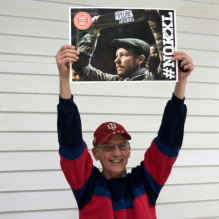
Grateful and humbled

I am grateful for many things this morning. For the waters falling from the sky. For my Mutual Aid friends who demonstrate what a Beloved community is. For the Buffalo Rebellion, growing a movement for climate action that centers racial and economic justice. Thankful for my Quaker communities. I give thanks to the Spirit.

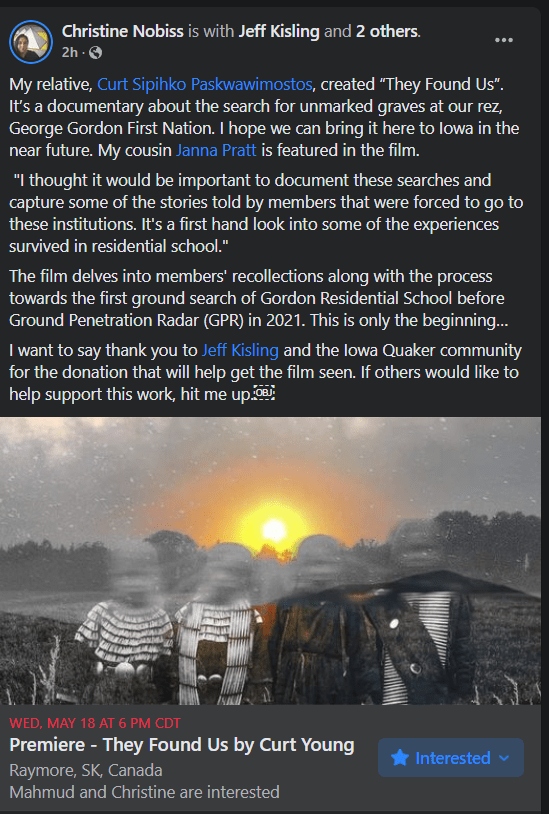
I am grateful for my Indigenous friends. Humbled by the grace they have shown me and other white people as we seek ways to heal from the horrendous history of white supremacy and forced assimilation, abuse, and death of thousands of Native children. As we search for ways to deal with the present, ongoing injustices. The intergenerational trauma. Ripping open deep wounds as the remains of children are located. As the title of this new documentary says, “They Found Us”.

Growing up I heard references to Quakers who worked in the residential schools. I was told they were helping the Native children adjust to living in white society. I didn’t have the awareness to question why that was not a good thing.

I’ve had a life-long concern about environmental devastation. I grew up on farms. When I moved to Indianapolis in 1970, I was horrified by the dense, noxious fumes from every tailpipe, making it difficult to even see. This was before catalytic converters hid the damage being done. I was led to refuse to own a car.

It was obvious Indigenous peoples lived in sustainable ways.

To pull this all together, here is the link to a recent blog post, Midwest Quakers and Native Peoples, which describes how I was blessed to become friends with Indigenous folks in the Midwest and the history of some of the work we’ve done together. It also talks about the Indian Residential Schools and includes a letter from Curt Young, member of George Gordon First Nation, describing the documentary he created, “They Found Us”. Sikowis is also a member of George Gordan First Nation.


“I thought it would be important to document these searches and capture some of the stories told by members that were forced to go to these institutions. It’s a first hand look into some of the experiences survived in residential school.”

Curt Sipihko Paskwawimostos, creator of “They Found Us”.

Sikowis (Christine) Nobiss is one of my close Indigenous friends. We’ve discussed the residential schools, briefly, a few times. I was glad she felt she could ask me if Quakers would help pay for expenses to travel with the film for viewing in a number of communities. She later told me it was difficult for her to ask for funds.

I am clerk of the Peace and Social Concerns Committee of Iowa Yearly Meeting (Conservative). Our committee has a budget of $1,100 to support justice work. In the past we sent $50 or $100 to a number of such organizations. Someone suggested instead sending a larger amount for one or two projects. We decided to do that but didn’t have a project in mind when we were meeting last summer.

I believed the Spirit would show us the way. The request for “They Found Us” seemed to be what we were waiting for. Our committee met to discuss and unanimously approve this. I’m grateful and humbled for that, as well.

Additional funds would be helpful. Please contact me if you are interested. jakislin@outlook.com

Martin Luther King Jr was a radical

“Hero” isn’t a word I hear much these days, but Martin Luther King, Jr, is one to me. Other heroes are the men and their families who also resisted cooperation with the systems of war. That includes a number of those in my Quaker community. And includes Muhammad Ali. People whose lives reflected their faith and beliefs. Because even as a child it was clear so many people did not do so. This was and continues to be spiritually traumatic.

In this brief celebratory moment of King’s life and death we should be highly suspicious of those who sing his praises yet refuse to pay the cost of embodying King’s strong indictment of the US empire, capitalism and racism in their own lives.

Martin Luther King Jr was a radical. We must not sterilize his legacy.  Cornel West

Martin Luther King’s beliefs and actions related to racism are well known.

He was late to publicly come out against the Vietnam War and was harshly criticized by most in his own community for doing so. The argument was that would weaken his work against racism. But he could clearly see the ties between racism, capitalism, and militarism.

A historic speech delivered by Martin Luther King Jr. is remembered even 55 years later as one of the most courageous speeches ever made. This speech stated those truths which no other leading political leader or even leading activist was willing to state in such a clear and sharp way.  The reference here is of course to the speech delivered by Dr. King at Manhattan’s Riverside Church on April 4 1967—a speech remembered also as the ‘Beyond Vietnam: A Time to Break Silence’ speech.

The great importance of this speech is due to several factors. Firstly, he drew a very clear linkage between why a civil rights activist like him has to be a peace activist at the same time. He stated very clearly that the high hopes he had from the poverty program started getting shattered from the time of increased spending on Vietnam war. So he realized that in order to really help the poor it is important also to prevent wars and to have peace. Secondly, he expressed deep regret that it is mainly the children of the poor (black as well as white young men from poor households) who were being sent to fight a very unjust and oppressive war, while they should have been contributing to reducing distress of their own settlements. Thirdly, he exposed the great injustices and bitter realities about US military intervention with such clarity and conviction that it was bound to have a strong nationwide and in fact worldwide impact.

April 4 – Remembering Martin Luther King on his Death Anniversary by Bharat Dogra, Counter Currents, April 4,2022


The major threat of Martin Luther King Jr to us is a spiritual and moral one.
Martin Luther King Jr turned away from popularity in his quest for spiritual and moral greatness – a greatness measured by what he was willing to give up and sacrifice due to his deep love of everyday people, especially vulnerable and precious black people.

If King were alive today, his words and witness against drone strikes, invasions, occupations, police murders, caste in Asia, Roma oppression in Europe, as well as capitalist wealth inequality and poverty, would threaten most of those who now sing his praises.
Today, 50 years later the US imperial meltdown deepens. And King’s radical legacy remains primarily among the awakening youth and militant citizens who choose to be extremists of love, justice, courage and freedom, even if our chances to win are that of a snowball in hell! This kind of unstoppable King-like extremism is a threat to every status quo!

Martin Luther King Jr was a radical. We must not sterilize his legacy.  Cornel West

New heroes for me are the young people I’ve been blessed to work with and learn from, particularly in Mutual Aid communities. Working against “capitalist wealth inequality and poverty.”

King’s radical legacy remains primarily among the awakening youth and militant citizens who choose to be extremists of love, justice, courage and freedom.”


Martin Luther King, Jr and Bobby Kennedy

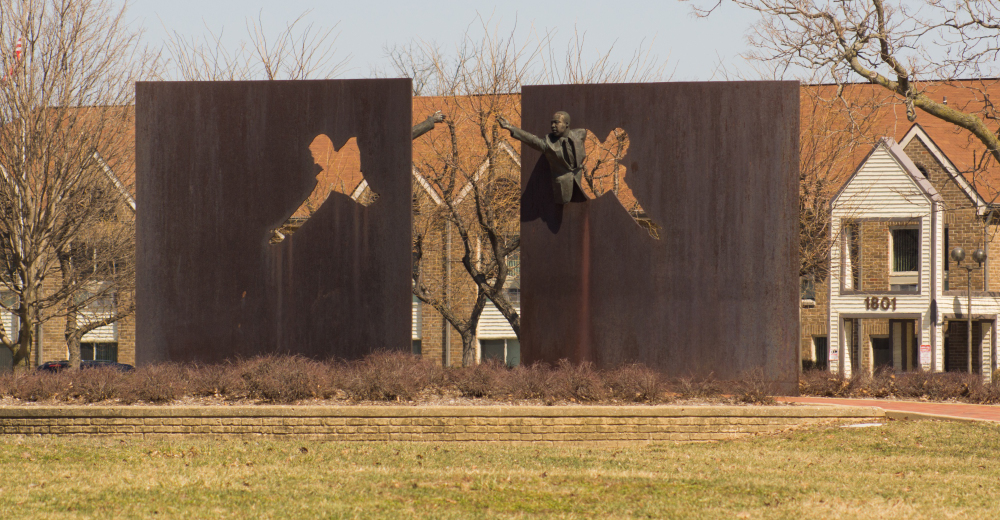
April 4th is the anniversary of the assassination of Martin Luther King, Jr, in Memphis, Tennessee. There is always a somber gathering in Indianapolis, at the site where Bobby Kennedy announced the death to a crowd. In the days before cell phones and instant communication, most in the crowd had not heard the news.

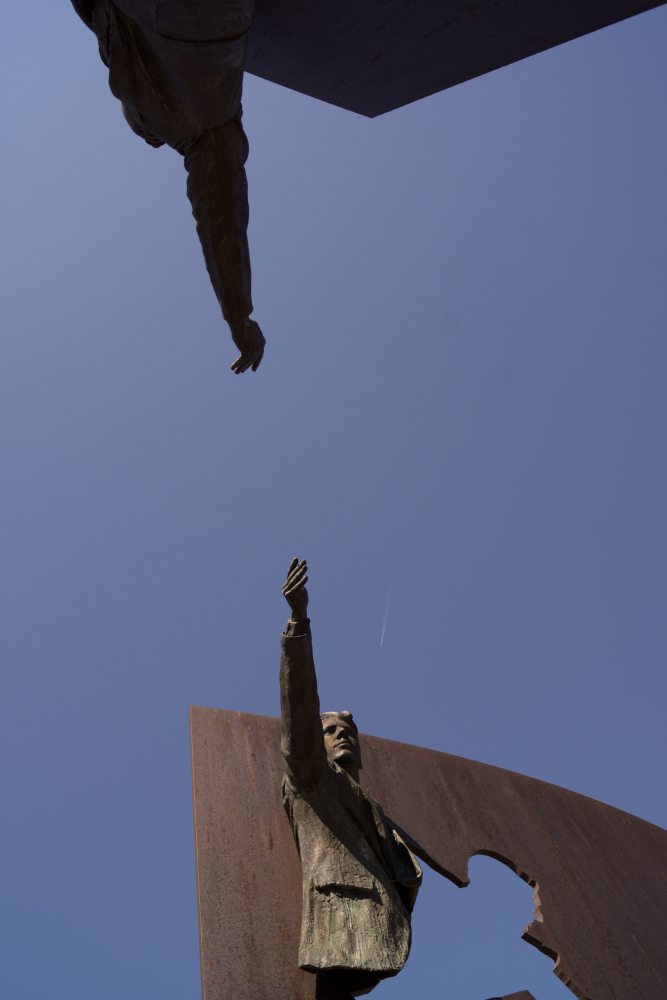
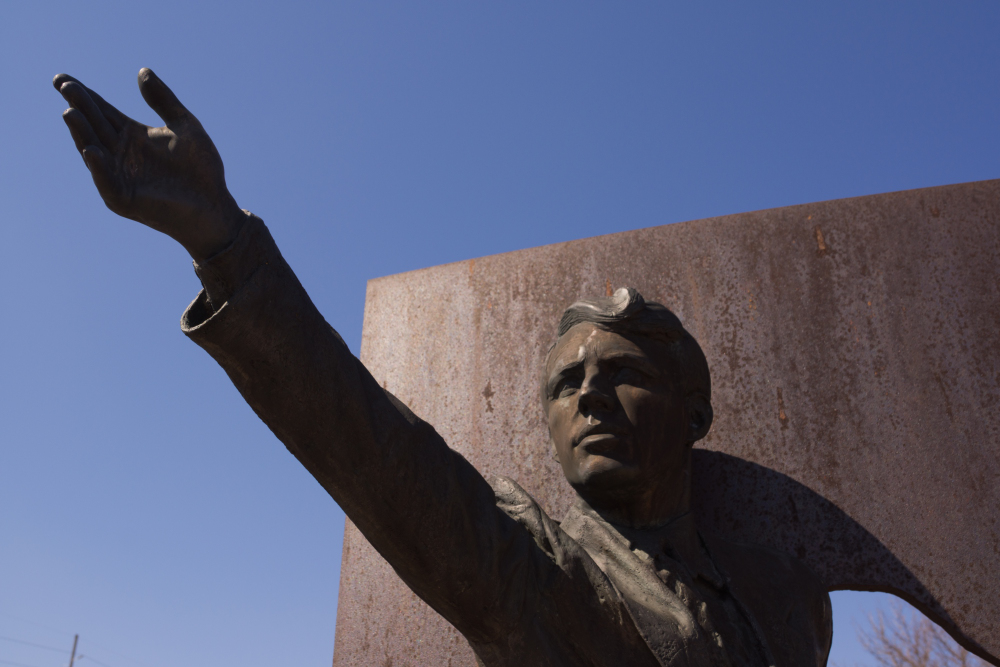
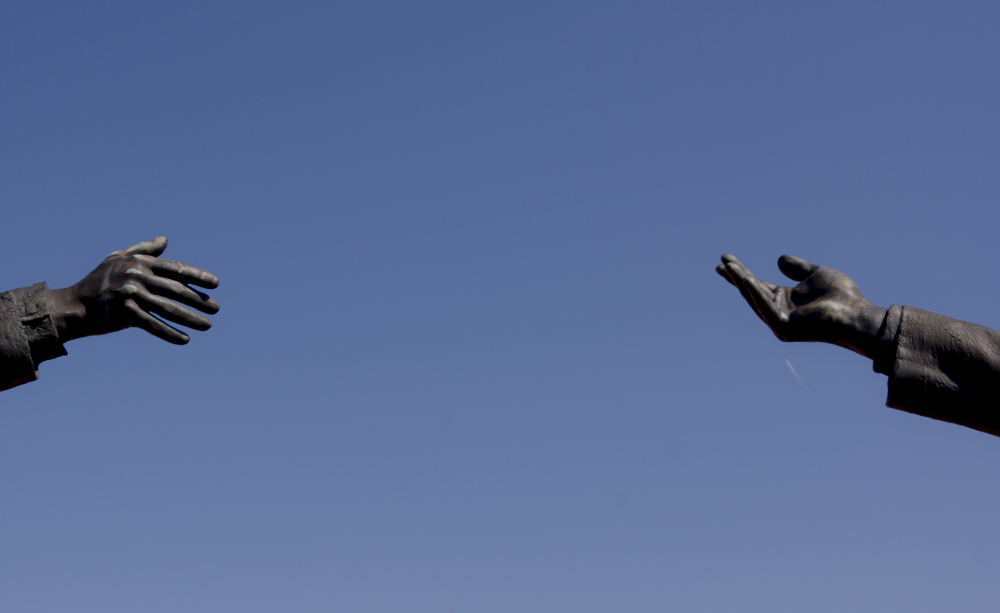
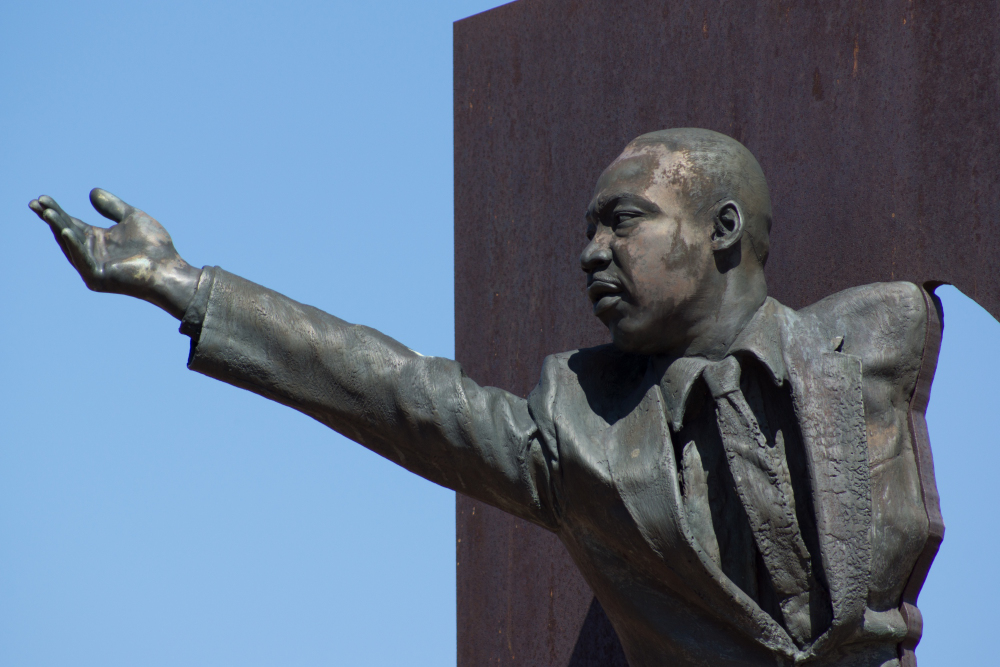
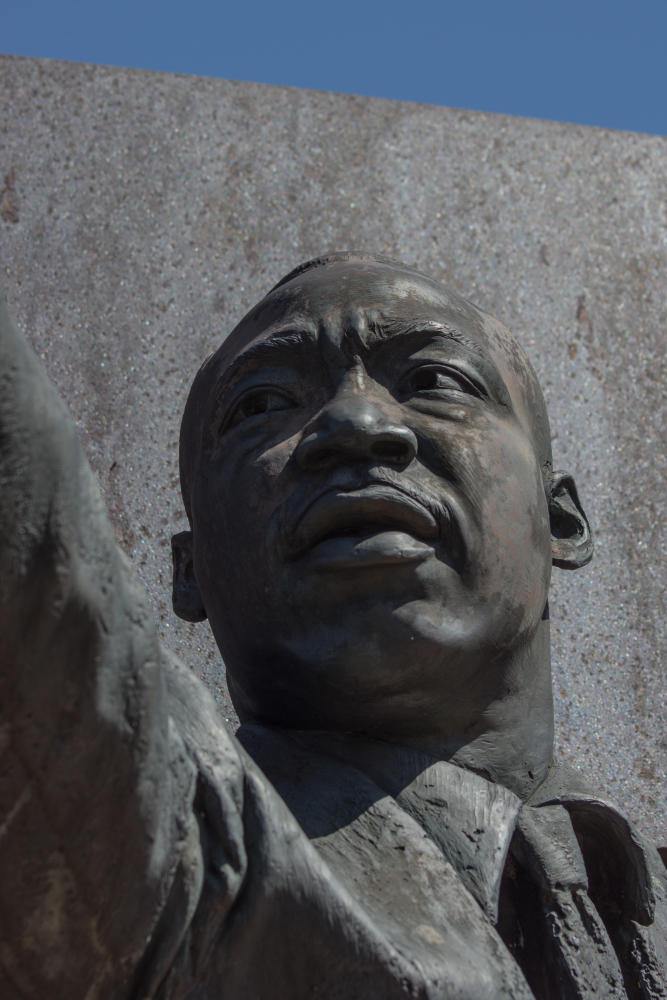
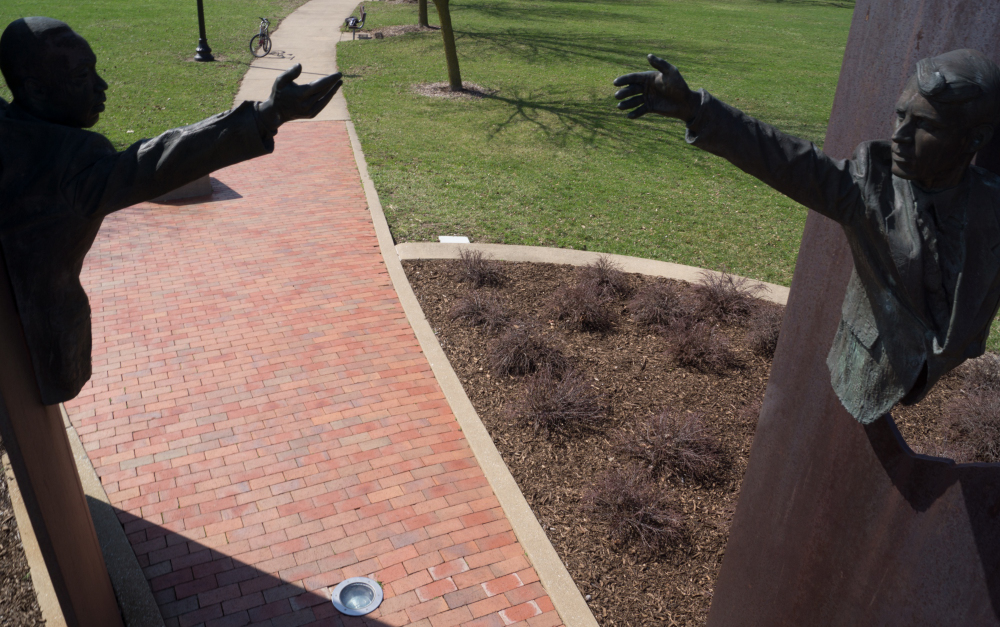
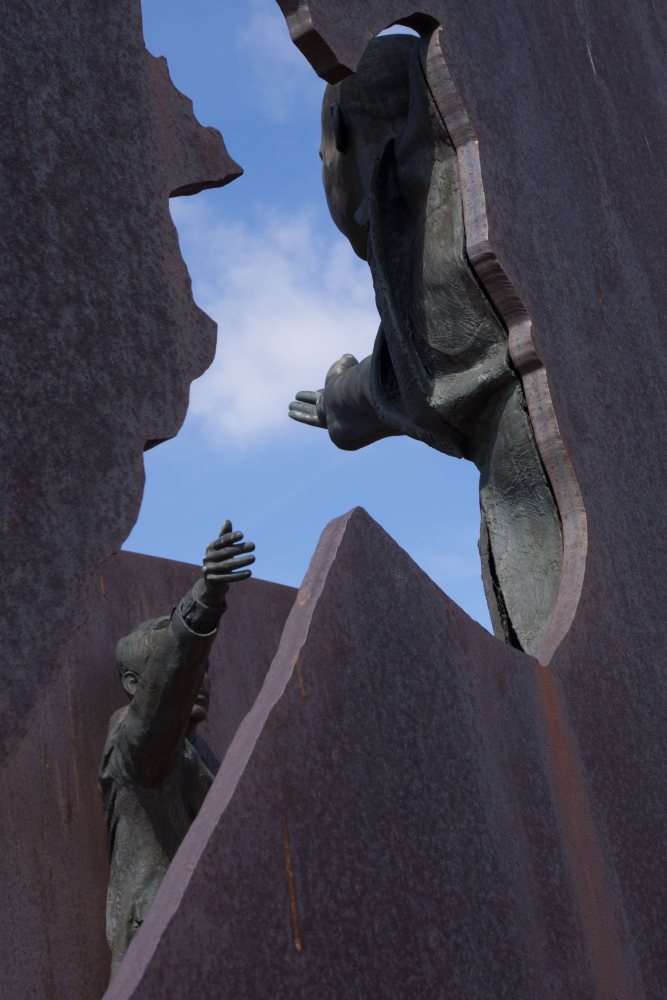
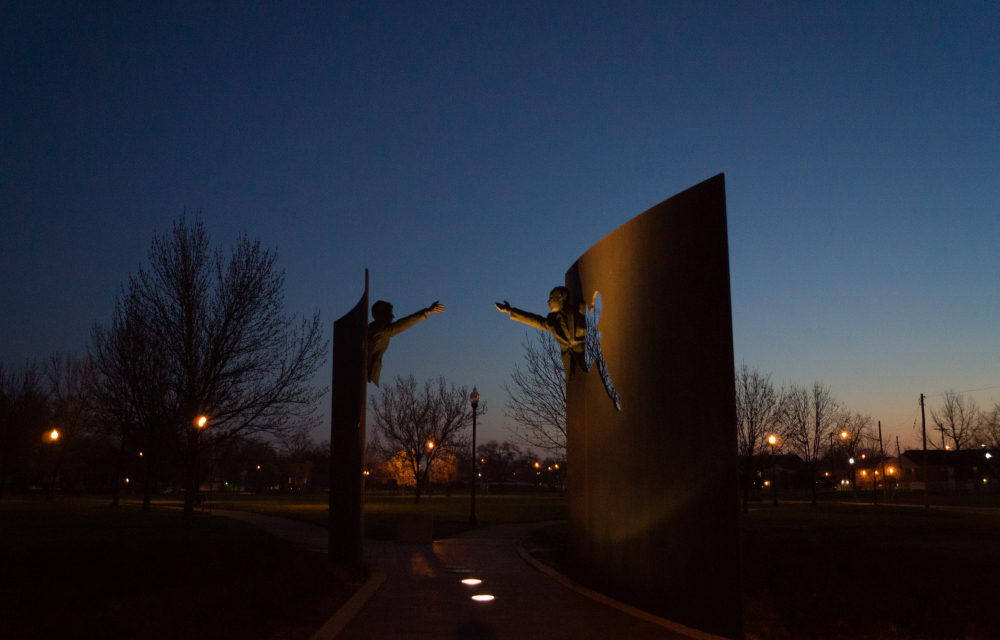
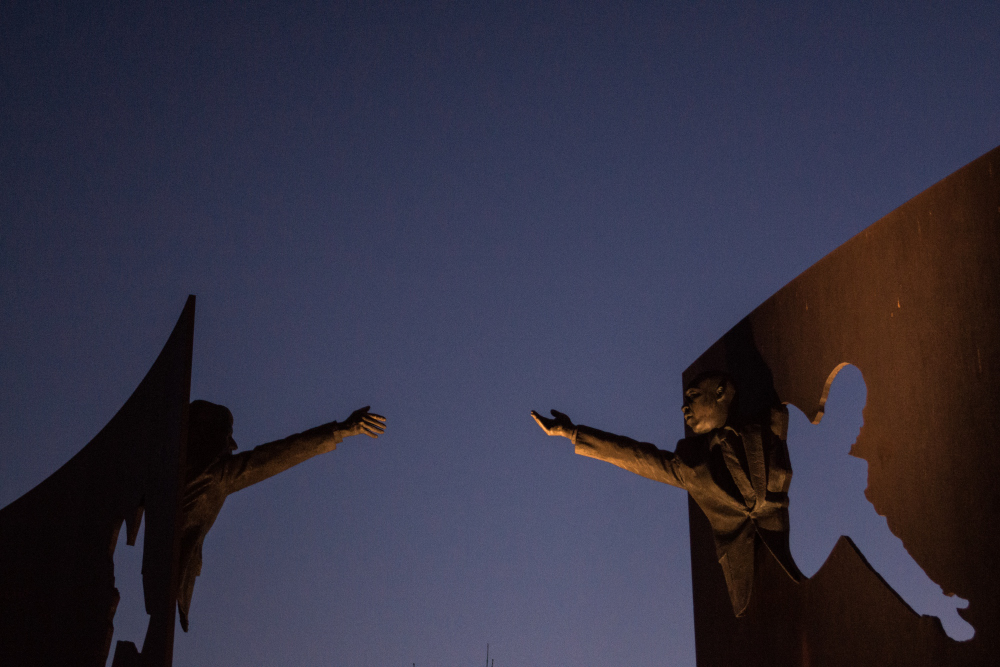
As a photographer I was fascinated by the sculpture of Martin Luther King, Jr, and Robert F Kennedy in the park where Bobby Kennedy spoke. I visited it many times, day and night. I put together the video below with some of the photos. There are two speeches as part of the video. The first is the last speech Martin Luther King gave, the night before he was killed. The second is the speech Bobby Kennedy delivered that day in Indianapolis.

There were riots in many cities that day, but not in Indianapolis.

“We’ve got some difficult days ahead,” Martin Luther King, Jr., told an overflowing crowd in Memphis, Tennessee, on 3 April 1968, where the city’s sanitation workers were striking. “But it really doesn’t matter with me now, because I’ve been to the mountaintop … I’ve seen the Promised Land. I may not get there with you. But I want you to know tonight, that we, as a people, will get to the Promised Land” (King, “I’ve Been,” 222–223). Less than 24 hours after these prophetic words, King was assassinated by James Earl Ray.

Martin Luther King, Jr

April 4, 1968, Robert F Kennedy gave several speeches in Indiana as he campaigned for the Democratic nomination for President of the United States. This young white man, as the United States Attorney General, along with his brother the President, had been thrust into the middle of the civil rights struggle. And then his brother was assassinated.

At Notre Dame he spoke about the Vietnam War and told the students there that college deferments for the draft discriminated against those who could not afford to attend college and should be eliminated.

After speaking about racism at Ball State, an African American student said, “Your speech implies that you are placing a great deal of faith in white America. Is that faith justified?” Kennedy answered “Yes” and added that “faith in black America is justified, too” although he said there “are extremists on both sides.” Before boarding a plane to fly to Indianapolis, Kennedy learned that Martin Luther King, Jr. had been shot. On the plane, Kennedy told a reporter “You know, it grieves me. . . that I just told that kid this and then walk out and find that some white man has just shot their spiritual leader.”

It wasn’t until the flight had nearly arrived in Indianapolis that he learned Martin Luther King, Jr, had died of his wounds. There wasn’t time to write something to cover this news. The Indianapolis event was to be held at a park in a predominantly black neighborhood downtown. The Indianapolis police and city leaders tried to get him to cancel the speech, telling him they couldn’t protect him if there was a riot.

But he insisted. At the park, from the back of a flatbed truck, he said:

Ladies and Gentlemen,

I’m only going to talk to you just for a minute or so this evening, because I have some–some very sad news for all of you — Could you lower those signs, please? — I have some very sad news for all of you, and, I think, sad news for all of our fellow citizens, and people who love peace all over the world; and that is that Martin Luther King was shot and was killed tonight in Memphis, Tennessee.

Martin Luther King dedicated his life to love and to justice between fellow human beings. He died in the cause of that effort. In this difficult day, in this difficult time for the United States, it’s perhaps well to ask what kind of a nation we are and what direction we want to move in. For those of you who are black — considering the evidence evidently is that there were white people who were responsible — you can be filled with bitterness, and with hatred, and a desire for revenge.

We can move in that direction as a country, in greater polarization — black people amongst blacks, and white amongst whites, filled with hatred toward one another. Or we can make an effort, as Martin Luther King did, to understand, and to comprehend, and replace that violence, that stain of bloodshed that has spread across our land, with an effort to understand, compassion, and love.

For those of you who are black and are tempted to fill with — be filled with hatred and mistrust of the injustice of such an act, against all white people, I would only say that I can also feel in my own heart the same kind of feeling. I had a member of my family killed, but he was killed by a white man.

But we have to make an effort in the United States. We have to make an effort to understand, to get beyond, or go beyond these rather difficult times.

My favorite poem, my–my favorite poet was Aeschylus. And he once wrote:

Even in our sleep, pain which cannot forget
falls drop by drop upon the heart,
until, in our own despair,
against our will,
comes wisdom
through the awful grace of God.

What we need in the United States is not division; what we need in the United States is not hatred; what we need in the United States is not violence and lawlessness, but is love, and wisdom, and compassion toward one another, and a feeling of justice toward those who still suffer within our country, whether they be white or whether they be black.

So I ask you tonight to return home, to say a prayer for the family of Martin Luther King — yeah, it’s true — but more importantly to say a prayer for our own country, which all of us love — a prayer for understanding and that compassion of which I spoke.

We can do well in this country. We will have difficult times. We’ve had difficult times in the past, but we — and we will have difficult times in the future. It is not the end of violence; it is not the end of lawlessness; and it’s not the end of disorder.

But the vast majority of white people and the vast majority of black people in this country want to live together, want to improve the quality of our life, and want justice for all human beings that abide in our land.

And let’s dedicate ourselves to what the Greeks wrote so many years ago: to tame the savageness of man and make gentle the life of this world. Let us dedicate ourselves to that, and say a prayer for our country and for our people.

Thank you very much

At the ceremony in 2016, I was surprised see my friend, Chinyelu Mwaafrika from the Kheprw Institute in the crowd. I hadn’t known he would be there. He saw me before he went onstage to perform part of the rap song, “The revolution will not be televised” by GIL SCOTT-HERON, 4/5/2016. We had a nice visit after his performance. I thought about the many ways we are all connected with one another.


Path of Peace

I refused to have a car for the nearly fifty years I lived in Indianapolis, initially for environmental reasons. That was possible by walking, running, and using the city bus system. Moving to Indianola, Iowa, which doesn’t have public transportation, has made it necessary to use my parent’s car for long distance travel. I still walk in town. But I always feel bad when I drive.

We usually drove the forty miles in each direction to attend Bear Creek Meeting on Sundays. But that ended with the pandemic, for now.

It’s a testament to how important Mutual Aid is to me that I drive to Des Moines every Saturday morning.

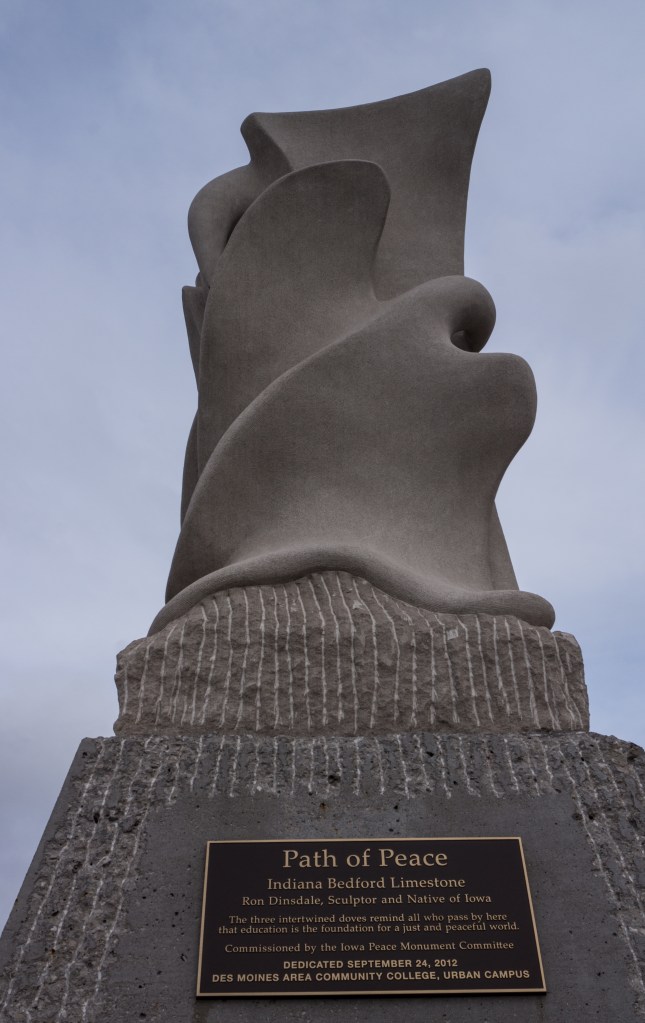
I try to make the most of each trip by taking photographs on the way in, or out of Des Moines, sometimes both. I leave a little early to have time for that. Yesterday I left later than usual and wondered if I had time to stop somewhere. I drove past the usual places, like Ewing Park and Easter Lake, but as I neared the church where our food project was done, I saw I did have about ten minutes to spare. The sculpture, “Path of Peace” was nearby. My dad, Burt Kisling, and Chuck Day were involved in having the sculpture installed on the Des Moines Area Community College campus.

I’m grateful for this video by my friend Rodger Routh.

Dedicated to peace and peacemakers, a ten-ton limestone sculpture, named “Path of Peace,” by Ron Dinsdale, portrays of three doves. It was installed on May 10, 2012 near Interstate 235 just south of Des Moines Area Community College’s Urban Campus. The sculpture was created out of a solid 14-ton block of Indiana Bedford limestone, one of the materials used to construct the Iowa State Capital in the late 1880s (between 1871 and 1886). This sculpture was supported by the Urban DMACC Campus, the Des Moines City Council, and the Iowa State Department of Transportation, as the first “I-235 Corridor Gateway Sculpture.”

Path of Peace.  Ron Dinsdale

It was a life-long dream that flourished in my soul.

Ron Dinsdale

Conscientious objection and Ukraine

Amid the horrifying situation of the Russian invasion of Ukraine, I was concerned every time I heard that Ukrainian men aged 18 – 60 were banned from leaving the country.

I studied war resistance and conscientious objection extensively while a student at Scattergood Friends School. All males in the US were required to register for the draft at the time of their eighteenth birthday. I was a Senior at Scattergood then (1969). I went through the process of applying for and was granted conscientious objector status while I tried to prepare my family for my decision to turn in my draft cards. Which I did.

This is a bit ironic because Iowa Yearly Meeting (Conservative)’s Peace and Social Concerns Committee discussed conscientious objector counseling at our recent meeting. That was brought up in part related to the war in Ukraine. Also, as an opportunity to engage our youth in discussions related to war and peace. And because of the writings of a member of the yearly meeting. John Griffith and Draft Resistance.

Ukrainian President Volodymyr Zelensky has ordered a general military mobilization.

In a declaration signed late Thursday, Zelensky said that “in order to ensure the defense of the state, maintaining combat and mobilization readiness of the Armed Forces of Ukraine and other military formations,” a broad-based mobilization was ordered, including in the capital, Kyiv and all Ukraine’s major cities.
It ordered the “conscription of conscripts, reservists for military service, their delivery to military units and institutions of the Armed Forces of Ukraine” and other state security services.

At the same time, Ukraine has banned all-male citizens 18-60 years old from leaving the country, according to the State Border Guard Service.

The statement said that following the introduction of martial law in Ukraine, a temporary restriction had been imposed.

“In particular, it is forbidden for men aged 18-60, Ukraine citizens, to leave the borders of Ukraine,” the statement said. “This regulation will remain in effect for the period of the legal regime of martial law. We ask the citizens to take this information into consideration.”

Ukrainian males aged 18-60 are banned from leaving the country, Zelensky says in new declaration From CNN’s Tamara Qiblawi and Caroll Alvardo, February 24, 2022

A New York Times podcast tells the story of an animator named Tyhran, who unsuccessfully tried to cross the border into Poland.

I can’t imagine myself doing military stuff […] I have no experience in it. I’m afraid of holding a gun […] I cannot imagine myself holding a gun.
Tyhran says he was shamed at the border by guards and others seeking to cross, but may try again to cross illegally.

They are bombing and people are dying. Everyone is running […] They are not going to stop. They just want to destroy.

In Ukraine, the Men Who Must Stay and Fight. As hundreds of thousands of citizens flee the Russian advance, the country’s government has ordered men ages 18 to 60 to remain. New York Times podcast, March 1, 2022

What international law says

The International Covenant on Civil and Political Rights guarantees freedom of thought, conscience and religion or belief. Although it does not specifically guarantee a right to conscientious objection to military service, the UN Human Rights Committee has confirmed this right derives from the protection under the convention.

This means that if a person’s conscience, religion or beliefs conflict with an obligation to use lethal force against other people, their right to conscientious objection to military service must be protected.

Some human rights can be suspended or limited during a public emergency. But the right to freedom of conscience is specifically excluded from this category.

Why banning men from leaving Ukraine violates their human rights by Amy Maguire, The Conversation, March 7, 2022

What should Ukraine do?

The government of Ukraine should cancel its ban on men leaving the country. To maintain it will violate the freedom of conscience of any man who wishes to flee due to a conscientious objection to killing others.

In relation to LGBTQI+ people, the ban could also be regarded as preventing people with a well founded fear of persecution from fleeing to seek refuge outside Ukraine.

More broadly, repealing the departure ban would protect Ukraine from allegations it is failing to protect civilians, as required by international humanitarian law. It is one thing to conscript men into military service, providing training and appropriate equipment (although, even in that case, a right to conscientious objection must be respected).

It is another thing entirely to prevent civilians from escaping a war zone.

Why banning men from leaving Ukraine violates their human rights by Amy Maguire, The Conversation, March 7, 2022

Questions and observations

Obviously, I have no idea about the deep details of either US or Russian policy. I’m horrified by the images and stories from Ukraine and fervently pray for the conflict to end.

But having worked for peace my whole life, I’m alarmed by the nearly universal support for the war in Ukraine.

History has shown the many times a pretext, or even false claims started wars. There were the Gulf of Tonkin incidents that led to the US becoming involved in the war in Vietnam. The false claims of weapons of mass destruction in Iraq. Claims that weren’t credible even at the time they were made.

Some might say the US is not directly at war with Russia. But the US involvement is obviously a proxy war.

Former U.S. Ambassador to Russia Michael McFaul joins Garrett Haake to share his reaction to Russia’s strike on a Ukrainian nuclear plant, and to assess the motivations behind President Putin’s aggression in Ukraine. “I think people really need to understand that this is just a proxy war for his fight against us,” says Ambassador McFaul. “That’s the way he frames this: the regime there is just a puppet American regime put in place by us.”

Amb. McFaul: Putin’s fight in Ukraine ‘is just a proxy war for his fight against’ the U.S., NBC Universal, March 4, 2022

Some of my questions and observations are:

  • Why was it not possible to meet Putin’s demand that Ukraine would not join NATO?
  • Who benefits from this conflict?
    • The war industry
    • Energy
      • Shutting down Russia’s oil industry
      • Shutting down the Nord Stream 2 pipeline
      • Terminating Russian oil imports
      • Calls to increase US oil and gas production
      • Calls to increase renewable energy
    • The President’s approval ratings
  • Why is it so easy for Congress to provide billions of dollars in aid to Ukraine, but not for social programs in the US?
  • Where is the concern about adding to the national debt?

Bear Creek Friends Meeting

Fog of War

I’m horrified by all the consequences of the Russian invasion of Ukraine.

There are many aspects beyond the actual fighting that I’m having trouble understanding or believing. Not much of which is being covered in the mainstream media. Vitally important issues that should inform decisions being made now, and in the future.

This confusion has been expressed as the fog of war.

The fog of war is the uncertainty in situational awareness experienced by participants in military operations. The term seeks to capture the uncertainty regarding one’s own capability, adversary capability, and adversary intent during an engagement, operation, or campaign.

Fog of War. Wikipedia

Access to fossil fuel sources has been and will continue to be a major part of all wars and conflicts.

It is past time to stop fossil fuel emissions. That is the existential global threat. Nothing else will matter as our environmental catastrophe rapidly worsens.

And yet what is informing political decisions in this country is the impact on gas prices. Capitalism.

Releasing strategic oil reserves is an example of the kind of decisions being made now that are absolutely wrong. Burning fossil fuels is indefensible as our environmental catastrophe accelerates. But that hasn’t slowed down fossil fuel emissions, yet.

As Jade Begay says, the current conflict will drive up domestic oil and gas development.

This makes it clear that not only are oil and gas used to carry out war but are also a root cause for exponential climate change. Second, as an organizer who is actively working to shut down fossil fuel infrastructure, I am hyper aware that this conflict will potentially drive up domestic oil and gas development, onshore and offshore gas leasing, and/or potentially roll back recent wins when it comes to fossil fuels, thus contributing to an increase in carbon emissions. Finally, I’d be remiss to not mention the impact that militaries have on the climate, when it comes to the U.S., our military is the single largest institutional polluter in the world, which creates more greenhouse emissions than 140 other countries.

Jade Begay. Climate justice campaign director for the NDN Collective, said Russia’s oil and gas money allowed it to pay for the invasion, according to an article in Indian Country Today.

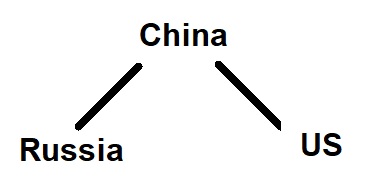
There is this triangle between Russia, China and the US, where China buys Russian oil for its economy. And the US buys products from China. Which means Russian profits come indirectly from the US economy. Which means the US is helping to financing the war in Ukraine.

Another part of the fog of war is a strengthening relationship between Russia and China.

Releasing strategic oil reserves is an example of the kind of decisions being made now that are absolutely wrong. Burning fossil fuels is indefensible as our environmental catastrophe accelerates.

Indigenous communities have a unique perspective on Ukraine’s tragic and horrific situation. They understand what it’s like to be invaded by a colonial power. They see the war not only as an attack on human rights, but an attack on Mother Earth.

Indigenous leaders speak out on Russia’s Ukraine invasion, Healing Minnesota Stories, March 3, 2022

Is what is happening in the Arctic another part of the fog of war? Indigenous people above the Arctic Circle are wary of what Russia’s attacks foreshadow, according to the Indian Country Today article Monitoring the Arctic in Russian invasion of Ukraine.


Hearing from Quakers in Kyiv, Ukraine

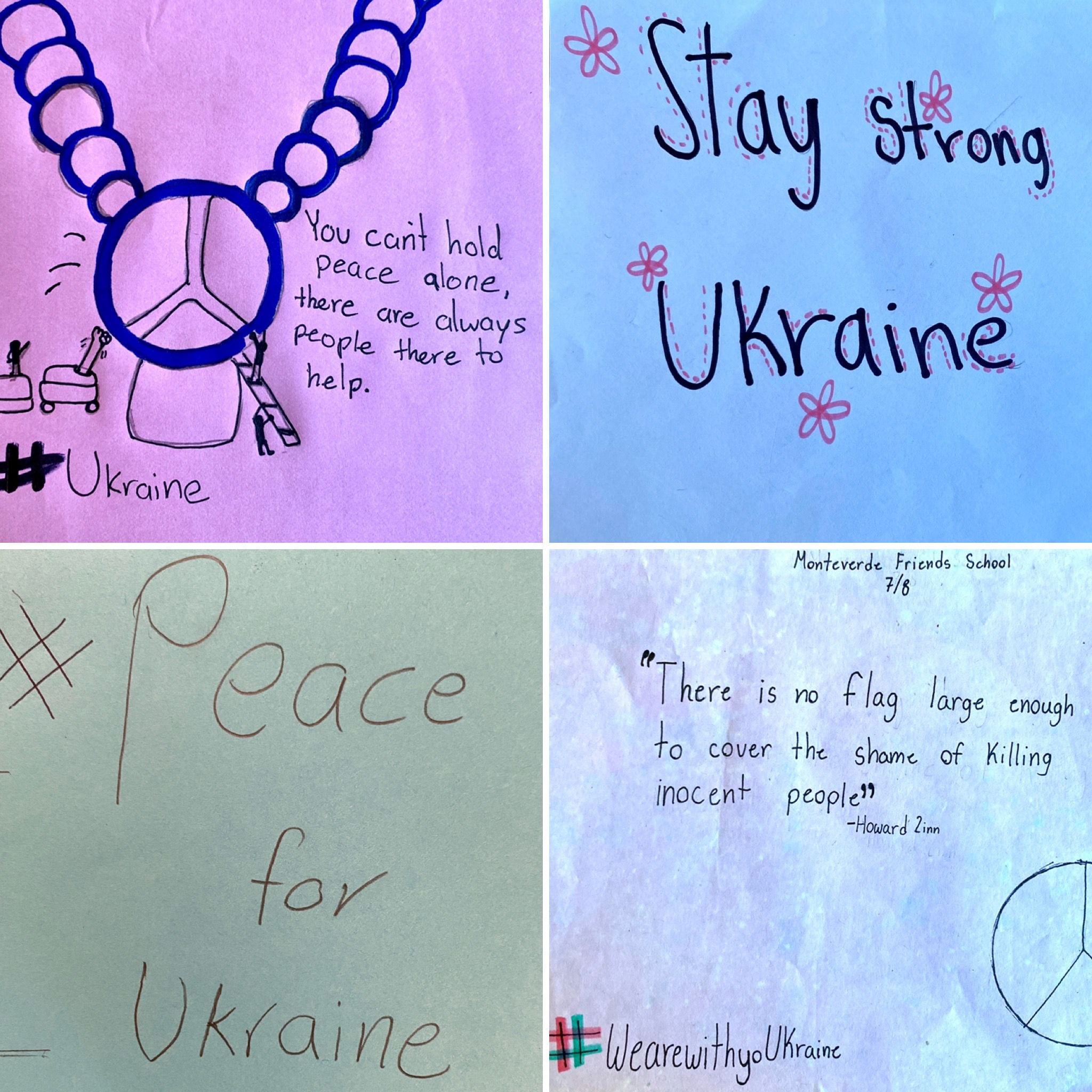
I recently wrote about support for Quakers in Kyiv, Ukraine, including the peace posters sent from students at Monteverde Friends School in Cosa Rica.

This morning at our meeting of Bear Creek Friends, we approved sending the following message to Quakers in Kyiv and were very relieved to receive the following response from them.

You’re our friends, the best friends on the planet,
those who send kind and deep words.
We are happy to have you with us and believe that God will make a miracle and stop the war.

https://www.facebook.com/QuakersKyivUkraine/

Quakers Of Kyiv, Ukraine / Квейкери Києва

Welcome to the page of Ukrainian supporters of Quakerism.
Religious Society of Friends is a Protestant Christian church, known for its humanistic orientation, human rights and environmental guidelines, etc.
The Quaker prayer meeting is first and foremost a time of peace. This is an hour free from unnecessary words.
Quakers in the world have different currents. We, the Quakers of Kyiv, belong to the liberal trend without the well-known religious speechifying and lexicon.
Seekers of friendship, peace, truth, and equality are cordially invited to the meeting, following the Spirit’s guidance in affairs, ready for the hour of silent worship.
Details on messenger:
m.me/QuakersKyivUkraine
by e-mail: quakers@ukr.net

Mutual Aid and War

The more I experience being part of a Mutual Aid community, the more I learn about Mutual Aid, the more I am convinced Mutual Aid is how we should all live. I just realized that might be the only way we can live, survive.

I recently learned the term prefigurative politics which is to model the organization and social relationships that the group is advocating. Mutual Aid groups do this.

Mutual Aid is about replacing the vertical hierarchies of power with a flat or horizontal hierarchy where we all have a voice.

I’ve been thinking a lot about Mutual Aid and war as Russia invades Ukraine. Dictatorships like Putin’s Russia represent the ultimate vertical hierarchy. But all nation states are built on vertical hierarchies.

I’ve been wondering how Mutual Aid can be applied to global powers waging war.

  • Our world, that has been colonized by imperialist white supremacist capitalist patriarchy, runs because of the oppressive and exploitative forms of power
  • Thus, to liberate ourselves and each other from this system, one of our main tasks is to confront hierarchy and hierarchical forms of power. 
  • Mutual aid is a form of prefigurative politics, aimed at abolishing hierarchy and hierarchical forms of power in the world by first living out these principles ourselves, bringing new ways of relating to each other into being

Mutual Aid: Non-Hierarchy in Practice by Tammy Gan, Bad Activist

Rather than feeling helpless in the face of war, we should be creating our own communities of Mutual Aid, of peace. That will take us out of imperialist white supremacist capitalist patriarchy so we will not be contributing the conditions for the next war.

To address one aspect of war, creating our own Mutual Aid communities would put us in the position of being able to welcome refugees.

mutual aid aims to: form the structure of a new society within the shell of the old; embody the forms of social relations, decision-making, culture and human experience that are its ultimate goal

Mutual Aid: Non-Hierarchy in Practice by Tammy Gan, Bad Activist

Beyond our personal experiences, our world, that has been colonised by imperialist white supremacist capitalist patriarchy, runs because of the oppressive and exploitative forms of power. 

For our world, as is, to run, there must be an inherent valuing of some bodies over others. This is what we mean when we talk about “racial capitalism”, the idea that capitalism emerged, as Cedric Robinson argued, on the grounds of a civilisation based on racial hierarchy. Racism, in designating and ideologically convincing people that some people are inferior to others, allows for a system of extraction (capitalism) to exploit Black and brown people, while white people carry this out, or benefit from this system, thereby never abolishing it. So hierarchy (racial or otherwise) is the foundation that maintains our structures and system. 
Thus, to liberate ourselves and each other from this system, one of our main tasks is to confront hierarchy and hierarchical forms of power. 

Confronting, is different from attempting to appeal to the people who are in power (e.g. solely depending on billionaires, or politicians), or striving to obtain the kind of power that we’re subjected to (think #girlboss feminism). Instead, confronting means to transform hierarchical forms of power into other forms of power. We must have “power of our own”: moving away from power-over to power-with. This is where spaces and projects that attempt to create that new world, starting from rethinking our relationships, come into play.

Mutual aid is a form of prefigurative politics, aimed at abolishing hierarchy and hierarchical forms of power in the world by first living out these principles ourselves, bringing new ways of relating to each other into being. Specifically, mutual aid aims to: form the structure of a new society within the shell of the old; embody the forms of social relations, decision-making, culture and human experience that are its ultimate goals (i.e. to practice what it wants to see, now); and continuously experiment, and be reflexive through trial and error. 

Mutual Aid: Non-Hierarchy in Practice by Tammy Gan, Bad Activist

And if the wreckage of this inheritance will not be complete; if notwithstanding the crimes committed during this “civilized” war [ World War I ], we may still be sure that the teachings and traditions of human solidarity will, after all, emerge intact from the present ordeal, it is because, by the side of the extermination organized from above, we see thousands of those manifestations of spontaneous mutual aid.

Preface to the 1914 edition of Peter Kropotkin, Mutual Aid: A Factor of Evolution (London: Heinemann, 1914).

Food Not Bombs

When a billion people go hungry each day, how can we spend another dollar on war? Food Not Bombs is an all-volunteer movement that recovers food that would otherwise be discarded, and shares free vegan and vegetarian meals with the hungry in over 1,000 cities in 65 countries in protest to war, poverty, and destruction of the environment. We are not a charity but dedicated to taking nonviolent direct action. Our movement has no headquarters or positions of leadership and we use the process of consensus to make decisions. We also provide food and supplies to the survivors of natural disasters, and people participating in occupations, strikes, marches and other protests.

As grocery stores empty out and food shortages loom, food-sharing projects like Food Not Bombs (FNB) take on new urgency. FNB volunteers collect food from bakeries, grocery stores, and restaurants, cook together, and share meals and groceries in public spaces with whomever comes. Volunteers also take part in nonviolent direct action to change the social structures that produce hunger. FNB-like initiatives have already appeared in restaurants that offer free meals to laid-off workers and in grocery-delivery networks. There’s an increasing need for flexible, mobile, horizontal approaches to food distribution.

Eight anti-nuclear activists formed the first FNB group on May 24, 1980 at the Occupation Attempt of the Seabrook Nuclear Power Station in Cambridge, MA. Their basic insight was that hunger is unnecessary in a country that spends millions on weapons of mass destruction.

Mutual Aid Dispatches, April 6, 2020

Prefigurative politics are the modes of organization and social relationships that strive to reflect the future society being sought by the group. According to Carl Boggs, who coined the term, the desire is to embody “within the ongoing political practice of a movement […] those forms of social relations, decision-making, culture, and human experience that are the ultimate goal”.[1]