Working for peace

With the rising rhetoric and tensions regarding the Russian invasion of Ukraine, I’m asking myself, again, what does it mean to work for peace? A question I’ve returned to repeatedly over the course of my life. My answer to that question has changed over time. Following is some history of working for peace. But I intend to write how I see working for peace has changed, what that means today, soon.

As I was coming of age in the late 1960’s, at the time of the war in Vietnam, I continuously studied and thought about war and peace. On his eighteenth birthday, every male in the US was required to register with the Selective Service System, which recruited for the armed services. I was born into a Quaker community and attending Scattergood Friends (Quaker) boarding school at that time.

Because of their work for peace, Quakers, the Brethren, and Mennonites were known as historic peace churches. Young men who were members of one of those religious organizations could apply for conscientious objector (CO) status with the Selective Service System. If approved, they would spend two years working in civilian jobs for the public good. Most often in hospitals or mental health institutions.

Those who didn’t belong to one of the historic peace churches could apply for CO status, but that usually wasn’t granted to them. That was blatantly unjust. Similarly, those attending college were routinely granted a student deferment, allowing them to finish their studies. Yet another injustice for those who weren’t students.

Conscientious objector status and student deferments were transparent efforts to quiet resistance to the draft. A number of young men refused to accept those alternatives. Refusing to register with the Selective Service System or returning your draft card made you a draft resister. If convicted, the sentence was a felony conviction and usually a prison sentence.

The peacetime draft was implemented in 1940. Not long after, some Quaker families left the country and established the Monteverde community in Costa Rica.

About dozen men and their families in my Quaker community remained in this country but believed they could not participate in the draft. Which meant refusing to register or returning their draft cards if they had registered but came to believe that was wrong.

It took some time for my family to come to terms with my decision to resist the draft. I initially applied for and was granted conscientious objector status. When my family finally accepted my decision, I turned in my draft cards.

A lot more about my draft resistance story can be found here: https://jeffkisling.com/2017/05/01/my-draft-resistance-story/

I wasn’t arrested, but Daniel Barrett, who attended Scattergood Friends School with me, was arrested and imprisoned.

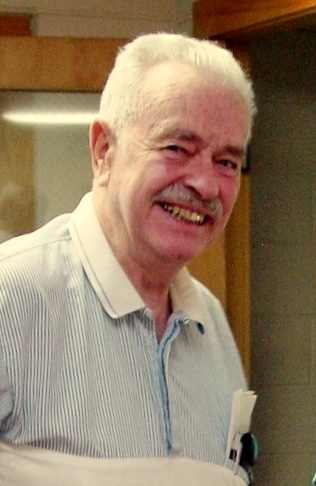
My Quaker friend and mentor, Don Laughlin, collected many stories of Quaker responses to several wars, including Danniel’s and mine. Don resisted the draft and was imprisoned. When I heard of his project and offered to help, which meant I had those stories when Don died. You can read those stories here:

Young Quaker Men Facing War and Conscription

This morning I saw a message from a Friend who suggested we begin to offer conscientious objector, or draft counseling, as was done during the Vietnam War.

I wanted to share the story of how Muhammad Ali was an inspiration to me as I struggled with my draft decision.

Muhammad Ali was one of the most significant influences in my life, at a difficult time in my life. Approaching my 18th birthday, when I would have to decide what I was going to do about registering with the Selective Service System, I saw Muhammad Ali take a very public, very unpopular stand against the Vietnam War.

He said:
“Under no conditions do we take part in war and take the lives of other humans.”

“It is in the light of my consciousness as a Muslim minister and my own personal convictions that I take my stand in rejecting the call to be inducted. I do so with the full realization of its implications. I have searched my conscience.”

“Man, I ain’t got no quarrel with them Vietcong…they never called me n_____.”

It was very clear what the consequences of that decision could be, and yet he would not be persuaded to change his position, knowing he was jeopardizing his boxing career.

I was impressed by his clear vision of the universal struggle of every person for peace and freedom, and every person’s responsibility to the world community, no matter their religion, race or country.

He helped me make my decision to refuse to participate in the draft, and therefore, the Vietnam War. And continued to be an inspiration in the days that followed.

Muhammad Ali and Me


I read this Epistle to Friends Concerning Military Conscription many times as I was praying and thinking about draft resistance, and since.

An Epistle to Friends Concerning Military Conscription

Dear Friends,

It has long been clear to most of us who are called Friends that war is contrary to the spirit of Christ and that we cannot participate in it.  The refusal to participate in war begins with a refusal to bear arms.  Some Friends choose to serve as noncombatants within the military.  For most of us, however, refusal to participate in war also involves refusal to be part of the military itself, as an institution set up to wage war.  Many, therefore, become conscientious objectors doing alternative service as civilians, or are deferred as students and workers in essential occupations.

Those of us who are joining in this epistle believe that cooperating with the draft, even as a recognized conscientious objector, makes one part of the power which forces our brothers into the military and into war.  If we Friends believe that we are special beings and alone deserve to be exempted from war, we find that doing civilian service with conscription or keeping deferments as we pursue our professional careers are acceptable courses of action.   But if we Friends really believe that war is wrong, that no man should become the executioner or victim of his brothers, then we will find it impossible to collaborate with the Selective Service System.  We will risk being put in prison before we help turn men into murderers.

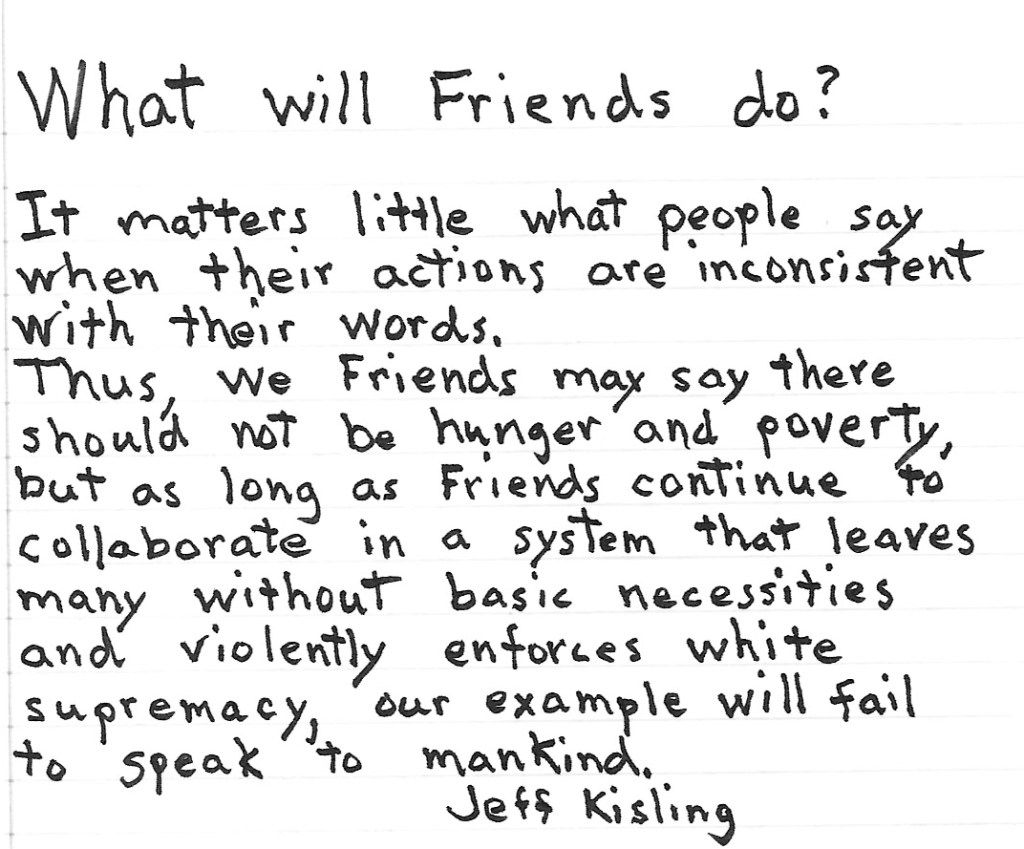
It matters little what men say they believe when their actions are inconsistent with their words.  Thus we Friends may say that all war is wrong, but as long as Friends continue to collaborate in a system that forces men into war, our Peace Testimony will fail to speak to mankind.

Let our lives speak for our convictions.  Let our lives show that we oppose not only our own participation in war, but any man’s participation in it.  We can stop seeking deferments and exemptions, we can stop filling out Selective Service forms, we can refuse to obey induction and civilian work orders.  We can refuse to register or send back draft cards if we’ve already registered.

In our early history we Friends were known for our courage in living according to our convictions.  At times during the 1600’s thousands of Quakers were in jails for refusing to pay any special respect to those in power, for worshiping in their own way, and for following the leadings of conscience.  But we Friends need not fear we are alone today in our refusal to support mass murder.  Up to three thousand Americans severed their relations with the draft at nation-wide draft card turn-ins during 1967 and 1968.  There may still be other mass returns of cards, and we can always set our own dates.

We may not be able to change our government’s terrifying policy in Vietnam.  But we can try to change our own lives.  We must be ready to accept the sacrifices involved if we hope to make a real testimony for Peace.  We must make Pacifism a way of life in a violent world.

We remain, in love of the Spirit, your Friends and brothers,

Don Laughlin
Roy Knight
Jeremy Mott
Ross Flanagan
Richard Boardman
James Brostol
George Lakey 
Stephen Tatum
Herbert Nichols
Christopher Hodgkin
Jay Harker
Bob Eaton
Bill Medlin
Alan & Peter Blood

Roy Knight, John Griffith, and Don Laughlin were among the members of my yearly meeting, Iowa Yearly Meeting (Conservative) who resisted the draft. Don and Roy signed the epistle above.
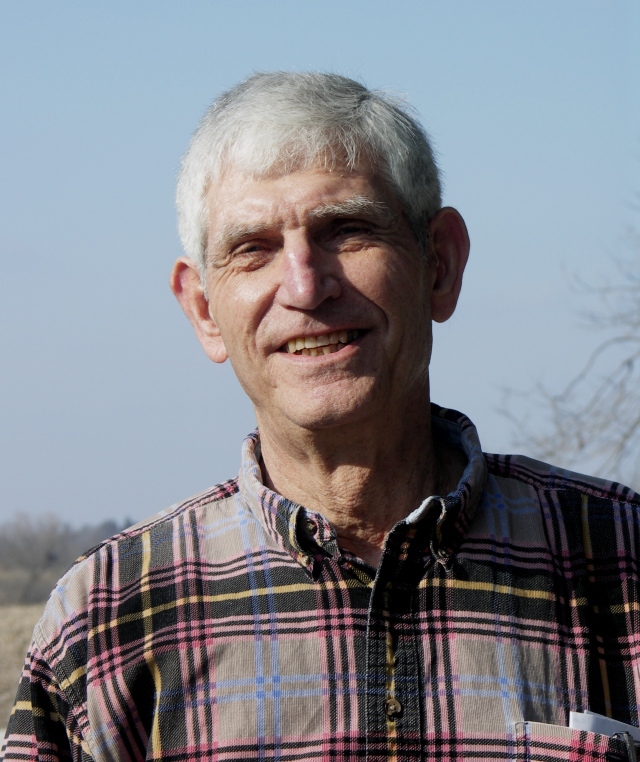
Writing a Better Story

Since I write so much, this article/story by Carrie Newcomer caught my attention. I can tell what she says will help me, can help all of us write better stories.

“Something I have learned as a writer is that every single day I wake up with a clean page. Each one of us awaken at the dawn with a pen and open notebook.”

Every day I wake up with a clean page, not knowing what I will write. It is a spiritual practice, listening to discern what to write. And lately I’ve been working on writing by hand, so I do “awaken at the dawn with a pen and open notebook.”

So let us honor the stories that gave us courage and personal grounding, the stories that brought us here, the finest ones the ancestors carried for us until we could carry them ourselves.

Carrie Newcomer

Carrie and I are Quakers. I got to hear her sing and tell stories when she visited our Quaker yearly meeting, Iowa Yearly Meeting (Conservative).

There are Quaker meetings that set aside time for people tell stories of their spiritual journey.

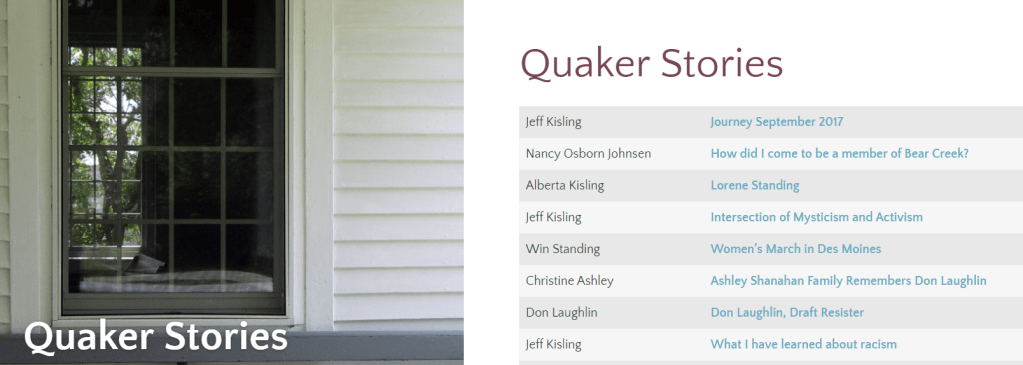
Some years ago, my mother began to gather Quaker stories, which can be found here: https://quakerstories.wordpress.com/

https://quakerstories.wordpress.com/

Writing a Better Story

–by Carrie Newcomer, syndicated from carrienewcomer.substack.com, Feb 17, 2022

Global Abolition and White Supremacy

For most of my life I understood abolition to mean abolishing slavery. I often heard about that in my Quaker community. The story is that Quakers were involved in the underground railroad, helping freedom seekers escape from where they were enslaved.

But my friend Lucy Duncan writes about myths and avoiding uncomfortable truths.

We White Quakers like to revel in our myths about ourselves. These include “we were all abolitionists”; “we all worked on the Underground Railroad”; and “none of us were slaveholders.”

Often there are kernels of truth in myths, but the truth is more complex. Myths exist to veil the complexity and contradictions of our history, to obfuscate the differences between who we think we are and who we really are and have been. Often we want to take credit for the courageous few among us in order to absolve us from the uncomfortable reckoning with our past and our present. These myths protect our sense of innocence and goodness, but at what cost? Our failure to interrogate uncomfortable truths keeps us from living up to the promise of our faith, one that centers uncovering truth as foundational to our communal religious life.

A Quaker Call to Abolition and Creation by Lucy Duncan, Friends Journal, April 1, 2021

There are many stories of white Friends today refusing to reckon with our past, and what racial justice requires of us now.

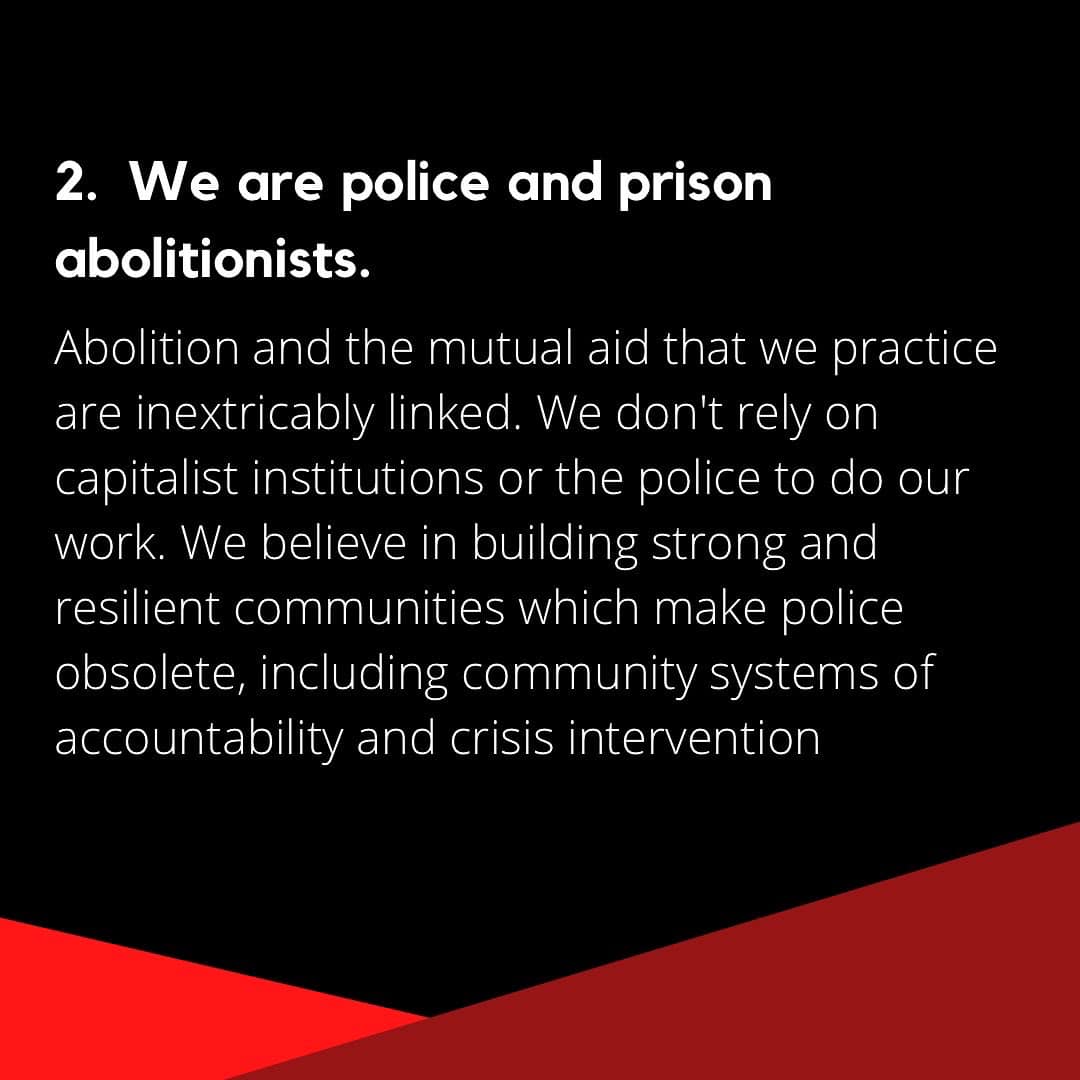
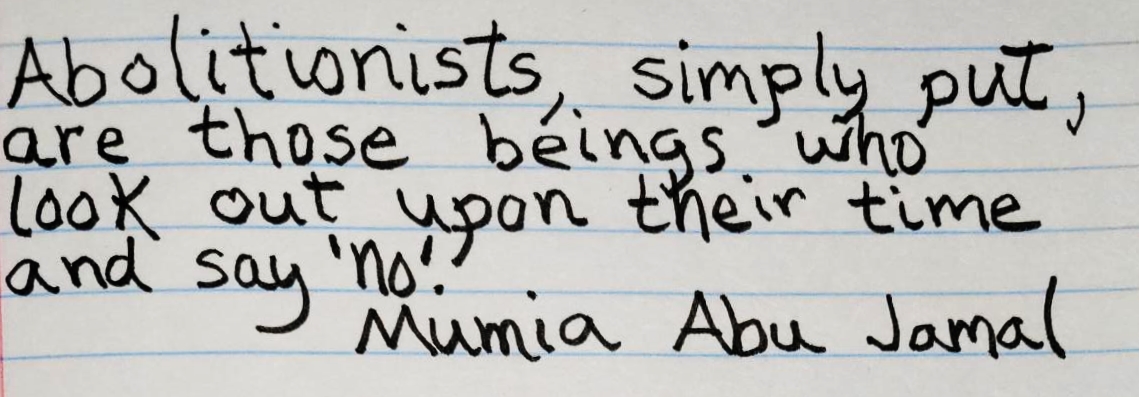
Today abolition more commonly refers to abolishing police and prisons. I’ve joined in the work of Quakers for Abolition Network and contributed to an article about this in the Western Friend, https://westernfriend.org/issue/94. I participate in the Central Iowa Democratic Socialists of America’s prison letter writing efforts and am taking two courses related to abolition.

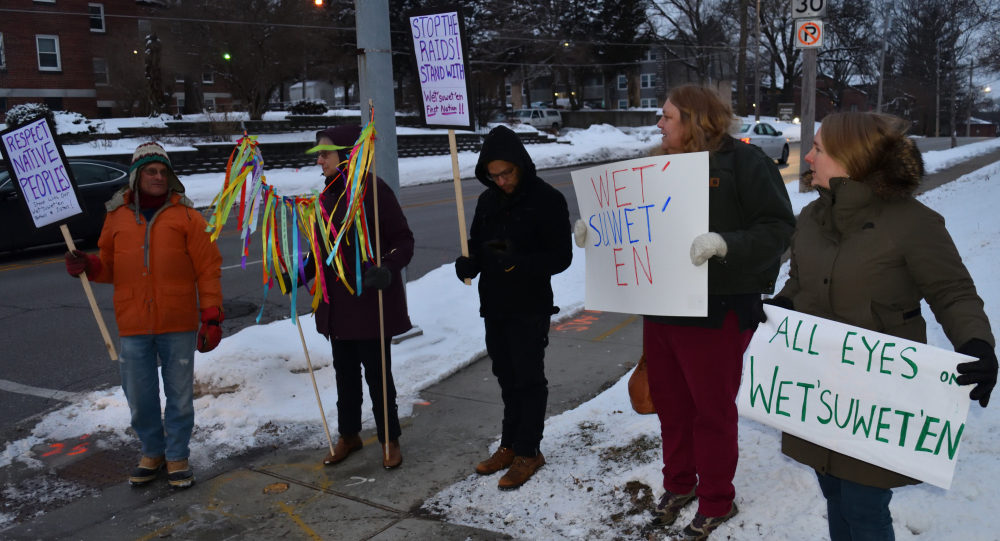
As I was praying about what to write today, I was thinking about the terrible abuses the Wet’suwet’en peoples in British Columbia are suffering from the heavily militarized Royal Canadian Mounted Police. The state sanctioned violence to enforce construction of the Coastal GasLink pipeline through their sacred and pristine lands and water. Yesterday I wrote about stopping the criminalization of Indigenous land defenders. And I realized this is another case that calls for the abolition of police and prisons.

That led to making the connection to the entire history of colonization of so-called North America to abolition. To the global colonization of Indigenous peoples. To the need for abolition of colonization and supremacy worldwide. Including repudiation of the Doctrine of Discovery.

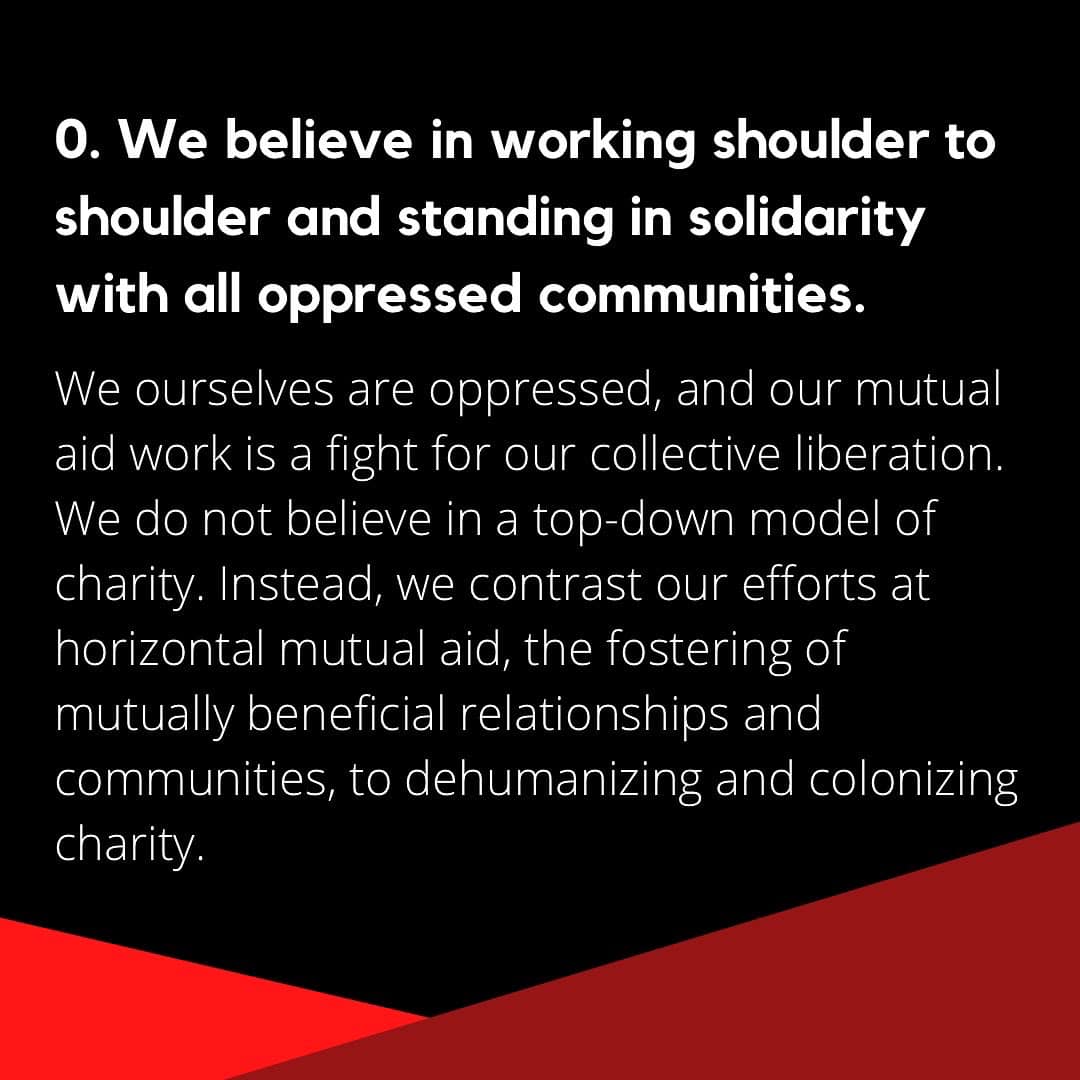
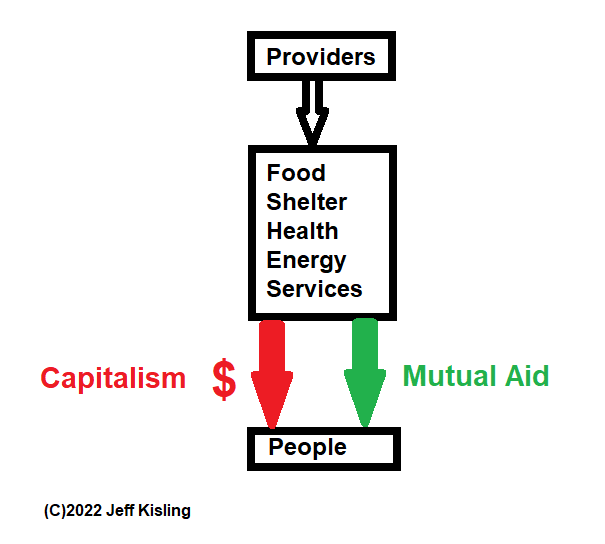
Abolition is about ending systems of control over populations. That is why my friends and I are working to create Mutual Aid communities. Mutual Aid is about replacing vertical hierarchies with horizontal group structures. There can be no control from above if there is no vertical hierarchy.

“What would it look like to finally and fully abolish slavery?” It would look like Mutual Aid.

What would it mean for us to take seriously and collectively as a Religious Society a call to finish the work of abolition, hand in hand and side by side with those affected  and their loved ones? What would it mean for us to stand fully with the calls to abolish the police and fully fund community needs instead? What would it mean to reckon with our past complicity with harm and fully dedicate ourselves to the creation of a liberating Quaker faith that commits to build the revolutionary and healing faith we long to see come to fruition? What would it look like to finally and fully abolish slavery?

A Quaker Call to Abolition and Creation by Lucy Duncan, Friends Journal, April 1, 2021

Stop Criminalizing Indigenous Land Defenders

These videos tell the story of the most recent persecution of the Wet’suwet’en peoples by the Canadian government and the militarized Royal Canadian Mounted Police. They speak eloquently for themselves.

They point out what has been obvious to anyone watching the trucker protests the double standard of how the RCMP treat them versus the state sanctioned violence against Indigenous peoples.

Two warnings. There are scenes of police violence. And the song at the end of the first video includes words not appropriate for children but are for the message given.

Today, February 14th 2022, a day that we honour and remember all our relatives that go missing and are found murdered, our land defenders are attending court for upholding Wet’suwet’en law.

We live by our ancestors teachings and the laws that have been in place forever. We will defend our lives and way of living, as all those that came before have done, so that our children will not have to fight the same battles.

We are so grateful that so many nations and allies have stood with us. Their bravery and conviction will always be remembered. Today we stand united before a court that refuses to recognize its’ own rulings. Today we also support our Likhtsamisyu and Gitxan relatives as they appear in the same court for also upholding Wet’suwet’en law. We are all one.

This is a first appearance for all those that were arrested on November 18/19 2021. There are two others facing charges that were arrested and violently removed from Coyote Camp on Cas Yikh yintah appearing today as well.

The criminalization of our people and the blatant racism of the so-called justice system is especially pronounced now as we see how non-indigenous people are treated. The violence used against Indigenous women protecting Indigenous land is intentional. The kid gloves used in Ottawa is intentional. We will not allow this to continue for our children to grow up with.

For more information please visit yintahaccess.com on how to support and current campaigns.

Follow our social media pages for updates on today’s court and future proceedings.

Misiyh.


Following is some history related to support from various groups in Iowa for the Wet’suwet’en struggles.

January 26, 2020

Bear Creek Friends (Quaker) meetinghouse is in the Iowa countryside. Many members have been involved in agriculture and care about protecting Mother Earth. A number of Friends have various relationships with Indigenous peoples. Some Friends have worked to protect water and to stop the construction of fossil fuel pipelines in the United States, such as the Keystone XL and Dakota Access pipelines.

We are concerned about the tensions involving the Wet’suwet’en Peoples, who are working to protect their water and lands in British Columbia. Most recently they are working to prevent the construction of several pipelines through their territory. Such construction would do severe damage to the land, water, and living beings.

Bear Creek Friends Meeting, of Iowa Yearly Meeting (Conservative) approved sending the following letter to British Columbia Premier, John Horgan.

John Horgan.
PO BOX 9041 STN PROV GOVT
VICTORIA, BC V8W 9E1.
Email premier@gov.bc.ca

John Horgan,

We’re concerned that you are not honoring the tribal rights and unceded Wet’suwet’en territories and are threatening a raid instead.

We ask you to de-escalate the militarized police presence, meet with the Wet’suwet’en Hereditary Chiefs, and hear their demands:

That the province cease construction of the Coastal Gaslink Pipeline project and suspend permits.

That the United Nations Declaration on the Rights of Indigenous Peoples (UNDRIP) and tribal rights to free, prior and informed consent (FPIC) are respected by the state and RCMP.

That the Royal Canadian Mounted Police (RCMP) and associated security and policing services be withdrawn from Wet’suwet’en lands, in agreement with the most recent letter provided by the United Nations Committee on the Elimination of Racial Discrimiation’s (CERD) request.

That the provincial and federal government, RCMP and private industry employed by Coastal GasLink (CGL) respect Wet’suwet’en laws and governance system, and refrain from using any force to access tribal lands or remove people.

Bear Creek Monthly Meeting of Friends (Quakers)
19186 Bear Creek Road, Earlham, Iowa, 50072

February 7, 2020

Several of us gathered in Des Moines, Iowa, for a vigil in solidarity with the Wet’suwet’en peoples. Our friends at Bold Iowa and Iowa Citizens for Community Improvement (ICCI) helped notify people about our vigil.

Feb 7, 2020

And photos from other events since that time.

#wetsuwetenstrong

Usefulness of Mutual Aid Against Our Failing Government

There are times when I’m afraid to write certain things. When I fear those I care about will be hurt by what I write. Afraid they will think poorly of me.

That was the case yesterday when I wrote “what this means for me is I don’t worry about the dysfunction of the political system. The culture and identity wars.”

For me this means rethinking whether we can influence government, which no longer serves us. Trying to engage with government officials has been one of the main ways Quakers and many others have worked for change. In earlier times, remarkable changes sometimes resulted.

I know many Friends will disagree when I say I believe this is no longer true.

Previously I wrote we need to rethink the stories we tell ourselves. Let go of the stories we have discovered were not, or no longer are true. Rethink stories of our past, of other cultures. To seek and really listen for Spiritual guidance. Act on that guidance. Question everything. Create new stories.

What I pay attention to, what I can actually help with are the survival needs of my community.

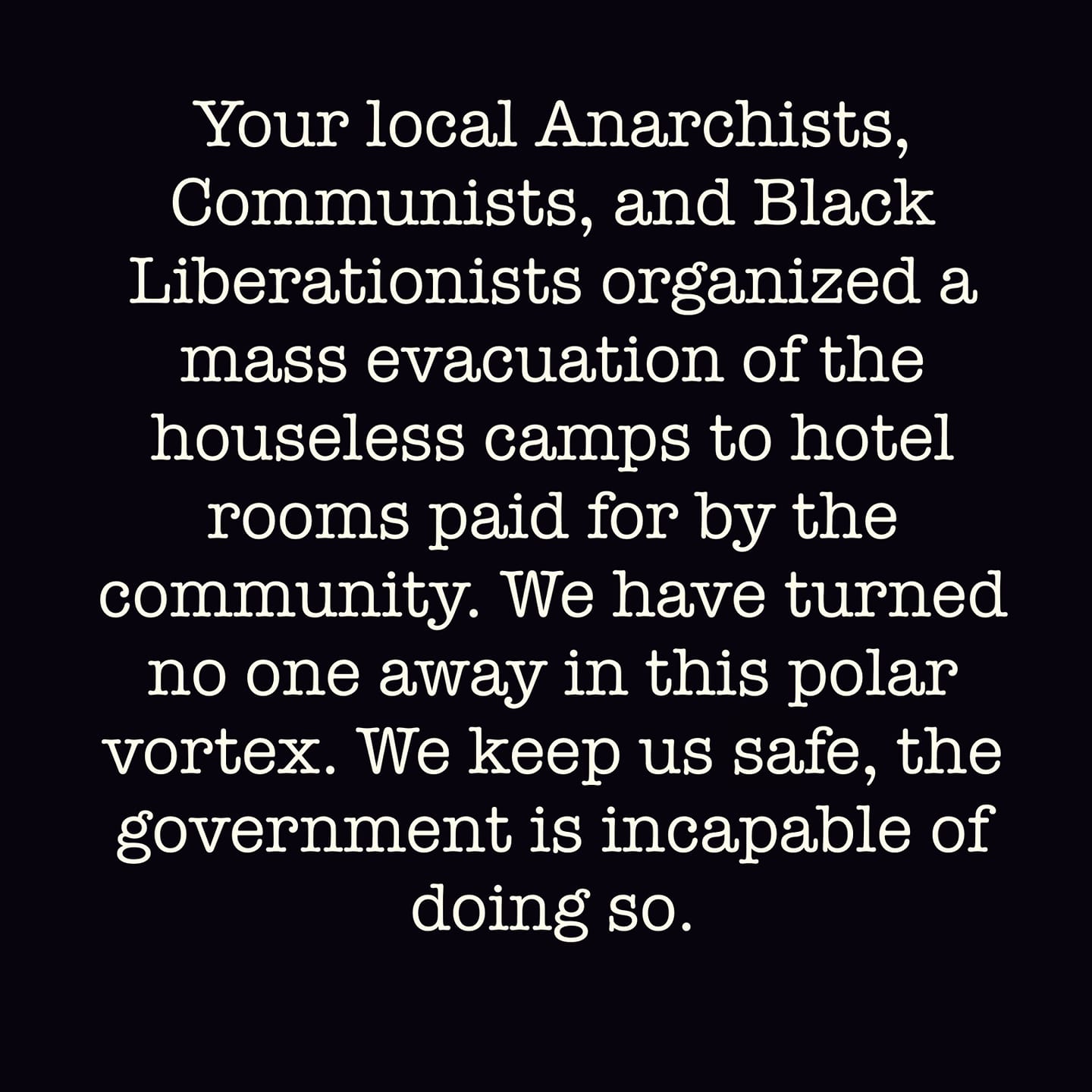
Your local Anarchists, Communists, and Black Liberations organized a mass evacuation of the houseless camps to hotel rooms paid for by the community. We have turned no one away in this polar vortex. We keep us safe, the government is incapable of doing so.

Des Moines Mutual Aid

The Mutual Aid work I’m most involved with is the free food project, which is a continuation of the Black Panther program mentioned below, that has existed in Des Moines since that time in the early 1970’s. I was there this morning. The wind chill was -11. Several of us mentioned we couldn’t see because our masks (which everyone wears) fogged up our glasses. Each time we would laugh about that. As always, we enjoyed being and working together.

We have only so much of ourselves that we can invest in work for justice. We can’t afford to waste that on things that will not result in change. The effort put into ineffective processes is effort that will not be available for other things, such as Mutual Aid.

I would ask what your stories are.

  • What is your justice work?
  • What has that work accomplished?
  • Have you developed deep, new friendships? New community?
  • Does that work excite and fulfill you?

Too little attention is paid to how justice work affects those doing the work. Too often I see those who want to make a difference go from committee meeting to meeting. Too often feeling dissatisfaction and fatigue. That isn’t going to do anyone any good.

That’s what Jason Laderas meant when he wrote mutual aid focuses on the root of community problems, rather than their symptoms. We bring the Beloved community into existence when we realize that with Mutual Aid, we are that community.

mutual aid focuses on the root of community problems, rather than their symptoms. 

Jason Laderas

Now more than ever, it is clear to me that there is not much of a difference between the Democrats and Republicans in America.

While the Democrats may seem to favor human rights more than the Republicans, they have failed to deliver the type of change that could transform our society and lift millions out of suffering.

This whole two-party system is a facade. Neither party has the average person’s interests in mind. It’s about what benefits the billionaire corporations the most; it’s about serving the wealthy elite and leaving everyone else behind.

It’s not surprising that during this past year of COVID-19, where millions of people became unemployed, thousands of people died and millions were at risk of eviction, that the billionaires in the United States gained about 1.3 trillion since March of last year, according to inequality.org.

It doesn’t surprise me because this is just how our capitalist system is supposed to be working — the rich are getting richer, and the poor are getting poorer.

For far too long, our government has failed to vastly improve our material conditions. While people of other countries have enjoyed monthly government payments to help deal with COVID-19, the U.S. has only issued three direct payments.

It really makes me think, are we really the best country in the world?

If we cannot depend on our elected officials to deliver change that is going to benefit the overwhelming majority of this country, it is self-explanatory that the people may have to take matters into their own hands.

All massive changes in the history of America have started with everyday people banding together for a cause that they believe in. It does not start with the government. In the push for civil rights for Black people in the ’60s, change came to be with grassroots organizing.

The same can be applied to the changes that we want today. Since we cannot depend on our government, we have to depend on each other.

The Usefulness of Mutual Aid Against Our Failing Government, By Jason Laderas, slice of culture,  

If we cannot depend on our elected officials to deliver change that is going to benefit the overwhelming majority of this country, it is self-explanatory that the people may have to take matters into their own hands.

Jason Laderas

One of the most famous examples of mutual aid is the Free Breakfast for Children Program of the Black Panthers. The Panthers took notice that poor black children often could not learn to the best of their ability because of poverty and hunger, so they took it upon themselves to feed the children. 

They served free breakfast and lunch daily, also intaking donations from other organizations within the community like churches and other businesses.

This program spread all around the Black Panther chapters across America, eventually reaching 36 cities by 1971. In 1969, 20,000 children were fed across America through this program. 

It was admitted during a 1969 U.S. Senate hearing in California, that the Panthers did a better job of feeding poor children than the state did. 

The Black Panthers breakfast program is a prime example of just how mutual aid can benefit communities. They took notice that the government was not doing their job to adequately educate, feed and house Black people in America, so they did it themselves. 

The Usefulness of Mutual Aid Against Our Failing Government, By Jason Laderas, slice of culture,  

The future we want

I’ve been trying to integrate all that I’ve been learning about Mutual Aid, #LANDBACK, Abolition, Religious Socialism, Ecosocialism, photography, forced assimilation and Indigenous worldview. There are many intersections among these. This is stimulated in part as I reflect on yesterday. It was a spiritual time when I stopped at Easter Lake to take photos there, despite, or because of the bitter cold. Then continuing to be with my Mutual Aid friends as we filled boxes of food to distribute in the neighborhood. To witness people coming together to share stories. Each moving from one friend to another. This is part of the future we (I) want that exists now. That is the wonderful thing about Mutual Aid, as the focus is on addressing survival needs in the present. As my friend Ronnie says, you work intensely for an hour and a half, and when you’re done you feel sweaty, tired and good.

As I hear so many friends expressing feelings of hopelessness and despair, I feel fortunate to be involved in a community that gives us a sense of doing something good together. Which is one reason I’m trying to get more people involved in Mutual Aid.

I heard some of this discouragement when those in the Quakers for Abolition Network met via ZOOM yesterday.

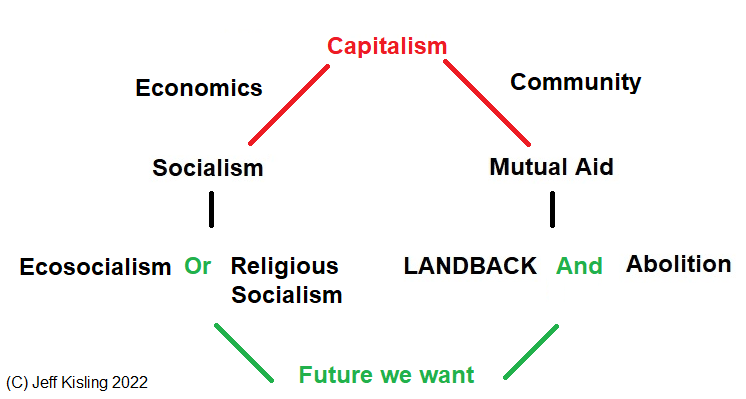
I’ve been working on a new diagram to help me visualize the relationships between the concepts mentioned at the beginning. The root cause of so much suffering is the capitalist economic system. Socialism is an alternative to capitalism. Ecosocialism is about how environmental devastation will be the end of capitalism. Or faith communities can help bring about socialism as an alternative to capitalism from a moral lens. Or both.

Mutual Aid is a framework to replace vertical hierarchies and the unjust power structures they enforce. LANDBACK, returning to Indigenous relationships with the land, and abolition of police and prisons are part of building communities that represent the future we want.

EPSON MFP image

Des Moines Mutual Aid Networking

Yesterday I wrote about the Quakers for Abolition Network I am a member of. We will be meeting this afternoon, so I’m thinking of what I hope our network might do. There is so much that needs to be done.

My friend Jake Grobe, from Iowa Citizens for Community Improvement (ICCI) was at our Des Moines Mutual Aid food distribution this morning. He doesn’t get to attend too often because of his organizing work. He told me about an upcoming action at MidAmerican Energy to demand that they shut down all their coal plants. Here is the story about a previous action.

Protesters gathered outside the MidAmerican Energy headquarters in downtown Des Moines today to demand Iowa’s largest energy company retire all of its coal plants in nine years. They were part of two groups: Iowa Citizens for Community Improvement (Iowa CCI) and the Iowa Sierra Club’s Beyond Coal campaign.

They also want MidAmerican to invest in retrofitting homes for energy efficiency with a focus on families of color and low-income individuals.

Jake Grobe stood on a ledge wearing a bucket hat and a blue T-shirt with “REVOLUTION NOW” printed in all capital letters. He held a megaphone to his mouth, which was covered by a black and white bandana. (All the protesters wore masks.) Grobe asked the crowd who is most hurt by the effects of climate change.

“It’s Black, Indigenous, it’s poor working families that are unable to recover from flash floods, from droughts from wildfires. Climate crisis increases all inequalities,” he answered himself.

Environmental Activists Urge Iowa Energy Company To Retire Coal Energy By Kassidy Arena, Iowa Public Radio, August 18, 2021

One of the things I love about Mutual Aid is how we network about each other’s work. I hadn’t known about the MidAmerican actions, but now I hope to attend the next one. He said it would be good if I could take photos there. This networking lets us know who has skills, like photography, which can help each other’s work.

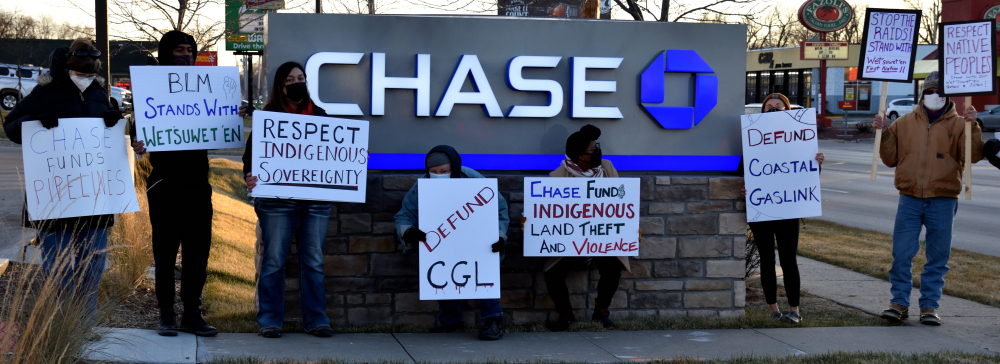
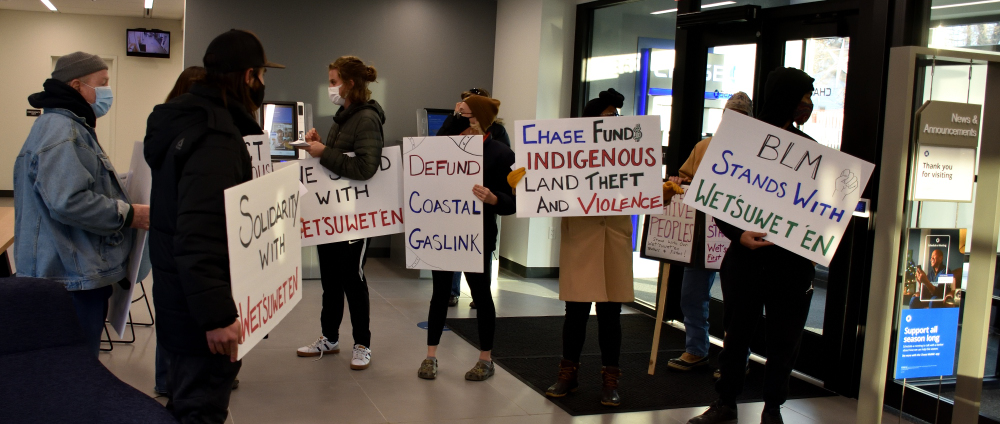
Speaking of photos prompted me to share about a recent action at Chase Bank in support of the Wet’suwet’en peoples fighting against the Coastal GasLink pipeline. He hadn’t been aware of that.

Support for Wet’suwet’en at Chase bank

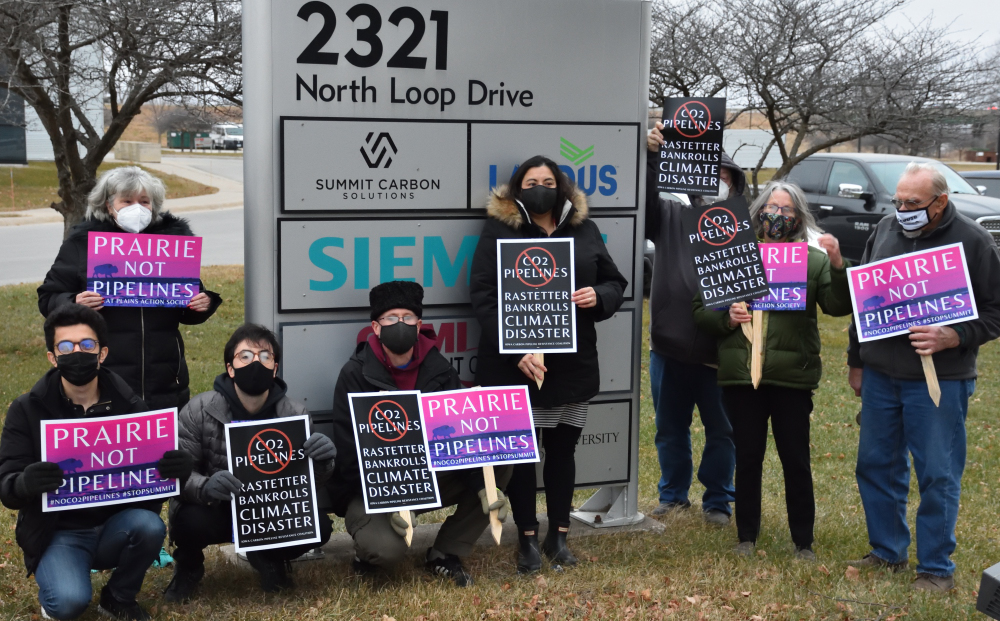
That also reminded me of going to SUMMIT headquarters in Ames, Iowa, recently. SUMMIT is one of the companies proposing to build carbon pipelines in the Midwest. My friends Sikowis Nobiss and Mahmud Fitil know of my photography and asked me to attend the gathering there.

Jake and ICCI are also working to stop CO2 pipelines.

We talked about how bad the Iowa legislature is. He said we need our own socialist party. I told him about the Central Iowa Democratic Socialists of America’s prison letter writing project.

He asked what I had been doing. I described the Quakers for Abolition Network, which interested him. He had been arrested three times last year at direct actions and said you don’t really know how bad prison is until you experience it yourself.

our response and an invitation that we allow the Spirit to awaken our imagination to build a world where we can all be safe(r) and flourish without threats of violence.  

The call for the abolishment of police, policing and the police state is not a new call. For centuries, Black and Indigenous people have called for the end of violence enacted on their bodies and communities by police. They have been calling for other possibilities that move us from the appearance of safety to truly safe and whole communities. In the wake of continued high profile police shootings across the United States, many people in the church pushed for an Anabaptist-oriented response and resources that helped us to move as a church into solidarity with the pain and brutality being felt and witnessed on Black, brown and Indigenous people. This curriculum is our response and invitation that we allow the Spirit to awaken our imagination to build a world where we can all be safe(r) and flourish without threats of violence.  

Defund the Police? An Abolition Curriculum
EPSON MFP image

Quakers for Abolition Network

The tragic news of the recent killings of police officers ratchets up calls for more policing. Demonizing those of us who call for defunding the police. New York City’s mayor refers to defunding the police as a bumper sticker.

President Joe Biden’s meeting with New York City Mayor Eric Adams on February 3, 2022, comes as cities across the U.S. face a rise in violent crimes and represents a politically awkward shift in how the Democratic Party is approaching policing and criminal justice.

As a Senator in the 1990’s, Biden was known to be tough on crime, and Adams, a former NYPD captain, has been vocal about his support for police and the criminal justice system. They both find their long-held positions on policing and crime back in the Democratic mainstream, as some mayors and elected officials have shifted their stance on crime and the “defund the police” movement over the past several months.

During his meeting with Adams, Biden expressed his opposition to defunding the police as he said, “the answer is not the defund the police, it’s to give you the tools, the training, the funding, to be partners [and] to be protectors.”

Joe Biden, Eric Adams Meeting Marks Democrats U-Turn on ‘Defund the Police’ BY MATTHEW IMPELLI, Newsweek, 2/3/22

As an abolitionist, it feels like menace is in the air. I’m reminded of my teen days when I resisted the draft while the Vietnam war was raging. It was great to be living in the Scattergood Friends School community then.

Most people think about abolition in terms of what it is against. Against the institution of slavery, against police and prisons. I like to think about what abolition is for.

I am a member of the Quakers for Abolition Network. Mackenzie Barton-Rowledge and Jed Walsh have been organizing this effort. Following are two articles published in Western Friend. To join the Quakers for Abolition Network, email Jed Walsh (jedwalsh9 [at] gmail.com) or Mackenzie Barton-Rowledge (mbartonrowledge [at] gmail.com).

Mackenzie: Let’s start with: What does being a police and prison abolitionist mean to you?

Jed: The way I think about abolition is first, rejecting the idea that anyone belongs in prison and that police make us safe. The second, and larger, part of abolition is the process of figuring out how to build a society that doesn’t require police or prisons.

M: Yes! The next layer of complexity, in my opinion, is looking at systems of control and oppression. Who ends up in jail and prison? Under what circumstances do the police use violence?

As you start exploring these questions, it becomes painfully clear that police and prisons exist to maintain the white supremacist, heteronormative, capitalist status quo. The racial dynamics of police violence are being highlighted by the recent uprisings and the Black Lives Matter movement.

We are in the same place, with a call to imagine a culture radically different than the one in which we live. Abolishing police and prisons, like abolishing slavery, would change the structure of our society: dramatically decreasing violence and undoing one set of power relationships that create domination and marginalization. And in place of this violence, we could, instead, have care.

Abolish the Police by Mackenzie Barton-Rowledge and Jed Walsh, Western Friend, Nov 2020

Perspectives from the Quakers for Abolition Network

In late 2020, the two of us wrote an article for this magazine, called “Abolish the Police.” Through writing the piece, we realized we wanted to convene a larger space where Friends with an interest in police and prison abolition could have conversations with one another. Quaker abolitionists today face major pushback from our Meetings; we hoped that drawing Friends together would support and strengthen our work.
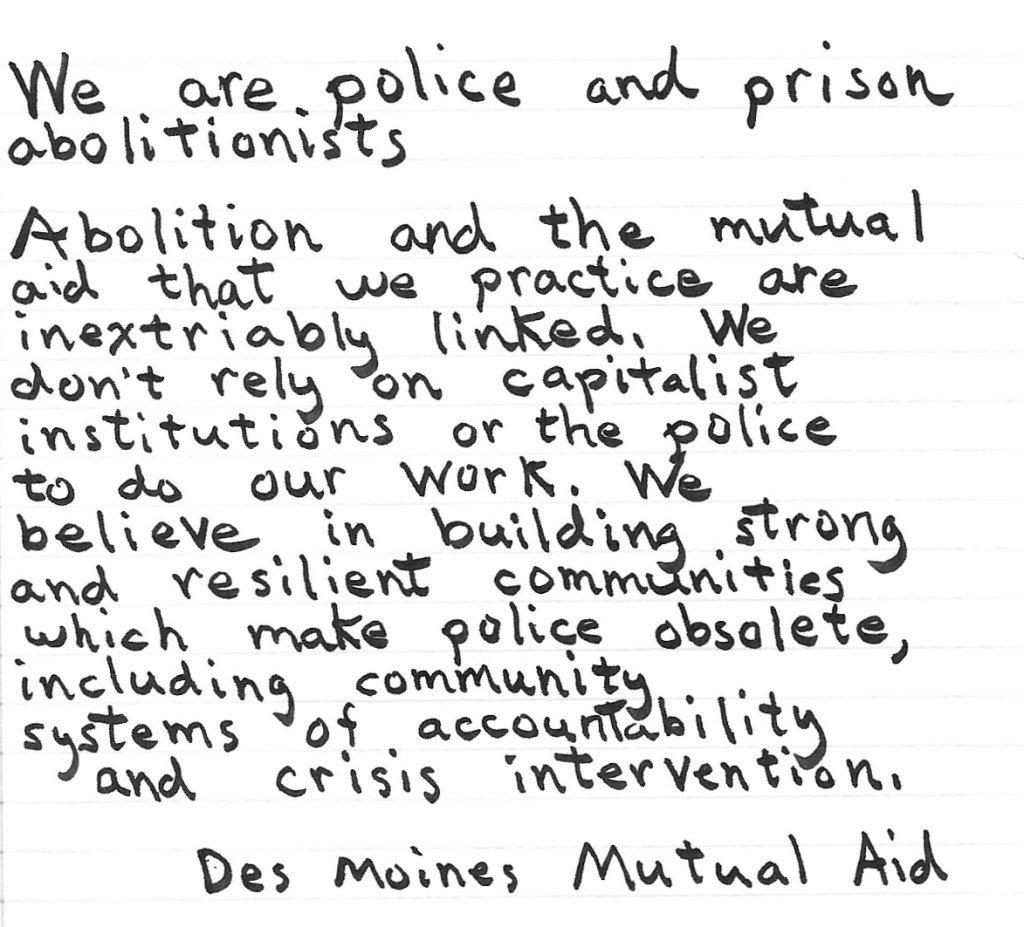
In this context, the Quakers for Abolition Network is being born. We are a collection of Friends from at least five Yearly Meetings; we range in age from high school to our 80s; we are disproportionately queer and trans. While AFSC and FCNL staff are participating, this is a grassroots project without any formal connections to existing organizations. We are in the process of defining our mission statement, structure, and our methods for addressing white supremacy when it shows up in our work, while building relationships with each other as we go. Below, four Friends write about their approaches to abolition, their lessons, and their visions for where Quakers might be headed.

Jeff Kisling: Mutual Aid and Abolition

I grew up in rural Iowa, where there was very little racial diversity and interactions with police and the court system were rare. About ten years ago, I was blessed to become involved with the Kheprw Institute, a Black youth mentoring and empowerment community. I’ll never forget how shocked I was when a Black mother broke down in tears, explaining how terrified she was every minute her children were away from home. It was obvious that every other person of color in the discussion knew exactly what she was saying.

After retiring, I was led to connect with Des Moines Mutual Aid, a multiracial organization founded to support houseless people. For over a year, I’ve helped my friends fill and distribute boxes of donated food, while continuing to learn about the framework of mutual aid.

To me, mutual aid is about taking back control of our communities. Besides the food giveaway, we support houseless people and maintain a bail fund to support those arrested agitating for change. We also work for the abolition of police and prisons.

To join the Quakers for Abolition Network, email Jed Walsh (jedwalsh9 [at] gmail.com) or Mackenzie Barton-Rowledge (mbartonrowledge [at] gmail.com).

Mackenzie Barton-Rowledge and Jed Walsh: Introducing the Quakers for Abolition Network, Western Friend, Sept 2021

Eco Socialism

I’m spending hours searching for information about religion and socialism since learning about the idea of Religious Socialism.

Socialism has a negative connotation for many that is related to Marxism and its support of revolution by any means.

In one of our nation’s best moments, the civil rights movement of the mid-20th century, Christian socialists played major roles. A. Philip Randolph and Bayard Rustin were very open about their socialism, and Dr. Martin Luther King Jr., who praised democratic socialism both publicly and privately, stood on the shoulders of previous generations of socialist African American social gospel leaders.

These Christian socialists agreed with Karl Marx’s ground-breaking analysis of the devastating impact capitalism wreaks on working people. But they parted ways when it came to Marx’s antipathy to religion, and they rejected Marx’s exhortations to revolution by any means. For religious socialists, the instrument of revolutionary reform is a political one at the ballot box and nonviolently in the streets. That approach works. Consider the many nations comparable to the United States, particularly in western and northern Europe, where socialist advocacy within the democratic process has led to universal healthcare, progressive taxation, and comprehensive social services that assure safe housing and a minimum income. Compared to the United States, life there is far closer to the kingdom of God on earth.

Christian Socialist by MAXINE PHILLIPS and FRAN QUIGLEY

I’ve long known evolving environmental chaos would be the end of capitalism. This chaos will increasingly lead to the physical destruction of the infrastructure that produces and distributes goods and the shops where they are sold, resulting in widespread financial ruin. The impact of severe drought and storms will significantly impact food production and supplies of clean water. These things will increasingly impact housing, energy, healthcare, education, finance, transportation, and other social and political systems.

We are finally at a place where the public can no longer refuse to recognize the impacts of climate change. The fear that generates, and the realization things will only get worse, is fueling social unrest. Movement toward authoritarianism, and domestic violence and terrorism.

I have become interested in religious socialism to create communities to support each other as current systems fail. This interests me as an opportunity to revitalize my Quaker communities. Or for more people to turn to whichever spiritual community meets their needs.

But it is unclear how many people will turn to spirituality, especially those who previously felt disenfranchised from churches and religious organizations.

As I’ve searched for information about religious socialism I’ve found a lot of information about Eco socialism, a term new to me. But which encapsulates what I’ve always believed about environmental chaos and the need for socialism to respond.

In the wake of Australian fire storms, global crop loss and catastrophic climate shifts, billions of people are recognizing the dangers to society and life itself presented by capitalism’s profit-driven despoiling of nature. At the same time, the last 40 years of deepening inequality inside virtually all nations have undermined their social cohesion, and increasingly, capitalism’s mechanisms are being blamed. Anti-capitalism is exploding across many political landscapes.

One broad socialist response to ecological crisis has produced a global eco-socialist movement and a rich set of eco-socialist writings. They rightly argue that a solution to the ecological crisis requires a transition from capitalism to socialism. Profit-driven capitalism is the problem that socialism can solve. Likewise, socialists argue, today’s extreme economic inequalities flow from capitalism. Socialism’s traditionally egalitarian focus on state redistributions of wealth and income has attracted mass interest and support.

Will Climate Change Provoke a Widespread Revival of Socialism? by Richard D. Wolff, TRUTHOUT, Feb 13, 2020

Black Lives have always mattered

Every time I hear this interview, I am reminded of some of my own experiences related to Black Lives Matter.

This is a dream unrealized. MSNBC

Dr. Clarence Jones, former speechwriter and counsel to Martin Luther King, Jr., reflects on what Dr. King would think about the nation today.
Jonathan Capehart
What would Martin Luther King say about what’s going on in the United States today?
Dr. Clarence Jones
He would say Black lives have always mattered, always matter. The challenge has been for us to get the majority of society to recognize and to respect that.

These stories are about white Friends recognizing and respecting that Black Lives have always mattered.

2014

Racial justice, and Black Lives Matter, need vocal, visible and spiritual support from White Quakers now. How often has the Underground Railroad been invoked during discussions of Friends and enslavement and racial justice? Have you wondered what you would have done if you had been alive then? Twenty years from now what will you remember when you think back to this time and what you did, or did not do?

When I was living in Indianapolis, I attended the peace vigil every Friday afternoon in downtown Indianapolis. There were usually just three or four attending. We held signs about peace, including the Friends Committee on National Legislation’s ‘War is Not the Answer’.

I had been thinking a lot about peace building and feel that addressing economic, environmental and racial injustice is what constitutes peace building today in the United States.

After Michael Brown’s killing in 2014, and the ongoing killings of people of color, there were multiple demonstrations in Indianapolis.

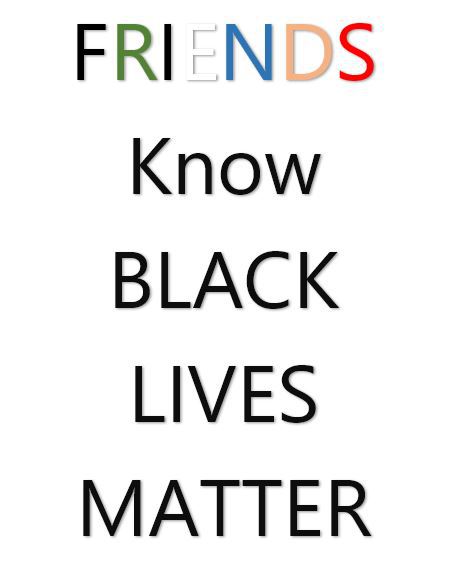
I changed my message to Quakers Black Lives Matter. I made the sign below to take to our weekly peace vigil in front of the Federal Building in downtown Indianapolis. I was very unsure of how that sign would be received by people of any race, but felt called to do it

However, I had forgotten the first time I carried the sign to the vigil (I didn’t own a car) was the weekend of Indy Black Expo. As I was walking to the Federal Building and entered the downtown mall, I was suddenly in the middle of thousands of people of color. I was unsure of what the reaction would be. I was tempted to turn around and go home. But I mostly got looks of surprise and puzzlement. No one said anything then (there was music, food, etc.).

But during the hour of the peace vigil that day, there were a lot of interactions, both with people driving and those walking past our group of three, and they were all positive. Many people said “thanks” with smiles. Someone said, “that’s a good sign, a damn good sign”. “Our lives DO matter”, said another.

Carrying the sign on the way home after the peace vigil, I was surprised by the sound of an air horn, and looked up into the cab of the tractor trailer passing by, where two young black men were grinning and waving their arms.

Another day a young Black man stopped, got out of his car, and walked up to us. I wasn’t sure how that was going to go. But he said, “a white man holding a Black Lives Matter sign”. I said, “yes, a white man holding a Black Lives Matter Sign”. He started to go away, but returned and asked, “why are you doing it?” I told him about the Kheprw Institute (KI) that mentors Black youth that I had been involved with for several years now. And how those kids had become friends of mine. And I want a better life for them. He nodded, then said it was a brave thing to do. I only mention this to show how other people might see what you do in public. He went on to say he felt justice had to be grounded in faith.

Many times a car of people of color would honk, and people smile and cheer and wave their hands. Many times take photos with their phones.

Another day an energetic young Black man came and said “Quakers, Black Lives Matter”, and began to take a video of us, then had a friend take more video as he stood with his arms around our shoulders, narrating all the time–“Quakers”, “Black Lives Matter”.

Bear Creek Friend Jenny Cisar created this decal and made 100 copies, which people were eager to obtain.

JennyBLM

Kathy Hall, of Whittier meeting, made this sign. Pictured is the Peace and Social Concerns Committee of Iowa Yearly Meeting (Conservative).

Peace and Social Concerns Committee of Iowa Yearly Meeting (Conservative).

July 12, 2016

Friends, this is a pivotal moment.  Silence means supporting the status quo, which means supporting white privilege and racial injustice.  Black Lives Matter is a nonviolent movement seeking to correct these injustices.

We are all aware of Friends’ history of speaking out publicly to witness against injustice.  Many of us continue our weekly peace vigils and display our “War is Not the Answer” signs.  Peace making now means speaking out for racial justice.

Here is one graphic you can make a sign from.

Friends, our small and rural communities especially need to hear these messages

This is the time to stir up uncomfortable conversations.  My black friends wonder why white people are not helping them.  We need to show visible signs of support.   We need to attend the Black Lives Matter rallies.  We need to put Black Lives Matter signs on our meetinghouse and home lawns.

Dallas surgeon Brian Williams, who helped care for the police shot there, said “I understand the anger and the frustration and distrust of law enforcement. But they’re not the problem. The problem is the lack of open discussions about the impact of race relations in this country. . . . The killing, it has to stop.’’

Please move away from the sidelines and unite together — regardless of your faith or religious practice — to seek an end to hatred and violence . . . What happened to our family is part of a larger attack on Black and Brown bodies . . . We call on all people, public officials, faith leaders and Americans from all walks of life to help address the festering sores of racism as it spurs an unforgiving culture of violence.” -Rev. Waltrina Middleton, longtime organizer, whose cousin Rev. Depayne Middleton, was killed in the massacre at Emanuel AME Church

2016

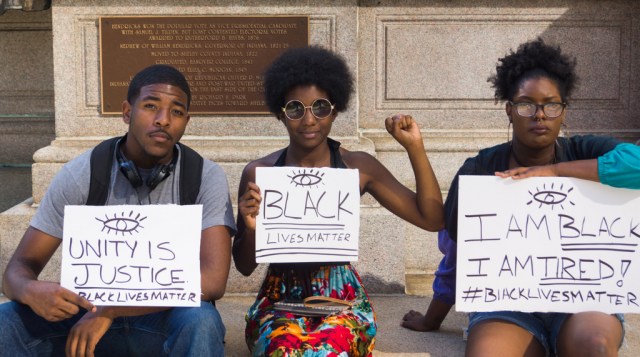
I’ve often looked at, and thought about this photograph I took at a Black Lives Matter protest in Indianapolis in July, 2016.

It was a warm, sunny summer evening, around sunset.  I arrived about half an hour early and there weren’t many people gathered on the lawn of the Indiana Capitol, yet.

I almost walked past the trio above, but something made me stop.  I thought they created an excellent image of the Black Lives Matter Movement…poised, stressed and tired, respectful, determined, nonviolent, hurt, angry, but very, very intent and serious. 

It was important to me that I ask for their permission to take this photo, something I didn’t usually do then at public events. These days I no longer take photos that show people’s faces, because law enforcement uses such photos to bring charges.

They each considered my request for a moment, then each, with varying degrees of enthusiasm, indicated that would be permissible.  I knelt in front of them, framed and then shot the photo, and thanked them.  Silent nods, but also slight smiles.

I like each of the facial expressions, the story each person’s posture tells, and the raised fist salute.  I like the sense of support, leaning in toward each other.  I like the messages on the signs.

But the reason I keep coming back to this is because I also feel a real challenge from them to me/us.  I think they are saying “we’ve taken the time and effort (and I would say courage) to come out in public to support our community and each other, and demand that these injustices stop.”

And they seem to be asking me/us, “what are you going to do?  Do you have a little courage yourself?  Will you make yourself, and others uncomfortable by speaking the truth about these things?”