Trying to face environmental meltdown

I’m still working on my foundational story. It is taking much longer than expected. I’ve been following a recent suggestion to examine my foundational story at its beginning, how it has evolved along the way, and what it is now.

Much of my foundational story is about care for Mother Earth. I lived my entire adult life without owning a car, being able to do so in part because of the barely adequate city bus system in Indianapolis. I don’t keep bringing this up for self-promotion. Rather, to point out everyone living in the early 1970’s could see the damage being done by the clouds of noxious fumes coming out of tailpipes. Since then, catalytic converters hid the visible damage, but the greenhouse gases continue to spew out.

We each made a choice.

  • either stop the pollution
  • or deem fouling the air with automobile exhaust an acceptable choice for our convenience

If we had decided to tackle the pollution and greenhouse gases then, we would not be in this environmental catastrophe now.

No one knows what the future holds, but it is no longer possible to hide the consequences of greenhouse gas emissions. High temperature records are broken daily. We see shrinking lakes and rivers, violent storms, flooding, and forest fires.

I’ve studied and prayed about this my whole life. I’m broken down by the continuous stress of knowing. At times I’ve felt like giving up. Wanting to stop thinking about all of this.

I don’t have a plan for what to do when water stops flowing from the faucet. When the grocery stores no longer have food. When no one picks up the trash. When there is no gas for cars and trucks. When hospitals close. When houses are destroyed by fires, winds, or floods. When there is no Internet. No electricity.

But I do have two tools to help me make a plan. For some hope.

  • My Quaker faith and faith community
  • And my Mutual Aid accomplices, who are not just making plans but implementing solutions now

People often mistake hope for a feeling, but it’s not. It’s a mental discipline, an attentional practice that you can learn. Like any such discipline, it’s work that takes time, which you fail at, succeed, improve, fail at again, and build over years inside yourself.

Hope isn’t just looking at the positive things in this world, or expecting the best. That’s a fragile kind of cheerfulness, something that breaks under the weight of a normal human life. To practice hope is to face hard truths, harder truths than you can face without the practice of hope. You can’t navigate dark places without a light, and hope is that light for humanity’s dark places. Hope lets you study environmental destruction, war, genocide, exploitative relations between peoples. It lets you look into the darkest parts of human history, and even the callous entropy of a universe hell bent on heat death no matter what we do. When you are disciplined in hope, you can face these things because you have learned to put them in context, you have learned to swallow joy and grief together, and wait for peace.

IT IS BITTER TEA THAT INVOLVES YOU SO: A SERMON ON HOPE by Quinn Norton, April 30, 2018

Our country is primed for an overthrow of power within rapidly shifting currents. The land has seen devastation over the winter’s long night, but now sings songs of rebirth inside the blossoms of the cherry tree. At least in this hemisphere. The people…well, we’re all a little worn out thanks to a heavy hitting astrological and planetary realignment. Does anyone else feel like they’ve hardly had a moment to process and catch a breath before Mercury went Gatorade? Again? We’re being tested. Within each survivor is a warrior. Can we captain this ship through unknown waters? Are we braver than our fears? Will we earn a seat at the table, our place as a future ancestor? Oh, hell yes.

Nahko Bear

When I realized this, I felt even more hopeless, but, thankfully, my Quakerism led me to another definition, which is also in the dictionary. In addition to defining hope in terms of desire, expectation, and fulfillment, most dictionaries provide a secondary, archaic definition based on faith. This older and much less common meaning is about trusting life, without the expectation of attaining particular outcomes any time soon. This type of hope has a quiet but unshakeable faith in whatever happens and in the human capacity to respond to it constructively. It is a positive, but not necessarily optimistic, attitude to life that does not depend on external conditions or circumstances.

I call this “intrinsic hope” because it comes from deep inside us. Václav Havel, former president of Czechoslovakia, said in Disturbing the Peace that hope “is a dimension of the soul, and it’s not essentially dependent on some particular observation of the world or estimate of the situation. . . . It is an orientation of the spirit, and orientation of the heart; it transcends the world that is immediately experienced, and is anchored somewhere beyond its horizons.” To me, intrinsic hope is also that of God in everyone; the inner light; the quiet, still voice; and the experience of the Great Mystery.

A Quaker Perspective on Hope By Kate Davies, Friends Journal, September 1, 2018

Mutual Aid and Ways of War

The reason I haven’t published anything for a while is because I’ve been working on a presentation about Mutual Aid that I plan to give when my Quaker yearly meeting, Iowa Yearly Meeting (Conservative) meets this week. It’s been helpful for me to organize my thoughts about Mutual Aid, something that’s become the center of my peace and justice work for over two years. I’m glad to have this opportunity to share this work.

I don’t plan to talk about everything on this list of all that is going wrong now. But it is alarming to see how many of these have escalated recently.


  • Collapse of capitalism
  • Severe drought, floods, heat result in massively diminished food production and famine
  • White supremacy
  • Spiritual poverty
  • Fascism/authoritarianism
  • Broken political system
  • Media as propaganda
  • Domestic terrorism. Armed militias.
  • Militarized police
  • Global militarism
  • Movements of millions of climate refugees
  • Punishment-oriented judicial system
  • Prisons
  • Education discourages critical thinking
  • Continued commodifying all natural resources
  • Continued fossil fuel extraction and burning
  • Factory farming
  • Broken healthcare

Instead, I plan to use this slide about how we can no longer depend on so many systems now. We’re being forced to find alternatives, and Mutual Aid can be the solution. I hope the presentation will result in more Quakers and others getting involved in Mutual Aid work.


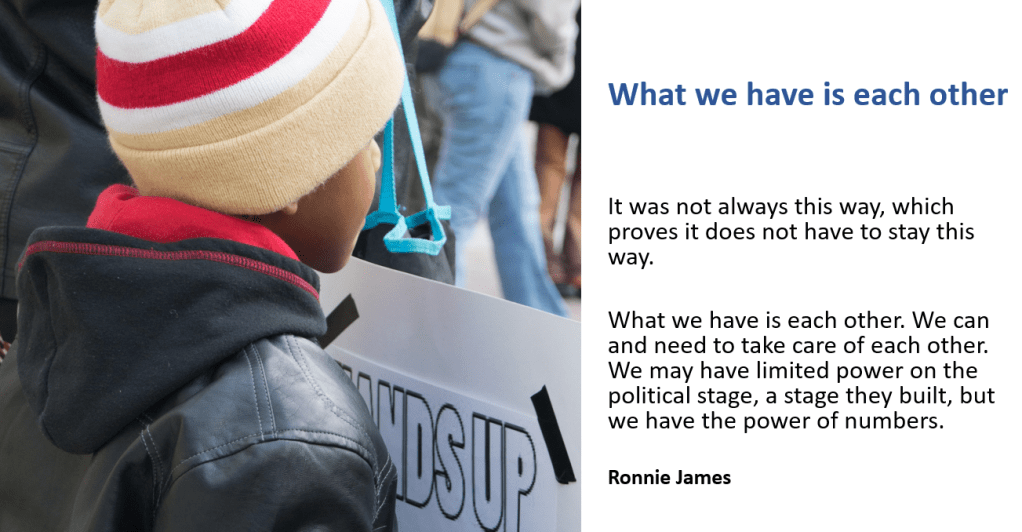
One of the things I’ve been praying about is this statement by my good friend and Mutual Aid comrade, Ronnie James.


Coming of age in the last 1960’s, during the Vietnam War, I saw and was part of the massive antiwar movement in this country. For the past several decades I’ve wondered what happened to the antiwar movement

Then we began to see war coming to the streets of our cities.

  • In 2014, we saw militarized police and tanks in the streets of Furguson, Missouri, following the killing of Michael Brown. Friends of mine from Indianapolis went there during the prolonged unrest. A Quaker friend went.
  • In 2016 the violent attacks of militarized police against the peoples peacefully gathered at Standing Rock were broadcast across the world.
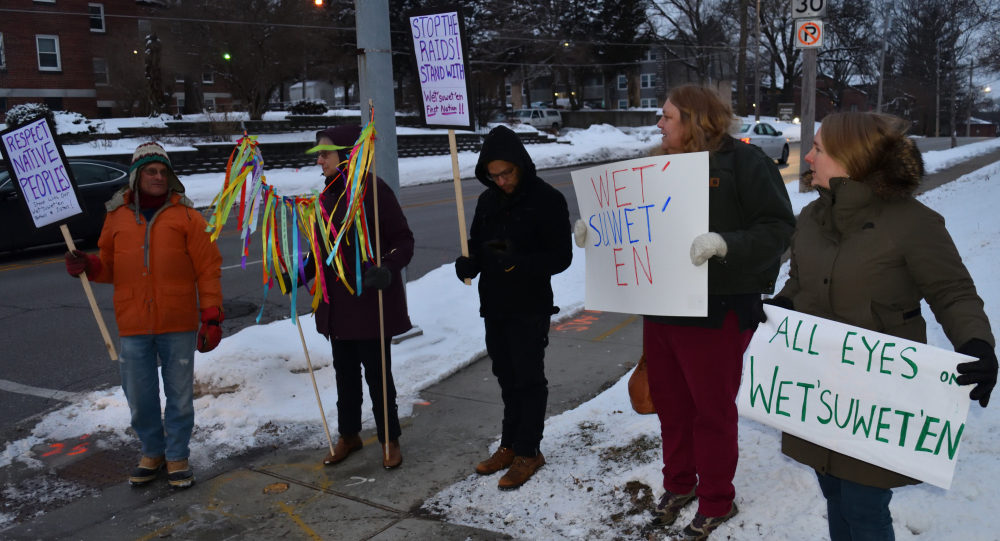
  • At the beginning of 2020, I saw the violent invasion of Wet’suwet’en lands by the militarized Royal Canadian Mounted Police (RCMP). And learned similar invasions occurred in previous years.
  • Also in January 2020, “Des Moines Mutual Aid participated in a march protesting the potential for war or increased hostilities with Iran that followed the fallout of the assassination of Qassem Soleimani by drone strike in Baghdad.”
  • Then the world watched in horror as Derek Chauvin killed George Floyd by pressing on his neck for nine and a half minutes on May 25, 2020. Prolonged nationwide protests occurred in many cities, including Des Moines. Des Moines Mutual Aid established a bail fund that kept every protestor out of jail.
  • Now, militarized police responses have occurred at every protest against so many, ongoing police murders.
  • The war is now on the streets of this country, in the communities of the oppressed.
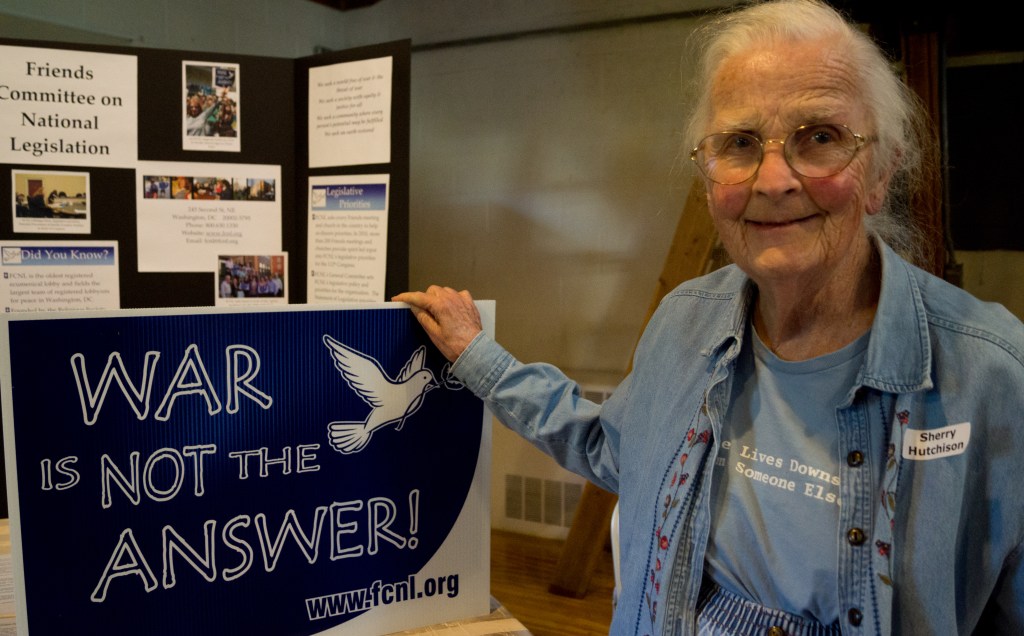
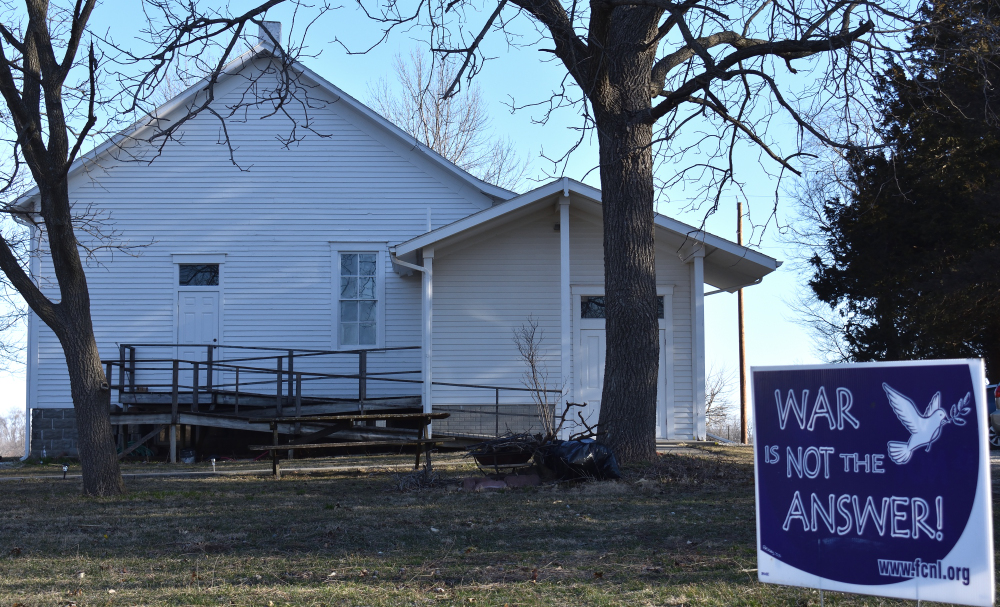
  • Now I think of FCNL’s “War is Not the Answer” signs being about these domestic wars.

I agree with Ronnie, “the more we take care of each other, the less they can fracture a community with their ways of war.” Mutual Aid is how we can take care of each other.


Mutual Aid is how we can work for peace and justice now.


War is Not the Answer

These words were taken from Martin Luther King Jr.’s speech, Beyond Vietnam: A Time to Break Silence, delivered April 4, 1967 at the Riverside Church in New York.

The message – War is Not the Answer – and the signs went viral. FCNL and Friends saw the potency and popularity of the message grew and spread, and the rest is history. With the increasing prospect for an endless war with Iran, War is Not the Answer, has become more relevant.

Friends and other people of faith act when they see broken systems. As we stand on the precipice of another war, Friends are mobilizing across the country to demand Congress halt the spiral into all-out war.

FCNL has distributed more than 2,000,000 “War is Not the Answer” bumper stickers and yard signs since 2002. Demands for the sign are increasing so we are making it available free online for you to download and print. If you’d like to purchase a lawn sign or bumper sticker, you can do so here.

https://www.fcnl.org/resources/war-not-answer

Sherry Hutchison

Eco-despair

I’m finding it difficult to put into words what I think and feel now.

I say this not as “I told you so”, but to put environmental devastation into some context related to time. Fifty years ago, this farm boy moved to Indianapolis, and was horrified by the thick, noxious clouds of smog pouring out of thousands of cars. And was led to a spiritual vision of a life without owning a car. Though I still needed them, or city buses, occasionally for transportation. But I planned where I lived so I had a walkable environment. Grocery store, laundry and work within walking distance.

Of course, I am not the only one to do so, but vast numbers of people chose the path of the automobile. The path of least resistance, or most convenience.

Indigenous peoples have lived with a fraction of my carbon footprint for thousands of years. That was one of the reasons I wanted to develop relationships with Indigenous peoples. And am blessed that happened.

So, for fifty years I’ve tried all different ways to warn of what we were doing to Mother Earth. As far as I know, I didn’t convince anyone to give up their car. In 2015 I wrote about cars as weapons of mass destruction. Seven years ago, I wrote “now is the time.” The common refrain from all of us warning of what was coming. Every year we would say now is the time.

It is now painfully obvious that we must stop burning fossil fuel now if we are to avoid the extinction of the human race.  We are out of time.  We have to stop using personal transportation now.  We have to lead the movement to embrace mass transit now.  Cars are the seeds of war.  I ask you to join me in rejecting personal automobiles.  I’m not really comfortable being this assertive now, but I regret not being assertive enough thirty years ago.  Now is the time.

Cars as weapons of mass destruction, Jeff Kisling, 9/13/2015

It was easy for people to ignore what we were doing to Mother Earth because so much of the damage was invisible or occurring slowly. Catalytic converters covered up auto emissions. Carbon dioxide and methane are invisible gases. Air temperatures were increasing gradually and helped by the oceans absorbing so much of the heat.

But the signs began to be visible. Polar bears on tiny pieces of ice. Mountain snows disappearing. Islands being covered by rising waters. Water levels of lakes and rivers falling dramatically. Forests burning, frequent, wild storms.

But this summer we can no longer hide from the earth on fire.

Those of us who paid attention had an idea of what to expect from rising greenhouse gas emissions. The devastation unfolded as we anticipated.

But we are in new territory now. I think we have all been caught by surprise at the pervasive and prolonged record-breaking air temperatures. These will likely trigger tipping points, like unthawing methane deposits in the oceans, which would cause a rapid escalation of air temperatures.

Who knows what will happen now? People assume the heat will relent. But will it?


 It took me almost a year to figure out, first, what ailed me and then to develop a remedy for it. I was, it turned out, like the miners’ canary, among the early victims of an emerging virus, the one that causes eco-despair. Unlike the canary I was still walking and talking, though my spirit had a hard time getting out of bed. The first symptom was a growing awareness that our way of life had put us on a high-speed train headed for a nasty ecological crash. Then came the question that felled me: was there any reason to hope that we would be able to change course in time to avoid it, or at least to slow the train enough to minimize the damage?

I feared the answer was no. The train was propelled by a hyper-consumption lifestyle that we equated with progress and success for us as both individuals and as a species. We were addicted to it. I didn’t think enough people could be convinced to quit or quit aspiring to it. In developed countries it would mean giving up too many conveniences that we considered our birthright. Like cars and air conditioning and ever-increasing supplies of electricity and running water, both cold and hot. In the developing ones it would mean letting go of the dream of attaining that lifestyle.

A case of eco-despair by A.J. Chopra


What can I do?

I recently came across the idea of learned helplessness, and wrote about it in Reject Learned Helplessness. Be at the IUB tomorrow.

As expected, I would estimate forty people did show up at the Iowa Utilities Board (IUB) to express their opposition to the construction of carbon pipelines in Iowa. Which is about what those of us working for change have come to expect. But that’s a ridiculously small number when the entire state of Iowa will suffer the consequences if those pipelines are built.

Iowa Utilities Board

According to the American Psychological Association, learned helplessness occurs when someone repeatedly faces uncontrollable, stressful situations, then does not exercise control when it becomes available.

They have “learned” that they are helpless in that situation and no longer try to change it, even when change is possible.

What is learned helplessness? by Jayne Leonard, Medical News Today, May 31, 2019

Learned helplessness has helped me understand, a little, why so many people seem to have given up on working for change. Any change, anywhere. It is an understatement to say we face “uncontrollable, stressful situations” today. Situations that have significantly worsened in just the past few months. To name just a few:

  • a collapsing economy
  • significantly rising gas prices
    • impacting the personal budget of everyone
    • affecting the prices of all good
  • global, dangerously high air temperatures
  • widespread drought and significantly diminished rivers and lakes
  • pandemics
  • famine
  • war
  • domestic terrorism
  • abusive policing
  • paralyzed legislatures
  • rogue Supreme Court

This blog post has gone in an unanticipated direction, but that’s often the case. I had intended to discuss the many positive effects of Mutual Aid. It looks like that is going to be delayed. Because it won’t do much good to talk about the positive changes Mutual Aid can bring about, if people are really stuck in learned helplessness. If they will not change.

“everywhere people ask, “what can we do?” The question, what can we do, is the second question.

The first question is “what can we be?” Because what you can do is a consequence of who you are. Once you know what you can be, you know what you can do”

Arkan Lushwala

In May 2018, I was blessed to hear Arkan Lushwala speak about “Indigenous Ways of Restoring the World” during a call sponsored by the Pachamama Alliance.  “Arkan Lushwala is a rare indigenous bridge of the global north and south, carrying spiritual traditions from the Andes in his native Peru as well as being adopted and initiated by the Lakota people of North America.”


The answer to “what can I do?”

Speaking about what is happening on Earth right now,
many of the conditions of life that we used to take for granted,
now are really out of balance.
Hopefully we still have time to get back into balance
so life may continue.
I travel around the world and meet people and talk to people
from all different cultures.
And everywhere people ask, “what can we do?”
The question, what can we do, is the second question.
The first question is “what can we be?”
Because what you can do is a consequence of who you are.
Once you know what you can be, you know what you can do,
and we cannot afford wasting time;
we have little time.
We need to be precise now.
When someone sincerely asks, “what can I do?”
my humble answer,
the only answer that I find in my heart to be sincere is,
“First find out what you can be.”
Action is extremely necessary at this time.
This is not a time just to talk about it.
The most spiritual thing now is action.
To do something about what’s happening.
To go help where help is needed.
To stand up when we need to stand up,
and protect what is being damaged.
And still, this action needs to be born
from a place in ourselves
that has real talent,
real intelligence, real power,
real connection to the heart of the Earth,
to universal wisdom,
so our actions are not a waste of time.
So our actions are precise,
our actions are in harmony with the movement,
the sacred movement,
of that force that wants to renew life here on Earth
and make it better for the following generations.

Arkan Lushwala


The most spiritual thing now is action.
This action needs to be born from a place in ourselves.

Arkan Lushwala

Paradox of Mutual Aid

In response to a recent article I wrote, Ideological commitment to destroying life on Earth, there was an objection, that simply changing to another political system will not result in the changes we need.

I had quoted George Monbiot. “Until we change our political systems, making it impossible for the rich to buy the decisions they want, we will lose not only individual cases. We will lose everything.”

I agree with the objection about political systems. The changes needed now go far beyond political systems. What is needed is a complete change in the structure of how we live with each other and all our relations. A change in how we prioritize among the urgent needs, and how we come together to address them.

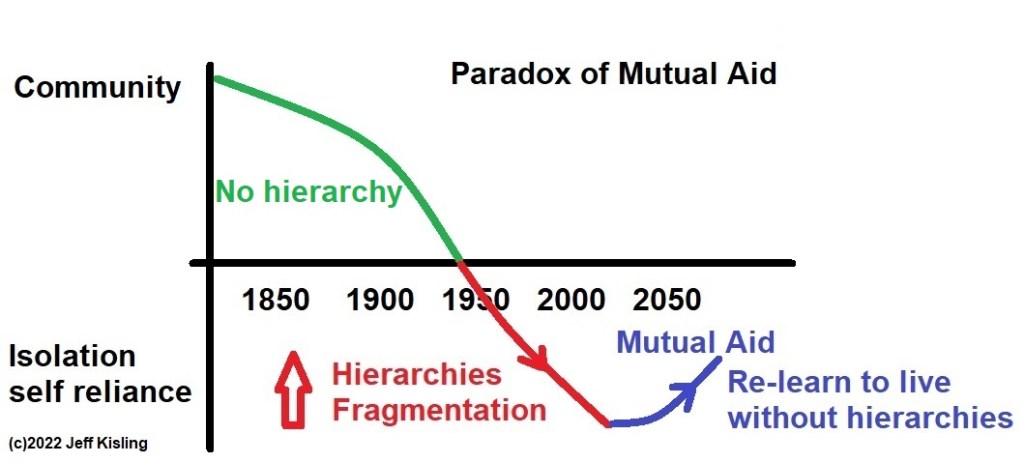
Today, in industrialized countries, all of our systems have become vertical hierarchies. Supervisors, teachers, politics, medicine, military, priests, and police. These hierarchies came about because of population growth and industrialization, which made our society more complex.

The primary reason for this switch to vertical hierarches was for control. The hierarchy for governance, for example, begins with the president, vice president, etc. Then Federal agencies, state governors, state agencies, mayors and city councils. These systems attempt to control us with laws, enforced by courts and police.

In a broader sense, the whole framework of capitalism and colonialism requires, and has viciously enforced vertical systems for control.


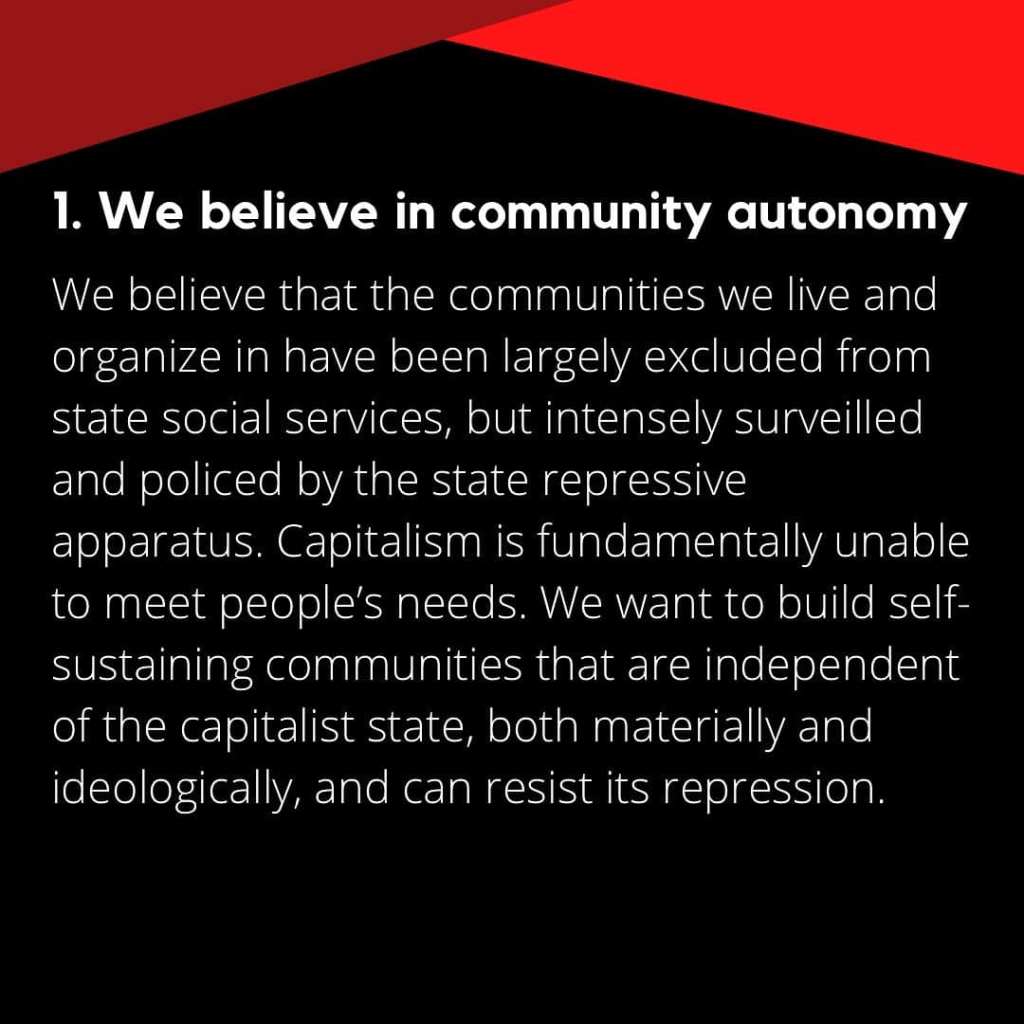
How does Mutual Aid replace these hierarchies? It does so by bringing governance and care back to local communities. At an earlier time, there might have been a debate about whether to do this. But since our current political chaos has paralyzed city, state, and federal governance, we will increasingly see the collapse of those systems. Hence another significant reason to build Mutual Aid communities now.

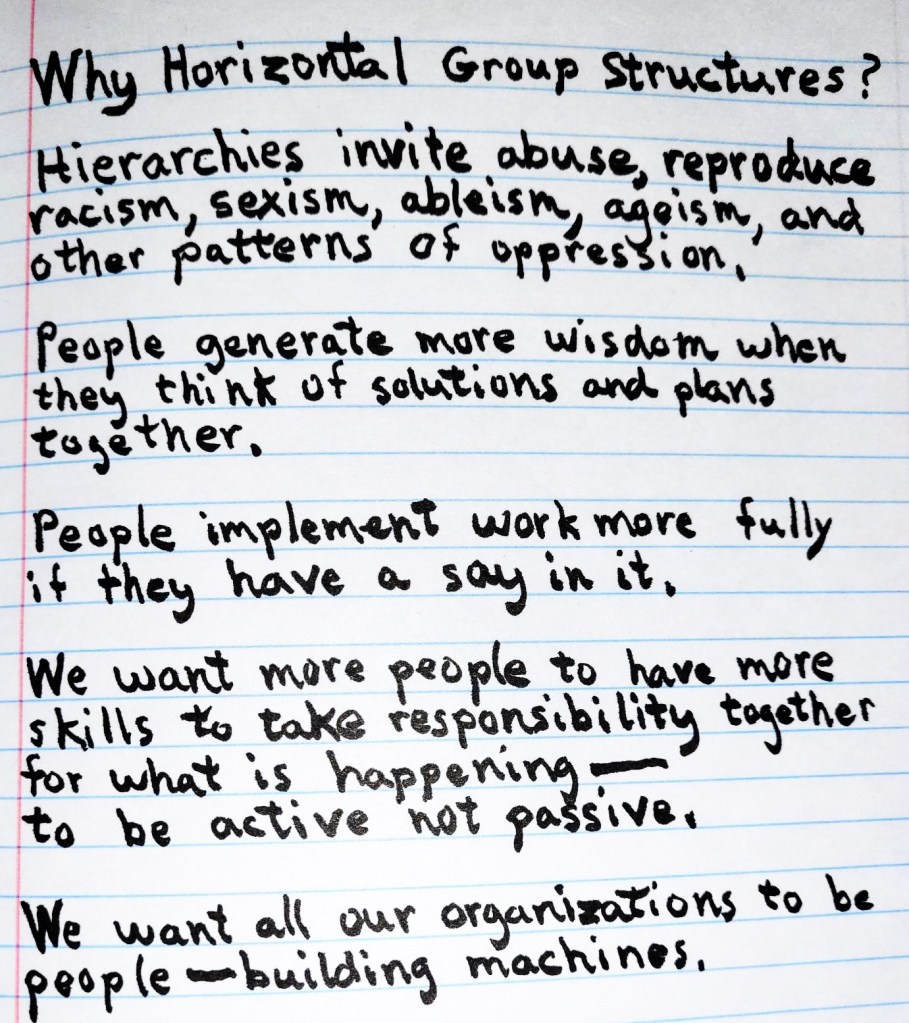
Mutual Aid is about a fundamentally different system of living in community. Mutual Aid is about living in a system of horizontal, flat, or no hierarchy. In horizontal group structures. A system that works in local neighborhoods and communities.

Trying to explain Mutual Aid is paradoxical, because that is the way peoples all over the world lived prior to industrialization. The way those in non-industrial places continue to live. The way our ancestors once lived.

People in our current, vertical hierarchies, don’t understand why we have to return to those ways. And why, if we decided to do so, it wouldn’t be easy to return to living without vertical hierarchies.

The problem is we bring our learned practices of hierarchy with us. We have forgotten how to live in a community without hierarchies. People become very uncomfortable when they realize they have forgotten how to act when order is not imposed by those above them in a vertical hierarchy.


“Mutual Aid is essential to our survival” by Dean Spake, Truthout, October, 28,2020


Because we bring our learned practices of hierarchy with us, a learning process is required to return to horizontal group structures.

As I was researching this, I came across this description of a book that I look forward to reading. Which describes my own experiences as a middle-class settler activist. It has taken me several years to learn how to be in a Mutual Aid community, and I’m still learning. Giving away food and providing for the houseless are public political actions. As have been public political actions for reproductive justice, against carbon pipelines, removing racist monuments and celebrating Indigenous Peoples Day. All of these actions occurred out in the community, on the streets. We have to be there to be transformed. There is no alternative to doing this together, in public.

And I’ve prayed a lot, with critical self-reflection, about all these things. And continue to pray.


Decolonizing Solidarity: Dilemmas and Directions for Supporters of Indigenous Struggles by Clare Land

Land argues that the predominant impulses which drive middle-class settler activists to support Indigenous people cannot lead to successful alliances and meaningful social change unless they are significantly transformed through a process of both public political action and critical self-reflection.

description from goodreads


This is a link to one PowerPoint presentation I have created about Mutual Aid.


Ideological commitment to destroying life on Earth

The recent article by George Monbiot (excerpts below) explains that the multitude of recent government policies and judicial capitulations that are dismantling any efforts to protect Mother Earth are not based on financial interests. The ideology of the ultra-rich is one committed to destroying life on Earth. “It’s no longer about money for them. It’s about brute power: about watching the world bow down before them. For this rush of power, they would forfeit the Earth.”

As Monbiot writes below, the changes needed to protect Mother Earth and all our relations cannot happen until we change our political systems.

Indigenous peoples have always known how to protect our environment. Which makes the policies of forced assimilation of native children and peoples all the more ignorant and reprehensible. We would not be in this catastrophic situation now if settler colonists had learned from native peoples. Can you imagine what that would have looked like?

What would be the political system that would allow us to honor the earth and each other? One alternative would be to build communities based on the concepts of mutual aid. (see: https://quakersandreligioussocialism.com/mutual-aid/ )

The following is from my mutual aid community, Des Moines Mutual Aid (DMMA).


But the final straw for me was a smaller decision. After two decades of disastrous policies that turned its rivers into open sewers, Herefordshire county council, following a shift from Tory to independent control, finally did the right thing. It applied to the government to create a water protection zone, defending the River Wye against the pollution pushing it towards complete ecological collapse. But in a letter published last week, the UK’s environment minister, Rebecca Pow, refused permission, claiming it “would impose new and distinct regulatory obligations on the farmers and businesses within the catchment”. This is, of course, the point.

When I began work as an environmental journalist in 1985, I knew I would struggle against people with a financial interest in destructive practices. But I never imagined that we would one day confront what appears to be an ideological commitment to destroying life on Earth. The UK government and the US supreme court look as if they are willing the destruction of our life support systems.

But even financial interests fail fully to explain what’s going on. The oligarchs seeking to stamp out US democracy have gone way beyond the point of attending only to their net worth. It’s no longer about money for them. It’s about brute power: about watching the world bow down before them. For this rush of power, they would forfeit the Earth.

Since 1985, I’ve been told we don’t have time to change the system: we should concentrate only on single issues. But we’ve never had time not to change the system. In fact, because of the way in which social attitudes can suddenly tip, system change can happen much faster than incrementalism. Until we change our political systems, making it impossible for the rich to buy the decisions they want, we will lose not only individual cases. We will lose everything.

It’s democracy v plutocracy – this is the endgame for our planet by George Monbiot, the Guardian, July 6, 2022


Public comments at Iowa Utilities Board

I was glad to see a number of friends, and others I don’t know, at yesterday’s monthly Iowa Utilities Board Meeting (IUB). Some traveled some distance. From Iowa City, for example.

And yet, it is discouraging to see so few people engaged with things like this carbon pipeline resistance. Additionally, it is crazy to see the US Supreme court gut the ability of the Environmental Protection Agency to protect almost anything. And the Biden administration doing all it can to stimulate oil production.

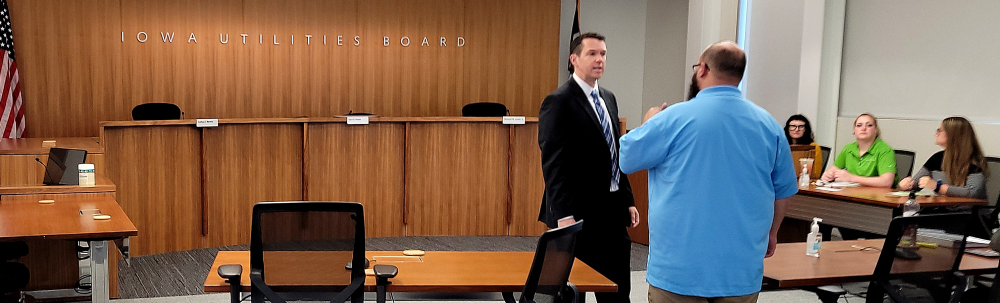
There was the expected Iowa State Patrol presence at the IUB, both outside and in the hearing room.

I was struck by the symbolism of the board versus the crowd. The board members on a dais, everyone dressed in suits. The participants dressed casually. Seated a long way from the board members.

Video monitors were all over the place. Initially displaying the agenda. But then during open comments, showing the time clicking down from three minutes, the limit for each person to comment. You could feel the reluctance of the board members to hear the comments. And yet, the instructions from the board to individual participants were polite.

I wish I could have stayed longer, but all the comment I heard were articulate expressions of strong opposition to the carbon pipelines. One county supervisor said he was convinced that the approval was a foregone conclusion, and these hearings were a sham. A farmer described how the pipeline would not only destroy his tile system but impact the farms upstream from his.


Reject Learned Helplessness. Be at the IUB tomorrow.

If you’ve been involved in any sort of activism, you know the frustration of the lack of participation by others.

One of my deepest frustrations has been related to the existential threat of environmental collapse. Fifty years ago, I moved to Indianapolis, and was horrified by the foul air, smog you could actually see, and barely breathe. I was led to live without owning a car from that point. And to try to get others to do whatever they could to stop the accelerating environmental devastation. Fifty years later, you can see where we are. In hindsight, we can imagine what might have happened if we had invested in mass transit back then.

I recently learned the term Learned helplessness from “The Vicious Cycle of American Collapse. How Social Collapse Happens-And Why Americans Feel So Powerless to Stop It” by umair haque, Eudaimonia, July 6, 2022

Tomorrow is a chance to reject learned helplessness. Instead, you can show up at the Iowa Utilities Board at 8:30 am. to object to the construction of carbon (CO2) pipelines. (Details below)


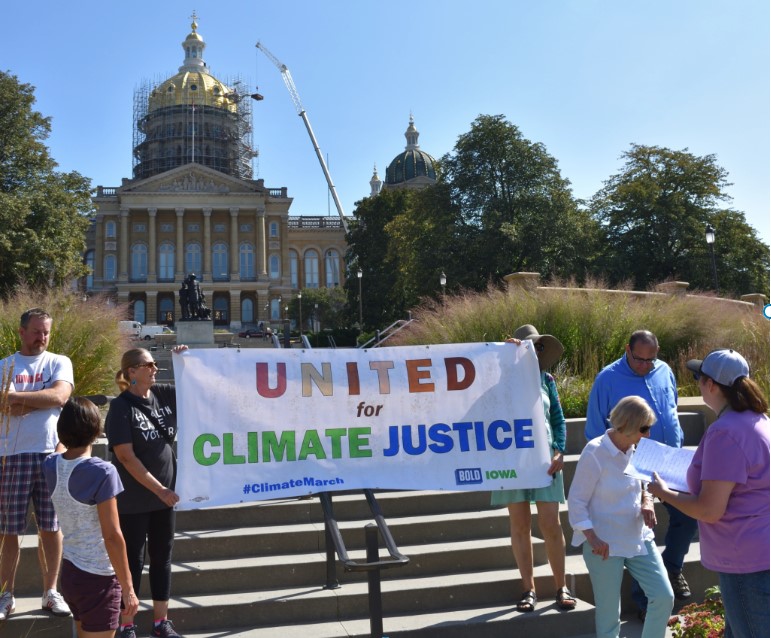
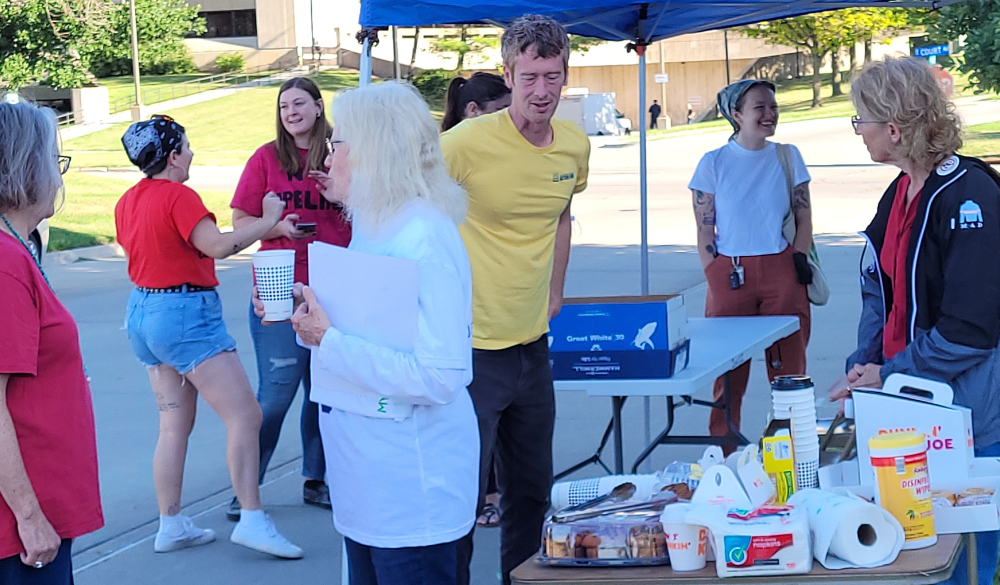
My years in Indianapolis were blessed by connections with wonderful people and organizations fighting for climate justice. I moved to Iowa July 1, 2017, and wondered how I could build new relationships here. By researching using social media, I learn about the work of Ed Fallon and Bold Iowa. I learned of an event to be held at the Iowa State Capitol to petition for the removal Richard W. Lozier, Jr. from the Iowa Utilities Board (IUB) because of his conflicts of interest. This photo of that event illustrates what a small number of people show up.

Although Ed wasn’t there, Sikowis Nobiss did attend. I reminded her we met when she spoke at Iowa Yearly Meeting (Conservative) a few months earlier. We have since worked on many projects together and I consider her a good friend of mine.

The Iowa Utilities Board (IUB) has been the site of a number of environmental protests because one of their functions is to approve pipeline projects.

Two people protesting the Dakota Access oil pipeline were arrested Wednesday in Des Moines after demanding a meeting at the Iowa Utilities Board.

Jessica Reznicek, who was arrested on a trespassing charge, had been fasting for 10 days with Travis O’Brennan, urging the board to revoke permits for construction on the Dakota Access oil pipeline in Iowa.

Two pipeline protesters arrested at Iowa Utilities Board by Charly Haley, and Linh Ta, Des Moines Register, Nov. 20, 2016

In July, 2017, Ruby Montoya, then a 27-year-old former preschool teacher, and Jessica Reznicek, then a 35-year-old activist, were arrested for damaging the sign at the Iowa Utilities Board.

Jessica Reznicek and Ruby Montoya, right, stand in front of the Iowa Utilities Board in July of 2017 and read statements taking credit for acts of sabotage against the Dakota Access pipeline. Courtesy of Des Moines Catholic Worker Archives

“Some may view these actions as violent, but be not mistaken. We acted from our hearts and never threatened human life nor personal property,” Montoya said. “What we did do was fight a private corporation that has run rampant across our country, seizing land and polluting our nation’s water supply. You may not agree with our tactics, but you can clearly see their necessity in light of the broken federal government and the corporations they represent.”

As a result of this admission, Montoya and Reznicek were indicted on nine felony charges of intentionally damaging energy infrastructure — a designation that can render a private, commercial company’s enterprise a matter of federal concern. 

‘You Strike a Match’ Why two women sacrificed everything to stop the Dakota Access pipeline by Julia Shipley, Grist, May 26, 2021

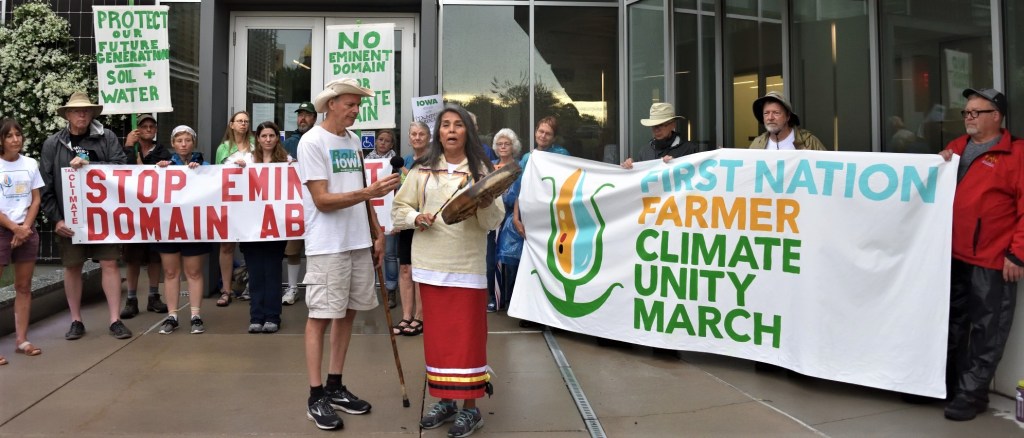
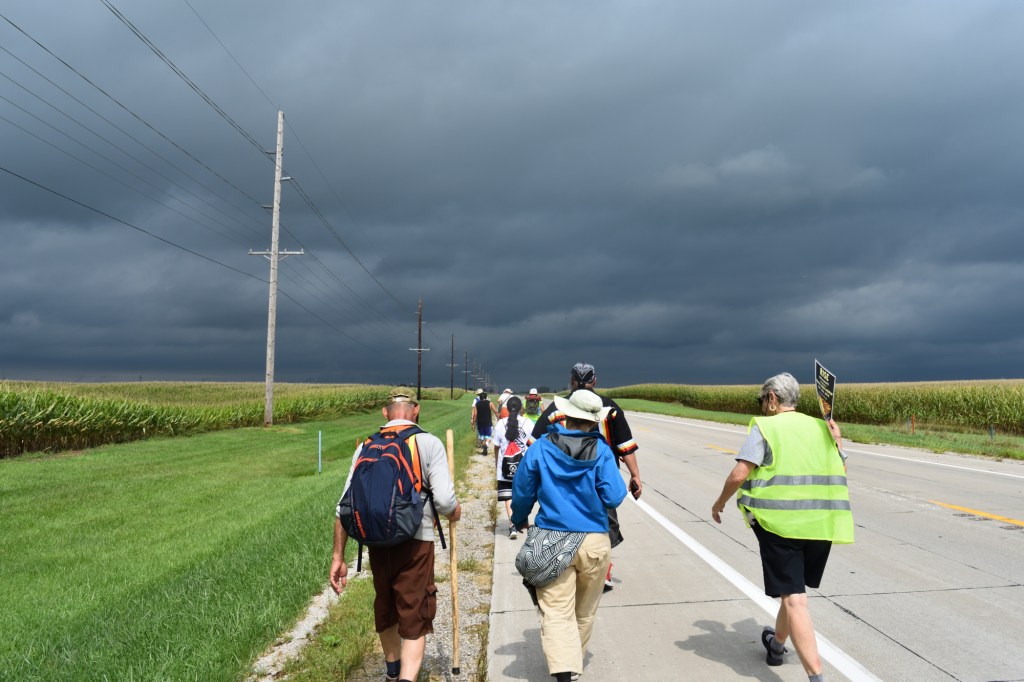
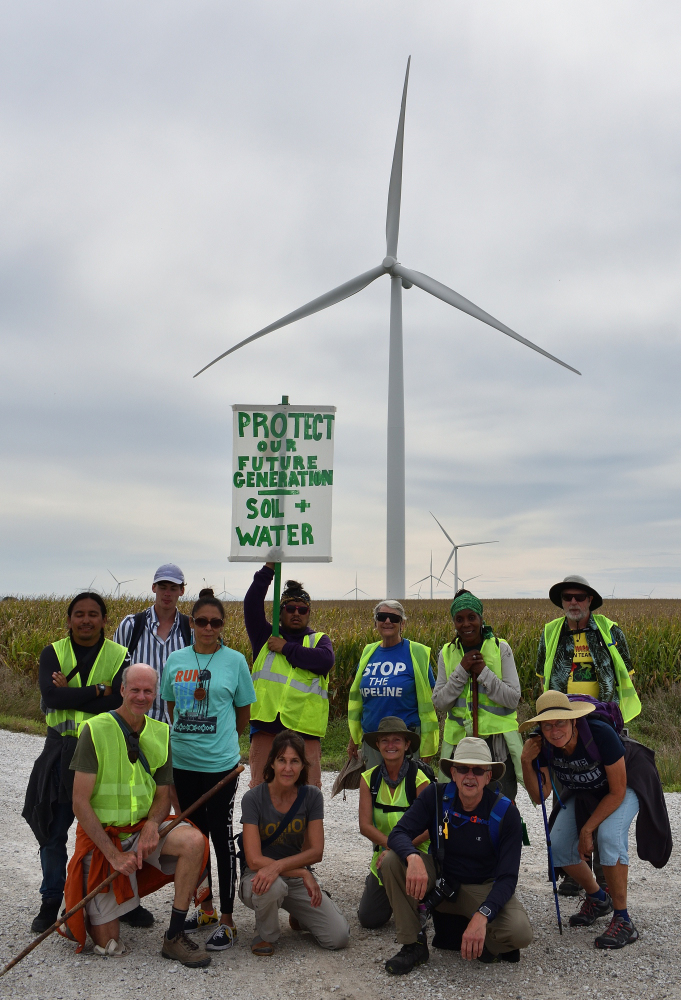
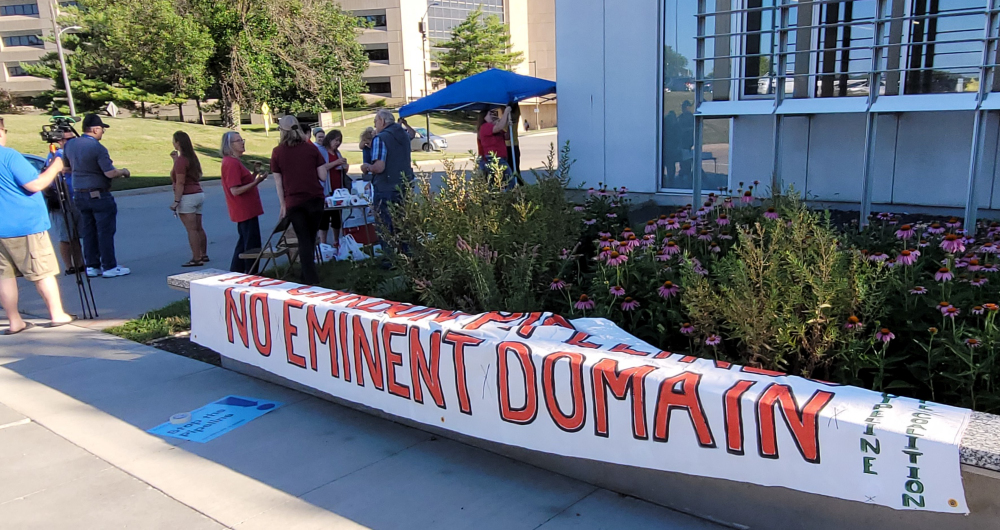
We were at the Iowa Utilities Board September 1, 2018, to start our sacred journey, the First Nation-Farmer Climate Unity March. A small group of us walked and camped along the path of the Dakota Access Pipeline, from our beginning here in Des Moines, to Fort Dodge, a distance of 94 miles, over eight days.

Regina Tsosie sings a song at the press conference at the Iowa Utilities Board regarding the improper use of eminent domain for the Dakota Access Pipeline. And the beginning of the First Nation-Farmer Climate Unity March.


Regina Tsosie sings a song at the press conference at the Iowa Utilities Board regarding the improper use of eminent domain for the Dakota Access Pipeline

Tomorrow, July 12, we will again gather at the Iowa Utilities Board, this time to object to the construction of carbon (CO2) pipelines in Iowa.

https://www.facebook.com/events/509509047578832

Please join us July 12th, 8:30 am at the Iowa Utilities Board (IUB) monthly board meeting. The board is preparing to handle permit requests for three hazardous carbon pipelines in Iowa.

There are many reasons why carbon pipelines should not be built, including:

  • these are unproven processes
  • even though the main argument for carbon pipelines is removal of carbon dioxide from the atmosphere, some of the captured carbon is actually used for more oil fracking
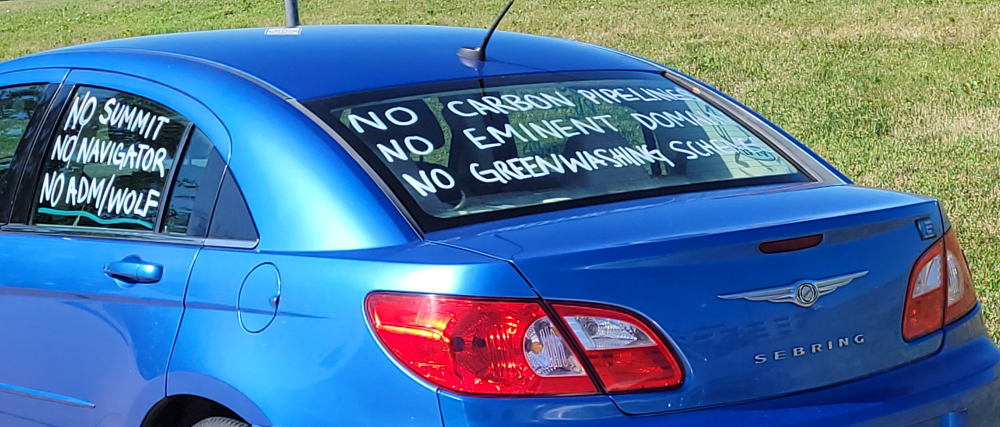
  • the abuse of eminent domain
  • and significant, long-term impacts on farmland.
  • In addition, these are hazardous material pipelines

When a carbon pipeline explodes, huge amounts of carbon dioxide escape into the air, replacing oxygen, and potentially killing people and animals. Such an explosion and some of those consequences actually happened in Satartia, Mississippi. See: CO2 Pipeline Dangers.

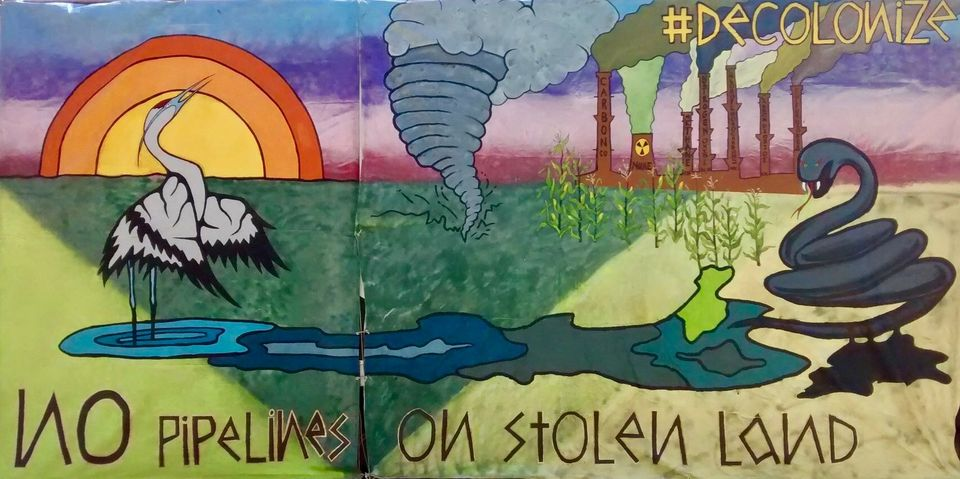
No CO2 Pipelines in Iowa


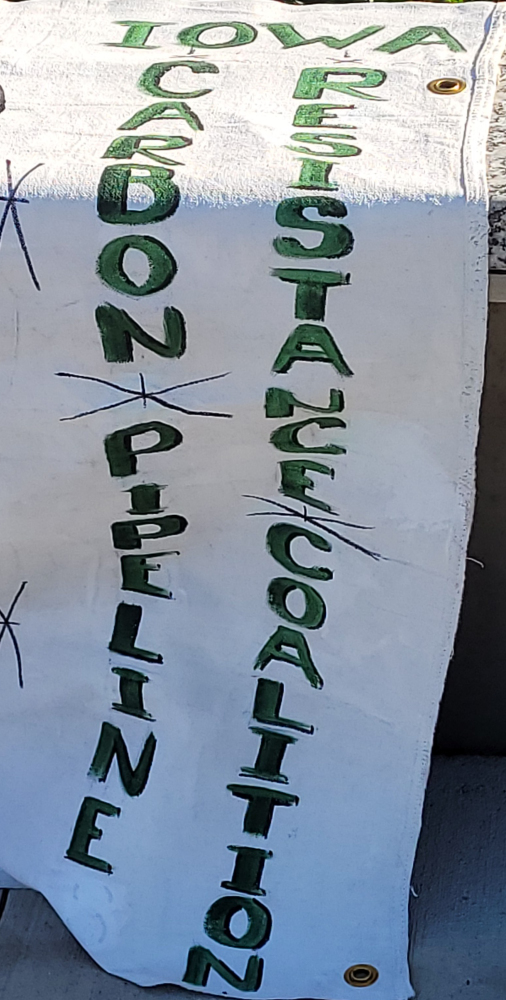
Join the Iowa Carbon Pipeline Resistance Coalition for a rally at the Iowa Utilities Board (IUB) monthly board meeting. We won’t stand by as corporations endanger our land, our communities, and our climate by abusing eminent domain. CO2 pipelines pose a multitude of threats to all Iowans. From destroying farmland to the threat of asphyxiation if a pipeline leaks, Iowans are carrying all the risks, while Wall Street and the fossil fuel industry make off with the reward.

As the Iowa Utilities Board prepares to handle permit requests for three hazardous carbon pipelines, it’s crucial that they know 80% of Iowans oppose using eminent domain for carbon pipelines. It’s time Iowa’s decision-makers learn that we will not accept greedy corporate interests being put before their needs.

Let’s show the Iowa Utilities Board how powerful we are when we stand together!

https://www.facebook.com/events/509509047578832/


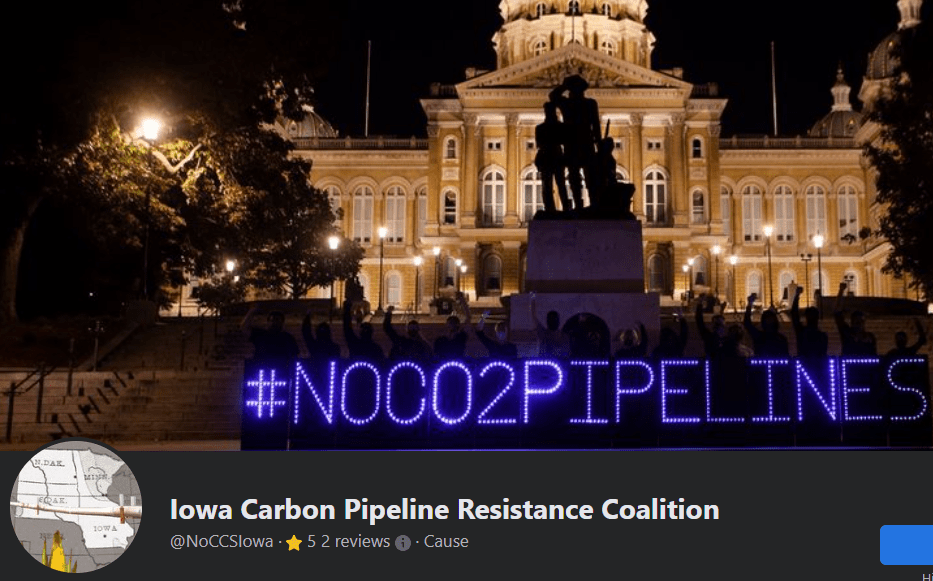
Iowa Carbon Pipeline Resistance Coalition

https://www.facebook.com/NoCCSIowa


Carbon Capture and Storage (CCS) is not the answer to the climate emergency. CCS is unproven, dangerous and delays real solutions to the climate crisis such as energy conservation, regenerative agriculture and renewable energy.
https://www.facebook.com/NoCCSIowa


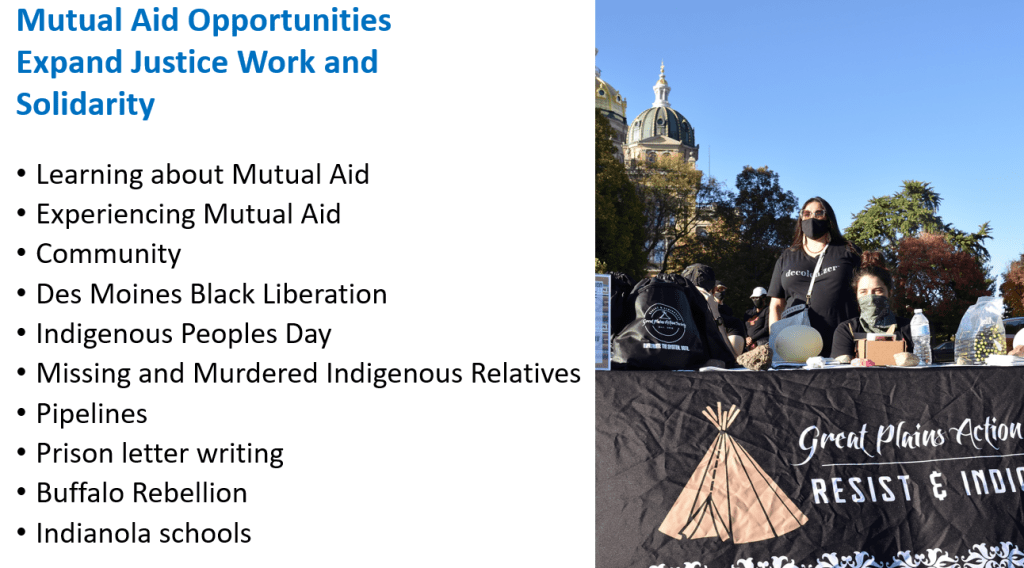
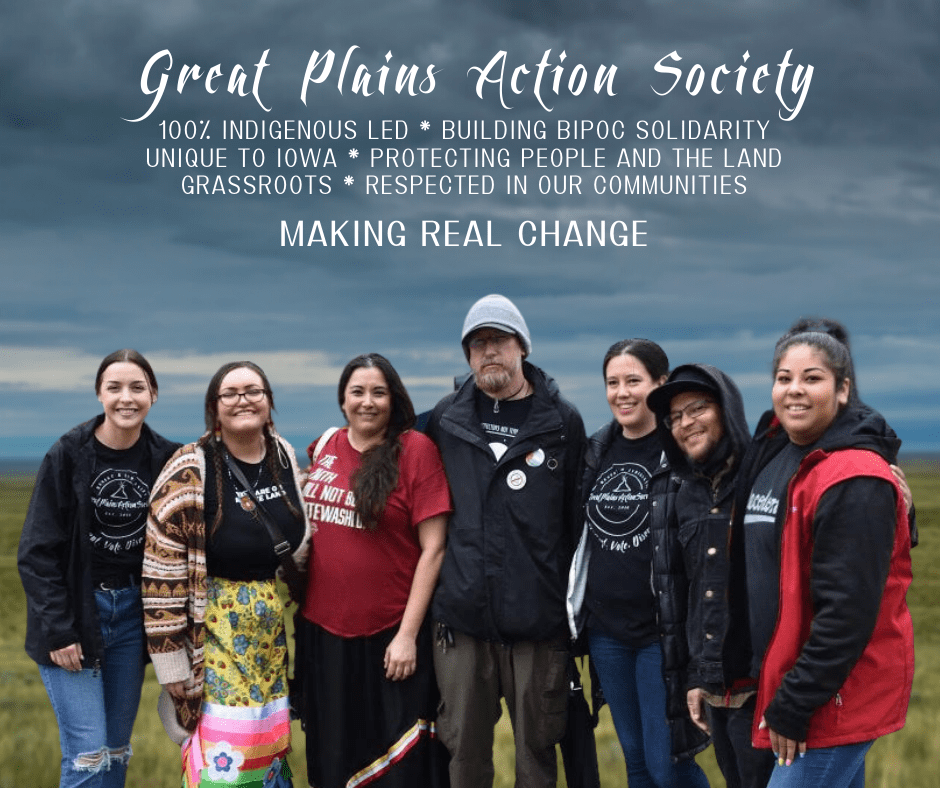
Great Plains Action Society

https://www.facebook.com/GreatPlainsActionSociety

Great Plains Action Society. An indigenous collective working to resist and indigenize colonial institutions, ideologies, and behaviors. https://www.facebook.com/GreatPlainsActionSociety


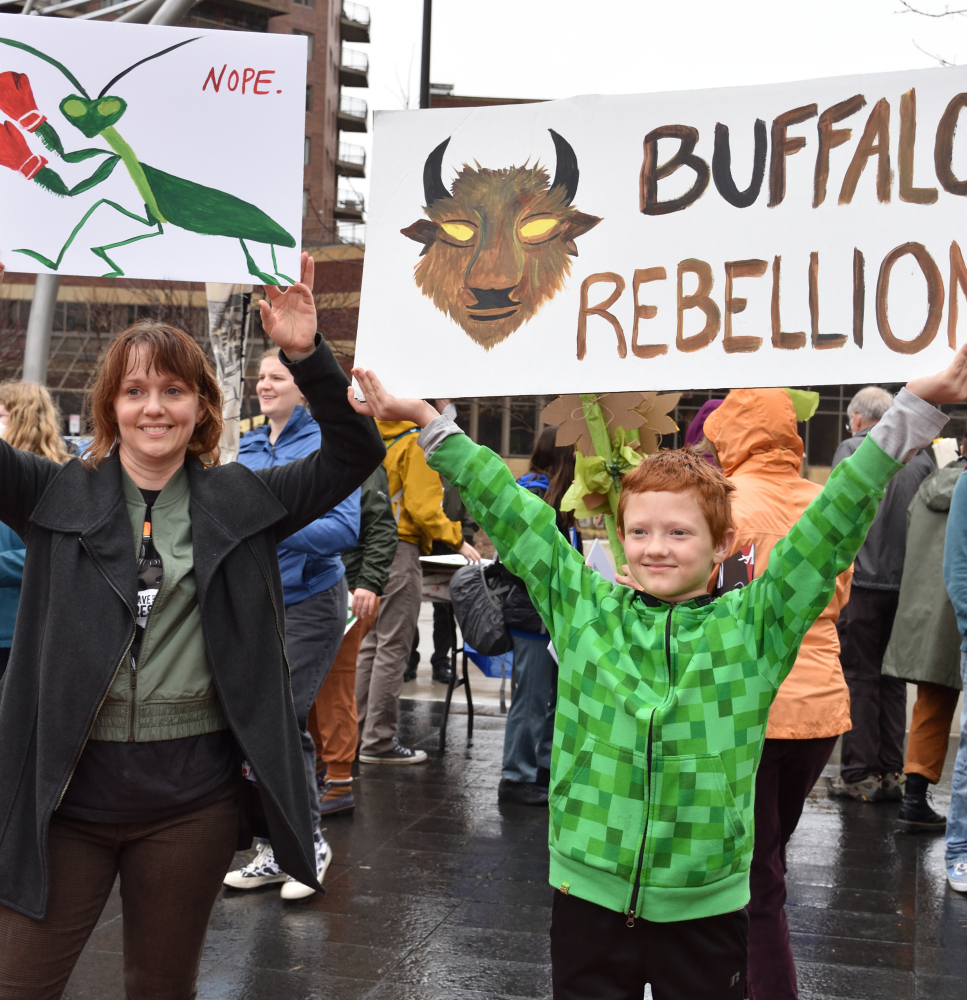
Buffalo Rebellion

https://www.facebook.com/IowaBuffaloRebellion

Buffalo Rebellion is a coalition of Iowa grassroots organizations that are growing a movement for climate action that centers racial and economic justice!

Formed in 2021, Buffalo Rebellion is comprised of seven Iowa organizations: Great Plains Action Society, DSM Black Liberation Movement, Iowa Migrant Movement for Justice, Sierra Club Beyond Coal, Cedar Rapids Sunrise Movement, SEIU Local 199, and Iowa CCI
https://www.facebook.com/IowaBuffaloRebellion


Iowa Sierra Club

https://www.facebook.com/IowaSierraClub/


Ní Btháska Stand

https://www.facebook.com/NiBthaskaStandCollective

Ní Btháska Stand

Direct Action Collaboration between Great Plains Action SocietNí Btháska Stand Collective at Iowa State Capitol sending a strong message to policymakers:

#NoCarbonPipelines
#StopNavigator
#StopSummit
#NoCCS
https://www.facebook.com/NiBthaskaStandCollective


https://www.facebook.com/iowacci

Iowa Citizens for Community Improvement
With thousands of members from all walks of life, we get things done on critical issues
https://www.facebook.com/iowacci


Improvisation and the Quantum of Consciousness

Every once in a while, I am very grateful to come across something so Spirit provoking. Natalie Hodges is a violinist and writes about improvisation in music.

It is both thrilling and terrifying to be so reminded that we know ourselves only incompletely and the future not at all; that inside us dwell parts so unexplored as to be capable of surprising the conscious totality — parts drawing on some subterranean river of lore to make instantaneous decisions we never could have planned and did not anticipate.

Lurking in it all is the haunting intimation of the illusion of choice, gnawing at the fundament of the self: Who exactly is doing the deciding that surprises the decided-for?

And yet out of such confusion, such delight. We call these delightful and disorienting deviations from the script improvisation. Nowhere are they more impressive, or more illustrative of the broader paradoxes of the self, than in music.

That is what violinist Natalie Hodges explores in one of the most enchanting parts of Uncommon Measure: A Journey Through Music, Performance, and the Science of Time (public library) — her altogether fascinating inquiry into the poetic science of sound and feeling.

Improvisation and the Quantum of Consciousness. Inside the brain’s secret portal to remembering the future by Maria Popova, themarginalian.org, July 6, 2022


In improvisation, the generation of material is spontaneous, but it’s never random. This in itself constitutes a paradox: If you can choose to play anything, with equal probability, what could make you choose any one thing — on the spur of the moment, blindly, trusting, without thinking about it — except chance? In other words, how can the spontaneous be anything but random; how can music made in a jolt of instinct, on a bolt out of the now, be endowed with a form that makes sense in time, as though it had been written and rewritten and practiced and memorized beforehand? And how, in making that first, most instinctive, most desperate decision, do we choose — if it really can be called “choosing,” if we really choose at all?

Natalie Hodges

Maria Popova says improvisation is nowhere more impressive than in music. And Natalie Hodges asks how improvisation can be anything but chance.

“If you can choose to play anything, with equal probability, what could make you choose any one thing — on the spur of the moment, blindly, trusting, without thinking about it — except chance?”

As a Quaker, when I read this, I wondered if the idea improvisation could be a way to express how we listen for the Spirit.

There are similarities between improvisation and Spiritual guidance. “It is both thrilling and terrifying to be so reminded that we know ourselves only incompletely and the future not at all; that inside us dwell parts so unexplored as to be capable of surprising the conscious totality — parts drawing on some subterranean river of lore to make instantaneous decisions we never could have planned and did not anticipate.”

But there is a fundamental distinction between Spiritual guidance and improvisation. Improvisation might be a matter of chance. Whereas guidance from the Spirit is not.


Support Truth and Healing Commission

On June 22, the Senate Committee on Indian Affairs (SCIA) held an oversight hearing on the findings of volume one of the Interior Department’s Federal Indian Boarding School Initiative Report.  (FCNL)

Following is information from the National Native American Boarding School Healing Coalition and the Friends Committee on National Legislation (FCNL) about how we can support Senate Bill 2907 to establish a Truth and Healing Commission on Indian Boarding School Policies.

https://mailchi.mp/nabshc.org/nabs-requesting-your-story-6100444


Senate Committee on Indian Affairs Holds Hearing to Address Legacy of Indian Boarding Schools

On June 22, the Senate Committee on Indian Affairs (SCIA) held an oversight hearing on the findings of volume one of the Interior Department’s Federal Indian Boarding School Initiative Report. They also held a legislative hearing to receive testimony on the Truth and Healing Commission on Indian Boarding School Policies Act (S. 2907).

Committee members asked about efforts to revitalize Native languages and what Congress can do to address some of the consequences of former boarding school policy. “I believe that our obligations to Native communities mean that federal policies should fully support and revitalize Native health care, education, Native languages, and cultural practices that prior federal Indian policies, like those supporting Indian boarding schools, sought to destroy,” said Interior Secretary Deb Haaland.

June 2022: Native American Legislative Update by Portia Kay^nthos Skenandore-Wheelock, FCNL, June 29, 2022