Foundational stories: Finding accomplices

“There’s nothing more radically activist than a truly spiritual life. And there’s nothing more truly spiritual than a radically activist life.”

Brian McLaren, Naked Spirituality

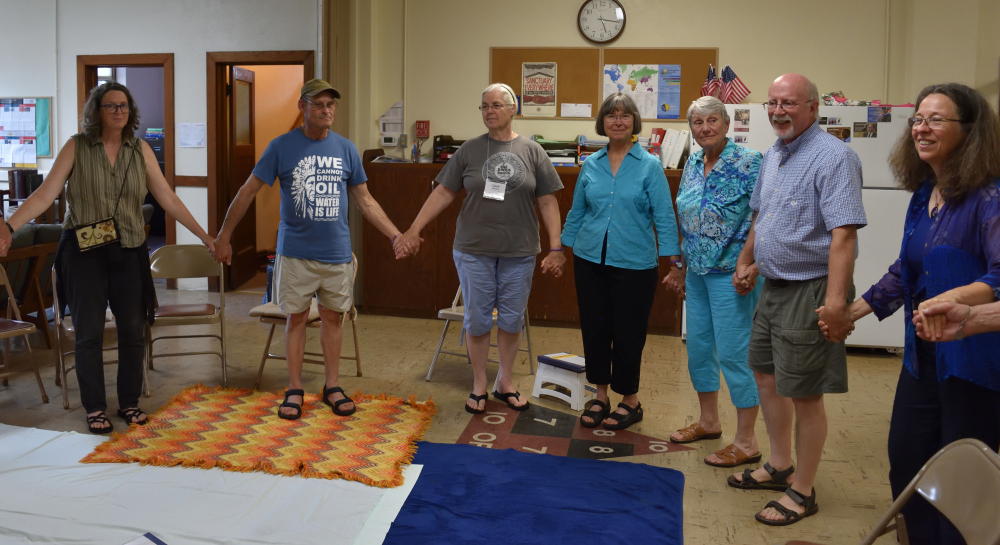
At the dawn of a new day, I listen to hear what I will write. I did not expect to be writing about accomplices today. But as I prayed about the next episode of this series of foundational stories, I am trying to express what or who I was looking for when I retired and moved back to Iowa (2017).

This quote immediately came to mind. “Destroy” might sound extreme, but the author is one of the most nonviolent people I know.

Randomly passing an accomplice on the street and throwing up a fist at each other as we go our separate ways to destroy all that is rotten in this world will never fail to give me extra energy and a single tear of gratitude for what this city is creating.

Mutual Aid friend

I leave the author unnamed because we never know what the authorities will use against us. I include myself in this by saying “against us“. I say Mutual Aid friend because we are both involved in a Mutual Aid community, which means we all support each other.

Although accomplice is defined as a person who helps another commit a crime, the meaning in the quote is more like associate or collaborator.

Or is it?

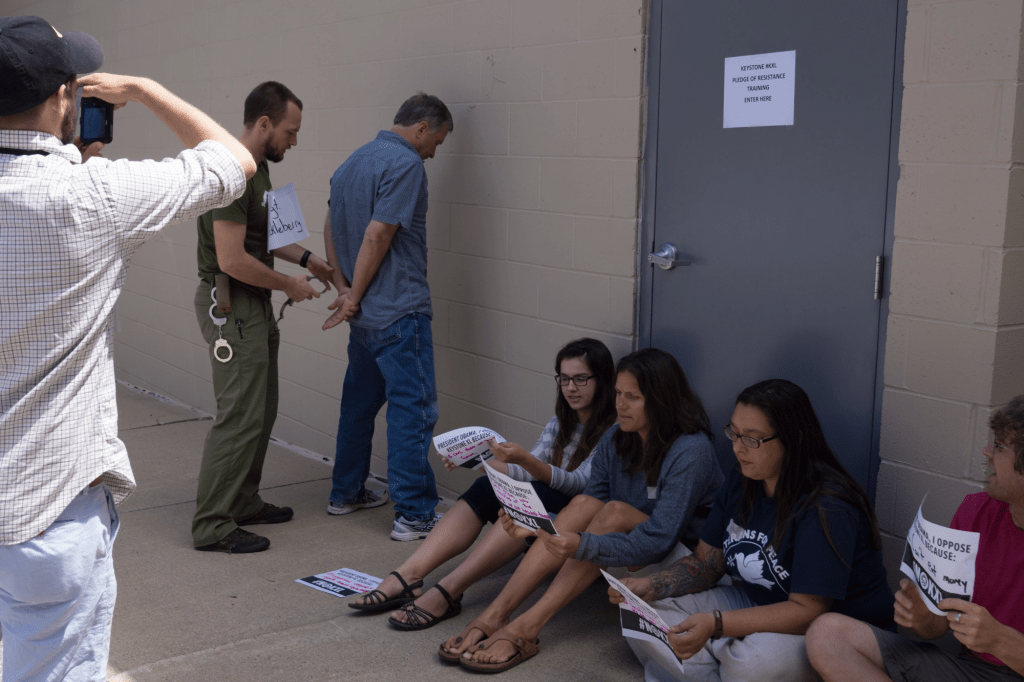
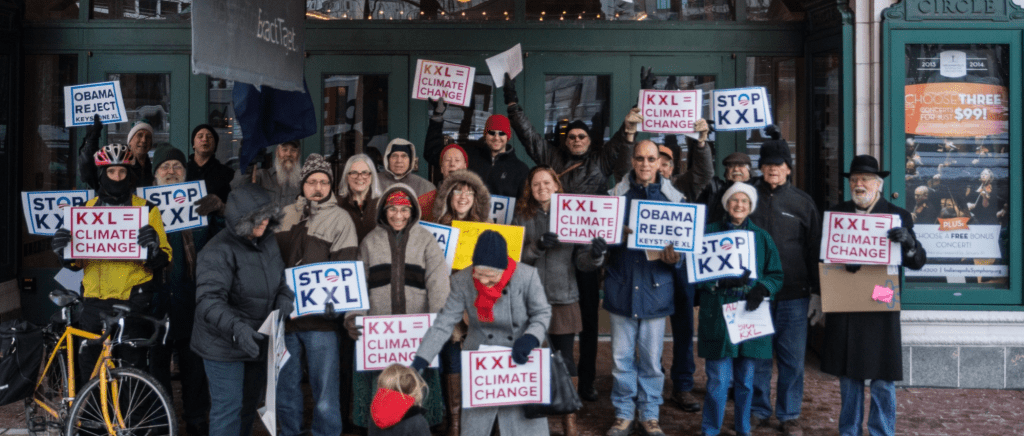
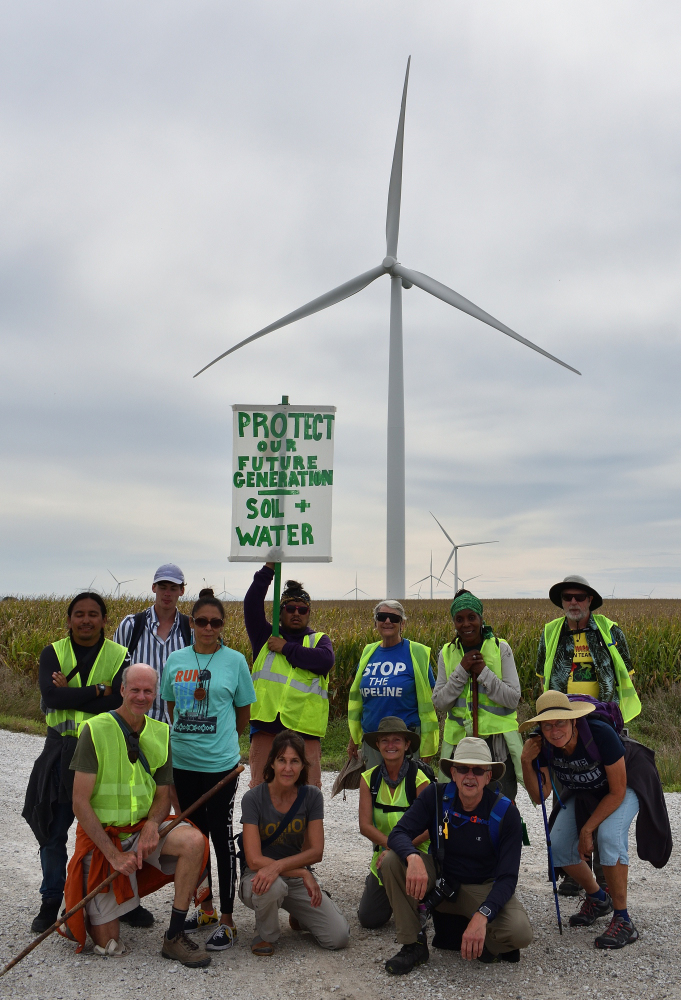
Nonviolent civil disobedience most often involves intentionally committing a crime. I previously wrote about being trained as a trainer for nonviolent direct actions, i.e. the Keystone Pledge of Resistance. And being prepared to break the law by blocking the doors of the Federal building in downtown Indianapolis, if necessary, to try to stop the construction of the Keystone XL pipeline.

I intentionally broke the law when I resisted the draft.

And there is the whole question of what is legal and who determines that? Legality and justice are not the same. Laws often enforce injustice, protecting the status quo.

The Doctrines of Discover gave permission to steal the land from and kill indigenous peoples all over the world. Manifest destiny said the expansion of white settlers across the land was justified and inevitable. There is the institution of enslavement. Forced assimilation.


…Under a government which imprisons any unjustly, the true place for a just man is also a prison. The proper place to-​day, the only place which Massachusetts has provided for her freer and less desponding spirits, is in her prisons, to be put out and locked out of the State by her own act, as they have already put themselves out by their principles. It is there that the fugitive slave, and the Mexican prisoner on parole, and the Indian come to plead the wrongs of his race, should find them; on that separate, but more free and honorable ground, where the State places those who are not with her, but against her — the only house in a slave State in which a free man can abide with honor. If any think that their influence would be lost there, and their voices no longer afflict the ear of the State, that they would not be as an enemy within its walls, they do not know by how much truth is stronger than error, nor how much more eloquently and effectively he can combat injustice who has experienced a little in his own person. Cast your whole vote, not a strip of paper merely, but your whole influence. A minority is powerless while it conforms to the majority; it is not even a minority then; but it is irresistible when it clogs by its whole weight. If the alternative is to keep all just men in prison, or give up war and slavery, the State will not hesitate which to choose. If a thousand men were not to pay their tax-​bills this year, that would not be a violent and bloody measure, as it would be to pay them, and enable the State to commit violence and shed innocent blood. This is, in fact, the definition of a peaceable revolution, if any such is possible. If the tax-​gatherer, or any other public officer, asks me, as one has done, “But what shall I do?” my answer is, “If you really wish to do anything, resign your office.” When the subject has refused allegiance, and the officer has resigned his office, then the revolution is accomplished. But even suppose blood should flow. Is there not a sort of blood shed when the conscience is wounded? Through this wound a man’s real manhood and immortality flow out, and he bleeds to an everlasting death. I see this blood flowing now…

Henry David Thoreau

I hope the foundational stories I’ve written thus far illustrate that what has been meaningful for me is to find people and communities who act instead of just talk. I was looking for such people and organizations to work with when I moved to Iowa. I’m blessed to have been led to them.

Foundational stories: Videos

[Note: This is a continuation of a series of posts about the evolution of my foundational stories, which are related to the intersection between my Quaker faith, protecting Mother Earth, and photography. As is often the case, it is taking me much longer than expected to tell my foundational stories (See: https://quakersandreligioussocialism.com/?s=foundational). Dramatic changes in the world have me re-evaluating how I see my Quaker faith, love of Mother Earth, and photography now. And seeking the way forward.]

There are many branches of these stories. Thus far the focus has primarily been on being a water protector, protecting Mother Earth, although my Quaker faith and photography are also parts of almost every story.

Having spent my adult life in Indianapolis, I returned to Iowa when I retired at the end of June, 2017.

But before I begin the Iowa stories, there are a couple more from Indianapolis.

I mentioned the Kheprw Institute (KI), a Black youth mentoring community I was involved with, in an earlier story about the Keystone Pledge of Resistance. KI played a huge role in my education about faith, social, racial, and environmental justice. I plan to share those stories later.

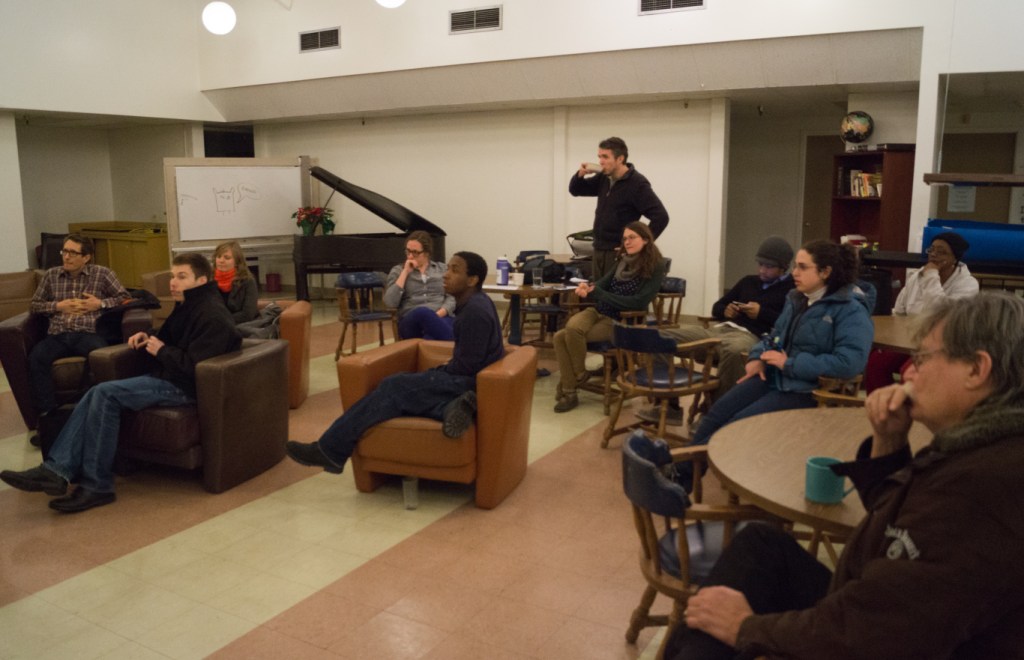
KI allowed us Keystone Action Leads to speak at a public meeting about the Keystone Resistance. Each of us spoke about why we were willing to risk arrest to stop the pipeline. We hadn’t really spoken about this before, and I was moved by what my friends said. I could tell the audience was as well.

Kheprw Institute, Indianapolis

Additionally, Ra Wyse, associated with KI, interviewed Aghilah Nadaraj (KI) and I about the Dakota Access pipeline. Following is the audio from that interview with a slideshow of photos I had taken.

Dakota Access Pipeline

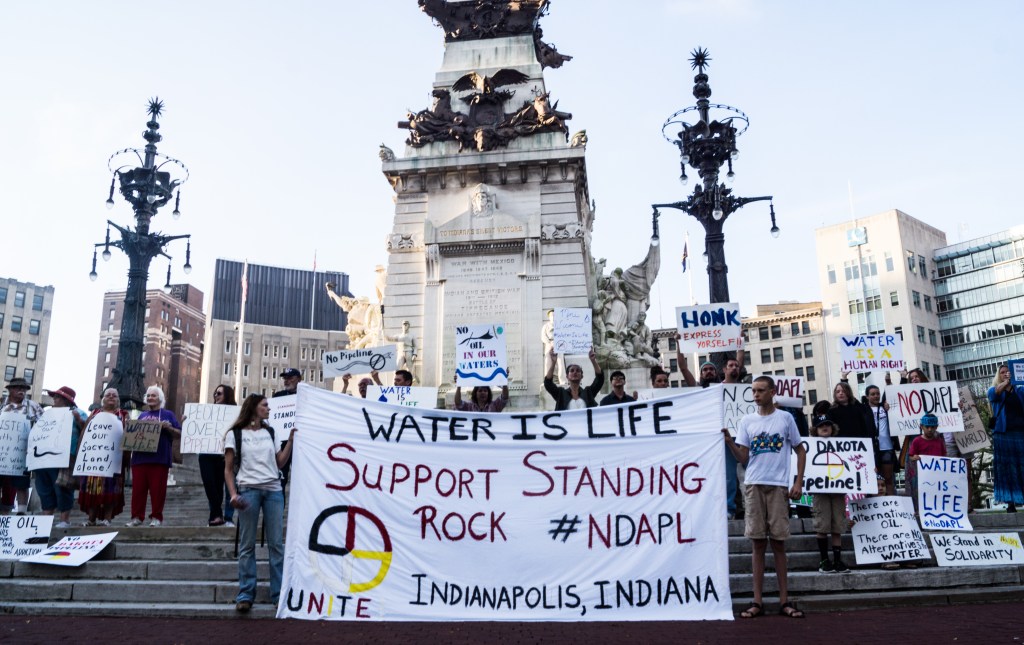
Coming full circle in a way, the video below is of me talking about the Keystone Pledge of Resistance at a Dakota Access Pipeline gathering at the Indiana State Capitol in 2017. That was a moving ceremony for those of us who had been working on the Dakota Access pipeline together.


I previously shared the Keystone Pipeline video Derek Glass and I made: https://youtu.be/gf08zb7t6UQ


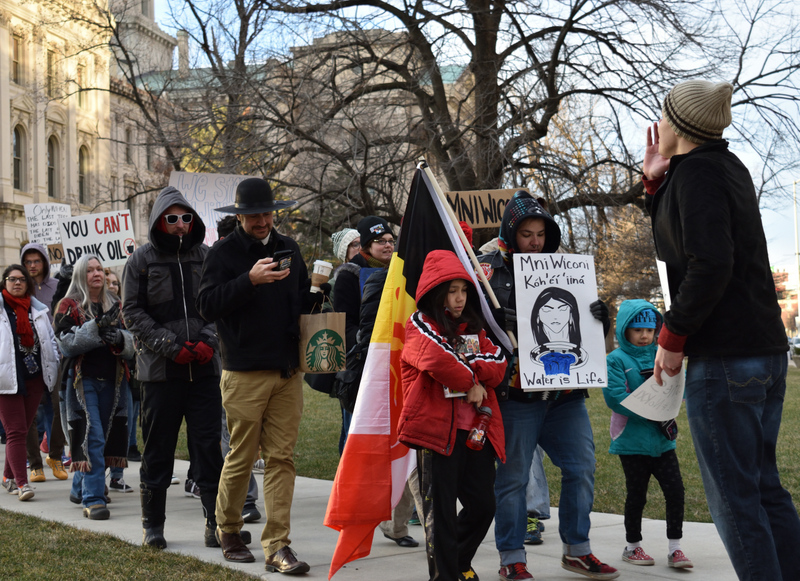
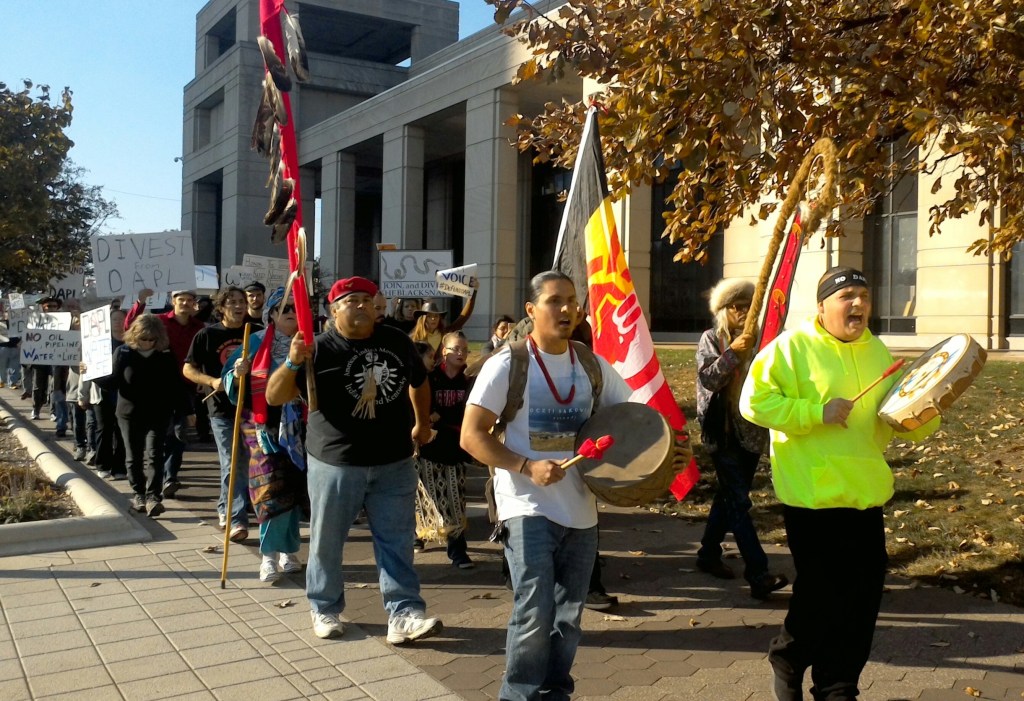
Those of us involved with DAPL supported Alex Red Bear when he wanted to organize a gathering and march related to DAPL in downtown Indianapolis.


NODAPL at PNC bank


Foundational Stories: DAPL beginnings

[Note: This is a continuation of a series of posts about the evolution of my foundational stories, which are related to the intersection between my Quaker faith, protecting Mother Earth, and photography. The following occurred when I was living in Indianapolis.]

The previous post described how those of us trained to bring attention to the Keystone XL pipeline connected with Joshua Taflinger and Brandi Herron of the White Pines Wilderness Academy. They wanted to support those at Standing Rock who were praying to stop construction of the Dakota Access pipeline (DAPL).

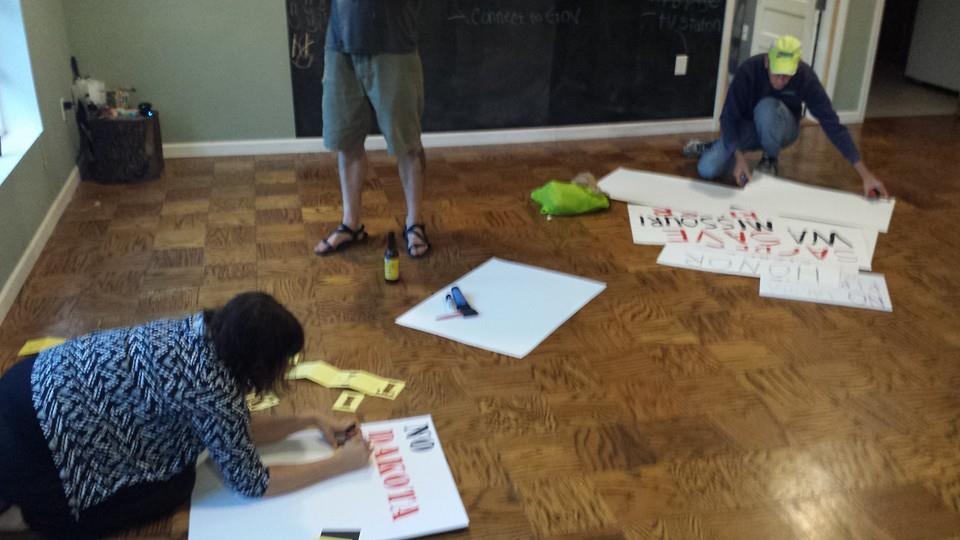
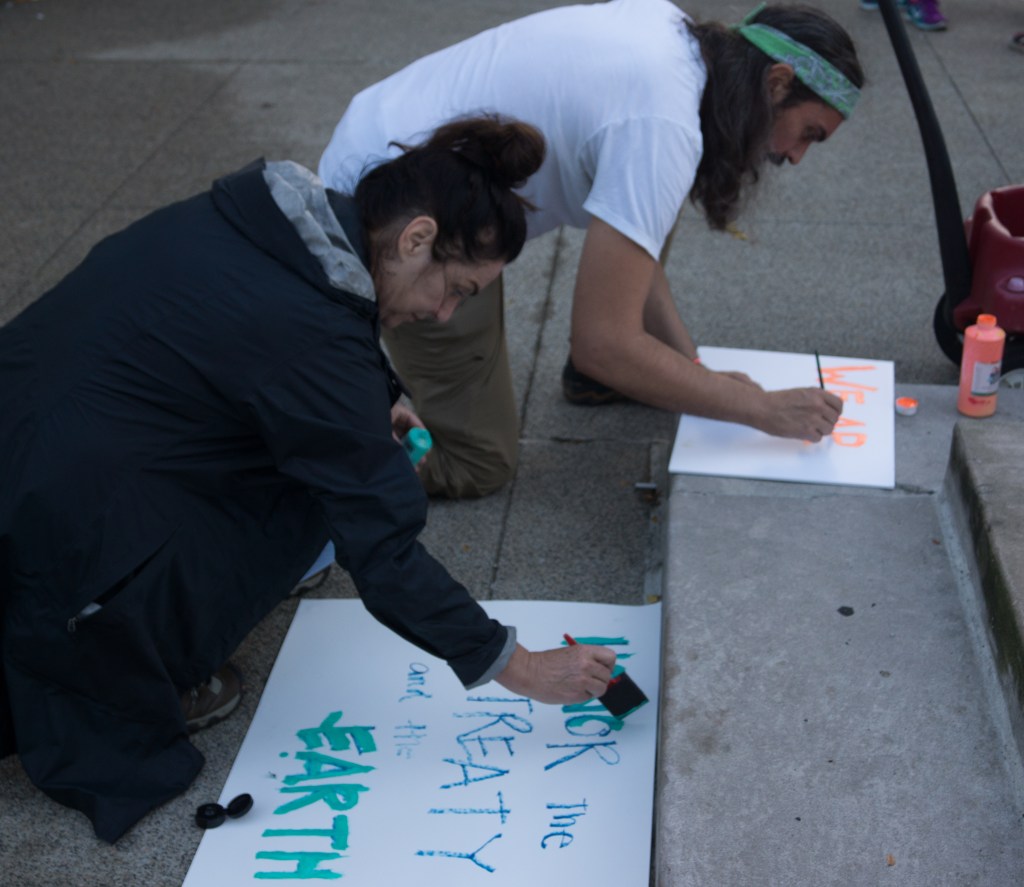
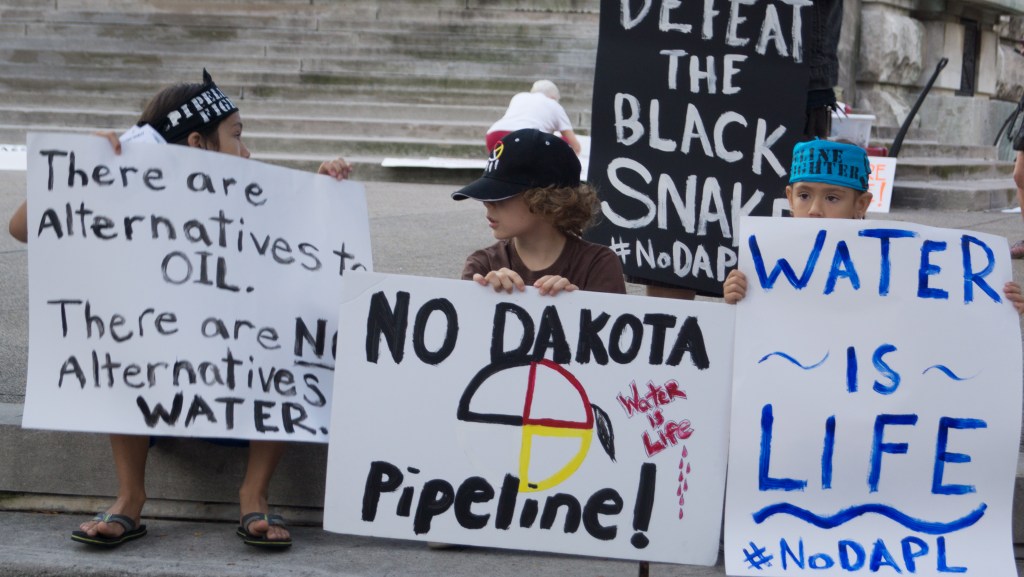
This photo was taken the first time we gathered at the Wilderness Academy, 9/8/2016. They had already made that great sign that was brought to all our gatherings, including the first one on the Circle in downtown Indianapolis the next day. The second photo from the same evening shows me inside the Academy making additional signs. The next morning sign making supplies were brought downtown where people made more of them.

Gathering at White Pines Wilderness Academy to plan first action related to the Dakota Access Pipeline, Indianapolis
Me making NODAPL signs at White Pines Wilderness Academy

Making signs at a gathering in downtown Indianapolis

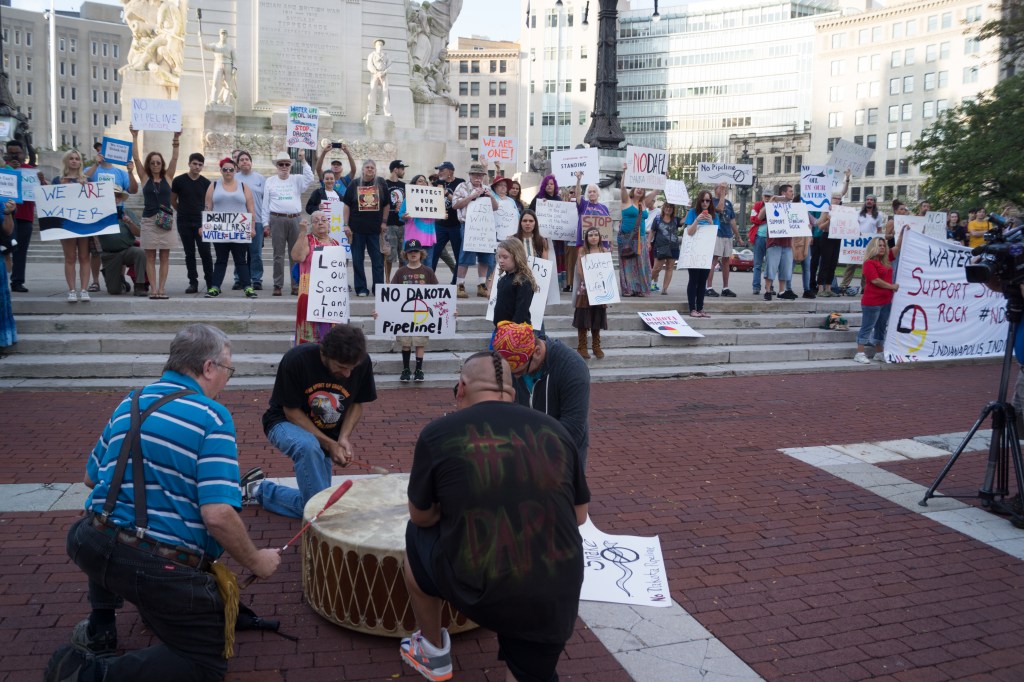
That gathering downtown on 9/9/206 was the first time Native Americans joined us. Sage was burned and there was drumming.

Burning sage

Drummers on the Circle, downtown Indianapolis

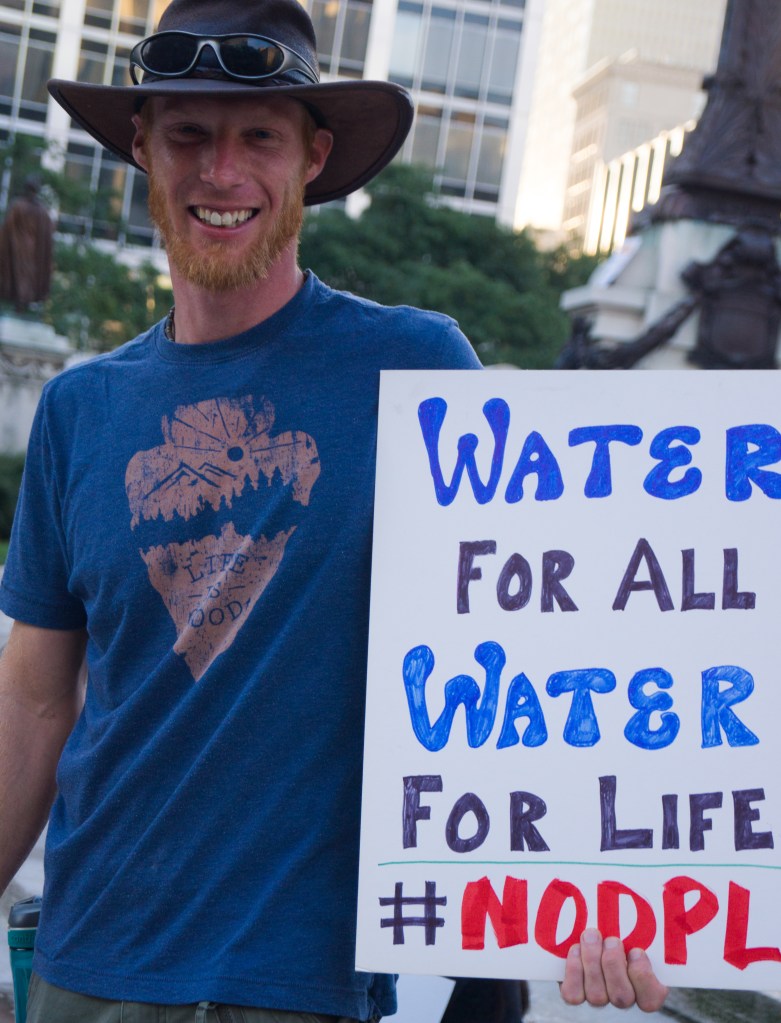
These are some photos from that gathering. Joshua is in the first photo.


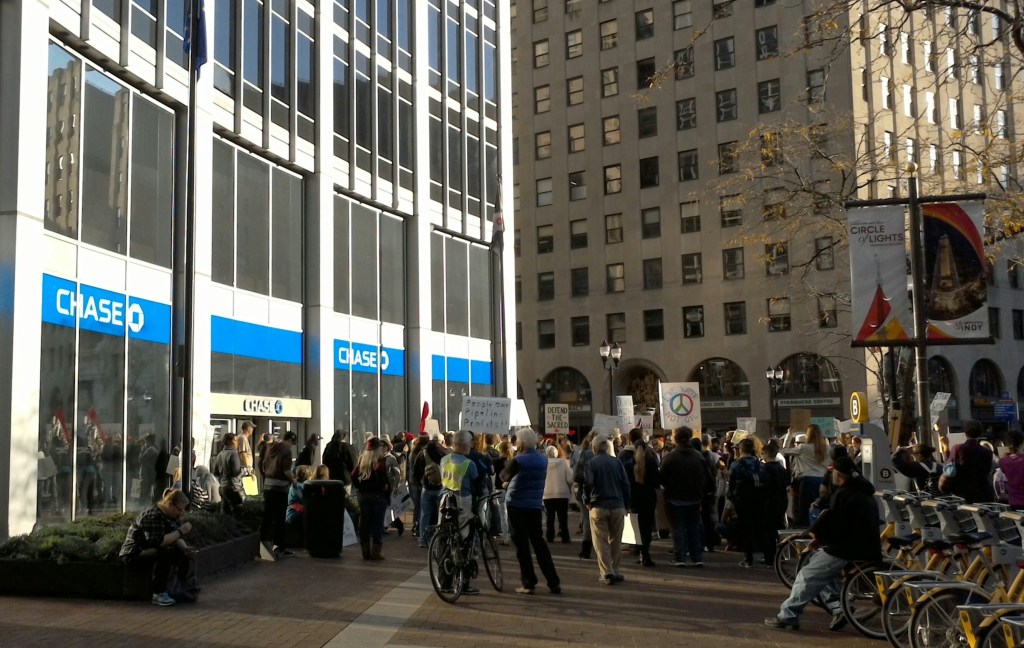
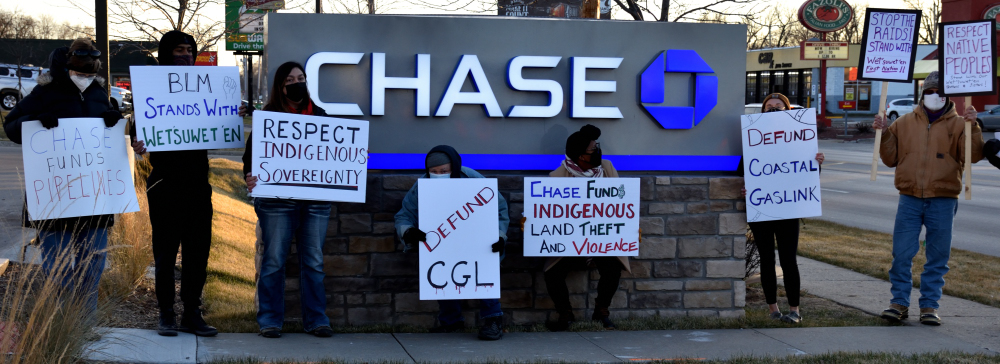
On November 15, 2016, we gathered to go to the two banks in Indianapolis that were involved in funding DAPL, which were PNC and Chase. We stood outside each bank in silence as those who had accounts went in to close them. $110,000 was withdrawn that day.


I had my own experiences when I was living in Indianapolis, at the downtown Chase bank, where I closed my account.


Divestment is a strategy that has been used in many instances related to funding fossil fuel projects. In November 2015, several of us went to the Indianapolis offices of Morgan Stanley. We had a polite conversation with the manager about funding coal projects.


On February 3, 2018, Super Bowl weekend, Ed Fallon organized a van trip to Minneapolis to call attention to USBank’s funding of fossil fuel projects. USBank’s headquarters are in Minneapolis, and the game was played at the USBank stadium.

Although we had communicated by email, this was the first time I met Ed. Among the others involved were Sikowis (Christine) Nobiss and Donnielle Wanatee. It was a beautiful day with falling snow.


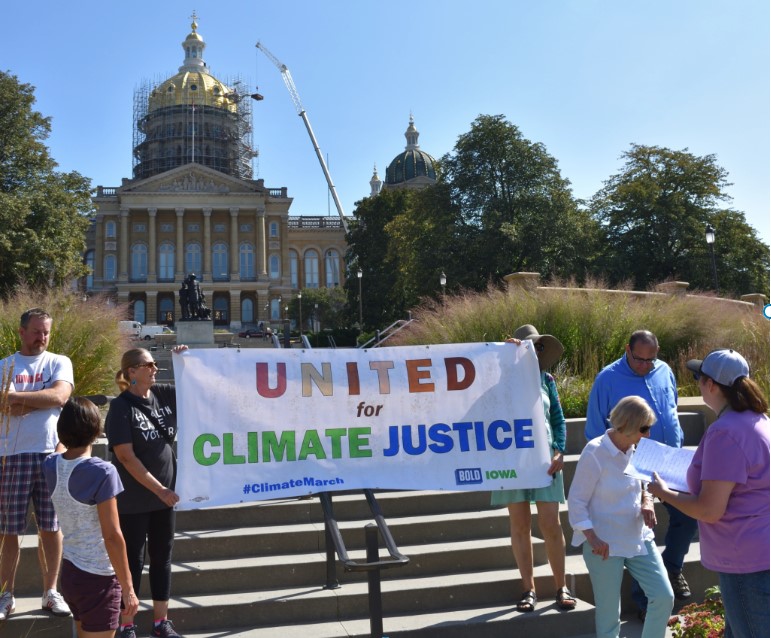
Defunding projects continue to this day. This was a gathering at a Chase bank in Des Moines in December 2021. Peter Clay and Jon Krieg were present.

Des Moines, December 2021

Foundational stories: Spiritual Warriors

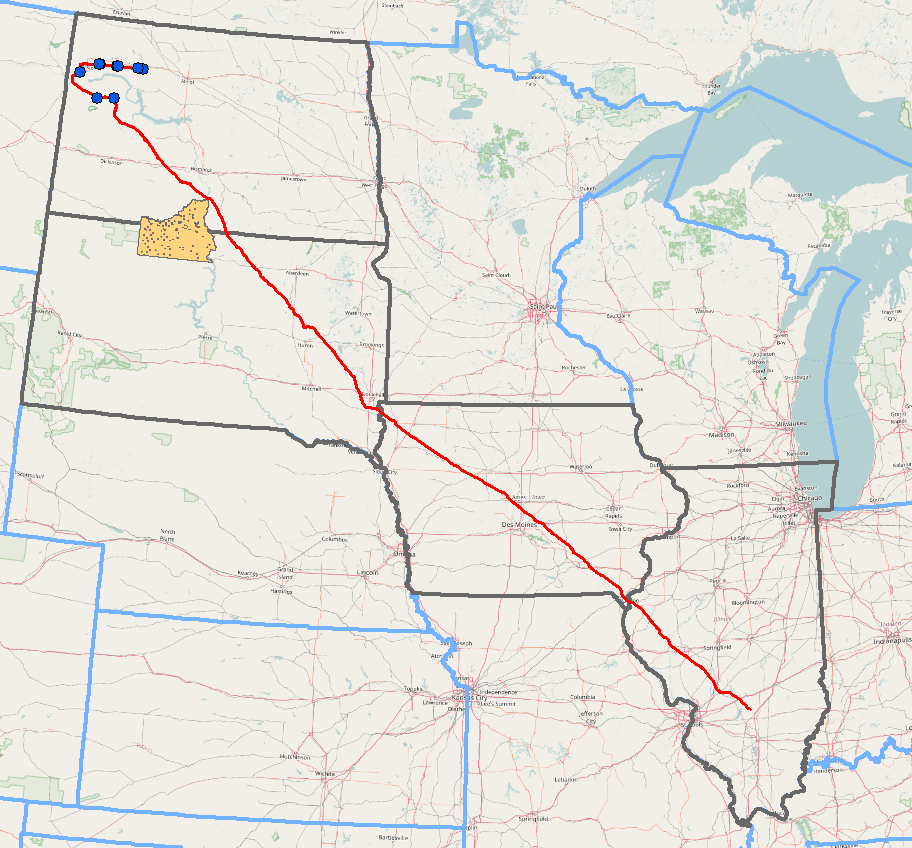
The Keystone pipeline resistance ended with President Obama’s denial of the pipeline’s permit. But then we began to hear about the construction of the Dakota Access Pipeline (DAPL). In one of the most transparent, egregious examples of environmental racism, the route of the pipeline was changed when people in Bismarck, North Dakota, objected to the original plan for DAPL to cross the Missouri River just upstream from them, fearing contamination of their water. So, the route was changed to cross beneath Lake Oahe (Missouri River), at the edge of the border of the Standing Rock Indian Reservation (orange in the map below).

By NittyG – Own work, CC BY-SA 4.0, https://commons.wikimedia.org/w/index.php?curid=52776844

Dakota Access Pipeline route (Standing Rock Indian Reservation is shown in orange)

That new route stimulated months of prayers and ceremonies by hundreds of Native American tribes and thousands of people.

By late September, (2016) NBC News reported that members of more than 300 federally recognized Native American tribes were residing in the three main camps, alongside an estimated 3,000 to 4,000 additional pipeline resistance demonstrators. Several thousand more gathered at the camps on weekends.[7][34][35]

Dakota Access Pipeline protests

DAPL support begins in Indianapolis

In a recent post (Keystone Pledge of Resistance) I described how Jim Poyser, Ted Wolner, and I were trained to design peaceful, nonviolent civil disobedience actions. And how we trained about fifty people in Indianapolis to participate in such actions.

A Spirit-led connection was made when Jim was talking with Joshua Taflinger about the Dakota Access Pipeline (DAPL). Jim lived near Joshua’s White Plains Wilderness Academy. Joshua wanted to know what he could do locally to bring attention to the Dakota Access pipeline. I say ‘bring attention’ rather than protest, because one of the first things I learned from those opposing DAPL was the difference between protesting and being a water protector.

Water protector was about an integral, Spiritual connection with Mother Earth, and all things human and nonhuman.

Bringing attention to the Dakota Access pipeline (DAPL) in downtown, Indianapolis

Jim told Joshua about the Keystone Pledge of Resistance, and those of us who had been trained to organize public gatherings and actions. And told Joshua we would be glad to support similar efforts to call attention to the dangers of DAPL. We were all excited about helping Joshua and White Plains Wilderness Academy, glad our experience could be useful.

Before getting into what we did related to DAPL, I’d like to express how working with Joshua and his wife Brandi, made me aware of the concept of spiritual warriors.


It may seem odd for a Quaker to speak about warriors. But what I mean by warriors is what Chief Sitting Bull said.

For us, warriors are not what you think of as warriors. The warrior is not someone who fights, because no one has the right to take another’s life. The warrior, for us, is one who sacrifices himself for the good of others. His task is to take care of the elderly, the defenseless, those who cannot provide for themselves and above all, the children, the future of humanity.

Chief Sitting Bull

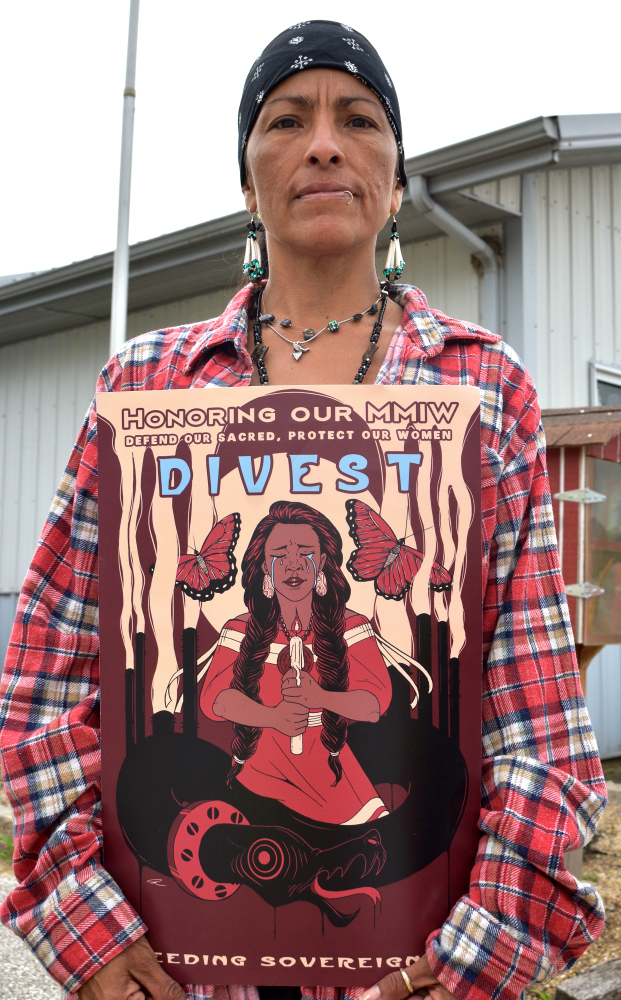
Warriors today are forging different ways to live together, returning to Indigenous ways to live in community. Mutual Aid is an alternative to our broken systems. Members of Mutual Aid communities are working for the abolition of police and prisons. To escape the colonial capitalist system. Feeding the hungry and finding shelter for the houseless. Collecting clothing.


The following from Joshua, is another example of radically rethinking our stories.

I am inspired to share with you all more directly a post I wrote, because I consider you an established and effective nature/spiritual warrior and believe that there is a need for the perspectives shared in the attached post to be more common thought in the minds of the many.

If you feel truth from this writing, and are inspired, I highly encourage you to re-write your own version, in your own words/perspectives, and post to your network.

With the intention of helping us all wake up, with awareness, clarity, and direction.

..spreading and weaving reality back into the world….

What has risen to the surface at Standing Rock is a physical/spiritual movement. Learn how to quiet your mind. To find the silent receptive space to receive guidance. To learn to adapt and follow the pull of synchronicity to guide you to where you will find your greatest support and strength.

What I have found in my time praying in the indigenous earth-based ways, is that it’s not about putting your hands together and talking to God…. It’s about quieting and connecting with the baseline of creation, of nature. Tuning into the frequency and vibration of the natural world, the nature spirits. The beings and entities that have been in existence, for all of existence, the examples and realities of sustainability and harmony.

It’s about becoming receptive to these things. Being open and flowing with them. The spirit guides us, but we have to make ourselves receptive to feel, sense, and respond to this guidance.

Joshua Taflinger


Each Warrior of the Light contains within him the spark of God. His destiny is to be with other Warriors, but sometimes he will need to practice the art of the sword alone; this is why, when he is apart from his companions, he behaves like a star. He lights up his allotted part of the Universe and tries to point out galaxies and worlds to all those who gaze up at the sky. The Warrior’s persistence will soon be rewarded. Gradually, other Warriors approach , and they join together to form constellations, each with their own symbols and mysteries. 

Coelho, Paulo. Warrior of the Light: A Manual (p. 89). HarperCollins. Kindle Edition


There comes a time when all life on Earth is in danger. Great barbarian powers have arisen.

Although these powers spend their wealth in preparations to annihilate one another, they have much in common: weapons of unfathomable destructive power, and technologies that lay waste our world. In this era, when the future of sentient life hangs by the frailest of threads, the Shambhala warriors appear.

The warriors have no home. They move on the terrain of the barbarian powers. Great courage is required, both moral and physical, for they must go into the heart of the barbarian powers to dismantle their weapons, into the places where the weapons are created, into the corridors of power where decisions are made.

The Shambhala warriors are armed only with the weapons of compassion and insight. Both are necessary. Compassion gives them the energy to move forward, not to be afraid of the pain of the world. Fueled by compassion, warriors engage with the world, step forward and act. But by itself compassion burns with too much passion and exhausts us, so the second weapon is needed — insight into the interdependence of all phenomena.

With that wisdom we see that the battle is not between “good guys” and “bad guys,” because the line between good and evil runs through every human heart. And with insight into our profound interrelatedness, we discern right action, knowing that actions undertaken with pure intent have repercussions throughout the web of life, beyond what can be measured or discerned.

Together these two weapons sustain the warriors: the recognition and experience of our pain for the world and the recognition and experience of our radical interconnectedness with all life.

Adapted from Dugu Choegyal, as recounted by Joanna Macy


The Spiritual Warrior is a person who challenges the dreams of fear, lies, false beliefs, and judgments that create suffering and unhappiness in his or her life. It is a war that takes place in the heart and mind of a man or woman. The quest of the Spiritual Warrior is the same as spiritual seekers around the world.  

www.toltecspirit.com/four-agreements/characteristics-of-a-spiritual-warrior/.


What can I do?

I recently came across the idea of learned helplessness, and wrote about it in Reject Learned Helplessness. Be at the IUB tomorrow.

As expected, I would estimate forty people did show up at the Iowa Utilities Board (IUB) to express their opposition to the construction of carbon pipelines in Iowa. Which is about what those of us working for change have come to expect. But that’s a ridiculously small number when the entire state of Iowa will suffer the consequences if those pipelines are built.

Iowa Utilities Board

According to the American Psychological Association, learned helplessness occurs when someone repeatedly faces uncontrollable, stressful situations, then does not exercise control when it becomes available.

They have “learned” that they are helpless in that situation and no longer try to change it, even when change is possible.

What is learned helplessness? by Jayne Leonard, Medical News Today, May 31, 2019

Learned helplessness has helped me understand, a little, why so many people seem to have given up on working for change. Any change, anywhere. It is an understatement to say we face “uncontrollable, stressful situations” today. Situations that have significantly worsened in just the past few months. To name just a few:

  • a collapsing economy
  • significantly rising gas prices
    • impacting the personal budget of everyone
    • affecting the prices of all good
  • global, dangerously high air temperatures
  • widespread drought and significantly diminished rivers and lakes
  • pandemics
  • famine
  • war
  • domestic terrorism
  • abusive policing
  • paralyzed legislatures
  • rogue Supreme Court

This blog post has gone in an unanticipated direction, but that’s often the case. I had intended to discuss the many positive effects of Mutual Aid. It looks like that is going to be delayed. Because it won’t do much good to talk about the positive changes Mutual Aid can bring about, if people are really stuck in learned helplessness. If they will not change.

“everywhere people ask, “what can we do?” The question, what can we do, is the second question.

The first question is “what can we be?” Because what you can do is a consequence of who you are. Once you know what you can be, you know what you can do”

Arkan Lushwala

In May 2018, I was blessed to hear Arkan Lushwala speak about “Indigenous Ways of Restoring the World” during a call sponsored by the Pachamama Alliance.  “Arkan Lushwala is a rare indigenous bridge of the global north and south, carrying spiritual traditions from the Andes in his native Peru as well as being adopted and initiated by the Lakota people of North America.”


The answer to “what can I do?”

Speaking about what is happening on Earth right now,
many of the conditions of life that we used to take for granted,
now are really out of balance.
Hopefully we still have time to get back into balance
so life may continue.
I travel around the world and meet people and talk to people
from all different cultures.
And everywhere people ask, “what can we do?”
The question, what can we do, is the second question.
The first question is “what can we be?”
Because what you can do is a consequence of who you are.
Once you know what you can be, you know what you can do,
and we cannot afford wasting time;
we have little time.
We need to be precise now.
When someone sincerely asks, “what can I do?”
my humble answer,
the only answer that I find in my heart to be sincere is,
“First find out what you can be.”
Action is extremely necessary at this time.
This is not a time just to talk about it.
The most spiritual thing now is action.
To do something about what’s happening.
To go help where help is needed.
To stand up when we need to stand up,
and protect what is being damaged.
And still, this action needs to be born
from a place in ourselves
that has real talent,
real intelligence, real power,
real connection to the heart of the Earth,
to universal wisdom,
so our actions are not a waste of time.
So our actions are precise,
our actions are in harmony with the movement,
the sacred movement,
of that force that wants to renew life here on Earth
and make it better for the following generations.

Arkan Lushwala


The most spiritual thing now is action.
This action needs to be born from a place in ourselves.

Arkan Lushwala

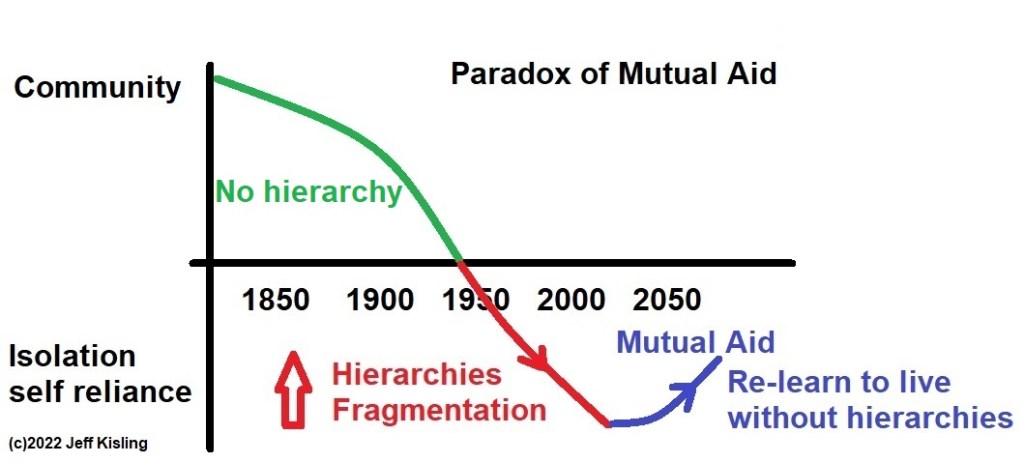
Paradox of Mutual Aid

In response to a recent article I wrote, Ideological commitment to destroying life on Earth, there was an objection, that simply changing to another political system will not result in the changes we need.

I had quoted George Monbiot. “Until we change our political systems, making it impossible for the rich to buy the decisions they want, we will lose not only individual cases. We will lose everything.”

I agree with the objection about political systems. The changes needed now go far beyond political systems. What is needed is a complete change in the structure of how we live with each other and all our relations. A change in how we prioritize among the urgent needs, and how we come together to address them.
Today, in industrialized countries, all of our systems have become vertical hierarchies. Supervisors, teachers, politics, medicine, military, priests, and police. These hierarchies came about because of population growth and industrialization, which made our society more complex.

The primary reason for this switch to vertical hierarches was for control. The hierarchy for governance, for example, begins with the president, vice president, etc. Then Federal agencies, state governors, state agencies, mayors and city councils. These systems attempt to control us with laws, enforced by courts and police.

In a broader sense, the whole framework of capitalism and colonialism requires, and has viciously enforced vertical systems for control.


How does Mutual Aid replace these hierarchies? It does so by bringing governance and care back to local communities. At an earlier time, there might have been a debate about whether to do this. But since our current political chaos has paralyzed city, state, and federal governance, we will increasingly see the collapse of those systems. Hence another significant reason to build Mutual Aid communities now.

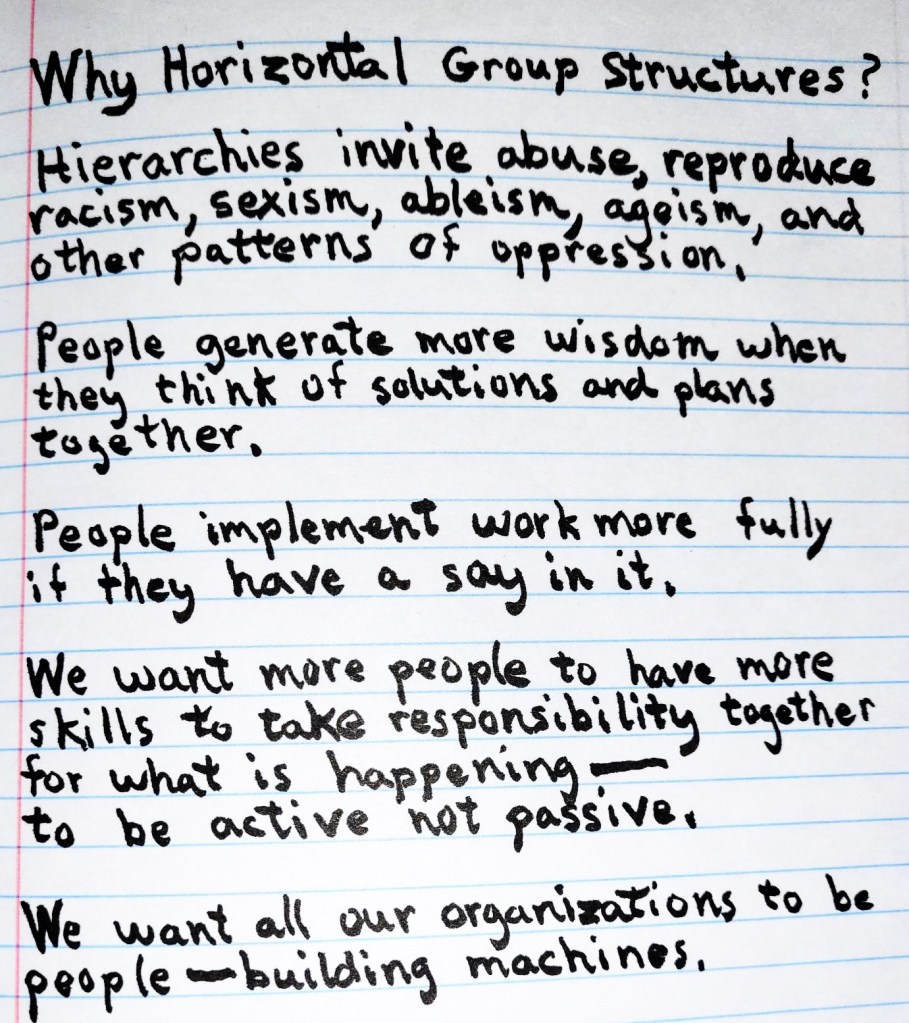
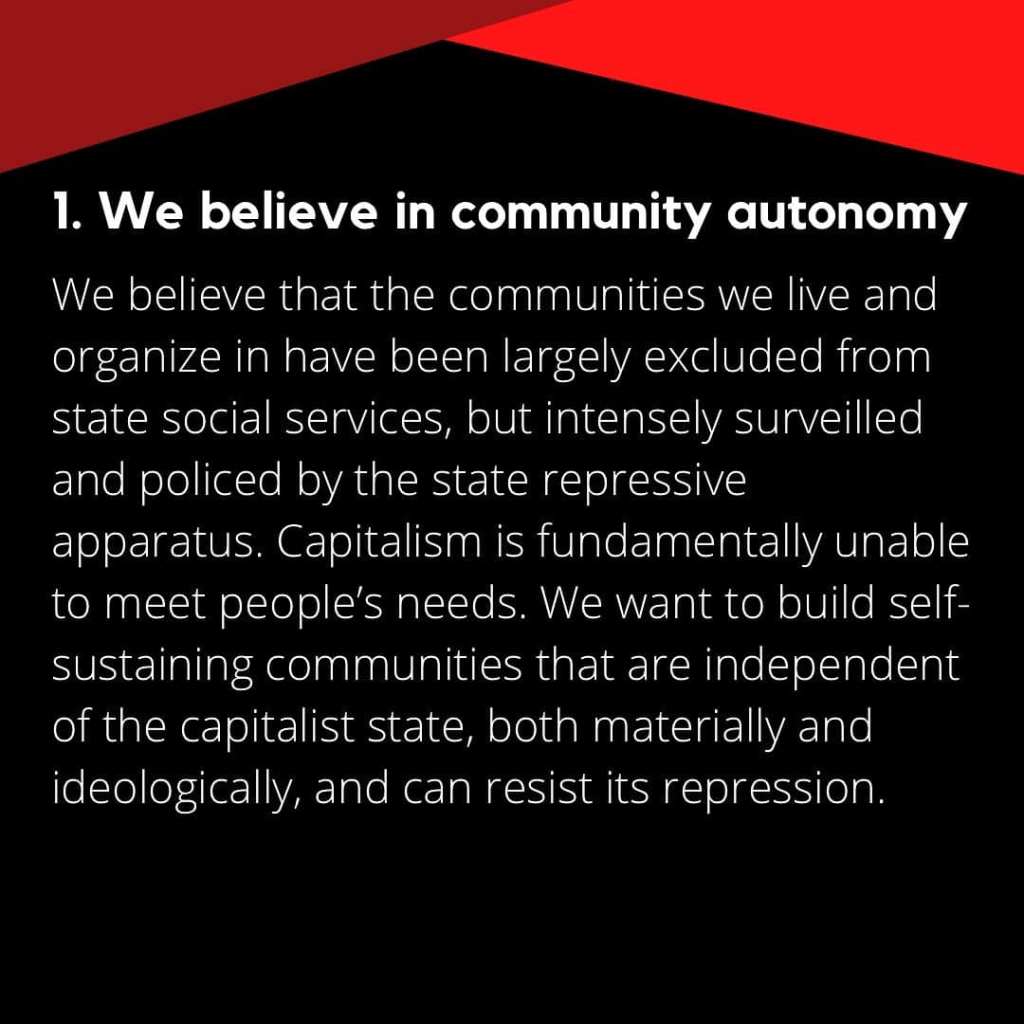
Mutual Aid is about a fundamentally different system of living in community. Mutual Aid is about living in a system of horizontal, flat, or no hierarchy. In horizontal group structures. A system that works in local neighborhoods and communities.

Trying to explain Mutual Aid is paradoxical, because that is the way peoples all over the world lived prior to industrialization. The way those in non-industrial places continue to live. The way our ancestors once lived.

People in our current, vertical hierarchies, don’t understand why we have to return to those ways. And why, if we decided to do so, it wouldn’t be easy to return to living without vertical hierarchies.

The problem is we bring our learned practices of hierarchy with us. We have forgotten how to live in a community without hierarchies. People become very uncomfortable when they realize they have forgotten how to act when order is not imposed by those above them in a vertical hierarchy.


“Mutual Aid is essential to our survival” by Dean Spake, Truthout, October, 28,2020


Because we bring our learned practices of hierarchy with us, a learning process is required to return to horizontal group structures.

As I was researching this, I came across this description of a book that I look forward to reading. Which describes my own experiences as a middle-class settler activist. It has taken me several years to learn how to be in a Mutual Aid community, and I’m still learning. Giving away food and providing for the houseless are public political actions. As have been public political actions for reproductive justice, against carbon pipelines, removing racist monuments and celebrating Indigenous Peoples Day. All of these actions occurred out in the community, on the streets. We have to be there to be transformed. There is no alternative to doing this together, in public.

And I’ve prayed a lot, with critical self-reflection, about all these things. And continue to pray.


Decolonizing Solidarity: Dilemmas and Directions for Supporters of Indigenous Struggles by Clare Land

Land argues that the predominant impulses which drive middle-class settler activists to support Indigenous people cannot lead to successful alliances and meaningful social change unless they are significantly transformed through a process of both public political action and critical self-reflection.

description from goodreads


This is a link to one PowerPoint presentation I have created about Mutual Aid.


Ideological commitment to destroying life on Earth

The recent article by George Monbiot (excerpts below) explains that the multitude of recent government policies and judicial capitulations that are dismantling any efforts to protect Mother Earth are not based on financial interests. The ideology of the ultra-rich is one committed to destroying life on Earth. “It’s no longer about money for them. It’s about brute power: about watching the world bow down before them. For this rush of power, they would forfeit the Earth.”
As Monbiot writes below, the changes needed to protect Mother Earth and all our relations cannot happen until we change our political systems.

Indigenous peoples have always known how to protect our environment. Which makes the policies of forced assimilation of native children and peoples all the more ignorant and reprehensible. We would not be in this catastrophic situation now if settler colonists had learned from native peoples. Can you imagine what that would have looked like?

What would be the political system that would allow us to honor the earth and each other? One alternative would be to build communities based on the concepts of mutual aid. (see: https://quakersandreligioussocialism.com/mutual-aid/ )

The following is from my mutual aid community, Des Moines Mutual Aid (DMMA).


But the final straw for me was a smaller decision. After two decades of disastrous policies that turned its rivers into open sewers, Herefordshire county council, following a shift from Tory to independent control, finally did the right thing. It applied to the government to create a water protection zone, defending the River Wye against the pollution pushing it towards complete ecological collapse. But in a letter published last week, the UK’s environment minister, Rebecca Pow, refused permission, claiming it “would impose new and distinct regulatory obligations on the farmers and businesses within the catchment”. This is, of course, the point.

When I began work as an environmental journalist in 1985, I knew I would struggle against people with a financial interest in destructive practices. But I never imagined that we would one day confront what appears to be an ideological commitment to destroying life on Earth. The UK government and the US supreme court look as if they are willing the destruction of our life support systems.

But even financial interests fail fully to explain what’s going on. The oligarchs seeking to stamp out US democracy have gone way beyond the point of attending only to their net worth. It’s no longer about money for them. It’s about brute power: about watching the world bow down before them. For this rush of power, they would forfeit the Earth.

Since 1985, I’ve been told we don’t have time to change the system: we should concentrate only on single issues. But we’ve never had time not to change the system. In fact, because of the way in which social attitudes can suddenly tip, system change can happen much faster than incrementalism. Until we change our political systems, making it impossible for the rich to buy the decisions they want, we will lose not only individual cases. We will lose everything.

It’s democracy v plutocracy – this is the endgame for our planet by George Monbiot, the Guardian, July 6, 2022


Support Truth and Healing Commission

On June 22, the Senate Committee on Indian Affairs (SCIA) held an oversight hearing on the findings of volume one of the Interior Department’s Federal Indian Boarding School Initiative Report.  (FCNL)

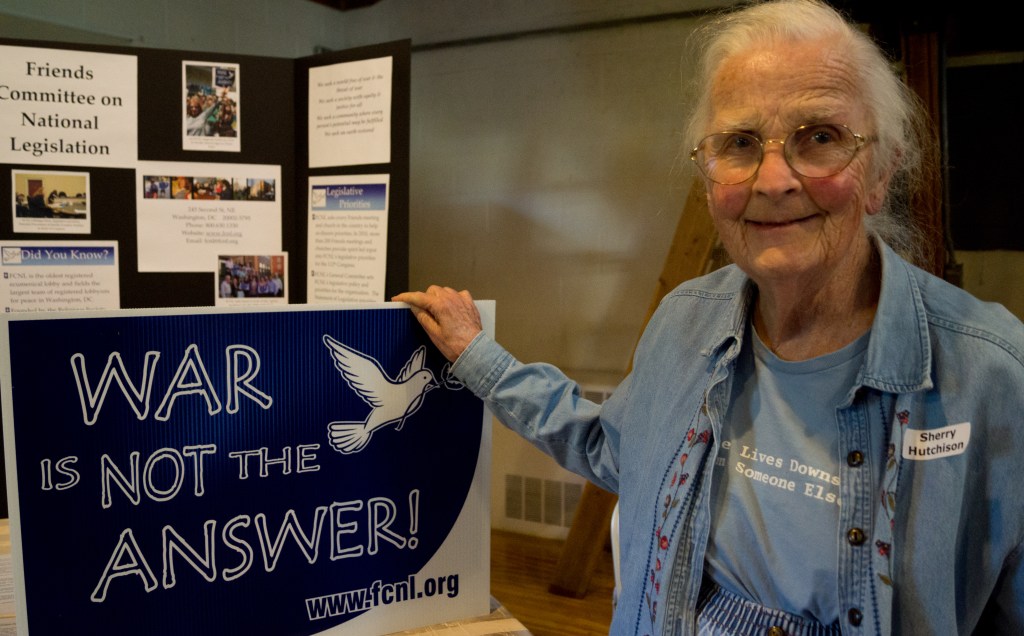
Following is information from the National Native American Boarding School Healing Coalition and the Friends Committee on National Legislation (FCNL) about how we can support Senate Bill 2907 to establish a Truth and Healing Commission on Indian Boarding School Policies.

https://mailchi.mp/nabshc.org/nabs-requesting-your-story-6100444


Senate Committee on Indian Affairs Holds Hearing to Address Legacy of Indian Boarding Schools

On June 22, the Senate Committee on Indian Affairs (SCIA) held an oversight hearing on the findings of volume one of the Interior Department’s Federal Indian Boarding School Initiative Report. They also held a legislative hearing to receive testimony on the Truth and Healing Commission on Indian Boarding School Policies Act (S. 2907).

Committee members asked about efforts to revitalize Native languages and what Congress can do to address some of the consequences of former boarding school policy. “I believe that our obligations to Native communities mean that federal policies should fully support and revitalize Native health care, education, Native languages, and cultural practices that prior federal Indian policies, like those supporting Indian boarding schools, sought to destroy,” said Interior Secretary Deb Haaland.

June 2022: Native American Legislative Update by Portia Kay^nthos Skenandore-Wheelock, FCNL, June 29, 2022


Multigenerational trauma and the US-Dakota War of 1862

I recently learned of yet another injustice in a multigenerational history that began with the genocide and theft of the lands of tribal nations by the white settler-colonialists.

Following are the parts of this trauma that began with the US-Dakota War of 1862.

  • US-Dakota War of 1862
  • The story of the hanging of 38 Dakota men
  • Discussion of this war at the Kheprw Institute
  • The Dakota 38 Memorial Ride
  • The Dakota 38 movie
  • Reconciliation Park and the Names of the executed Indians
  • The removal a controversial outdoor “gallows” sculpture
  • Sales and leases of parcels taken from the Dakota raised nearly $580,000 for the University of Minnesota

Much information about the war can be found on the Minnesota Historical Society website, the US-Dakota War of 1862. “It has been over 150 years since the U.S.-Dakota War of 1862, a disastrous time in Minnesota history. The war had a profound impact in shaping Minnesota as we know it today.”

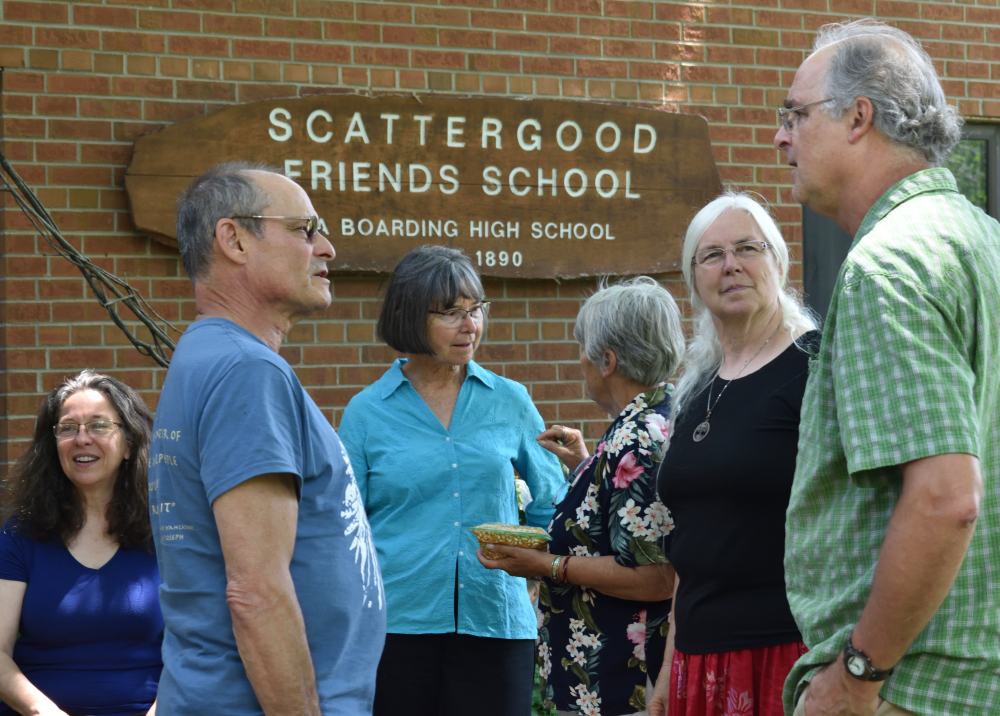
My friend and roommate from Scattergood Friends School, Lee Tesdell, taught in Mankato, where the hangings occurred, and has spoken about this history with me. I have friends who have participated on the Memorial Ride for the Dakota 38.


The US-Dakota War of 1862 and the hanging of 38 Dakota men

On the day after Christmas in 1862, 38 Dakota men were hanged under order of President Abraham Lincoln. The hangings and convictions of the Dakota 38 resulted from the aftermath of the U.S.-Dakota War of 1862 in southwest Minnesota.

In addition to the 38 men hanged the day after Christmas, there were terrible injustices committed against 265 others in the form of military convictions and inhuman injustices to more than 3,000 Dakota people who were held captive, then forced to march west out of Minnesota.

How It All Started

The conflict erupted when treaties restricted the lands of the Dakota people to an area that could no longer sustain them. Promised compensations were slow or non-existent and the Dakota people feared starvation heading into a brutal Minnesota winter.
The Dakota also faced terrible racism, one white settler historically quoting, “Let them eat grass.”

The Traumatic True History and Name List of the Dakota 38. The Dakota 38 execution was the largest mass execution in the United States and took place on December 26, 1862 by VINCENT SCHILLINGDEC, Indian Country Today, December 26, 2020

“Wakute was our band leader. Some of our relatives in the Canku family were captured in 1862 and sent to Fort Snelling. There was nine of our family that were sent there. And then the rest escaped and went to the Plains. They were implicated for being Dakota. Just being Dakota means that you were guilty before any consideration of being innocent.” 

Dr. Clifford Canku, Sisseton Wahpeton community of Dakota, 2010

The discussion of this war at the Kheprw Institute

As an example of how seemingly disconnected things can be interconnected, on January 20, 2016, I wrote what follows below. It is interesting today to see this connection between our monthly book discussions at the Kheprw Institute, and stories of Indigenous peoples. The Kheprw Institute is a youth mentoring community I was blessed to be part of in Indianapolis. A community working on its own history and multigenerational injustices, in this case related to the institution of slavery and its consequences.

This story also brings Quakers into this history. North Meadow Circle of Friends in Indianapolis, where I attended, participated in a program called Quaker Social Change Ministry, and the Kheprw Institute was the organization we partnered with. Quakers had some involvement with the Indian Boarding Schools.

January 20, 2016

The book we will be reading for the next monthly community discussion at the Kheprw Institute (KI) is An Indigenous Peoples’ History of the United States (ReVisioning American History) by Roxanne Dunbar-Ortiz

One event in that history was the Dakota War.  As series of events led to conditions in which the Dakota were facing starvation.  Armed conflict eventually occurred but didn’t last long.  Afterwards, the largest mass execution by the United States, the hanging of 38 of the Dakota warriors at the same time took place in Mankato, Minnesota, on December 26, 1862, on the order of Abraham Lincoln.

To promote healing and reconciliation related to that, the Dakota created a film, “Dakota 38“, in response to a vision that came to one of them in 2005.  To make the story widely available, the film is distributed free of charge:  https://www.youtube.com/watch?v=1pX6FBSUyQI

This is one of the most powerful videos I have ever seen.  We hear what the riders are thinking as they ride their horses on the 330-mile journey to Mankato through blizzard conditions.  Some of the modern-day warriors also ran the last 90 miles.

Jeff Kisling


The Dakota 38 Memorial Ride

“Today, all the people of the region continue to be affected by this traumatic event. We take the youth on the ride, so that they may connect with their culture in a more physical way. By being a part of the ride they are connecting themselves with their ancestors and their horse relatives. It is through the ride that they are able to see the beauty in the history and their culture.”

SUNKTANKA

The Dakota 38 Plus 2 Memorial Ride is a ride that honors the 38 Dakota men who were hung in Mankato in December of 1862. The ride began from the vision of a Dakota elder and warrior. In this vision riders would ride from Crow Creek, SD to Mankato, MN. Ever since then the ride has continued to happen annually from the beginning year December 2005 to present collecting supporters and new riders along the way.

My name is Winona Goodthunder. My Dakota name is Wambde Ho Waste Win, Eagle Woman with a Good Voice. I have ridden in this ride since 2006, the second year. I was in eighth grade when I started. As the years have gone by the riders that we’ve met every year have become a part of a new kind of family. We are all different even though we are all somehow related. Those of us who are from the Lower Sioux region are used to different types of living than those who come from Canada, Nebraska, South Dakota, and other parts of the world. The differences that we have are forgotten when we come to this ride. We get up early in the morning to get our horses ready together. We ride all day together, and we eat together at night. It is then that our differences merge and we teach each other. The thing that seems to bind us the most is the fact that we can laugh. Humor may not be what is expected on a memorial ride, but it is encouraged for it is stressed that this ride is for forgiveness.

Although our group goes only for the last four days it is enough to establish that sense of family amongst each other. It is from these riders that I’ve learned most about my culture. I have read books, but they cannot foster the feeling that one gets when they are living in an experience such as the ride.

Winona Goodthunder


The Dakota 38 movie

I met Silas, a young man in his twenties from New England, at a servicespace.org retreat. He was a filmmaker, I’d heard. Over the next few days many stories were shared. Silas’ filmmaking was done on a shoestring. He carried his gear in a bag and stayed at friends’ houses when he traveled. I remember Silas telling us about meeting a Native American elder at his home. I wondered how that had happened. The elder talked about a dream he’d had, an important dream, one that he’d tried to ignore. But finally he understood that the dream had to be re-enacted. There would be a ride of Native Americans on horseback, over 300 miles across the Dakotas in the dead of winter, a healing ride to the place where 38 Native Americans had been hung during the presidency of Abraham Lincoln. This ride would have to be filmed the elder told Silas. That’s what you’ll do, he’d said.
     I remember feeling shocked by the story. “Are you going to do it?”  I asked. He was. I didn’t have to ask if there was any money involved. I knew there wasn’t. And I remember being alarmed. My God, what an ordeal! Blizzards and freezing winds! Things could go seriously wrong!
     But Silas went. He went on the ride with his camera and some young assistants not afraid of the risks and ready for a once-in-a-lifetime adventure [Jesse HighEagle, Sarah Weston, Andrew Weston, Wes Schuck, JB Weston and Pancho Ramos Stierle].

A Conversation with Silas Hagerty: Dakota 38 by Richard Whittaker, Works and Conversations, July 28, 2012

The Dakota 38 movie


To download the film in HD, or burn your own DVD for free, visit www.smoothfeather.com/dakota38. In honoring honor native traditions surrounding ceremonies, we are screening and distributing “Dakota 38” as a gift rather than for sale.

In the spring of 2005, Jim Miller, a Native spiritual leader and Vietnam veteran, found himself in a dream riding on horseback across the great plains of South Dakota. Just before he awoke, he arrived at a riverbank in Minnesota and saw 38 of his Dakota ancestors hanged. At the time, Jim knew nothing of the largest mass execution in United States history, ordered by Abraham Lincoln on December 26, 1862. “When you have dreams, you know when they come from the creator… As any recovered alcoholic, I made believe that I didn’t get it. I tried to put it out of my mind, yet it’s one of those dreams that bothers you night and day.”

Now, four years later, embracing the message of the dream, Jim and a group of riders retrace the 330-mile route of his dream on horseback from Lower Brule, South Dakota to Mankato, Minnesota to arrive at the hanging site on the anniversary of the execution. “We can’t blame the wasichus anymore. We’re doing it to ourselves. We’re selling drugs. We’re killing our own people. That’s what this ride is about, is healing.” This is the story of their journey- the blizzards they endure, the Native and Non-Native communities that house and feed them along the way, and the dark history they are beginning to wipe away.

SmoothFeather


Reconciliation Park and the Names of the executed Indians

Forgive Everyone Everything

FORGIVE EVERYONE EVERYTHING is inscribed on a bench in Reconciliation Park, Mankato, Minnesota, where the ride ends. The photo of the memorial shows a list of the names of the 38 Dakota men who were all hanged at the same time in what is now Mankato, Minnesota. A raised wooden platform, with 38 nooses along the sides, was constructed. It is said nearly 4,000 people witnessed this, the largest execution in U.S. history, on December 26, 1862.

As to who needs to be forgiven, there are many answers to that. 

More specifically this history came about as the Dakota were forced into smaller and smaller areas of land, to the point they could not sustain themselves.

This image has an empty alt attribute; its file name is 96766751_rTnbZmN48yVXBZxfPoiyqOQl6MjM_fEEZFr6jKZWb54.jpg
https://foursquare.com/v/reconciliation-park/4d86396a509137040938a75b

Names of the executed Indians

#1 was to be TA-TAY-ME-MA but he was reprieved because of his age and questions related to his innocence

  1. Plan-doo-ta, (Red Otter.)
  2. Wy-a-tah-ta-wa, (His People.)
  3. Hin-hau-shoon-ko-yag-ma-ne, (One who walks clothed in an Owl’s Tail.)
  4. Ma-za-bom-doo, (Iron Blower.)
  5. Wak-pa-doo-ta, (Red Leaf.)
  6. Wa-he-hua, _.
  7. Sua-ma-ne, (Tinkling Walker.)
  8. Ta-tay-me-ma, (Round Wind) — respited.
  9. Rda-in-yan-ka, (Rattling Runner.)
  10. Doo-wau-sa, (The Singer.)
  11. Ha-pau, (Second child of a son.)
  12. Shoon-ka-ska, (White Dog.)
  13. Toon-kau-e-cha-tag-ma-ne, (One who walks by his Grandfather.)
  14. E-tay-doo-tay, (Red Face.)
  15. Am-da-cha, (Broken to Pieces.)
  16. Hay-pe-pau, (Third child of a son.)
  17. Mah-pe-o-ke-na-jui, (Who stands on the Clouds.)
  18. Harry Milord, (Half Breed.)
  19. Chas-kay-dau, (First born of a son.)
  20. Baptiste Campbell, _.
  21. Ta-ta-ka-gay, (Wind Maker.)
  22. Hay-pin-kpa, (The Tips of the Horn.)
  23. Hypolite Auge, (Half-breed.)
  24. Ka-pay-shue, (One who does not Flee.)
  25. Wa-kau-tau-ka, (Great Spirit.)
  26. Toon-kau-ko-yag-e-na-jui, (One who stands clothed with his Grandfather.)
  27. Wa-ka-ta-e-na-jui, (One who stands on the earth.)
  28. Pa-za-koo-tay-ma-ne, (One who walks prepared to shoot.)
  29. Ta-tay-hde-dau, (Wind comes home.)
  30. Wa-she-choon, (Frenchman.)
  31. A-c-cha-ga, (To grow upon.)
  32. Ho-tan-in-koo, (Voice that appears coming.)
  33. Khay-tan-hoon-ka, (The Parent Hawk.)
  34. Chau-ka-hda, (Near the Wood.)
  35. Hda-hin-hday, (To make a rattling voice.)
  36. O-ya-tay-a-kee, (The Coming People.)
  37. Ma-hoo-way-ma, (He comes for me.)
  38. Wa-kin-yan-wa, (Little Thunder.)

The removal a controversial outdoor “gallows” sculpture

In a story emblematic of the great harm that can be done when one culture attempts to tell stories of another, a sculpture of “gallows” was taken down following protests.

The Walker Art Center in Minneapolis has agreed to remove a controversial outdoor “gallows” sculpture following protests by local Native Americans. The large work includes design elements of seven different historical U.S. gallows, including one used to hang 38 Dakota Indians in the state in 1862.

“I regret the pain that this artwork has brought to the Dakota community and others,” museum executive director Olga Viso said in a statement announcing the decision that was posted on Facebook Saturday. “This is the first step in a long process of healing.”

Minnesota Museum To Remove Gallows Exhibit After Native American Protest. The work, which depicts a structure where 38 Dakota Indians were killed, was criticized for being insensitive by Mary Papenfuss, HUFFPOST, May 29, 2017

What led to me writing about this again, today, was learning of yet another part of this history.

The federal government’s hanging of 38 Dakota men from a Mankato, Minn., gallows in December 1862 brought an end to the U.S.-Dakota war. It also triggered a financial bonanza for the University of Minnesota.

Dubbed the “Minnesota Windfall,” sales and leases of parcels taken from the Dakota raised nearly $580,000 for the young university — part of a massive grab of wealth cleaved from Native people and given to American universities.

Troubling stories surface as U probes its history with Native people” by Melissa Olson, North Star Journey, June 30, 2022

No CO2 Pipelines in Iowa

Iowa Utilities Board (IUB)! See Our Power!

https://www.facebook.com/events/509509047578832/

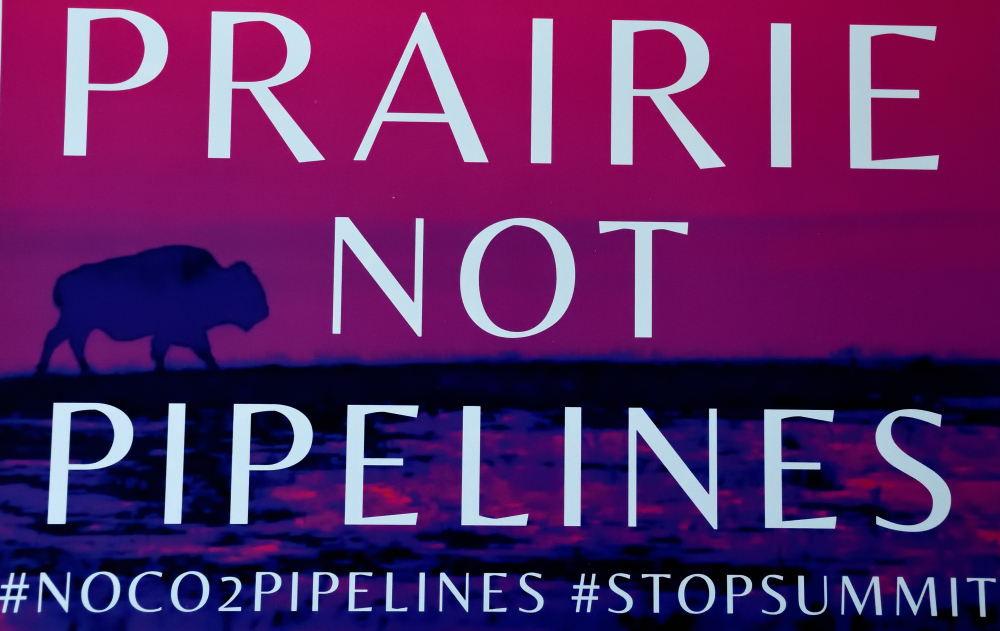
You can download a copy of this poster here. https://1drv.ms/b/s!Avb9bFhezZpPjNEeBqI19Hk2DVMAkw

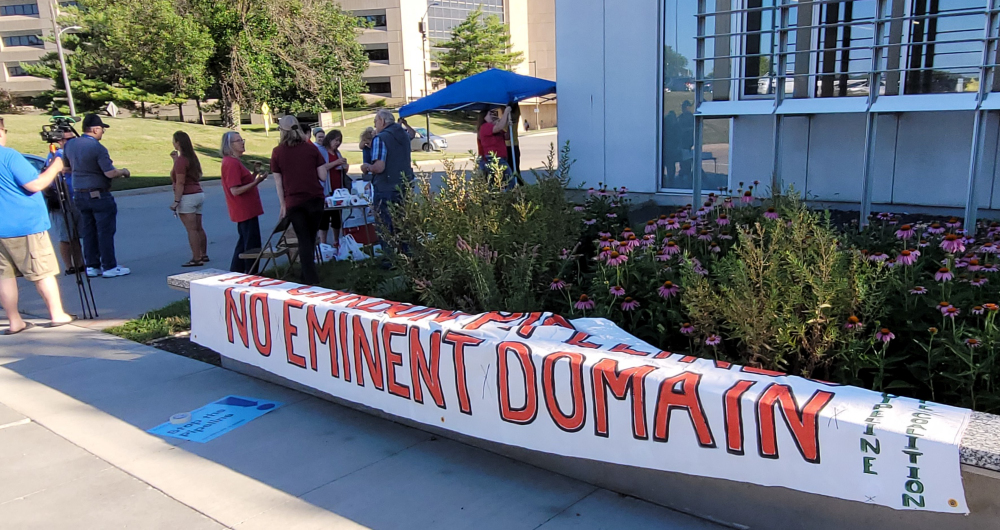
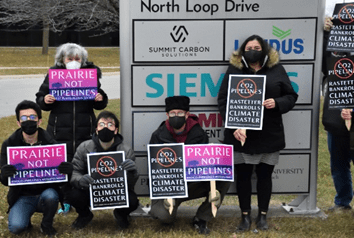
Please join us July 12th, 8:30 am at the Iowa Utilities Board (IUB) monthly board meeting. The board is preparing to handle permit requests for three hazardous carbon pipelines in Iowa.

There are many reasons why carbon pipelines should not be built, including:

  • these are unproven processes
  • even though the main argument for carbon pipelines is removal of carbon dioxide from the atmosphere, some of the captured carbon is actually used for more oil fracking
  • the abuse of eminent domain
  • and significant, long-term impacts on farmland.
  • In addition, these are hazardous material pipelines

When a carbon pipeline explodes, huge amounts of carbon dioxide escape into the air, replacing oxygen, and potentially killing people and animals. Such an explosion and some of those consequences actually happened in Satartia, Mississippi. See: CO2 Pipeline Dangers.

Here are some other posts I’ve written about carbon pipelines.

Carbon pipeline opposition
Eminent domain abuse again
Survivors of Carbon pipeline explosion tell their stories
Iowa carbon pipeline resistance

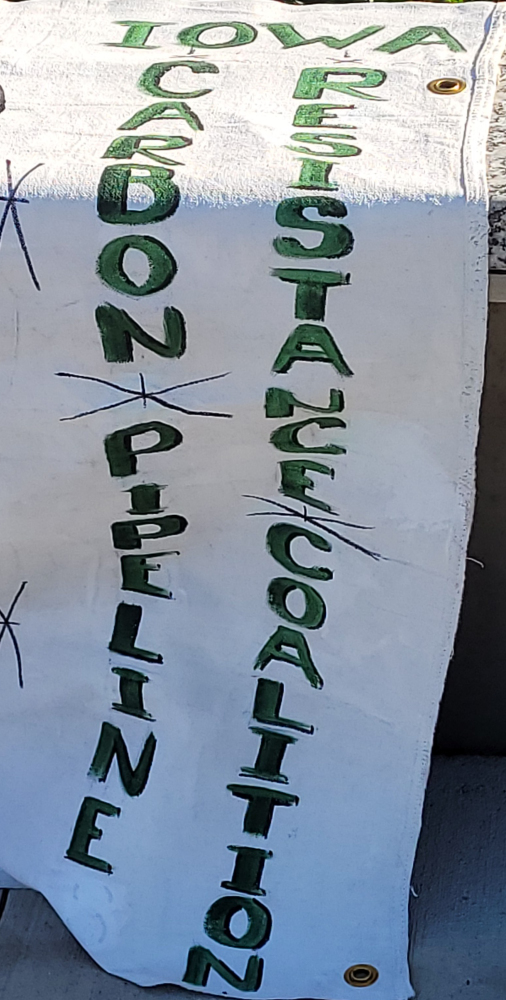
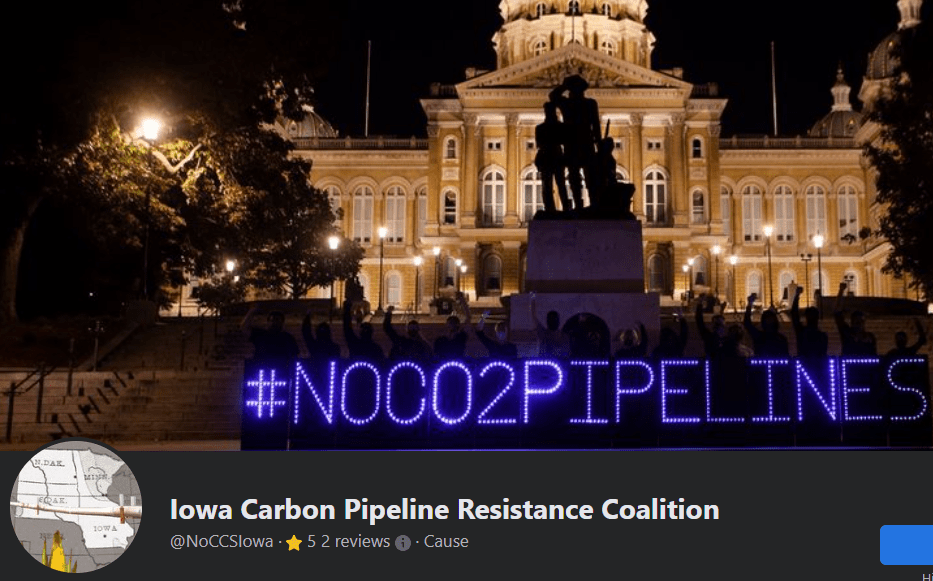
Join the Iowa Carbon Pipeline Resistance Coalition for a rally at the Iowa Utilities Board (IUB) monthly board meeting. We won’t stand by as corporations endanger our land, our communities, and our climate by abusing eminent domain. CO2 pipelines pose a multitude of threats to all Iowans. From destroying farmland to the threat of asphyxiation if a pipeline leaks, Iowans are carrying all the risks, while Wall Street and the fossil fuel industry make off with the reward.

As the Iowa Utilities Board prepares to handle permit requests for three hazardous carbon pipelines, it’s crucial that they know 80% of Iowans oppose using eminent domain for carbon pipelines. It’s time Iowa’s decision-makers learn that we will not accept greedy corporate interests being put before their needs.

Let’s show the Iowa Utilities Board how powerful we are when we stand together!

https://www.facebook.com/events/509509047578832/


Iowa Carbon Pipeline Resistance Coalition

https://www.facebook.com/NoCCSIowa


Carbon Capture and Storage (CCS) is not the answer to the climate emergency. CCS is unproven, dangerous and delays real solutions to the climate crisis such as energy conservation, regenerative agriculture and renewable energy.
https://www.facebook.com/NoCCSIowa


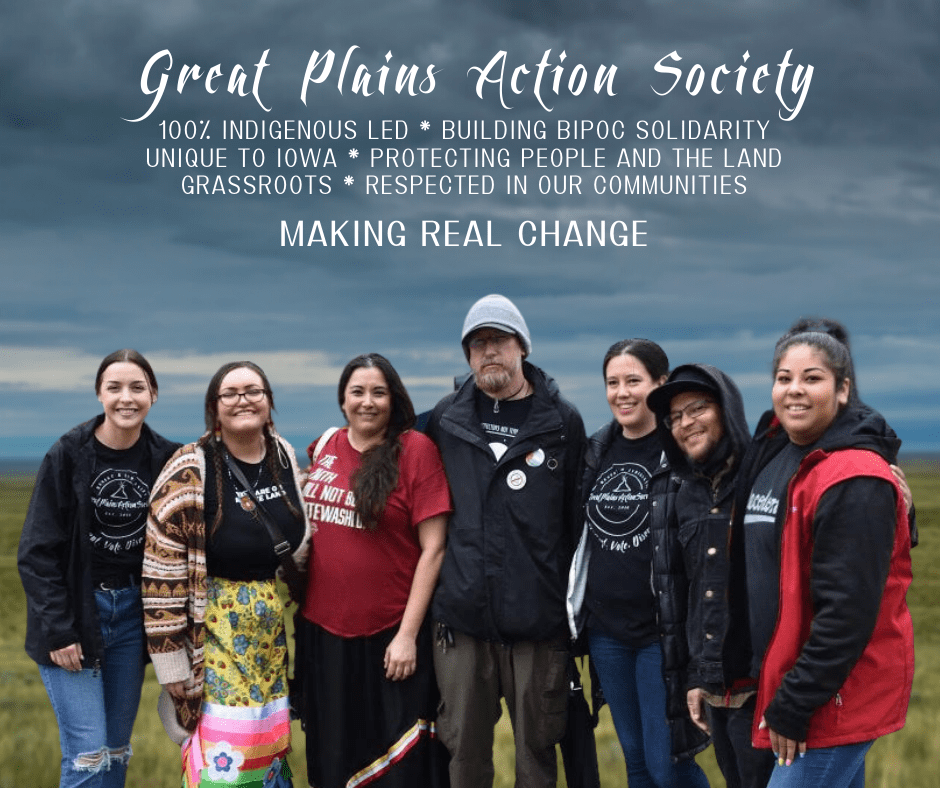
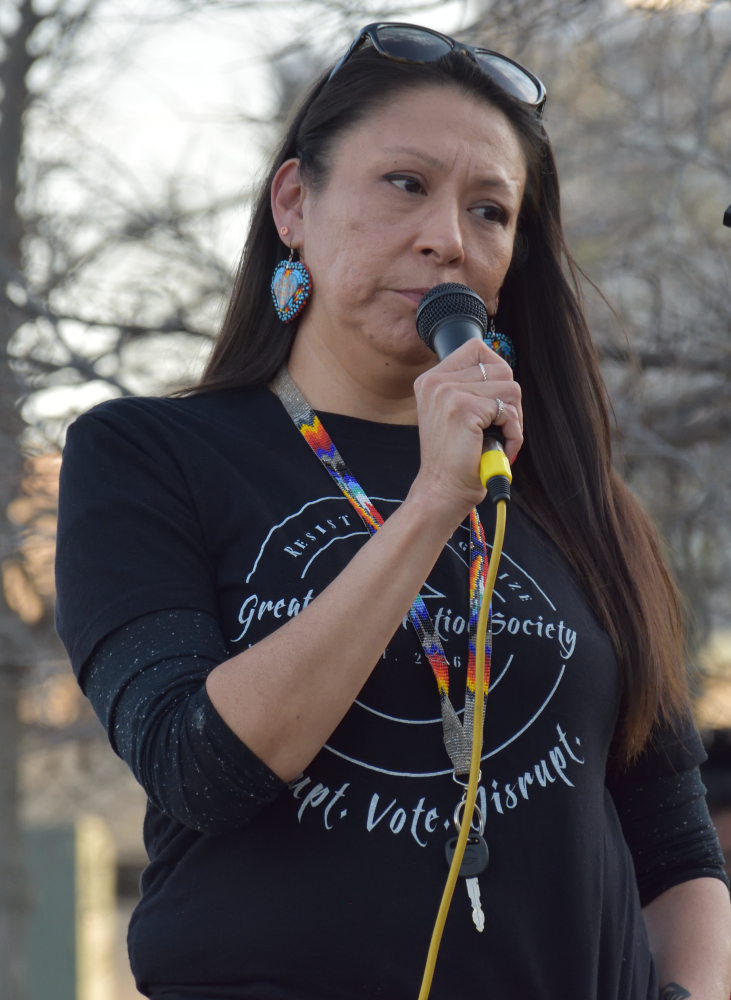
Great Plains Action Society

Great Plains Action Society. An indigenous collective working to resist and indigenize colonial institutions, ideologies, and behaviors. https://www.facebook.com/GreatPlainsActionSociety


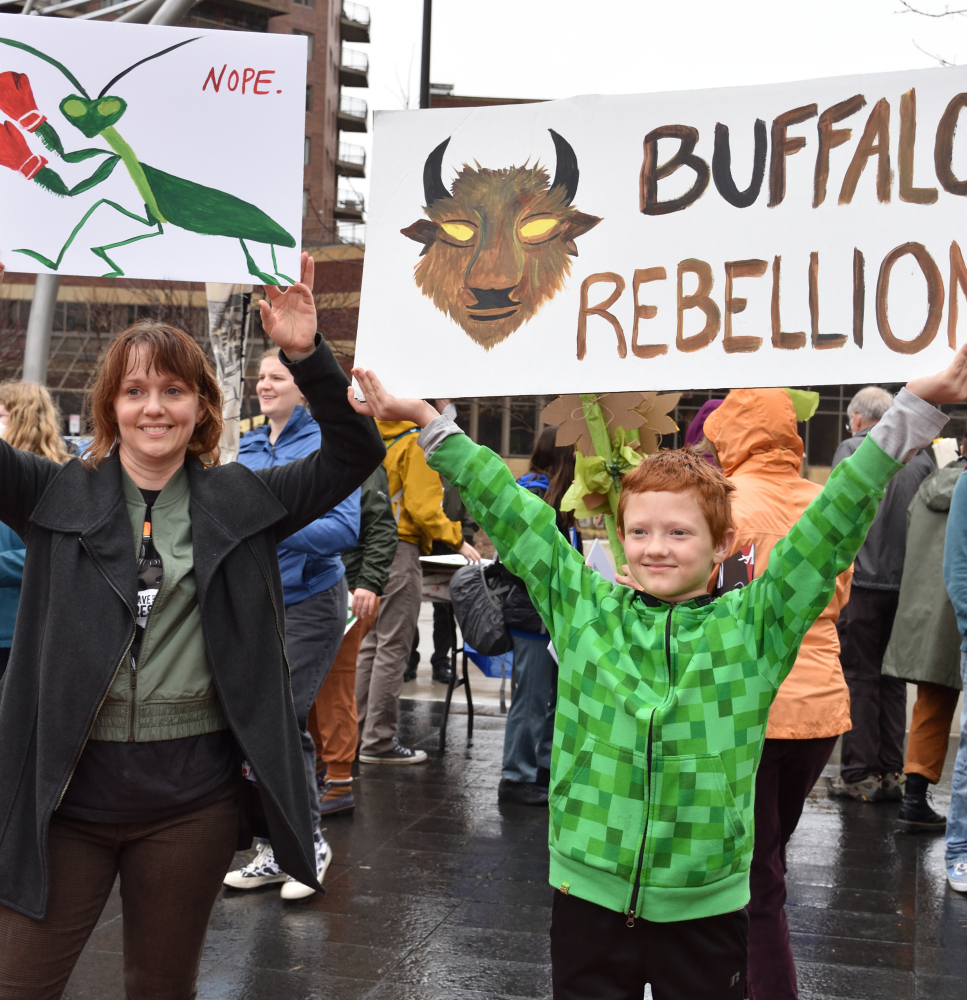
Buffalo Rebellion

Buffalo Rebellion is a coalition of Iowa grassroots organizations that are growing a movement for climate action that centers racial and economic justice!

Formed in 2021, Buffalo Rebellion is comprised of seven Iowa organizations: Great Plains Action Society, DSM Black Liberation Movement, Iowa Migrant Movement for Justice, Sierra Club Beyond Coal, Cedar Rapids Sunrise Movement, SEIU Local 199, and Iowa CCI
https://www.facebook.com/IowaBuffaloRebellion


Iowa Citizens for Community Improvement
With thousands of members from all walks of life, we get things done on critical issues
https://www.facebook.com/iowacci


#NoCarbonPipelines
#StopNavigator
#StopSummit
#NoCCS